Algorithmic Agility in MCP Server-Client Cryptographic Negotiation

TL;DR
- This article covers how to implement cryptographic agility within Model Context Protocol environments to survive the coming quantum threat. We explore how servers and clients negotiate cipher suites without breaking legacy ai workflows, focusing on hybrid post-quantum schemes. You'll learn practical strategies for future-proofing mcp p2p connectivity while maintaining real-time performance across distributed infrastructure.
The need for Agility in mcp ecosystems
Ever wonder why we're still using security tech from the 90s to protect ai models that think like they're from 2050? It’s a weird gap, and honestly, it's getting a bit dangerous for anyone running mcp setups.
The truth is, our current favorite tools like rsa and ecc are basically sitting ducks. If you've been following the quantum news, you know Shor's algorithm is the boogeyman that's going to tear through traditional math-based encryption once the hardware catches up. (The quantum threat that could shatter all modern security - MSN) For mcp ecosystems, where a client (like your local ai assistant) is constantly chatting with a server (like a database or a retail tool), that's a massive problem.
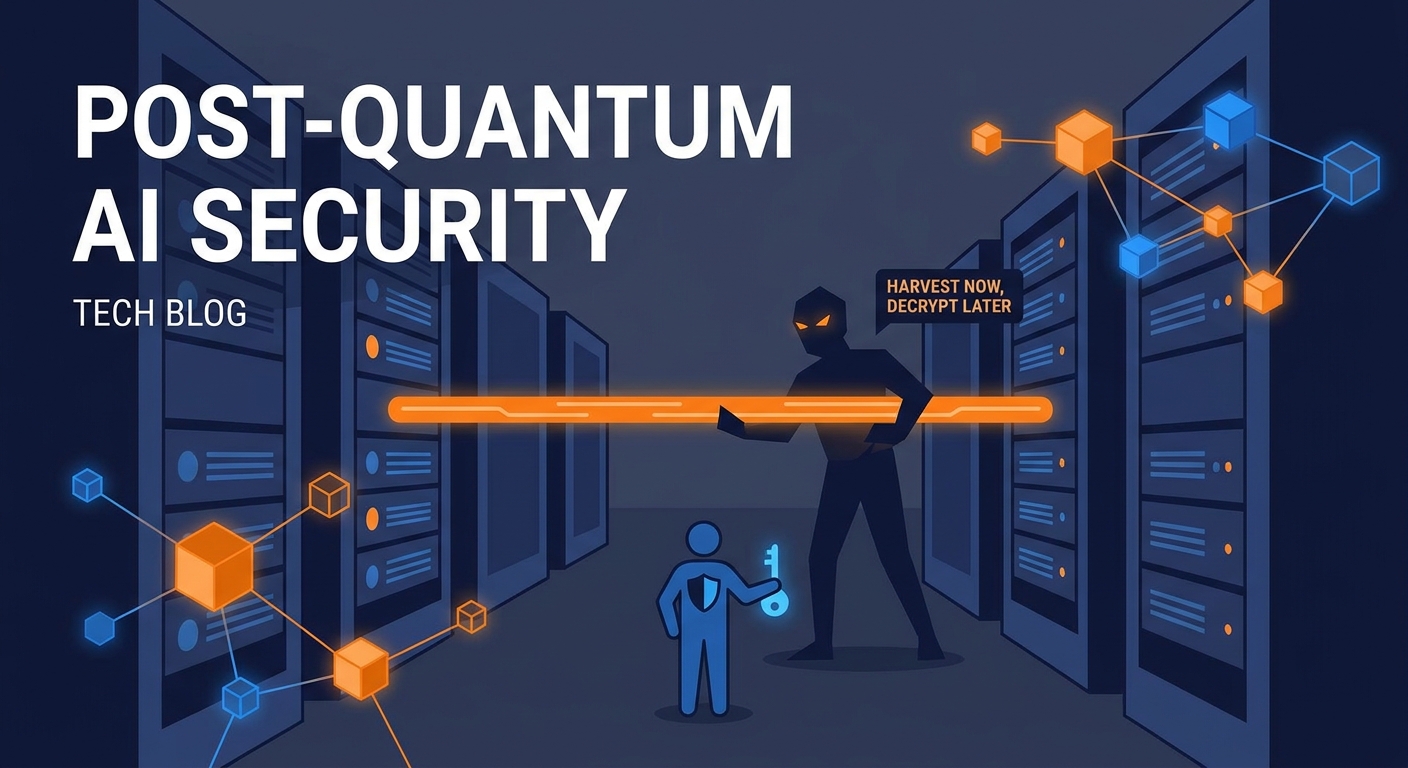
- Quantum Vulnerability: Most mcp deployments rely on standard tls. The problem? A "harvest now, decrypt later" attack is real. Someone can scoop up your encrypted healthcare data or proprietary finance logs today and just wait for a quantum computer to crack it in a few years.
- Sensitive Context: mcp is all about "context." When an ai tool accesses a company's private api, it's moving the "crown jewels" of data. If that connection isn't future-proof, you're basically leaving a time capsule for hackers.
- Protocol Rigidity: A lot of systems have the encryption hard-coded. If a new vulnerability pops up, you have to rewrite the whole stack just to change a cipher. That's just not practical for fast-moving ai infrastructure.
According to RFC 7696: Guidelines for Cryptographic Algorithm Agility, cryptographic algorithms eventually become weaker over time as new techniques emerge, making "agility" a requirement for any long-lived protocol.
So, what do we actually mean by "agility"? It’s not just about having a backup plan. It's about building a system where the mcp server and client can negotiate the best possible security on the fly without breaking the actual tool execution.
Diagram 1: The Handshake Flow
(This diagram shows the initial request-response cycle where a client proposes security levels and the server selects the strongest mutually supported option.)

We need to separate the "how we talk" from the "what we say." By following the modular approach in rfc 7696, we can swap out a busted rsa implementation for a shiny new post-quantum algorithm (like Kyber) without the ai even noticing.
In a retail environment, an mcp server might be pulling customer purchase history to help an ai agent make recommendations. If that server is agile, it can step up its encryption for high-value transactions while staying compatible with older inventory bots. It’s about having the "agility" to move between security levels based on what the data actually is.
Building this into the handshake now is the only way to avoid a total collapse later.
Next, we're going to look at how the actual negotiation logic works when a client and server first meet.
Negotiation mechanics between mcp clients and servers
Ever tried to explain to a toddler why they can't wear a swimsuit in a snowstorm? That's kind of what it feels like when a modern mcp client tries to talk to a server that only understands rsa-2048.
The negotiation phase is where the "magic" happens, but if we don't get the mechanics right, we're just opening the door for attackers to crash the party. It is basically the digital version of a secret handshake, but with way more math and a lot higher stakes for your ai infrastructure.
When an mcp client first pokes a server, it doesn't just say "hello." It sends a list of every cryptographic trick it knows how to perform. This is the client hello, and in a post-quantum world, this list gets pretty long because we're carrying both the old-school stuff and the new pqc (post-quantum cryptography) algorithms.
The server has to be the adult in the room here. It looks at the client's list and compares it against its own "mandatory-to-implement" (mti) policy. As we saw in the guidelines from rfc 7696, having a set of mti algorithms is the only way to make sure everyone can actually talk to each other without the whole system falling apart.
- Algorithm Advertisement: The client sends over identifiers for things like ML-KEM (formerly Kyber) for key exchange and ML-DSA (Dilithium) for signatures. (The State of Post-Quantum Cryptography (PQC) on the Web | F5 Labs)
- Policy Enforcement: The server checks if these meet the minimum security bar. If a client only offers "broken" algorithms, the server should just drop the connection right then and there.
- The Identity Crisis: One big headache is the "combinatoric explosion." If you have 10 encryption types and 10 signature types, you suddenly have 100 possible suites. To keep things from getting messy, most mcp setups prefer "suite identifiers" that bundle compatible algorithms together. For example, a suite identifier string looks like
MCP_PQ_KEM_KYBER768_AES256_GCM.
Diagram 2: Suite Selection Logic
(This visual depicts the server filtering the client's list of suite identifiers against its own internal security policy to find a match.)

In a healthcare setting, for example, a mobile app acting as an mcp client might need to pull patient records via an ai agent. The server (holding the data) has to enforce a strict pqc-only policy because that medical data needs to stay secret for the next 50 years, not just until the first quantum computer goes live.
Here is where it gets spicy. Attackers love "downgrade attacks." This is when a man-in-the-middle tricks the client and server into thinking they both only support some weak, 20-year-old cipher that the hacker already knows how to crack.
To stop this, we use post-quantum signatures to sign the entire negotiation process. Even the list of "supported algorithms" gets signed. If an attacker tries to delete the pqc options from the client's list, the signature won't match, and the server will know something is fishy.
- Anti-Downgrade Logic: The server sends back a finished message that includes a hash of every packet sent so far. If a single bit was changed by a hacker, the handshake fails.
- Server Authentication: Before the ai starts dumping sensitive context (like financial trade secrets) into the mcp channel, it has to verify the server's identity using a pq-resistant certificate.
- Hybrid Signatures: Since we're in a transition period, many mcp deployments use "dual signatures." You sign with both a traditional algorithm (like ecc) and a pqc one (like Dilithium). It's like having a deadbolt and a smart lock on the same door.
The goal is to be secure and agile at the same time. If a new vulnerability is found in Kyber tomorrow, an agile mcp server can just update its mti list and tell all clients to start using a different algorithm on the next connection.
I've seen this play out in high-frequency trading environments. They use mcp to connect ai risk-models to real-time data feeds. Because the "alpha" (the secret sauce) in their trades is so valuable, they can't risk a "harvest now, decrypt later" attack. They've moved to a negotiation style where the server rejects any handshake that doesn't include at least one lattice-based algorithm.
In a retail scenario, a company might have thousands of old inventory scanners (the "legacy" crowd) and a few hundred new ai-powered tablets. An agile mcp server handles both by negotiating a "good enough" traditional suite for the scanners while forcing the tablets into a full post-quantum tunnel for processing sensitive customer loyalty data.
Once the handshake is finished and the keys are swapped, we have to keep that data safe while it's moving.
Post-Quantum P2P Connectivity in mcp
So, we’ve talked about how the client and server shake hands, but let’s be real—a handshake doesn't mean much if the tunnel you're walking through is made of glass. If we want mcp to actually survive the next decade, we have to talk about how things like Gopher Security are changing the game for p2p (peer-to-peer) connectivity.
To be clear, Gopher Security isn't just a concept; it's a specific open-source library and toolset designed to automate the deployment of these complex post-quantum tunnels. It acts as a middleware that handles the heavy lifting of crypto-negotiation so developers don't have to.
It's not just about picking a fancy math problem for encryption; it's about how you manage that connection when the "threat actor" might eventually be a quantum computer. Honestly, most people just slap a tls certificate on their ai server and call it a day, but that’s like putting a padlock on a screen door.
- Automated Migration: One of the coolest things is how it can move you from legacy tls to these quantum-resistant mcp tunnels. You don't have to be a cryptography phd to do it; the system essentially "wraps" your existing traffic in a layer that quantum computers can't easily peel back.
- Monitoring the Handshake: I’ve seen so many mcp deployments fail because of weird negotiation errors. Gopher has a dashboard where you can see these failures in real-time. If a client is trying to use a weak algorithm that your policy forbids, you’ll see it pop up immediately instead of just wondering why the ai is "hallucinating" or disconnected.
- Granular Policy Control: This is where it gets really nerdy. You can restrict algorithms not just by name, but at the parameter level. Like, you can say "I'll allow Kyber, but only with these specific security strengths." It’s that level of detail that keeps the hackers out.
The industry is in this weird "in-between" phase right now. We know the old stuff is dying, but we're not 100% ready to bet the farm on brand-new post-quantum math alone. That’s why we use "hybrid" key exchange.
The idea is simple: you combine a traditional algorithm like x25519 (which is super fast and everyone trusts) with something like Kyber (the new pqc kid on the block). If someone breaks the new math, you’re still protected by the old math. If someone uses a quantum computer to break the old math, the new math has your back.
Diagram 3: Hybrid Key Exchange
(This diagram illustrates how two separate keys—one traditional and one post-quantum—are combined into a single master secret to protect against both current and future threats.)

But there's a catch—performance. ai workloads are already heavy. If you add a massive cryptographic overhead, your assistant is going to start lagging. I worked on a project for a finance firm where they used mcp to connect their trading bots to a private data feed. When they first tried pqc, the latency spiked because the keys were so much bigger than what they were used to.
- Managing Key Sizes: Post-quantum keys are big. Like, "clog up your network buffer" big. In resource-constrained mcp environments (think edge devices or old retail scanners), you have to be careful. You might need to adjust your mtu settings or use more efficient variants of the algorithms to keep things snappy.
- Performance Balancing: You have to find that sweet spot. For a healthcare app sending patient vitals, you might go full-tilt on security. But for a retail bot checking if a shirt is in stock? Maybe you stick to a lighter hybrid mode so the customer isn't waiting ten seconds for a response.
Stateful Re-keying and Session Resumption
In an agile mcp environment, you can't just leave a connection open forever. "Stateful re-keying" is the process where the client and server periodically generate new keys without dropping the session. This is vital because if one key is ever compromised, only a tiny slice of the data is at risk. In mcp, we use "session resumption" tokens that are themselves protected by pqc. This allows an ai agent to reconnect quickly—skipping the heavy math of the initial handshake—while still maintaining a quantum-resistant state. It’s a balance of speed and long-term secrecy.
Bridging the gap between today's speed and tomorrow's quantum threats is the real challenge.
Next up, we’re going to look at what happens when things go wrong—specifically, how we handle the transition when a server suddenly decides it doesn't trust your keys anymore.
Transitioning from weak algorithms in production
So, you’ve finally got your mcp server running, but then you realize half your traffic is still using encryption that’s basically the digital equivalent of a "Keep Out" sign written in crayon. It’s a messy reality, but moving away from weak algorithms in a live production environment is where the real engineering happens.
The biggest hurdle isn't the math; it's the fact that you can't just flip a switch and break every ai agent currently talking to your database. You need a way to signal that the end is nigh for things like sha-1 or early ecc without actually pulling the plug on day one.
If you've been following the guidelines from the ietf—specifically those found in rfc 7696 which we talked about earlier—you know they have this clever way of labeling things. Instead of just saying "this is good" or "this is bad," they use terms like SHOULD+ and MUST-.
- SHOULD+: This is like telling your developers, "Hey, we're using this now, but it's totally going to be the mandatory standard soon, so get your mcp clients ready."
- MUST-: This is the "final warning" phase. It means the algorithm is currently required for interoperability, but it’s marked for death. If you see this in your mcp server logs, you should be sweating a little.
- Flag Days: Eventually, you have to set a hard date. I've seen teams in the retail sector try to avoid this for years, only to get forced into a "flag day" upgrade because a new vulnerability made their old inventory-tracking ai a massive liability.
Setting these milestones gives your ecosystem time to breathe. You start by moving your "Mandatory-to-Implement" (mti) list toward post-quantum options like ML-KEM, while slowly pushing the old rsa stuff into the MUST- category.
We'd all love to live in a world where every client is brand new, but in reality, you probably have some legacy mcp clients lurking in your infrastructure—maybe an old finance bot or a legacy healthcare data scraper that nobody wants to touch.
The trick is to use fallback mechanisms that don't downgrade the security for everyone. You can't let one old client force your whole server into using weak crypto.
- Context-Aware Isolation: This is a lifesaver. You use your access control policy to shunt legacy traffic into a "low-trust" zone. If an mcp client insists on using an old ecc curve, the server might let it connect but restrict it from touching the most sensitive ai contexts.
- Visual Warnings and Audit Logs: Honestly, most developers don't even know they're using weak crypto until you show them. I’ve seen ops teams set up dashboards that highlight "insecure handshakes" in bright red. It’s amazing how fast people update their code when they're on a "shame list" for security compliance.
Diagram 4: Isolation Strategy
(This diagram shows how a server routes "weak" connections to restricted data silos while allowing "strong" pqc connections to access the full ai context.)

I remember working with a logistics firm where they had thousands of old scanners acting as mcp clients. They couldn't update them all at once, so they used this exact "isolation" strategy. The scanners could still check package locations (low risk), but any ai task involving customer addresses or payment data required a full post-quantum tunnel.
It’s all about balance. You want to be "agile," as mentioned in that rfc we keep referencing, but you also have to be practical. If you just cut off the old clients, the business stops. If you keep them without isolation, you're a sitting duck for a quantum harvest attack.
Managing the "state" of a connection and handling re-keying is the final piece of the puzzle.
Security considerations for cryptography engineers
Look, we can talk about math and lattice-based cryptography until we're blue in the face, but if your mcp deployment is hard-coded to a single "perfect" algorithm, you've already lost. The minute a new paper drops showing a weakness in that specific math, your entire ai infrastructure becomes a liability overnight.
It is super tempting to just pick the strongest thing nist recommends right now—like ML-KEM-768—and bake it into every corner of your mcp server. But honestly, that is exactly what happened with WEP back in the day, and we all know how that ended. Tying your protocol to a single algorithm is a recipe for a massive, expensive headache down the road.
If you follow the "agility" mindset we've been discussing, you treat algorithms like swappable parts, not the engine itself. You want to keep your implementation modular so that when the next set of standards comes out, you're just updating a config file instead of rewriting your entire handshake logic.
- Modular Design: Your mcp server should treat the cryptographic layer as an external module. The ai logic shouldn't care if the tunnel is rsa or a post-quantum lattice; it just needs a secure pipe.
- Future-Proofing: We don't even know what the "final" best pqc standards will look like in five years. By building for agility now, you’re basically buying insurance against future math breakthroughs.
- Complexity vs. Security: There's a fine line here. You don't want to support 50 different ciphers—that just increases your attack surface. You want a tight, manageable list of "Mandatory-to-Implement" (mti) options that you rotate as they age.
Diagram 5: Modular Architecture
(This visual shows the separation between the AI application logic and the pluggable cryptographic provider, allowing for easy algorithm swaps.)

How does this actually look in the real world? In a retail setting, you might have a warehouse ai agent trying to talk to an inventory server. The server needs to be smart enough to say, "I see you're offering old-school ecc, but my policy says for this specific context, we need something quantum-resistant."
Here is a simplified way you might handle that negotiation using a json-rpc style approach. The goal is to agree on parameters before any sensitive data—like customer pii or proprietary model weights—ever leaves the server.
class CryptoRegistry:
def __init__(self):
# We list our supported suites in order of preference
self.supported_suites = [
# ML-KEM-768 is the 'sweet spot' for security vs performance.
# 512 is too weak for long-term, 1024 is too slow for AI latency.
"PQ_ML_KEM_768_AES256",
<span class="hljs-comment"># HYBRID mode combines X25519 (fast) with ML-KEM-512.</span>
<span class="hljs-comment"># This addresses latency concerns while still being quantum-safe.</span>
<span class="hljs-string">"HYBRID_X25519_ML_KEM_512"</span>,
<span class="hljs-string">"TRAD_ECDH_P384"</span> <span class="hljs-comment"># Marked as MUST- (deprecated soon)</span>
]
<span class="hljs-keyword">def</span> <span class="hljs-title function_">negotiate</span>(<span class="hljs-params">self, client_suites</span>):
<span class="hljs-keyword">for</span> suite <span class="hljs-keyword">in</span> <span class="hljs-variable language_">self</span>.supported_suites:
<span class="hljs-keyword">if</span> suite <span class="hljs-keyword">in</span> client_suites:
<span class="hljs-built_in">print</span>(<span class="hljs-string">f"Negotiated suite: <span class="hljs-subst">{suite}</span>"</span>)
<span class="hljs-keyword">return</span> suite
<span class="hljs-comment"># If no common ground, we kill the connection</span>
<span class="hljs-keyword">raise</span> Exception(<span class="hljs-string">"No secure algorithm match found. Connection dropped."</span>)
client_offer = ["TRAD_ECDH_P256", "TRAD_ECDH_P384"]
registry = CryptoRegistry()
try:
selected = registry.negotiate(client_offer)
except Exception as e:
print(f"Security Alert: {e}")
In a healthcare environment, this logic is even more critical. If an ai tool is pulling patient records, the mcp server should probably just refuse to talk to any client that doesn't support a post-quantum suite. It might feel harsh to drop connections, but it’s better than having that data "harvested" now and cracked in three years when quantum hardware catches up.
One thing I've noticed in finance deployments is that developers sometimes go overboard. They try to implement every single variant of every new algorithm, and then they wonder why their ai assistant takes five seconds to respond. You have to balance that security strength with the actual complexity of the protocol.
As previously discussed regarding the guidelines in RFC 7696, the best practice is to keep the mti set small. Don't give people too many choices, or they'll inevitably pick the wrong one. Stick to one or two high-strength pqc suites and one hybrid option for the transition period.
A 2015 BCP (Best Current Practice) from the IETF emphasizes that "too many choices can be harmful" because it leads to rarely-used code paths that are prime targets for undiscovered bugs.
I’ve seen this in action with a team building a decentralized ai network. They tried to be "super secure" by allowing 20 different signature types. It turned into a nightmare of interoperability bugs. They eventually cut it down to just three—one legacy for old nodes, one pure pqc, and one hybrid—and their reliability shot up overnight.
At the end of the day, cryptography engineers working on mcp need to be more like diplomats than mathematicians. You’re negotiating a truce between the speed your ai models need today and the quantum threats we know are coming tomorrow.
- Keep your code modular so you can swap algorithms without a total refactor.
- Use SHOULD+ and MUST- labels to signal to your users when it's time to upgrade.
- Don't let "perfect" security break your actual system performance.
If you build your mcp client-server handshakes with agility as the foundation, you won't be the person staying up until 4 AM when the next major crypto-vulnerability hits the news. You'll just be the person changing a single line in a registry and getting back to work.
If we want ai to be a permanent part of our infrastructure, we have to stop treating its security like an afterthought. Build it agile, build it modular, and for heaven's sake, stop hard-coding your rsa keys.