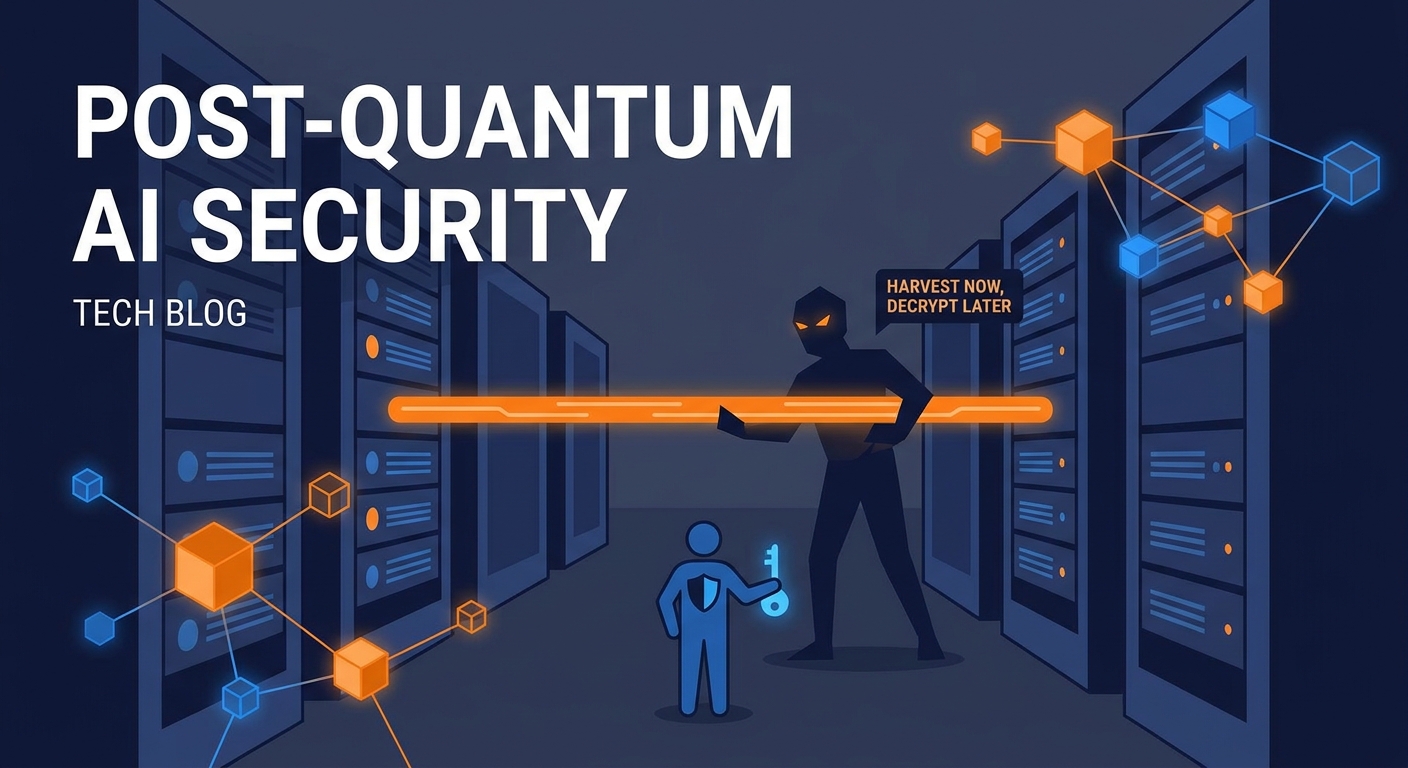
Model Context Protocol (MCP) vulnerability analysis in post-quantum environments.

TL;DR
- This article covers the landscape of Model Context Protocol (MCP) vulnerabilities, focusing on the unique challenges posed by post-quantum environments. It includes an analysis of attack vectors, explores quantum-resistant cryptographic solutions like PQuAKE, and provides best practices for securing MCP deployments against future threats. The article also highlights the importance of zero-trust architecture and continuous monitoring in maintaining robust AI infrastructure security.
The Developer's Security Mindset: Shifting Left
Okay, let's dive in! Ever wonder why some websites seem to shrug off attacks while others crumble? It's often about when security becomes the focus.
See, treating security as just a final step? Big mistake. It's like building a house and only thinking about the locks after you've furnished the place.
- Cost of breaches: Data breaches are expensive – like, really expensive. (Cost of a Data Breach Report 2025 - IBM) Think about the fines, the lawsuits, and all the recovery efforts. It's not just a tech problem; it's a business-killer.
- Reputational damage: News of a security flaw can spread like wildfire. (Urgent Warning About New 'Interlock' Ransomware Threat - Aztek) Customers lose trust, and it's tough to win them back.
- Legal compliance: Depending on your industry (healthcare, finance, etc.), there's probably regulations you need to follow. (5 Essential Healthcare Compliance Laws and Regulations | NAVEX)
Instead, let's "shift left" – meaning, bring security earlier into the development lifecycle.
- Integrating security early: This means thinking about security from the get-go – during design, coding, and testing.
- Automated testing: Tools can automatically scan your code for vulnerabilities. This is especially useful in fast-paced development environments.
- Continuous feedback: Security isn't a one-time thing. Get constant feedback and keep improving your defenses.
So, how do we actually do this "shift left" thing? Next, we'll explore what this looks like in practice.
Identifying Vulnerabilities: Your First Line of Defense
Okay, so, you wouldn't drive a car without brakes, right? Same goes for websites and security. Finding those weak spots before the bad guys do is kinda crucial, and it's where the "shift left" strategy really shines.
Here's how to start hunting:
- Know thy enemy (vulnerabilities): We're talking stuff like SQL injection (where hackers sneak in malicious code via input fields to manipulate your database – imagine them changing prices or stealing user info), cross-site scripting (xss) which, let's be honest, sounds way cooler than it is (injecting malicious scripts into trusted websites to steal cookies or redirect users), and broken authentication – basically, weak logins. These are some common web vulnerabilities developers face.
- Automate, automate, automate: Ain't nobody got time for manual code reviews all day. There's a ton of tools out there that can automatically scan your code for vulnerabilities. Some free ai-powered ones include:
- OWASP ZAP (Zed Attack Proxy): A widely used, open-source web application security scanner. It can find a lot of common vulnerabilities.
- Nikto: A web server scanner that performs comprehensive tests against web servers for dangerous files/CGIs, outdated server software, and other problems.
- Arachni: An open-source, feature-rich, modular, high-performance, and extensible web application security scanner framework.
- Keep learning: Security threats are like, constantly evolving. Stay updated on the latest vulnerabilities and attack techniques. It's a never-ending game of cat and mouse, honestly.
So, where do you find these tools, you ask? Up next, i'll tell you about some free ai-powered ones...
Secure Coding Practices: Building a Solid Foundation
Think of secure coding as the foundation of a fortress – if it's weak, the whole thing crumbles. It's not just about writing code that works, but code that resists attacks.
Input Validation: Never, ever trust user input. Seriously. Always validate and sanitize anything coming from the outside world. Like, imagine a retail site; if you don't validate the coupon code field, someone could inject malicious scripts and steal customer data. This means checking data types, lengths, and formats, and stripping out potentially harmful characters.
Authentication & Authorization: Strong authentication and authorization are key. Use multi-factor authentication (mfa) wherever possible. you know, like how banks use it? Also, role-based access control (rbac) so only the right people can access sensitive data. RBAC works by assigning permissions to roles (like 'admin', 'editor', 'viewer'), and then assigning users to those roles. This way, you manage permissions centrally rather than on a per-user basis, making it much more scalable and less error-prone.
Error Handling & Logging: Proper error handling is important - don't expose sensitive info in error messages. Detailed logging helps you track down issues and spot suspicious activity. Gotta monitor those logs, though, or they're just digital clutter. For security, you should log things like:
- Login attempts (successful and failed)
- Access to sensitive data or functions
- Changes to critical configurations
- Any unusual patterns of activity, like a flood of requests from a single IP address or access attempts outside of normal business hours.

Getting this right means less headaches down the road.
Continuous Monitoring and Testing: Staying Ahead of Threats
Think of your website like a garden—you can't just plant it and walk away, right? You gotta keep weeding and watering, which, in web security terms, means constant monitoring and testing.
- Automated Security Testing: Make friends with automation! Integrate tools into your ci/cd pipeline to automatically scan for vulnerabilities whenever code changes. This is like setting up sprinklers that automatically water the plants.
- Real-time Monitoring: Set up alerts to catch issues as they happen. Monitoring traffic patterns can help you respond quickly to incidents. It's like getting a notification when a rabbit starts munching on your lettuce.
- Regular Pentesting: Pen-testing isn't just for the big guys. Even smaller companies can benefit from regular security audits.

So, how do you keep up with all this? Well, let's talk about some ai-powered tools that can help you stay ahead of the game.
The Future of Web Security: AI and Automation
The web security landscape is changing rapidly, and honestly, keeping up feels like a never-ending race! But here's the good news: ai and automation are stepping in to lend a hand.
- Predictive analysis: ai algorithms can analyze past attack data to predict future threats. Imagine a retail company using ai to foresee potential DDoS attacks during peak shopping seasons, allowing them to beef up defenses beforehand.
- Automated threat detection: ai-powered systems can automatically detect and respond to threats in real-time. For example, in healthcare, ai can monitor network traffic for unusual activity that may indicate a data breach.
- Adaptive security measures: ai can dynamically adjust security protocols based on the current threat landscape. Think of a financial institution whose ai system tightens access controls during periods of increased phishing attacks.
Staying informed is half the battle. Here's where to get your security news:
- OWASP (Open Web Application Security Project): A fantastic resource for learning about web security vulnerabilities and best practices.
- sans institute: Offers courses, certifications, and resources for security professionals.
- Security blogs and forums: Keep an eye on blogs from security firms and participate in forums to learn from others experiences.

Look, web security isn't some optional extra; it's gotta be baked into everything you do. Embrace ai and automation, stay informed, and you'll be well-equipped to defend your stack.