Quantum-Resistant Homomorphic Encryption for Model Context Computation


TL;DR
- This article dives deep into securing model context computation (mcp) using quantum-resistant homomorphic encryption (qr-fhe). We are covering everything from the fundamentals of qr-fhe and its application to mcp, to the challenges and future directions. You'll gain insights into how qr-fhe can protect your ai infrastructure against emerging quantum threats, ensuring data confidentiality and computational integrity even in untrusted environments, it's importance in zero-trust architectures, and ways to implement in your organization.
Understanding the Quantum Threat to Model Context Computation
Okay, so quantum computers are comin', right? Not tomorrow, probably. But when they do arrive, they're gonna mess up all sorts of encryption we use today. Scary stuff, honestly.
- Shor's algorithm: This bad boy can break RSA and ECC, the backbones of current online security. Imagine all those banking systems and secure websites just... poof.
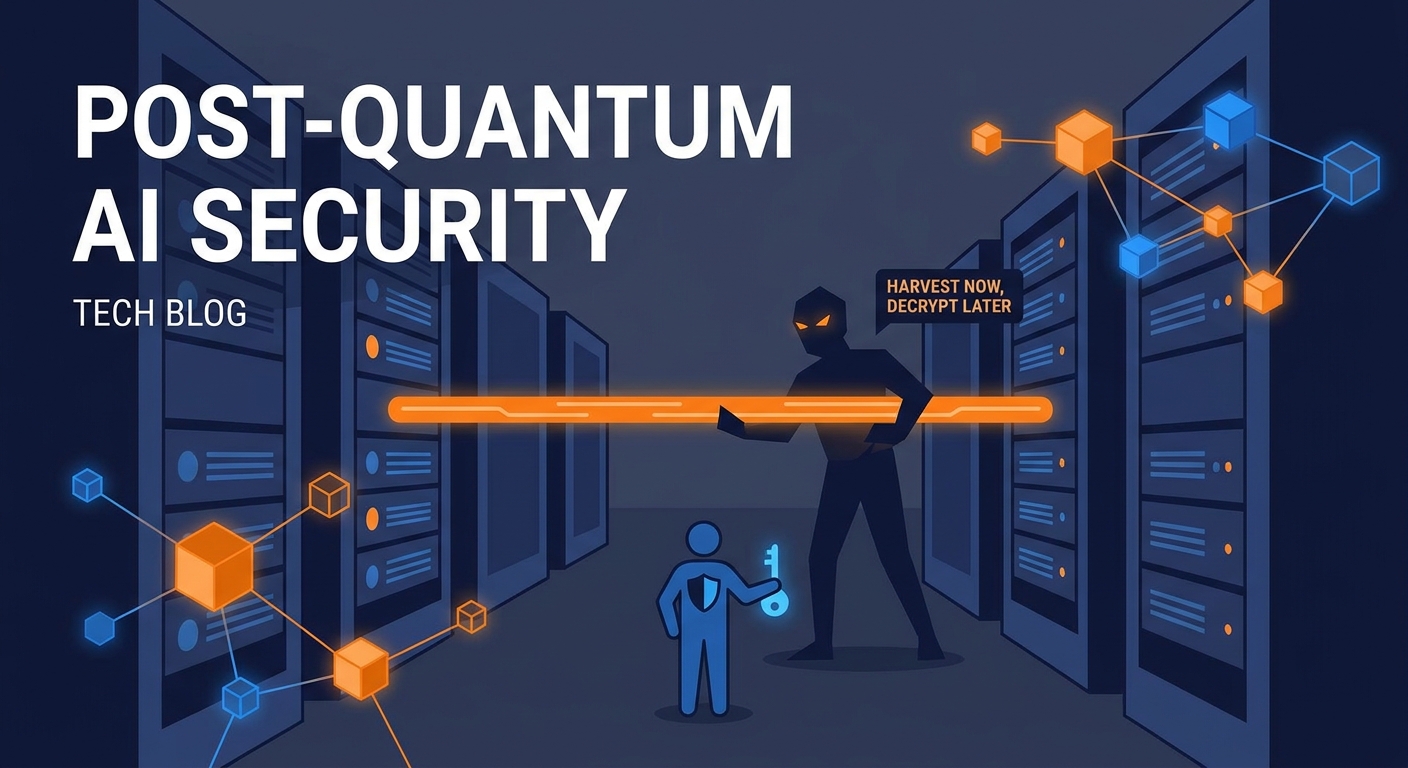
- Harvest now, decrypt later: Hackers are already grabbing encrypted data, hopin' to crack it later with quantum computers. Kinda like burying treasure for your future self, only it's stolen data. This means sensitive information like financial transactions, personal health records, and even government secrets could be compromised years down the line. The real-world impact could be devastating, leading to widespread identity theft, compromised national security, and the collapse of critical infrastructure.
- Think about the power grid, hospitals, banks—all vulnerable. It's not just about privacy; it's about keeping things running. According to Forward Edge-AI, Inc, the U.S. government is on a mission to fortify critical networks against these quantum threats by 2027.
Model Context Protocol (MCP) is basically the brains behind the ai operation. If someone messes with it, the ai could do all sorts of wrong things. The general quantum threat to encryption directly impacts the security of AI models, as the very data and algorithms that define their behavior are susceptible to future decryption. Protecting the integrity of these models, and specifically their context, becomes paramount in a post-quantum world.
- What's model context? It's the data and settings that tell an ai how to work. Think of it like the recipe for a cake. It includes things like the model's weights (the learned parameters), the specific training data it was exposed to, hyperparameters that control the learning process, and any unique configurations or settings that define its behavior. Mess that up, and you get a disaster.
- Unprotected mcp is risky: If hackers change the context of an ai model, that ai could start spewing misinformation, making bad decisions, or even straight-up attacking systems.
- We need to make sure this mcp is secured in untrusted environments.
Now that we know what we're up against, let's dive into how quantum-resistant homomorphic encryption can help us protect our ai.
Homomorphic Encryption and Its Role in Protecting MCP
Okay, so you're probably wondering how homomorphic encryption (HE) can seriously protect AI, right? It might sound like some far-off sci-fi tech, but its actually super useful. Let's break down how it steps up to protect Model Context Protocol(MCP) in the real world.
HE lets you perform calculations on encrypted data without ever decrypting it. Imagine doing surgery while blindfolded – that's kinda what it's like, but for computers.
- Basically, this means that even if your ai is crunching data on a server you don't fully trust, the data stays safe and sound. Think about hospitals sharing patient data for ai-powered diagnoses – they can keep everything private without sacrificing the benefits of ai.
- There's actually different types of HE. Fully Homomorphic Encryption (fhe) let's you do any kind of calculation, while others are more limited. For example, somewhat homomorphic encryption (SHE) might only allow a limited number of additions or multiplications. This trade-off means SHE can be more performant for specific tasks, like securely aggregating encrypted sensor data or performing simple statistical analysis, where the full power of FHE isn't necessary.
Using HE with MCP is like putting a super-strong lock on the ai's brain. It means no one can mess with the ai's "recipe" while it's being used.
- It's especially useful for things like secure ai inference, where you want to get predictions from a model without revealing anything about the input data or the model itself.
- Implementing HE isn't always easy though. It can add extra overhead, making things slower. But hey, security is worth it, right?
So, what do you think? Ready to see how we can make HE even more secure against quantum computers? Let's talk quantum-resistant HE next...
Quantum-Resistant Cryptography: A Necessary Evolution
Okay, so, traditional homomorphic encryption is cool and all – but, it's kinda like bringing a butter knife to a lightsaber fight when quantum computers show up, right? They can just... slice through it. While HE is powerful, its underlying mathematical problems are susceptible to quantum attacks, necessitating a new approach. That's where post-quantum cryptography (pqc) comes in. It's basically the next generation of encryption algorithms designed to resist those quantum baddies.
- Traditional HE schemes relies, on problems like integer factorization, which quantum computers, using Shor's algorithm, can solve super quickly.
- PQC, on the other hand, use math problems that supposed to be hard for both regular and quantum computers.
- And hey, NIST is already on it. They already picked a first group of encryption tools designed to resist cyberattacks from quantum computers, so its only a matter of time, before they are fully implemented.
So, yeah, pqc is a must. Now, let's see one promising solution: lattice-based cryptography.
Quantum-Resistant Homomorphic Encryption (QR-FHE) Models for MCP
Okay, so we've talked about why we need quantum-resistant homomorphic encryption (qr-fhe) and what it is. Now comes the fun part–how do we actually use it to protect our ai models? It's not as simple as just swapping out one encryption for another.
There's a few qr-fhe schemes out there, each with it's own quirks. BGV, GSW, and TFHE are some of the big names. They all rely on different math tricks, but the goal is the same: let you do calculations on encrypted data, even if a quantum computer is trying to snoop. Choosing the right one depends on what you're trying to do, honestly.
- BGV: This one's a workhorse. It's been around for a while and it's pretty versatile, since it can do both addition and multiplication on encrypted data. Think of it like the swiss army knife of qr-fhe. It relies on something called Learning With Errors (lwe), a mathematical problem that's believed to be hard for quantum computers to solve.
- GSW: GSW is kinda neat because it's efficient at bootstrapping. Bootstrapping is like giving your encryption a shot of espresso – it lets you do more calculations without losing security. It also often relies on lattice-based problems for its quantum resistance.
- TFHE: If speed is what you need, then TFHE might be the ticket. It's designed to be fast, so it's good for stuff where you need to crunch numbers on encrypted data quickly. TFHE typically uses the Learning With Errors (lwe) problem or related variants for its security.
So, how does this translate to protecting Model Context Protocol (MCP)? Simple: encrypt the mcp! That way, even if someone gets their hands on it, they can't mess with it.
- Imagine a hospital using ai to diagnose patients. If they encrypt the ai model's context with qr-fhe, they can share it with other hospitals without worrying about hackers changing the model to give out wrong diagnoses.
- Or think about a bank using ai to detect fraud. By using qr-fhe, the bank can train the ai on sensitive financial data without ever exposing the raw numbers.
- There are challenges, though. QR-fhe can be slow, and picking the right settings can be tricky.
Next up, we'll dive into how to make qr-fhe faster.
Implementing Quantum-Resistant Homomorphic Encryption for MCP: A Practical Guide
Okay, so you're ready to put this stuff into practice, huh? It's not just about knowing the theory but also getting your hands dirty, so let's dive into some practical steps.
- Assess your organization's vulnerability to quantum threats: This is where you figure out how much trouble you'd be in if a quantum computer did show up tomorrow. What systems are using encryption that's vulnerable, and how bad would it be if they got cracked? I mean, are we talking minor inconvenience or business-ending disaster?
- Identify the MCP use cases that require qr-fhe: Not everything needs the top-tier protection, right? Figure out what ai models are most critical and where you're handling the most sensitive data. For example, if you're using AI for medical diagnoses, that's probably higher priority than an ai that suggests what color socks to wear.
- Select the appropriate qr-fhe scheme and parameters: There's a bunch of different qr-fhe options, and picking the right one is like picking the right tool from your security arsenal - you need the right tool for the job. I mean, think BGV, GSW, TFHE – each has strengths and weaknesses you'll need to consider. Factors like the types of operations you need to perform (addition, multiplication, comparisons), performance requirements, and the availability of robust libraries (like Microsoft SEAL, HElib, or TFHE-rs) will guide your choice. Plus, you gotta get the key sizes and other settings just right, or else it's like locking your door with a flimsy padlock.
- Integrate qr-fhe into your ai infrastructure and workflows: This ain't just plug-and-play, folks. You'll needs to weave this encryption into your existing systems, which means tweaking code, updating policies, and probably a few late nights debugging, let’s be honest. This could involve modifying data pipelines, updating api endpoints, and ensuring compatibility between different software components.
- Continuously monitor and update your qr-fhe implementation to address emerging threats: Security is never "set it and forget it" – it's a constant game of cat and mouse. As new quantum computing developments emerge, or new vulnerabilities are found, you'll need to adapt your defenses. This might involve re-evaluating your chosen schemes, updating cryptographic libraries, or adjusting your security parameters.
There are a lot of moving parts, so don't expect to flip a switch and suddenly be quantum-proofed – it's a journey. Understanding the landscape of comprehensive solutions can help navigate these complexities.
Gopher Security's MCP Security Platform is one such solution, but there are others out there that are able to provide a holistic solution to securing ai infrastructure against quantum threats. By including threat detection, access control, policy enforcement, and quantum encryption, these platforms offer a comprehensive defense strategy for organizations.
The Future of QR-FHE and Model Context Security
It's kinda wild how quantum computers are supposed to change everything, right? I mean, it's not just about faster calculations, but the kinda scary part is how they'll break current security. So, what's next, you may ask?
Well, the future of Model Context Security seems to be heading towards quantum-resistant homomorphic encryption (qr-fhe), but it isn't as simple as just swapping out old encryption for new. It's an ongoing evolution, and there's a few key trends worth mentioning:
- Hybrid Cryptographic Schemes: Blending pqc algorithms with existing methods could offer a more balanced approach. Imagine a system that uses lattice-based crypto for the really sensitive stuff, and something faster (though less quantum-resistant) for other operations.
- Research into faster qr-fhe: Speed is still a major hurdle. Folks are looking into things like hardware acceleration and specialized architectures to make these encryption schemes run faster – maybe we'll see gpus pulling double duty, or even custom ASICs designed specifically for homomorphic computations.
- Zero Trust Architecture: The combination of Zero Trust and QR-FHE is a game changer. Zero Trust says don't trust anyone, always verify. QR-FHE then encrypts the data end-to-end, so even if someone does get in, they can't read anything.
It's not enough to just know about this stuff; we need to do something. Now, I'm not saying everyone needs to become a cryptography expert, but here's what organizations should be thinkin' about:
- Assess Vulnerabilities: Figure out where your systems are most at risk from quantum attacks. What data is super sensitive? What systems are using encryption that'll be toast once quantum computers arrive?
- Collaborate and Share: No one can do this alone. Getting involved in the cybersecurity community, sharing knowledge, and working together is gonna be key to making qr-fhe a reality. It's going to be like that time when a little help got the entire team over the big hurdle.
It's a messy situation, but all this advancements in that space gives what seems to be a glimpse of what's to come.