Quantum-Resistant Key Management for Distributed AI Systems


TL;DR
- This article covers the urgent need for quantum-resistant key management in distributed ai systems. It explores the vulnerabilities quantum computing introduces, details quantum-safe cryptographic solutions, and offers practical strategies for implementation. The article also discusses managing keys in distributed environments and ensuring ongoing security against evolving threats.
The Looming Quantum Threat to AI Model Confidentiality
Okay, so quantum computers are coming, and they're gonna be a problem for, like, everything we thought was secure, right? It's not just some sci-fi movie plot anymore.
Here's the deal – your ai models, especially the context around them, is super valuable. I mean, think of it like the secret sauce, you know? This "context" includes things like the data the model was trained on, its specific architecture, how it's configured for a particular task (inference parameters), the logs of its operations, and even how users interact with it. If someone nabs this context, it's game over. They can steal your ip, mess with the model to do bad stuff, or just straight-up breach your data.
- Imagine a healthcare company; if someone gets their hands on the ai model used to predict patient outcomes, they could, like, totally manipulate it for insurance fraud.
- Or, take a retail giant. If their ai-powered recommendation engine's context is compromised, competitors could reverse-engineer their strategies and poach customers.
- And, of course, in finance, a hacked ai model could lead to massive losses through manipulated trading algorithms.
The scary part? Current encryption methods, that we all rely on, are basically toast once quantum computers become powerful enough. The Post-Quantum Cryptography - CSIAC explains how quantum computers uses qubits to represent both 0 and 1 simultaneously and how many cybercriminals are actively harvesting encrypted data, anticipating that forthcoming technologies will soon break these algorithms—i.e., hack now, crack later. Yeah, Shor's algorithm is the big baddie here, it's a quantum algorithm that can break RSA, Diffie-Hellman, ECC – all the stuff we use to keep things safe online. Understanding Shor's and Grover's Algorithms | Fortinet - It's like having a universal key to unlock everything.
A 2024 study by McKinsey Digital - while quantum computers may not be able to crack conventional encryption protocols until 2030, many cybersecurity and risk managers should evaluate their options today.
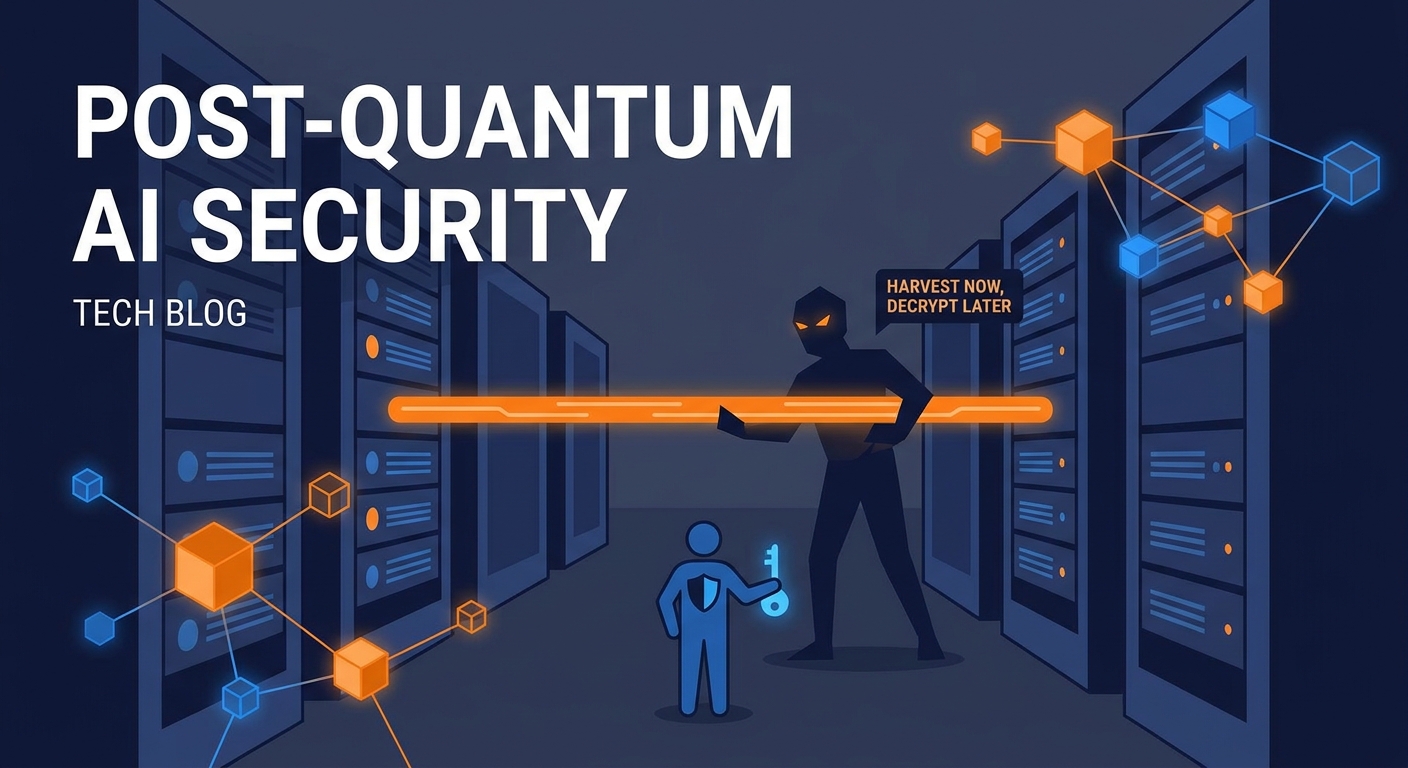
This "harvest now, decrypt later" thing is real. Bad actors are grabbing encrypted data now, knowing they can crack it later when they have the quantum computing power. So, even if your data is safe today, it might not be in a few years. This synergy between harvested data and compromised AI models is concerning; imagine a compromised AI model being used to analyze patterns in harvested encrypted data to aid decryption, or to identify specific targets for data harvesting once quantum decryption becomes feasible.
That's why we gotta start thinking about post-quantum cryptography now. It's not just some future problem – it's a ticking time bomb, and we need to defuse it before it goes off. Developing new cryptographic methods to counter these quantum threats is crucial, and this is where organizations like NIST come into play.
Next, we'll get into what post-quantum cryptography even is and hopefully, this post-quantum cryptography thing will save us.
NIST's Post-Quantum Cryptography Standards: A New Hope
NIST finalized their post-quantum cryptography (pqc) standards? Finally! I mean, we knew it was coming, but it's nice to see it actually here. Now, we got something solid to work with, instead of just, like, worrying, you know?
Okay, so NIST didn't just pick one thing, they've got a few algorithms to choose from. And it's not just encryption, they're also covering digital signatures. That's good, 'cause you need both, encryption to keep stuff secret, and signatures to prove who sent it.
CRYSTALS-Kyber: This is their go-to for general encryption and securing websites. It's based on this "learning-with-errors" thingy. While I'm not gonna pretend I fully understand it, the basic idea is that it's a mathematical problem that's really hard for even quantum computers to solve. They got different "sizes" of Kyber – Kyber-512, Kyber-768, Kyber-1024 – that give you different levels of security, kinda like AES-128, AES-192, and AES-256.
CRYSTALS-Dilithium, FALCON, and SPHINCS+: These are for digital signatures. Dilithium is what they recommend as the main one. It's, like, the workhorse. But if you really need small signatures that are fast, then FALCON's the way to go. And SPHINCS+? well, it's different mathematically, so it's a good backup, in case someone figures out how to break the others.
So, what if you're, like, super paranoid? Or, you know, just responsible? Well, you can combine the new post-quantum stuff with the old stuff we already use. Like, do elliptic-curve Diffie-Hellman (ECDH) along with CRYSTALS-Kyber. CybelAngel.com - notes that ANSSI (French national cybersecurity agency) recommends this hybridization as well. This means encrypting with both classical and post-quantum algorithms. That way, even if someone does crack one of them, you're still safe. It's like wearing a belt and suspenders, offering resilience against future cryptographic breaks.
All this might sound complicated, but its all about protecting your data from quantum computers, now and in the future. Next up, we'll dive deeper into CRYSTALS-Kyber and how it keeps our keys safe.
Implementing Quantum-Resistant Key Exchange for Model Context Protocol
Okay, so you're thinking about quantum-proofing your Model Context Protocol? Smart move. It's like, prepping your house for a hurricane before the weather folks start yelling about it.
First things first, let's talk about CRYSTALS-Kyber. I mean, NIST kinda gave it the thumbs up, right? For general encryption and securing stuff, this is your go-to. It's based on this "learning with errors" thing--which honestly sounds like my dating life--but supposedly, it's pretty darn tough for quantum computers to break.
- Think of it like this: you're a bank. You're not just sending the combination to the vault over a postcard! You're using CRYSTALS-Kyber to encrypt the heck outta that key exchange so only the right teller, with the right quantum-resistant decoder, can open it.
- Or maybe you're a hospital. You're using patient data with ai models, and you can't have that data getting out. So CRYSTALS-Kyber helps keep those communications between different systems locked down tight.
But it ain't all about keeping stuff secret, you also need to know who sent it, right? That's where CRYSTALS-Dilithium comes in. It's NIST's pick for digital signatures.
- Imagine a retail company using ai to manage inventory. Dilithium ensures that when an ai model reorders items, the request actually comes from the ai and not some bad actor trying to manipulate the supply chain.
- Or, consider a financial institution using ai for fraud detection. Dilithium can be used to digitally sign transaction records, ensuring their integrity and authenticity, which is kinda important when you're dealing with money.
Now, all this fancy crypto stuff is useless if you're storing your keys under your doormat, you know? You gotta have a secure place to keep those cryptographic keys. Think hardware security modules (hsms) or key management systems (kms). These are crucial because they offer tamper-resistance and secure key generation/storage capabilities, which are essential for protecting your new quantum-resistant keys, regardless of the algorithm. Treat em' like gold, 'cause that's basically what they are.
As cisco noted in a 2025 presentation, the time to plan for post-quantum cryptography is now.
So, yeah, implementing CRYSTALS-Kyber and CRYSTALS-Dilithium is a solid start to securing your Model Context Protocol. Next up, we'll discuss crypto-agility and why it's important in the long run to maintain long-term security and resilience.
Addressing Key Exchange Vulnerabilities in the Quantum Era
Quantum key exchange: is it really all that? Prolly not. It's got some serious vulnerabilities, and we can't just ignore 'em. This section is about general key exchange vulnerabilities in the context of a quantum future.
- Compromised ai models and data: Just think, if someone gets in, they could mess with algorithms, steal data–the works. Like, imagine a bad actor tweaking a trading algorithm to make off with some serious cash. A compromised AI model could be manipulated to infer or brute-force cryptographic keys, or to facilitate man-in-the-middle attacks during key exchange, thereby directly impacting its security.
- Potential attack vectors: It's not just about quantum computers cracking codes. It's also about old-school stuff like phishing, malware, and even supply chain attacks. And don't even get me started on insider threats. These general attack vectors can be used to compromise the systems that handle key exchange, even if the underlying cryptography is quantum-resistant.
- Multi-factor authentication (mfa): Make sure you're using more than just a password, you know? Like, a code from your phone, or even a fingerprint. It's like adding an extra lock on your front door. MFA can mitigate risks even if a quantum computer breaks a primary authentication method used in key exchange.
- Rotating cryptographic keys: Change those keys regularly. It's like changing your passwords every few months. Regular key rotation helps limit the window of opportunity for attackers, even if they manage to compromise a key.
- Hardware security modules (hsms): These are like Fort Knox for your encryption keys. Keep 'em safe and sound, you know? HSMs are essential for protecting the new quantum-resistant keys, as their tamper-resistance and secure key generation/storage capabilities are vital regardless of the cryptographic algorithm used.
So, yeah, quantum-resistant key exchange is important, but it's not a silver bullet. As cisco noted in 2025, we gotta plan now.