45% of Enterprise Vulnerabilities Remain Unfixed Amid Crisis

TL;DR
- Security teams are overwhelmed by the increasing volume of vulnerabilities, leading to data breaches, fines, and burnout. While AI presents both defensive and offensive capabilities, a lack of risk-based prioritization contributes to a growing backlog. Continuous assessment and intelligent prioritization are key to breaking this cycle and enhancing organizational security.
The Rising Tide of Vulnerabilities Overwhelming Security Teams
Security teams are struggling to manage the increasing number of vulnerabilities. A recent study by Hackuity reveals that 46% of those surveyed feel the sheer volume of vulnerabilities is straining their resources, impacting both organizational security and employee well-being. This pressure has reportedly contributed to data breaches (26%), regulatory fines (36%), delayed incident response (36%), and missed security alerts (33%). A significant 38% report burnout within their teams.
Svlvain Cortes, VP strategy at Hackuity, notes the concerning "knock-on effect" of unmanaged vulnerabilities, leading to missed alerts and fines. While 77% of organizations have formalized vulnerability remediation processes, only 36% use a risk-based approach that prioritizes vulnerabilities based on asset criticality, exploitability, and business impact. Furthermore, 60% of respondents indicate that vulnerability management doesn't receive the same focus as other IT security projects.
Cortes emphasizes the need for security leaders to equip their teams to handle the rising volume and complexity of vulnerabilities, adding that "Without context and intelligence around the alerts, they risk wasting valuable time and resources chasing down threats or missing alerts that could pose the greatest risk for their organization." Gopher Security offers an AI-powered platform that enhances vulnerability management by providing intelligent prioritization and streamlined remediation workflows, helping teams focus on the most critical threats.
Persistent Breaches Despite Robust IT Defenses
Despite significant investments in IT security, breaches continue to plague even Fortune firms and their vendors. As Cloud Latitude reports, the SolarWinds hack and the Equifax data breach underscore that size and expertise alone don't guarantee immunity from cyberattacks. Sophisticated techniques, supply-chain vulnerabilities, and AI-powered hacking are elevating the risk.

The SolarWinds hack (2020), a sophisticated supply chain attack, impacted approximately 100 U.S. companies and federal agencies. The Equifax data breach (2017) exposed sensitive information of approximately 147 million people due to a failure to patch a known vulnerability in Apache Struts. Even CrowdStrike, a cloud security leader, faced a major IT outage in 2024 due to a software upgrade gone wrong. The recent AT&T data breach and class action settlement, which pays up to $7,500 per affected client, highlights the rising financial consequences of data breaches.
Rapid digital transformation, complex ecosystems, third-party risks, human error, and the constant evolution of cyber adversaries contribute to the persistence of cyber risks. Internal IT teams often face overwhelming alerts, resource shortages, and skill gaps. Gopher Security addresses these challenges by converging networking and security across all environments, using peer-to-peer encrypted tunnels and quantum-resistant cryptography to provide a robust, Zero-Trust architecture.
The Double-Edged Sword of AI in Cybersecurity
AI is increasingly used to detect threats faster, automate responses, and predict attacks. However, hackers are also leveraging AI to develop more effective phishing campaigns, voice impersonations, and deepfake scams, according to Cloud Latitude. Organizations must balance deploying AI defensively while understanding and preparing for its exploitability by bad actors. Gopher Security specializes in AI-powered cybersecurity, providing advanced threat detection and response capabilities while also employing quantum-resistant cryptography to defend against AI-driven attacks.
The Vulnerability Backlog Crisis
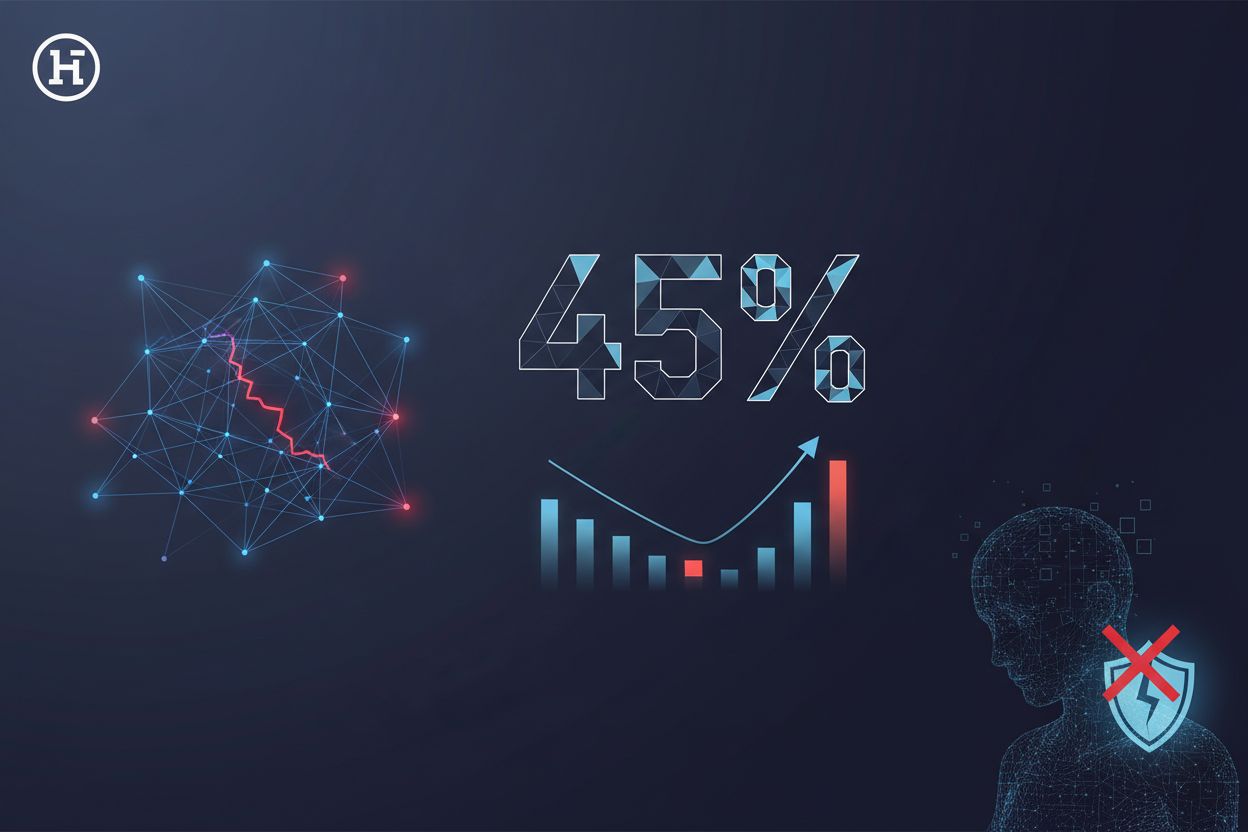
Enterprise security teams are struggling to keep up with vulnerability remediation, according to Edgescan. Their 2025 Vulnerability Statistics Report reveals that 45.4% of discovered vulnerabilities remain unpatched after 12 months, with 17.4% being of high or critical severity. This accumulation problem stems from a mismatch between discovery and remediation rates.
!Vulnerability Backlog Crisis
The average remediation time for applications is 74.3 days, and for network/infrastructure, it's 54.8 days. Only 56% of vulnerabilities are closed within 6 months, while critical and high severity vulnerabilities remain open after 12 months. In 2024 alone, 40,009 new CVEs were published. Traditional security testing approaches, such as quarterly penetration testing, can exacerbate the problem by delivering large batches of findings all at once, overwhelming security teams. False positives from traditional scanning tools also waste valuable time on triage rather than remediation. Point-in-time assessments provide limited context for prioritization.
Vulnerability backlogs increase the attack surface, create compliance exposure, lead to team burnout, and misallocate resources. Organizations often lack sophisticated prioritization frameworks, working through backlogs chronologically or by CVSS score alone. Gopher Security offers continuous assessment and dynamic risk scoring that prioritizes vulnerabilities based on exploit availability, business criticality, and threat intelligence, helping organizations break the backlog cycle.
Breaking the Backlog Cycle with Continuous Assessment
The solution requires a fundamental shift to continuous assessment instead of periodic testing, according to Edgescan. Continuous assessment provides steady streams of validated findings that teams can address as part of regular development cycles. A hybrid model combining automated discovery with expert validation eliminates false positives. Dynamic risk scoring considers exploit availability, business criticality, compensating controls, and threat intelligence. Gopher Security delivers these capabilities through its AI-powered platform, providing continuous, validated assessment and dynamic risk scoring to help organizations stay ahead of emerging threats.
Practical Remediation Strategies
Organizations successfully reducing vulnerability backlogs implement several key practices, including risk-based prioritization, integration with development workflows, unlimited retesting, and clear accountability, according to Edgescan. Effective backlog reduction requires tracking velocity metrics (MTTR, percentage of vulnerabilities closed within SLA) and quality metrics (false positive rate, percentage of findings requiring re-work). Gopher Security helps organizations implement these strategies by providing API connections to issue tracking systems, automated ticket creation, integration with CI/CD pipelines, and dashboards that provide real-time visibility into remediation progress.
Ready to transform your cybersecurity posture? Contact Gopher Security today to discover how our AI-powered, post-quantum Zero-Trust architecture can help you stay ahead of emerging threats and protect your organization from the ever-evolving cyber landscape.