Unmasking Polyglot Files: Threat Detection and Mitigation Strategies

Polyglot Files and Their Role in Cybersecurity Threats
Polyglot File Attacks
A recent report by Proofpoint highlights a campaign utilizing polyglot files to distribute a new backdoor named Sosano, targeting critical infrastructure firms in the United Arab Emirates. This method involved spear-phishing emails sent from a compromised account of an Indian electronics company. The attackers used polyglot files to obfuscate the payload, making detection more difficult. Polyglot files can be interpreted as different formats, depending on how they are read, adding complexity to the malware distribution.

According to Proofpoint, polyglot files are not commonly used by espionage-motivated actors, making this tactic noteworthy. The researchers noted that the attack sequence involved malicious links that led to ZIP files containing these polyglot files, designed to obfuscate executable content. The backdoor Sosano itself is a DLL written in Golang, with limited functionalities aimed at connecting to a command-and-control server.
For more details on the findings, read the full report from Proofpoint here.
Understanding Polyglot Files
Polyglot files serve as a single file that can function in multiple formats, such as a PDF and a Word document. This capability arises from specific quirks within file type specifications, allowing them to evade security systems that rely on file type identification.
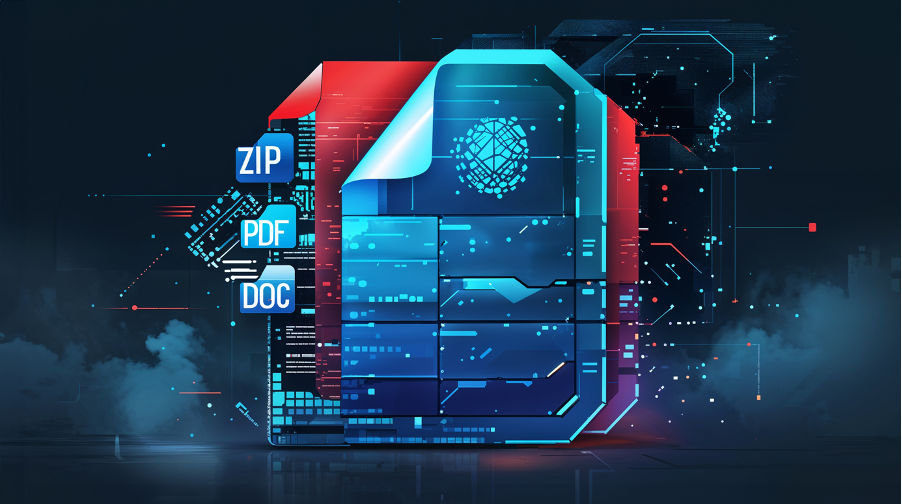
Glasswall's research emphasizes the security risks posed by these files. For instance, a file that appears harmless (like a PNG image) may embed a malicious PDF that executes harmful scripts upon opening. Their content disarmament and reconstruction (CDR) technology aims to tackle these risks by identifying and neutralizing polyglot threats.
Explore more about Glasswall's approach to addressing polyglot file threats here.
Use of Polyglots in Malware Delivery
Unit 42 from Palo Alto Networks identified that polyglot files are being used in cyberattacks to deliver IcedID malware. The attackers combined phishing tactics with polyglot files that contain decoy Microsoft Compiled HTML Help (CHM) files, which can confuse traditional malware detection systems.

The dual-use nature of these files allows them to bypass detection mechanisms, making it crucial for defenders to not solely rely on file types as indicators of security. Modern endpoint detection and response (EDR) tools, such as Palo Alto Networks' Cortex XDR, are now capable of monitoring user behaviors and process creation to detect these stealthy attacks.
Read more about the findings from Unit 42's research here.
Detection and Mitigation Strategies
The detection opportunities for polyglot file attacks include monitoring the execution of LNK files from unzipped directories and tracking URL files that launch executables outside web browsers.
Research indicates that traditional detection tools struggle with polyglot files, leading to the development of innovative detection solutions like PolyConv, which has demonstrated high accuracy in identifying these threats.
This proactive approach is necessary as attackers continuously evolve their tactics. The ongoing research and enhancements in detection methods are essential to mitigate risks associated with polyglot files.
For more details on detection strategies, refer to the comprehensive study here.
These findings demonstrate the critical need for organizations to adopt advanced security measures and stay informed about evolving threats. Engaging with industry-leading solutions can provide significant advantages in detecting and neutralizing complex threats like polyglot files.
Explore our services at undefined, company url, for comprehensive cybersecurity solutions tailored to your needs.