Quantum-Resistant Identity and Access Management for MCP Hosts

TL;DR
- This article explores the critical shift toward quantum-resistant identity frameworks for Model Context Protocol hosts. We cover the integration of lattice-based signatures and PQuAKE protocols to secure agent-to-tool communications against harvest-now-decrypt-later threats. You will learn how to implement context-aware access controls that maintain security even if traditional asymmetric encryption fails in the post-quantum era.
The Shattering of AI Identity Foundations
Ever feel like we’re building a glass house while someone is outside testing a new sledgehammer? That’s basically where we’re at with ai identity and quantum computing right now. honestly, the way we prove an ai agent is "who" it says it is—mostly using RSA and ECC—is essentially making us sitting ducks for future attacks.
The big problem here is the Model Context Protocol (MCP). If you haven't heard of it, MCP is the new standard for connecting ai agents to tools and data sources. It’s like the "usb port" for ai, but if that port isn't secure, the whole system is wide open.
The foundations of our digital world are built on math problems that quantum machines can solve in minutes. RSA relies on factoring large integers, and ECC uses discrete logarithms. (Asymmetric Cryptography: RSA, ECC & PKI Explained | CISSP Guide) but as Gopher Security points out, Shor’s algorithm is a total killer because it makes these "hard" problems trivial for a quantum computer.
- Shor’s algorithm ends the party: Unlike classical computers, quantum ones use this process to crack the asymmetric encryption we use for every mcp host today.
- Vulnerable tokens: Current ai tokens like jwt rely on digital signatures. if a quantum computer can forge these, an attacker can impersonate any trusted service or agent.
- Static secret risks: In agentic workflows, we often use long-lived api keys. if these are harvested now, they’ll be cracked the second a quantum machine is ready.

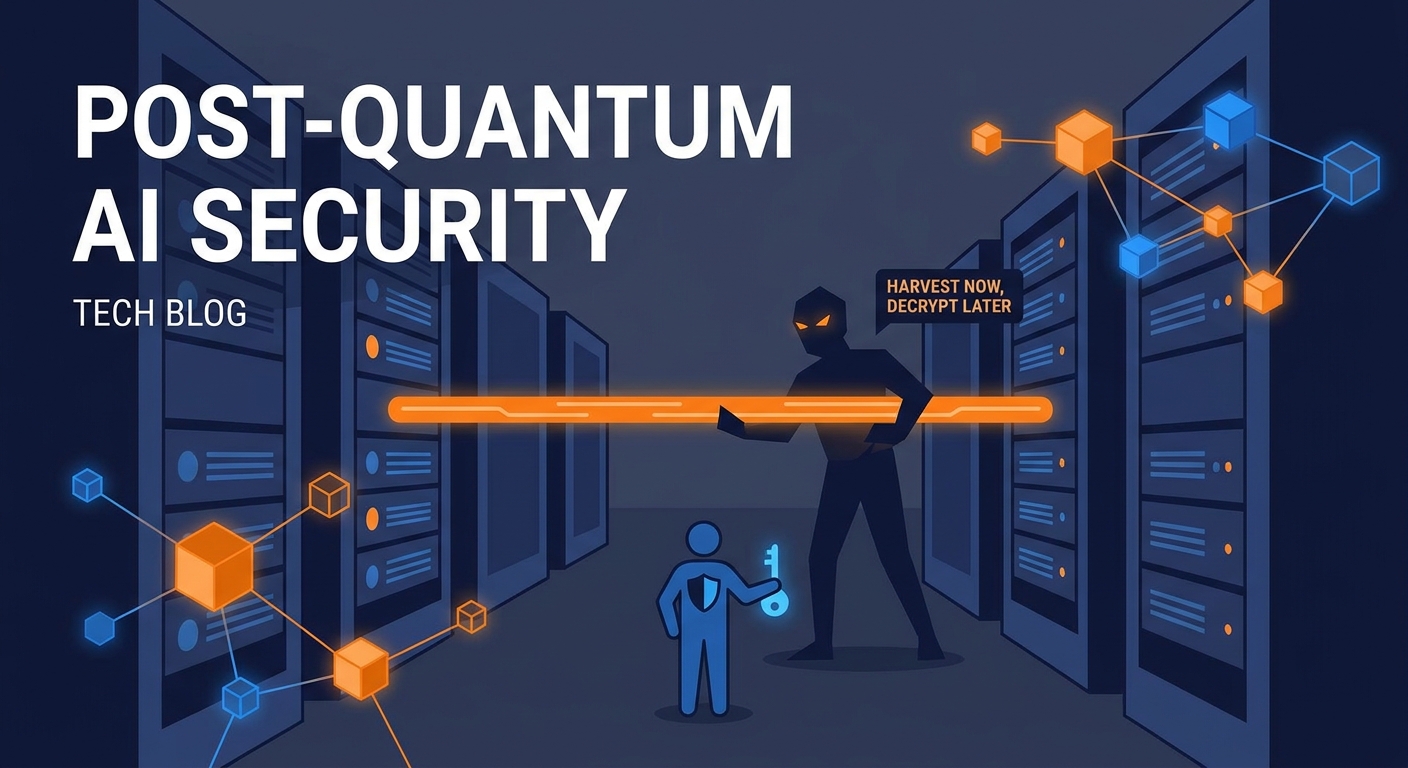
You might think quantum is years away, but the "Harvest Now, Decrypt Later" (HNDL) risk is happening right this second. Adversaries are siphoning mcp traffic from healthcare and finance ai systems, just waiting for the tech to catch up so they can crack it open later. (New attack vector: MCP "tool poisoning" - anyone thinking ...)
According to Post-Quantum Cryptography, doubling aes keys to 256 is just a band-aid; it provides some resistance but isn't a "quantum-proof" fix for the identity layer.
If an ai agent in a banking app has an api key that doesn’t rotate, and that key gets "harvested," the whole backend is at risk. we’re basically leaving the keys in the ignition.
Next, we’ll look at how we actually start fighting back with better crypto.
Building the Post-Quantum MCP Host
So, you've realized your current security is basically a paper lock in a world of quantum bolt cutters. honestly, building a post-quantum mcp host isn't just about swapping one math problem for another—it’s about changing how your ai agents talk to tools before the "harvest now, decrypt later" crowd wins.
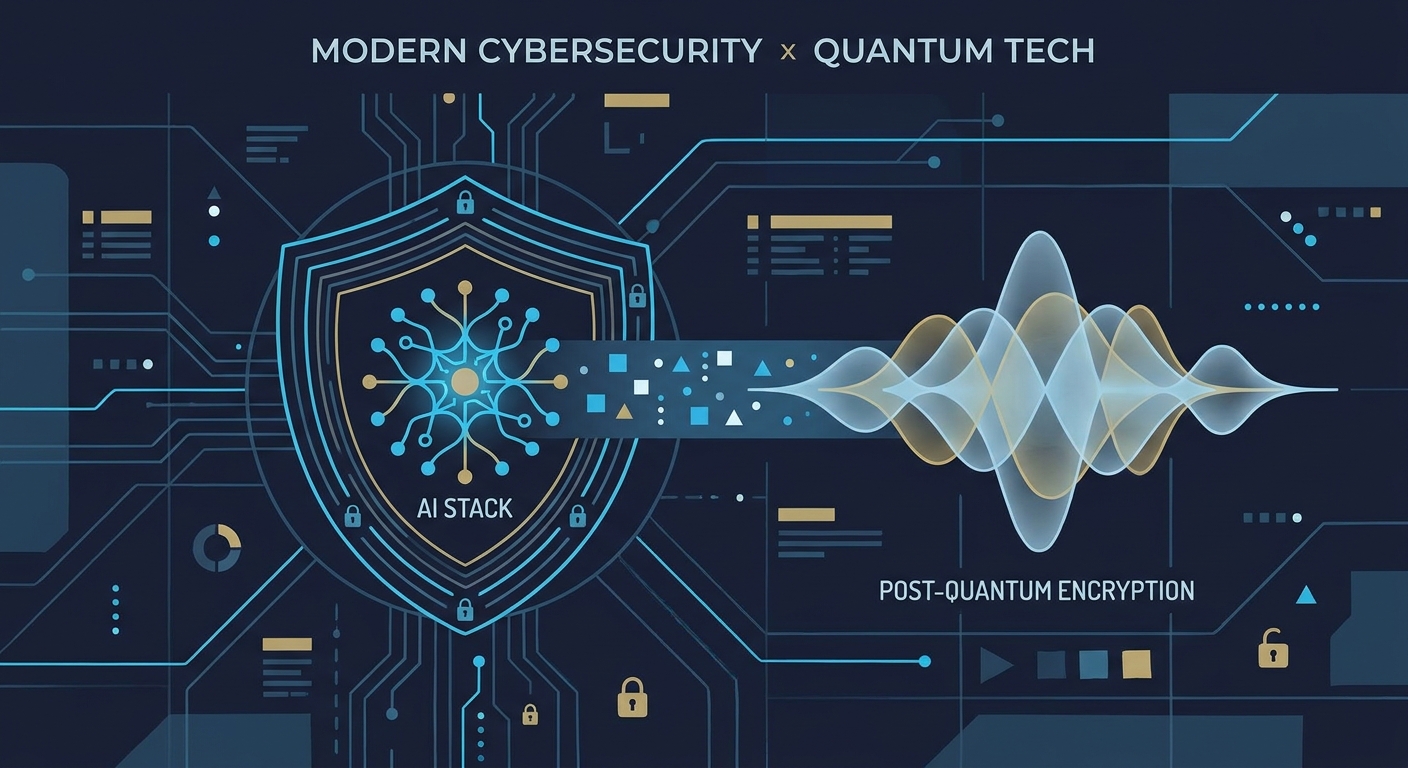
When an ai agent needs to pull data from a sensitive database, the transport layer needs to be rock solid. we're seeing a big shift toward lattice-based stuff because it’s the most mature way to fight off shor’s algorithm. Implementing CRYSTALS-Kyber for your mcp tunneling is basically the gold standard right now for key encapsulation.
But it’s not just about the tunnel; it's about the permission. You should be using CRYSTALS-Dilithium to sign every single tool execution request. This makes sure that some rogue process hasn't hijacked your agent’s identity to start dumping healthcare records or something equally messy.
- Quantum-resistant signatures: Dilithium ensures that even if an attacker sniffs your traffic today, they can’t forge the agent’s "id" five years from now.
- Hybrid models: You don't have to go 100% quantum overnight. Most smart deployments "double-bag" by wrapping existing ecc with a pqc layer.
- Crypto-agility: Use sidecar proxies so you can swap algorithms without rewriting your whole ai app every time nist updates a standard.

One thing that trips people up is the overhead. If you're running ai agents on edge devices—like smart grid sensors—you can't afford heavy crypto that drains the battery in ten minutes. That's why the PQuAKE (Post-Quantum Authenticated Key Exchange) protocol is such a big deal for mcp.
Standard PQC handshakes can be huge and slow, but PQuAKE solves the mcp overhead issue by reducing the number of round-trips and keeping packet sizes small. It makes the whole thing way more efficient for low-power devices.
According to the PQuAKE IETF draft, this protocol is designed to be lightweight, minimizing communication bits while providing forward secrecy for agent-to-tool logs.
The handshake usually follows four steps: establishing a confidential link, exchanging certificates, encapsulating shared secrets, and finally confirming the keys. It’s snappy but secure.
Honestly, if you aren't building with this kind of agility now, you're just setting yourself up for a massive "y2k" style panic later. Next, we're going to look at how to manage these identities without losing your mind.
Context-Aware Access Management in the 4D Space
Ever feel like giving an ai agent "admin" rights is basically just asking for a disaster to happen? It’s like handing your house keys to a robot that might accidentally let a burglar in because it didn't recognize the "vibe" was off.
This is where the 4D Space comes in. It sounds fancy, but it just means looking at four specific dimensions of security: Identity (who is it?), Context (where are they?), Device Posture (is the hardware safe?), and Time/Behavior (is this normal?).
Honestly, the old way of doing things—where an agent has a set role forever—is dead. We gotta look at the whole context of a request. If a quantum computer eventually breaks our encryption, these behavioral signals act as a secondary defense layer. Even if the "key" looks valid, the behavior might be totally wrong.
- checking device posture: Before an mcp tool executes, we should check environmental signals like location or device integrity.
- dynamic permission adjustment: If an agent in a retail app suddenly tries to pull 10,000 shipping manifests when it usually pulls ten, that's a massive red flag and we should kill the access instantly.
- stopping puppet attacks: We need real-time detection to make sure a human hasn't been replaced by a malicious process that's just "wearing" a stolen id.

Instead of "Standing Privileges," we need Zero Standing Privileges (ZSP). The agent gets the key only for the second it needs it, then the key vanishes into thin air. Honestly, if the secret doesn't exist when it's not being used, there is nothing for a quantum computer to harvest.
- ephemeral keys: These are one-time use tokens that vanish after the tool call is done.
- preventing credential stuffing: By using MojoAuth style passwordless flows, we remove the "static" target for hackers to hit.
- Harvest prevention: A recent survey in AIMS Mathematics suggests that behavioral signals are becoming the primary way to stop "harvest now" attacks from turning into full breaches.
I’ve seen folks get lazy and leave api keys in their code for months. In a post-quantum world, that's basically a suicide note for your infrastructure.
Next, we’re gonna look at how to actually implement a full zero trust architecture without losing your mind.
Implementing a Quantum-Safe Architecture
So, you’ve got your post-quantum math figured out, but how do you actually drop it into a messy, real-world mcp setup without breaking everything? Honestly, it’s one thing to talk about lattices and another to actually migrate a live fleet of ai agents while the "harvest now, decrypt later" crowd is watching.
The biggest mistake I see is people hardcoding specific algorithms directly into their ai apps. If you bake crystals-kyber right into your core logic and a better standard comes out next year, you're looking at a total rewrite. You need a layer of "crypto-agility" so you can swap parts like a lego set.
- Using sidecar proxies: Instead of making the mcp host handle the heavy lifting, offload the encryption to a sidecar (like a specialized envoy instance).
- The abstraction layer: Your ai code should just ask for a "secure tunnel," and the proxy decides if it's using old-school ecc or the new nist-approved pqc.
- Timeline alignment: According to recent status reports on nist standards, we’re looking at a 2030 deadline for most systems, but if you're in finance or healthcare, you probably want this running by Tuesday.
If your mcp host is running on an edge device—like a smart sensor in a retail warehouse—software security isn't enough. Someone could just walk up and steal the physical chip. This is where Physical Unclonable Functions (PUF) save your skin. A PUF uses tiny, microscopic variations in the silicon to create a "digital fingerprint" that isn't even stored in memory, so there’s nothing for a hacker to "dump."
- Silicon-level id: Because the key is generated from the hardware's physical properties, it can't be cloned by quantum math or classical hacking.
- Hybrid wrapping: Most smart setups "double-bag" their security by wrapping a standard ecc layer inside a pqc tunnel. This gives you the best of both worlds while we transition.
- Hardware-backed auth: As discussed in recent reports from AIMS Mathematics, using pufs for device identity means even a quantum computer can't "clone" the hardware profile.

I recently saw a team try to roll their own pqc library for a fleet of drones. It was a disaster—latency went through the roof and batteries died in twenty minutes. Don't do that. Use established providers like Gopher Security to handle the orchestration so your devs can focus on the actual ai logic.
Honestly, if you aren't building with the assumption that your "secure" keys will be public knowledge in five years, you're already behind.
Conclusion: Staying Ahead of the Quantum Curve
So, we’ve basically seen that the quantum "sledgehammer" is real and it’s already swinging at our ai infrastructure. Honestly, if you’re still relying on the same old rsa keys for your mcp hosts, you’re just leaving a "kick me" sign on your backend for future hackers.
Moving to a post-quantum world isn't just about the math, it's about a total shift in how we handle trust. We gotta stop thinking about identity as a static thing and start seeing it as a moving target that needs constant checking.
Here is the deal for staying ahead of the curve:
- continuous monitoring for anomalies: Even if a "key" looks legit, if an ai agent starts behaving like a rogue script—pulling way too much data or hitting weird apis—you gotta kill that session. Behavioral signals are your best backup when the encryption fails.
- compliance is coming: You might think you have time, but auditors for soc 2 and hipaa are already looking at nist standards. Recent reports suggest that hardware-backed stuff like puf is becoming the gold standard for proving device integrity in retail and healthcare.
- rotate or die: Seriously, stop using long-lived api keys. Moving toward passwordless and ephemeral secrets means there is nothing left for a quantum computer to "harvest" later.

Honestly, I've seen teams wait until the last second to update their crypto and it always ends in a mess of downtime and panic. Don't be that person. Start "double-bagging" your security with a pqc layer today so your ai agents can actually stay secure tomorrow. It's a bit of a headache now, but it beats a total infrastructure collapse later.