2026 Cybersecurity Trends: Dominance of Vulnerability Exploits


TL;DR
- This article examines the shift in cyber intrusion tactics where vulnerability exploits have overtaken phishing as the primary access method. It covers the shrinking window between software disclosure and weaponization, the increasing targeting of edge devices, and the rise of automated AI-driven threats. Readers will gain insights into why traditional patching is failing and how a post-quantum Zero-Trust architecture can block exploit paths.
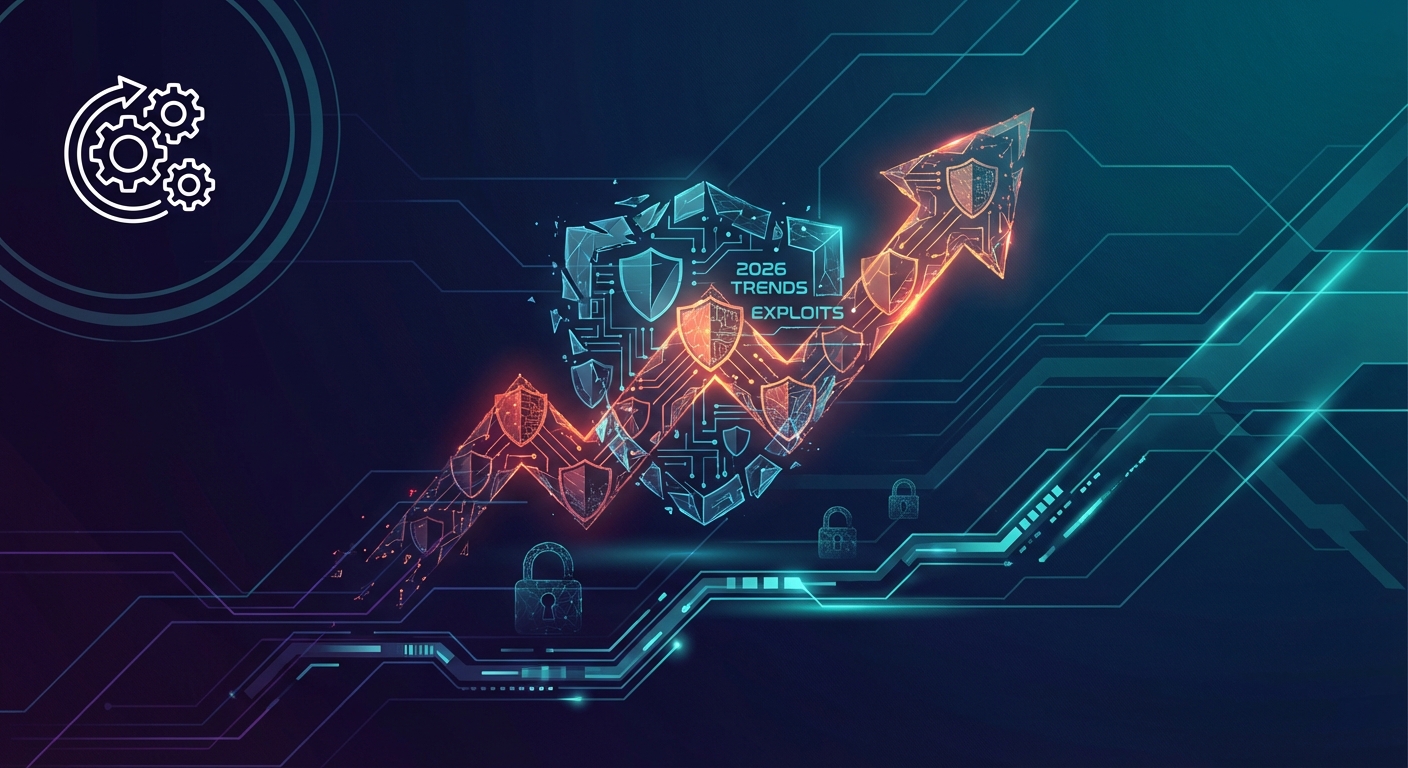
Vulnerability exploits have overtaken phishing as the primary method for initial access. Cisco Talos reports that nearly 40 percent of all intrusions in Q4 2025 were due to exploited flaws. This marks the second consecutive quarter where exploits led the charge, following a Q3 rate of 62 percent driven by ToolShell attacks. Attackers are moving with unprecedented speed, often weaponizing vulnerabilities like Oracle EBS and React2Shell within hours of public disclosure.
Collapsing Exploit Timelines and Patching Delays
The window between disclosure and exploitation is shrinking toward "Day 0." In the first half of 2025, 32.1% of exploited CVEs showed activity on or before the day they were disclosed. While attackers automate their processes, a BitSight analysis indicates that many organizations still take months to apply critical fixes. This creates a structural gap that traditional patch management cannot bridge alone. For instance, a functional proof-of-concept for React2Shell was available online within just 30 hours of its release.

Targeting Edge Devices and Identity Control Planes
Attackers have shifted focus toward edge devices and public-facing applications. Approximately 73% of actively exploited vulnerabilities map to Exploit Public-Facing Application (T1190). Compromising VPNs and central management systems allows for lateral movement and the bypass of Multi-Factor Authentication (MFA). Recent events highlight this risk, such as the Ivanti zero-day attacks and critical SolarWinds RCE flaws.

Evolving Ransomware and AI Threats
Ransomware incidents dropped to 13 percent of cases in late 2025, down from 50 percent earlier in the year. This shift suggests a consolidation of criminal groups rather than a decrease in overall threat. Simultaneously, the use of AI in cybercrime is rising. While 80% of ethical hackers use AI, attackers are employing it to create sophisticated phishing lures and automate exploit development. Organizations are also seeing massive scale attacks, such as the Aisuru Botnet's 31.4 Tbps DDoS and the exposure of 175,000 Ollama AI servers.

Critical Infrastructure and Global Breaches
State-sponsored activity remains a top concern, with the Polish power grid being targeted by Russian-linked groups. Large-scale data breaches also continue to impact the private sector, notably the Match Group breach affecting platforms like Tinder and Hinge. Third-party risks are further highlighted by the eScan update server breach used to push malicious code and the exploitation of WinRAR path traversal flaws.

Advanced Zero-Trust Architecture for Modern Threats
Traditional perimeter defenses are no longer sufficient against "Day 0" exploits and identity-based attacks. To combat these evolving threats, Gopher Security provides an AI-powered, post-quantum Zero-Trust architecture. This platform converges networking and security across all environments—including cloud, remote access, and containers—using peer-to-peer encrypted tunnels and quantum-resistant cryptography. By enforcing runtime constraints and securing the management plane, Gopher Security ensures that even if a vulnerability exists, the exploit path is blocked before it can cause destructive impact.
To learn how to protect your organization from rapid exploit cycles and secure your control planes, visit Gopher Security.