Cloud and Zero Trust Architecture Adoption Accelerate Modernization of Industrial Control Systems Security

TL;DR
- Zero Trust replaces outdated perimeter-based security in industrial environments.
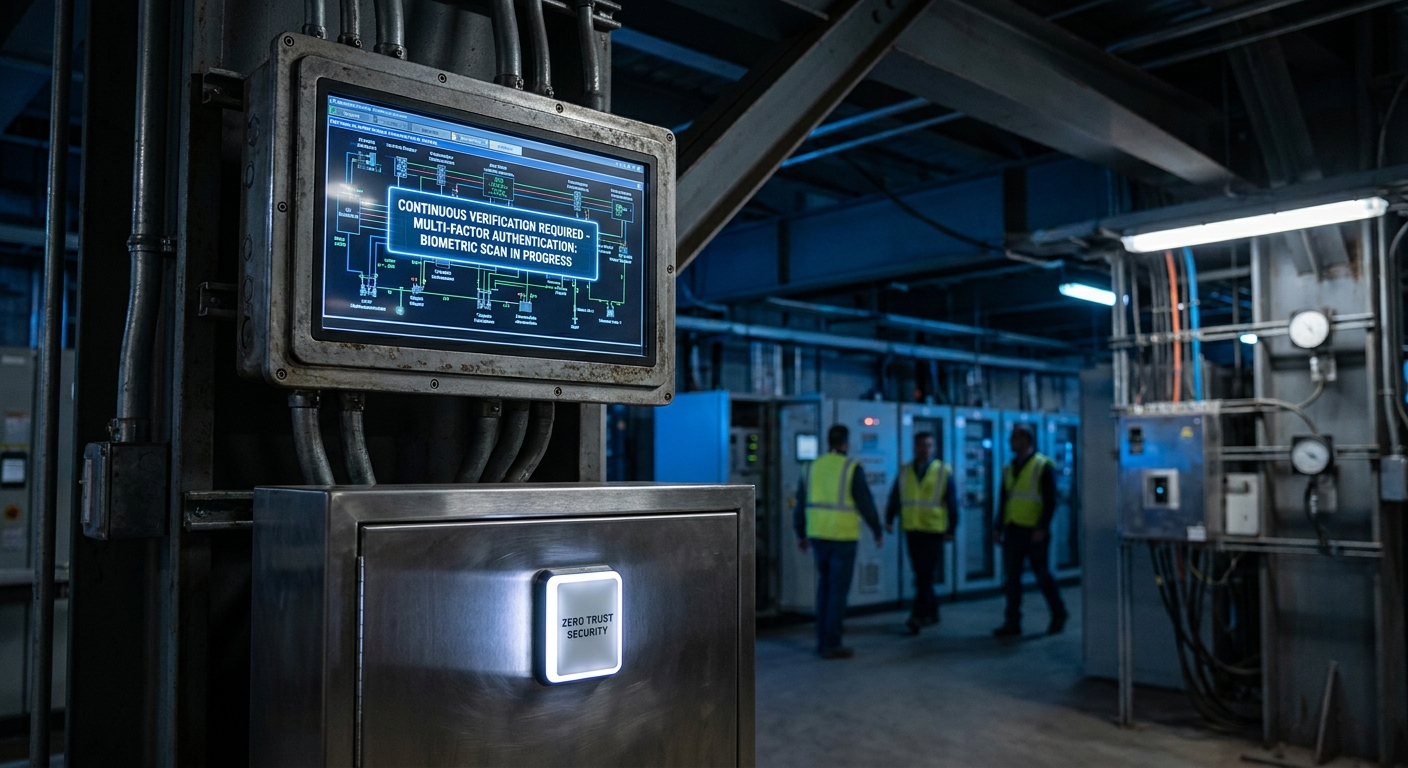
- Continuous verification is now essential for legacy OT and ICS hardware.
- Aligning DoD cloud requirements with FedRAMP speeds up secure modernization.
- Granular access control and MFA are critical for protecting industrial networks.
The way we protect Industrial Control Systems (ICS) and Operational Technology (OT) is undergoing a radical, long-overdue makeover. For years, the industry relied on the "castle-and-moat" mentality—build a strong perimeter, and assume everything inside is safe. That era is dead. As IT and OT environments bleed into one another, that old-school perimeter is no longer just porous; it’s a liability.
Enter Zero Trust Architecture (ZTA). It’s not just a buzzword; it’s a fundamental shift toward a model of continuous, relentless verification. If you’re a user, a device, or a data packet, you don’t get a free pass just because you’re "inside." You have to prove your identity, every single time.
The Death of Implicit Trust
The core philosophy of Zero Trust, as highlighted in recent analysis by Industrial Cyber, is simple: stop assuming anything is inherently secure. In the messy, high-stakes world of industrial operations, this is easier said than done. You’re dealing with legacy hardware that wasn’t built for the modern internet, specialized protocols that don’t play nice with standard security tools, and a desperate need to keep the lights on without interruption.
Implementing ZTA here isn't a "plug-and-play" situation. It’s a surgical operation. You need to map out your network identity, check the pulse of every endpoint, and understand exactly how data flows through your operational processes. The goal is to strip away the unchecked movement that defined older networks. In a Zero Trust world, every transaction is scrutinized against real-time security policies. If it doesn’t fit the rules, it doesn’t happen.
Federal Policy: Cutting the Red Tape
If we want to get serious about this, we have to fix the bureaucracy. Right now, government agencies are struggling with a fragmented approach to cloud authorization. The Information Technology Industry Council (ITIC) has been pushing the Department of Defense (DoD) to stop reinventing the wheel and align its internal Cloud Computing Security Requirements Guide (CC SRG) with the FedRAMP program.
Currently, the DoD runs its own distinct authorization scheme. It’s a friction point that slows down the integration of commercial cloud solutions into national security systems. By leaning into the FedRAMP Authorization Act, the DoD could stop duplicating effort and start building real efficiency. Aligning these frameworks would be a game-changer for several reasons:
- Access Control: Moving toward a universal standard ensures that "least-privilege" isn’t just a suggestion, but a hard-coded reality.
- Multifactor Authentication (MFA): We need uniform, high-assurance gates across every cloud-integrated system. No more weak links.
- Configuration Management: By using shared, pre-assessed cloud environments, we can stop wasting time on secure baselines and start focusing on actual defense.
As the ITIC points out, this isn't just about saving time on paperwork—it’s about creating a hardened, resilient posture for the entire defense infrastructure.
A Playbook for Operational Technology
The transition to Zero Trust in OT is getting a much-needed boost from federal guidance. CISA has stepped up with joint guidance specifically for industrial settings, acknowledging that you can’t just drop IT-security tools onto a factory floor and expect them to work.
The National Security Agency (NSA) has also rolled out its Zero Trust Implementation Guidelines (ZIGs), which provide a phased, realistic roadmap for organizations that don't know where to start.
| Phase | Objective | Focus Area |
|---|---|---|
| Primer | Strategy Definition | Setting goals and getting the team on the same page. |
| Discovery | Asset Visibility | Mapping data flows and identifying what actually matters. |
| Execution | Capability Deployment | Deploying access controls and turning on the monitoring. |
The NSA’s "Discovery Phase" is the most critical piece for industrial operators. You can’t protect what you can’t see. If you start enforcing restrictive security policies before you actually understand your network’s data flows, you’re going to break something—and in an industrial environment, that’s not an option. You have to map the terrain before you build the fence.
The Big Picture
This shift is part of a broader federal strategy to drag our critical infrastructure into the 21st century. Between the looming threat of quantum computing and the reality of sophisticated state-sponsored cyberattacks, the government is finally realizing that "good enough" security is a recipe for disaster.
The drivers of this transition are clear:
- IT-OT Convergence: The wall between the office network and the factory floor has crumbled; we need to secure the rubble.
- Identity-Centric Security: It doesn’t matter where you are; it matters who you are and what you’re authorized to do.
- Continuous Monitoring: Periodic audits are a relic of the past. We need real-time health checks on every device, every second of the day.
- Standardization: We need to close the gap between commercial cloud standards and government-specific requirements to move at the speed of the threat.
Modernizing isn't just a technical upgrade; it’s a cultural one. It’s about moving away from the comfort of the "castle" and accepting that the only way to survive is to trust nothing and verify everything. As these frameworks mature, the reliance on outdated perimeter defenses will continue to fade. In its place, we’re building a dynamic, identity-aware model that can actually scale. It’s a heavy lift, but for the sake of our critical infrastructure, it’s the only path forward.