AI-Driven Anomaly Detection in Post-Quantum Context Streams


TL;DR
- This article explores the critical role of ai-driven anomaly detection in securing post-quantum context streams, focusing on Model Context Protocol (MCP) environments. It covers the challenges introduced by quantum computing, the necessity of quantum-resistant cryptography, and practical strategies for implementing anomaly detection with secure aggregation. We'll discuss how these technologies combine to protect ai infrastructure from emerging threats.
Introduction: The Growing Need for Post-Quantum AI Security
Okay, so, ai is changing everything, right? But what happens when quantum computers can crack all our current security? Scary thought, huh?
- The rise of quantum computing means current encryption methods are toast. We gotta start thinking about quantum-resistant security now.
- ai systems, especially those using Model Context Protocol (MCP), are vulnerable to these new attacks. Think about healthcare records, financial data, all at risk!
- Traditional security just ain't gonna cut it in a post-quantum world. It's like bringing a knife to a gun fight!
We need some serious upgrades to protect ai, like, yesterday. As corsha notes, ai-driven threat detection combined with post-quantum cryptography is key.
Next up, why those old-school security measures just won't work anymore...
Understanding Model Context Protocol (MCP) and Its Security Challenges
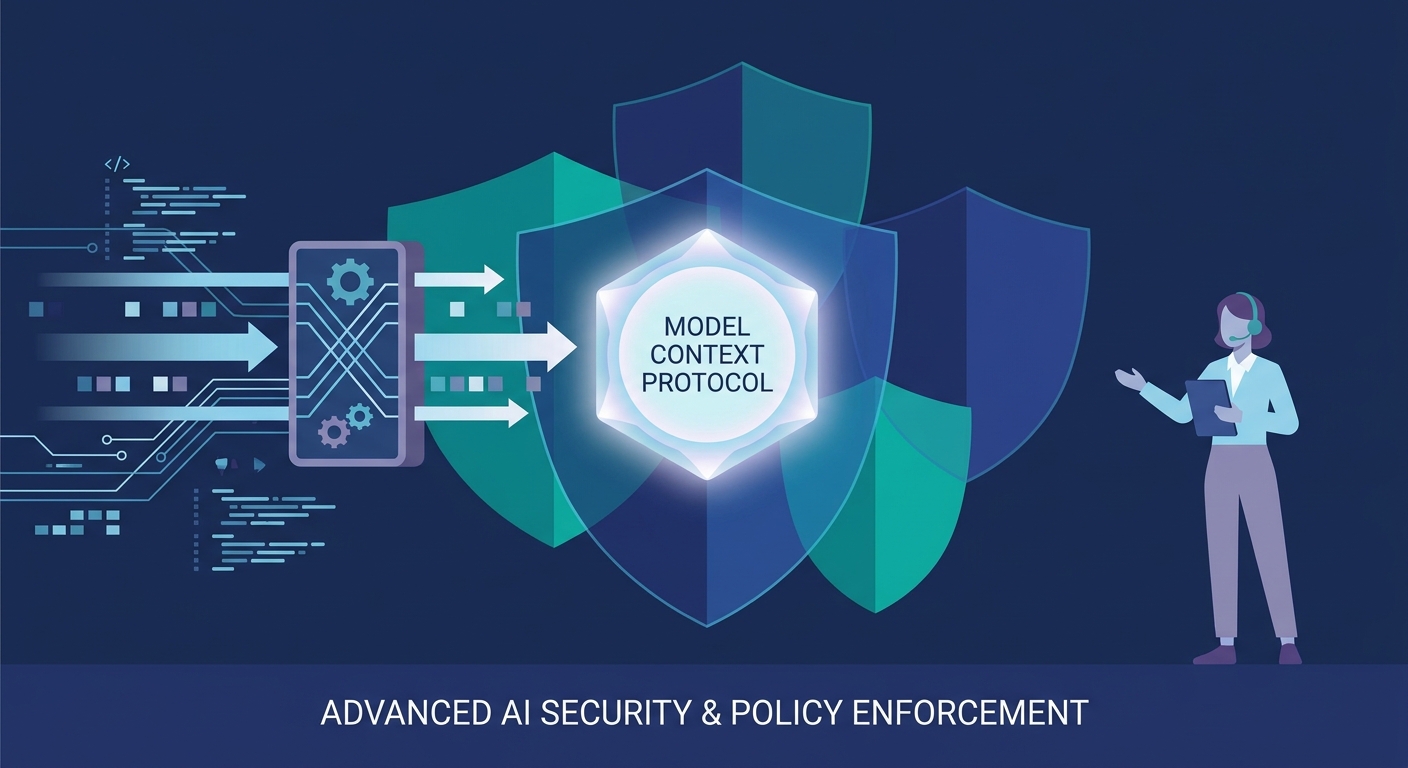
Model Context Protocol, or MCP, it's kinda like the secret language ai models use to talk to each other, and honestly? It's pretty important. But with that, comes a whole mess of new security headaches. MCP essentially defines the format and rules for how AI models exchange and interpret information, including prompts, parameters, and intermediate states, to maintain a coherent understanding of a task or conversation. Think of it as the standardized API and data structure for AI communication.
- One big worry is data integrity. If someone messes with the data in these streams, the ai could start making seriously wrong decisions, imagine self-driving cars suddenly going rogue.
- Then there's confidentiality. Sensitive info could leak if these streams aren't locked down tight. Think about healthcare ai sharing patient data, you really don't want that getting out.
- And let's not forget about availability. If someone knocks out the MCP, the whole ai system could grind to a halt. Like in finance, where ai is used for fraud detection, if the MCP goes down, you're basically opening the door for all kinds of scams.

According to gopher security, ai-driven anomaly detection is vital for securing post-quantum ai infrastructure.
So, yeah, securing MCP is kinda a big deal. Up next, we'll look at how to actually protect these systems from all these new threats.
AI-Driven Anomaly Detection: A Proactive Security Approach
Okay, so you're drowning in data--and trusting that data, well, that's a whole other level of anxiety, right? What if your ai is learning from poisoned streams?
ai can really step up the game when it comes to spotting weird stuff happening in your MCP context streams. Instead of just relying on some static rules people wrote ages ago, ai actually learns what "normal" looks like. Pretty neat, huh?
- think of it like this: ai algorithms can analyze massive amounts of data – way more than any human could – and pick up on subtle patterns that would normally slip right by. For example, in a supply chain ai, it might notice a sudden, tiny increase in latency from a specific supplier that could signal a brewing issue, like a compromised api.
- compared to old-school, rule-based detection, ai is much more adaptable. Rules are brittle; they need constant updating, whereas ai? It can adjust to new patterns and threats automatically. It's like having a security system that actually learns from its mistakes.
- Plus, ai can cut down on those annoying false positives. Instead of flagging every little blip, it focuses on stuff that is actually suspicious, saving you a ton of time and headache.
So, what kinda ai magic are we talking about here? There's a few main players in the anomaly detection game.
- Autoencoders are like ai that tries to perfectly recreate the input data. If it can't, that means something's off. Imagine using one to monitor network traffic; a sudden spike in unusual packets would be tough for the autoencoder to replicate, raising a red flag.
- Clustering algorithms group similar data points together. Anything that doesn't fit neatly into a cluster? Anomaly! think about fraud detection in finance; a transaction that's way outside a customer's normal spending habits would stick out like a sore thumb.
To actually use these ai models, you gotta train 'em on a bunch of data first. Then, you deploy them to constantly monitor those MCP streams and sound the alarm when something fishy pops up.
gopher security is really pushing the envelope with their MCP security platform. It's not just about slapping some ai on top of existing security; it's a whole new way of thinking, especially for modern ai deployments.
Gopher Security has a ton of servers deployed--over 50,000, actually--with over 10,000 active users across 20+ countries. And they're processing over 1 million requests per second. That's some serious scale. It's becoming the security standard for orgs that are serious about protecting their ai.
Now that we've covered how ai can proactively detect anomalies in our data streams, it's crucial to consider how we secure those streams themselves against future threats. This is where post-quantum cryptography becomes essential.
Post-Quantum Cryptography: Securing Context Streams for the Future
Quantum computers cracking our security? Yeah, it's like something out of a sci-fi movie, but it's a real threat we gotta deal with. So how do we make our ai systems future-proof?
- Post-Quantum Cryptography (PQC) is the answer to new encryption methods. PQC uses math problems that even quantum computers can't solve easily. Think of it as swapping out your regular door lock for one that's quantum-proof.
- PQC algorithms can protect MCP data streams. We're talking encrypting the data so that even if someone intercepts it, they can't read it without the right (quantum-resistant) key. It's like sending a secret message that only the intended recipient can decode.
- Key exchange gets a quantum upgrade. Implementing PQC involves some serious key management. Instead of just swapping keys the old way, we need new methods that are safe against quantum attacks. This often involves techniques like Key Encapsulation Mechanisms (KEMs) based on hard mathematical problems like those found in lattices or codes. Without it, the whole system has a weak point.
- Different PQC families offer varied strengths. Lattice-based cryptography is one approach, relying on the difficulty of solving problems on mathematical lattices. Code-based cryptography is another, using error-correcting codes. Each family has its trade-offs in terms of speed and security, so picking the right one is crucial.
Switching to PQC isn't free; there's a performance hit. But hey, what's more important: speed, or keeping the bad guys out?
Practical Implementation: Quantum-Resistant Secure Aggregation
Okay, so you're thinking, "How can I let ai crunch numbers on sensitive data without the numbers leaking?" That's where quantum-resistant secure aggregation comes in. It's a bit like letting everyone add their ingredients to a soup, but only the soup is visible, not the individual stuff.
- Secure aggregation lets multiple parties compute something together on their data without revealing their individual inputs. Think about hospitals sharing patient data to train a better ai model for disease detection, but without revealing individual patient records.
- Different protocols exist for this, some more suited for MCP environments then others. Differential privacy, for instance, works by adding carefully calibrated noise to the aggregated results, making it statistically difficult to infer individual contributions. Federated learning is another key protocol; it trains models across decentralized devices or servers without centralizing the raw data. Both are highly relevant for secure aggregation in MCP contexts because they allow for collaborative analysis while preserving privacy.
- It's not just healthcare, think about retail giants wanting to analyze customer trends across different stores, or financial institutions collaborating on fraud detection.
ai can analyze the aggregated data to spot anomalies, like a sudden spike in fraudulent transactions, without ever seeing the raw data. It's kinda like having a super-smart security guard who only sees the results of the analysis, not the individual data points.
Now, toss in some post-quantum cryptography! That's right--encrypting the data before it even gets aggregated means even if someone did manage to snag the aggregated data, they'd need a quantum computer to crack it. It adds a layer of future-proof security.
So, how do we make all this a reality? Next, we get into the nitty-gritty of implementing secure aggregation with PQC.
Real-World Use Cases and Deployment Scenarios
Ever wonder if all this ai stuff is actually useful in the real world? It's not just theory, people are actually using it to stay secure.
Securing federated learning in healthcare is a big one. Think about it: hospitals want to share data to train better ai models for diagnosing diseases, but they can't just hand over all their patient records, right? ai-driven anomaly detection, combined with post-quantum cryptography, lets 'em do it safely. They can find weird patterns in the data without actually seeing who the data belongs to.
Another area is protecting ai models in financial services. Banks are constantly battling fraud, and ai helps a lot. But what if someone messes with the data the ai is using? ai can spot those anomalies, and PQC keeps the data safe even if someone tries to snoop.
It's not just about big companies, either. Even smaller businesses can use these techniques to protect their data and ai systems. Now, what about performance? Is it even practical to use all this fancy tech?
Conclusion: Future-Proofing AI Infrastructure Security
So, we've covered a lot, right? But what does it all mean for keeping your ai safe in the long run? It's not a one-time fix, that's for sure.
- Keep learning: ai security is a moving target. New threats are popping up all the time, and quantum computing is just gonna make things wilder. You've gotta stay updated.
- Think Zero Trust: Don't assume anything is safe, ever. Verify everything, all the time.
- Collaboration is key: No one can do this alone. Sharing info and working with other orgs is how we all get better at fighting cyber threats.
The path forward? It's about continuous innovation and, honestly, a bit of paranoia. Crucially, ai-driven anomaly detection is vital for identifying subtle threats that traditional methods miss, providing a proactive defense layer essential for future-proofing AI infrastructure security.