AI Security Frameworks: How to Build Quantum-Resistant Infrastructure

TL;DR
- ✓ Immediate SNDL attacks threaten current AI infrastructure through future decryption risks.
- ✓ Standard TLS protocols fail to protect against emerging quantum computing capabilities.
- ✓ Migrate to post-quantum cryptography to ensure regulatory compliance and data longevity.
- ✓ Secure your Model Context Protocol deployments against high-frequency agentic data interception.
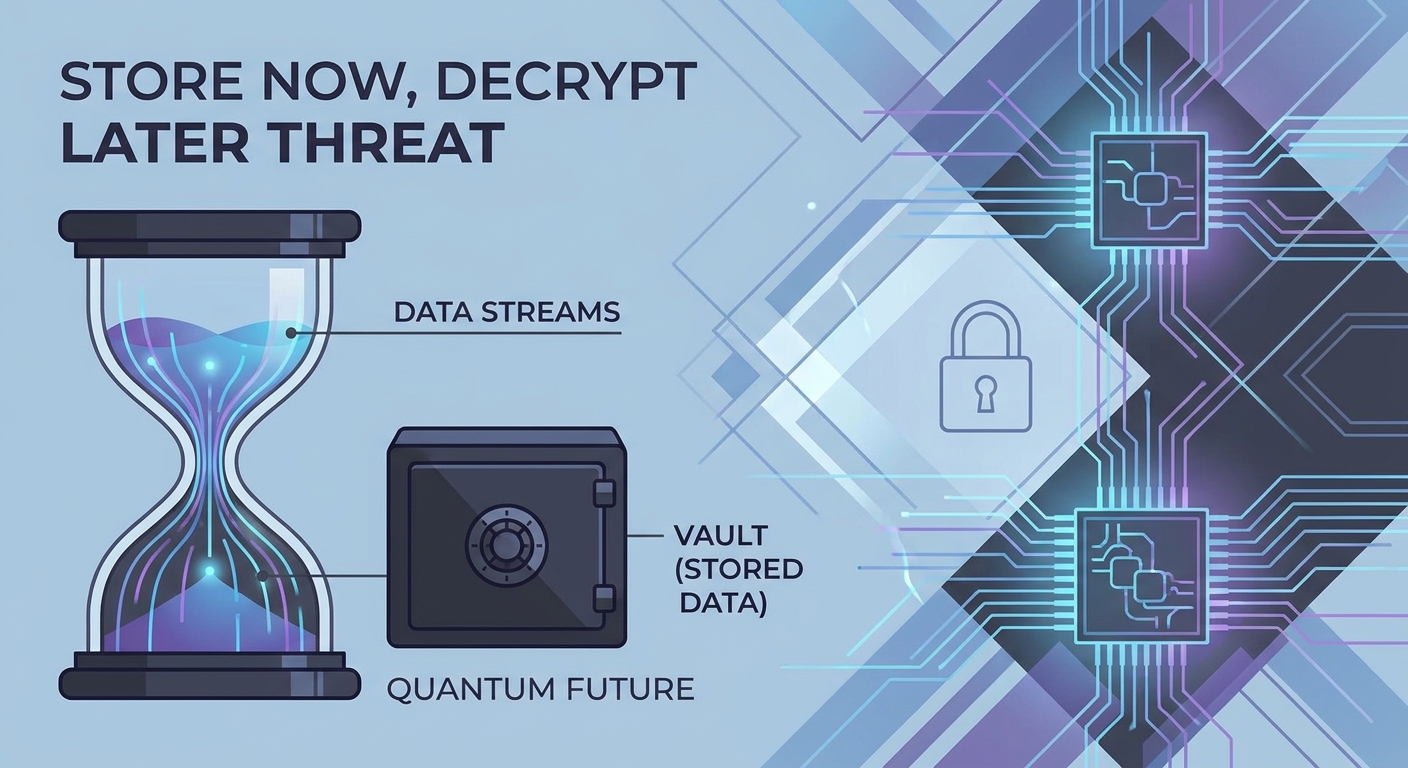
The quantum threat isn't some sci-fi nightmare reserved for a future decade. It’s an immediate, gut-punch reality for every architect building in the AI space today. If your stack relies on LLM-to-tool connections, you’re likely already bleeding data to adversaries running "Store Now, Decrypt Later" (SNDL) campaigns.
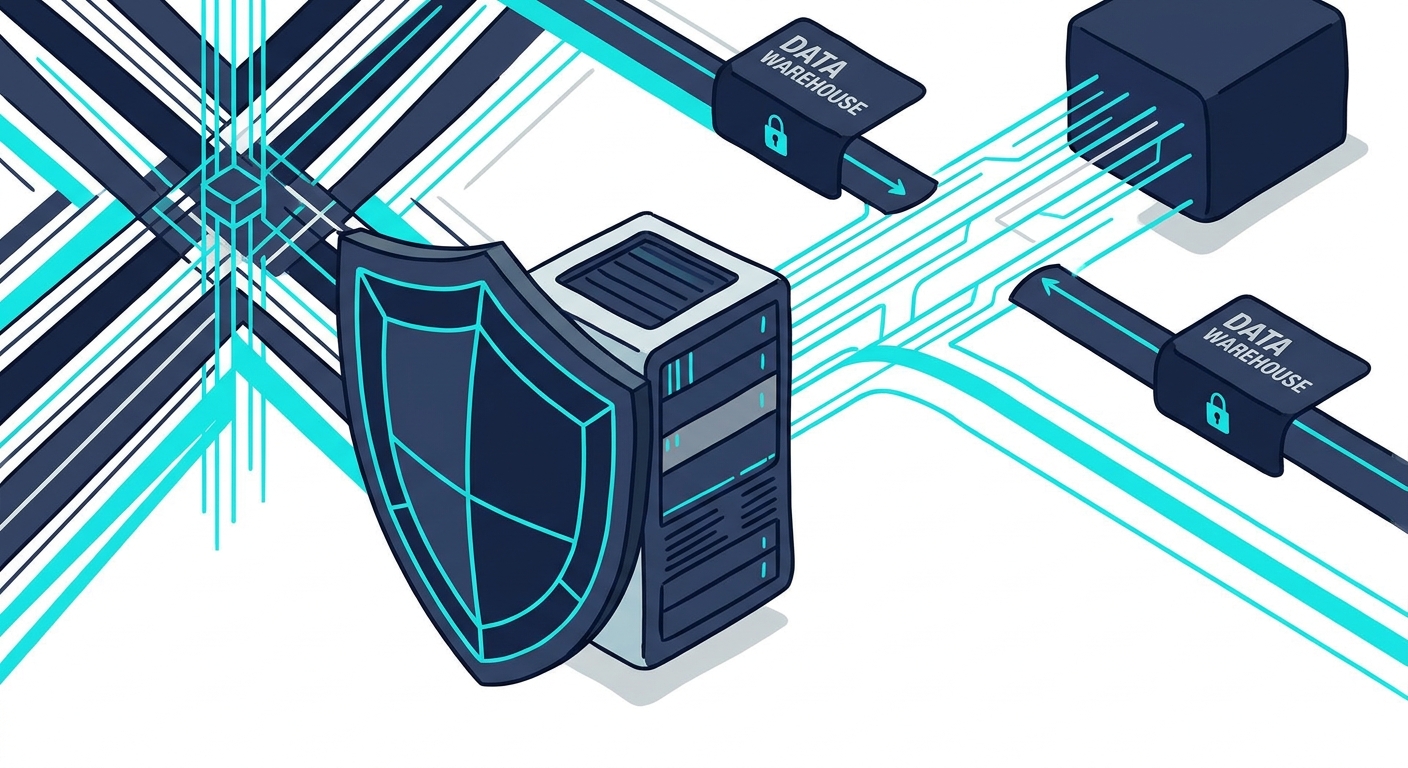
Think about it: attackers are vacuuming up your encrypted traffic right now. They aren't trying to crack it today. They’re storing it in massive, cold-storage warehouses, waiting for the day quantum compute hits maturity and turns your current RSA and ECC encryption into a digital sieve. If you’re still relying on static, hard-coded security, you’re already behind the curve. You need to stop thinking about "securing the perimeter" and start thinking about crypto-agility.
Why the Quantum Threat is a "Now" Problem
The danger of SNDL is simple: data longevity. AI training pipelines, proprietary model weights, and the messy, high-value context passed between your agents and tools are the crown jewels of your business. If this stuff gets intercepted, the fact that it's behind a standard TLS wall is irrelevant. An adversary just needs to wait five years to flip the switch and unlock everything.
Regulators aren't just firing warning shots anymore, either. The CISA Post-Quantum Cryptography Resource Center has moved from "suggestions" to specific mandates. The grace period for "wait-and-see" infrastructure is effectively dead. If your systems aren't migrated to PQC standards by 2030, you won't just be insecure—you’ll be un-auditable.
The MCP Vulnerability: Why Your Agent Ecosystem is Exposed
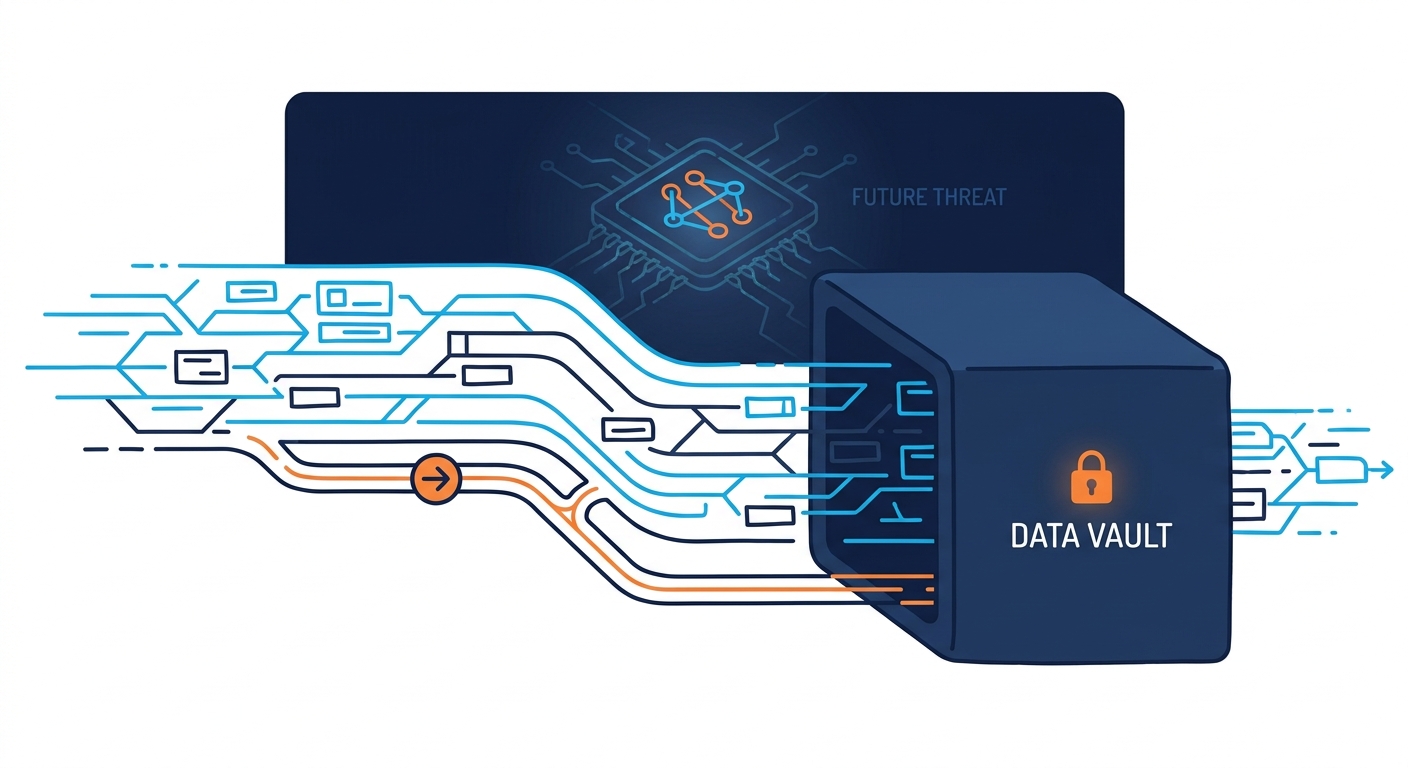
We’re moving fast. We’ve ditched the simple, isolated chat interfaces for complex, agentic ecosystems. The Model Context Protocol (MCP) is the glue holding this all together, allowing LLMs to reach into your databases and tools. But there’s a catch: MCP was built for speed. It’s optimized for low-latency, high-frequency communication, which means the API layer usually skips the heavy lifting required for deep-packet quantum protection.
Most MCP implementations lean on legacy handshakes that are wide open to quantum-enabled interception. Unless you’ve built a Secure Model Context Protocol Roadmap, your agent-to-tool traffic is basically an open window. According to Anthropic’s Model Context Protocol Documentation, the protocol's real power is standardizing how agents "perceive" the world. But that standardization is a double-edged sword: if the transport layer is stuck in the classical era, you’ve just standardized how an attacker can exploit your entire chain.
Architecting for Crypto-Agility
What is crypto-agility? It’s the ability to swap out your cryptographic primitives on the fly—like changing a flat tire at 80mph—without tearing down your entire engine.
In a static, "brittle" architecture, if your encryption gets cracked, you’re finished. You have to rebuild the whole stack. In a crypto-agile setup, you decouple the security layer from the application logic.
The smart money is moving toward a "Hybrid Security Model." You don't have to torch your classical encryption overnight. Instead, you layer PQC algorithms on top of your existing standards. If a new vulnerability pops up in a PQC primitive, your classical layer keeps you safe. If the classical layer fails, the PQC layer holds the line. It’s defense-in-depth, evolved.
NIST Standards: What You Actually Need to Know
NIST has finally finalized the first set of post-quantum standards, with ML-KEM (formerly known as Kyber) leading the charge. These aren't just suggestions; they are the math-heavy armor designed to stop Shor’s algorithm from shredding public-key infrastructure.
The headache for architects isn't just "which algorithm do I pick?" It’s "how much will this tank my performance?" PQC algorithms often bring larger key sizes and more computational overhead. You need to be smart about implementation. Check out our Quantum-Resistant Cryptographic Algorithms Guide for the breakdown on how to map these NIST Post-Quantum Cryptography Standards to high-throughput AI traffic without killing your latency.
A Practical Roadmap to Quantum Resilience
Don't panic, but don't wait. Building for the quantum era is an iterative process, not a "rip and replace" disaster.
- Inventory Everything: You can't defend what you can't see. Map every single MCP endpoint, every agent-to-agent handshake, and every pipe that carries PII or model data.
- Go Hybrid: Start by upgrading your TLS handshakes to support hybrid key exchange. This is your immediate defense against SNDL. Even if they store your packets, they won't be able to open them later.
- Deploy Smart Monitoring: Use AI-driven observability. You need tools that can spot anomalous traffic patterns. If an attacker starts probing your infrastructure for quantum-vulnerable signatures, your system should automatically trigger a key rotation.
The Identity Crisis: Agents in a Quantum World
Traditional Identity and Access Management (IAM) is built on private keys. If a quantum computer can easily crack those keys, your IAM system isn't just broken—it's a liability.
In an agentic world, your "Non-Human Identities" (NHI) are performing actions on your behalf. If an agent’s private key is intercepted, an attacker isn't just reading your data. They are becoming your agents. They can execute code, exfiltrate data, and mess with your databases as if they were authorized users. You need quantum-resistant digital signatures for these identities. Without them, your "Zero Trust" model is basically a "Zero Security" model.
Conclusion: Stop Advising, Start Building
This is the biggest shift in security history. It’s not about "set it and forget it" anymore; it’s about continuous, agile adaptation. Organizations that use Gopher Security’s infrastructure layers are already making this transition seamless, keeping their ecosystems resilient without sacrificing performance.
The window for proactive defense is closing. The quantum threat is coming for your data—the only question is whether you’ll be ready when it arrives.
Frequently Asked Questions
Does my AI infrastructure need quantum-resistant security today?
Yes. Due to the "Store Now, Decrypt Later" (SNDL) threat, attackers are actively harvesting encrypted data today. If that data has a long shelf life—such as proprietary model weights or sensitive user data—it remains at risk of being decrypted the moment a quantum computer becomes viable.
Will switching to post-quantum cryptography break my existing AI agent workflows?
Not if you implement a hybrid security model. By running PQC alongside classical algorithms, you ensure backward compatibility while layering on quantum-resistant protection, allowing you to upgrade your stack without disrupting daily operations.
What is the biggest security risk for Model Context Protocol (MCP) in 2026?
The biggest risk is the lack of standardized, quantum-resistant encryption in the communication channels between LLMs and their authorized tools. Without proper hardening, these API-driven connections are vulnerable to interception and future decryption.
How does Gopher Security help with PQC compliance?
Gopher Security provides modular, crypto-agile infrastructure layers that allow organizations to deploy NIST-approved PQC algorithms across their MCP-based agent ecosystems. We simplify the transition by automating policy enforcement and providing tools to monitor for quantum-era threats in real-time.