Defending Model Context Protocol: A Framework for Future-Proof AI Security

TL;DR
- ✓ MCP serves as the critical connective tissue for enterprise AI agent tool integration.
- ✓ Centralized agent pathways create high-value targets for sophisticated schema manipulation and injection attacks.
- ✓ Securing MCP requires moving beyond prompt sanitization to robust architectural agentic governance models.
- ✓ Long-lived session connections demand strict identity integrity to prevent unauthorized system access.
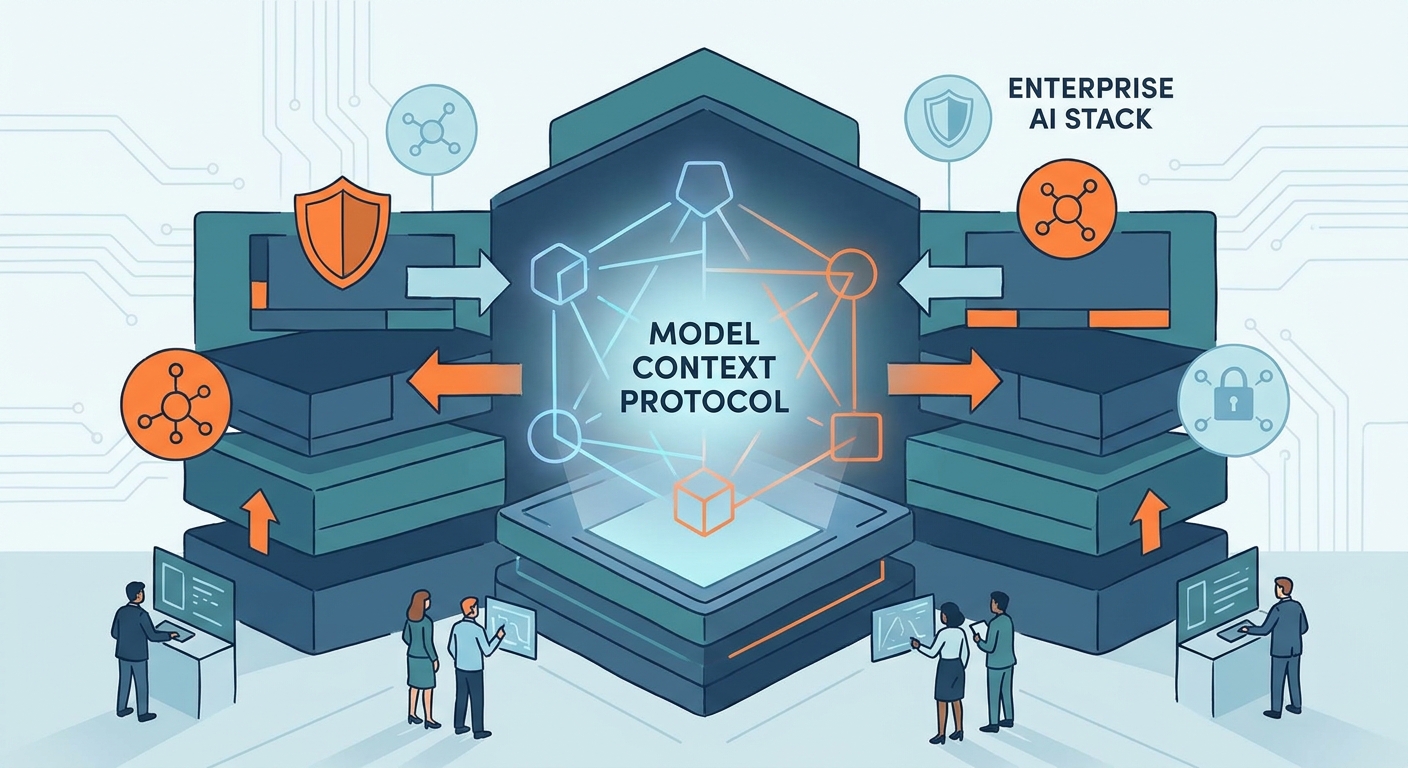
The Model Context Protocol (MCP) has become the connective tissue of the modern enterprise AI stack. It’s how agents talk to tools, databases, and internal APIs. But there’s a catch. By centralizing how agents talk to tools, we’ve built a massive, high-value target for anyone looking to break into your systems.
If you’re treating MCP like just another "plug-and-play" feature, you’re missing the forest for the trees. This protocol is now core infrastructure. You can’t just sanitize a few prompts and call it a day. You need a real, architectural approach to Agentic Governance.
Why is the Model Context Protocol the New "Connective Tissue" of Enterprise AI?
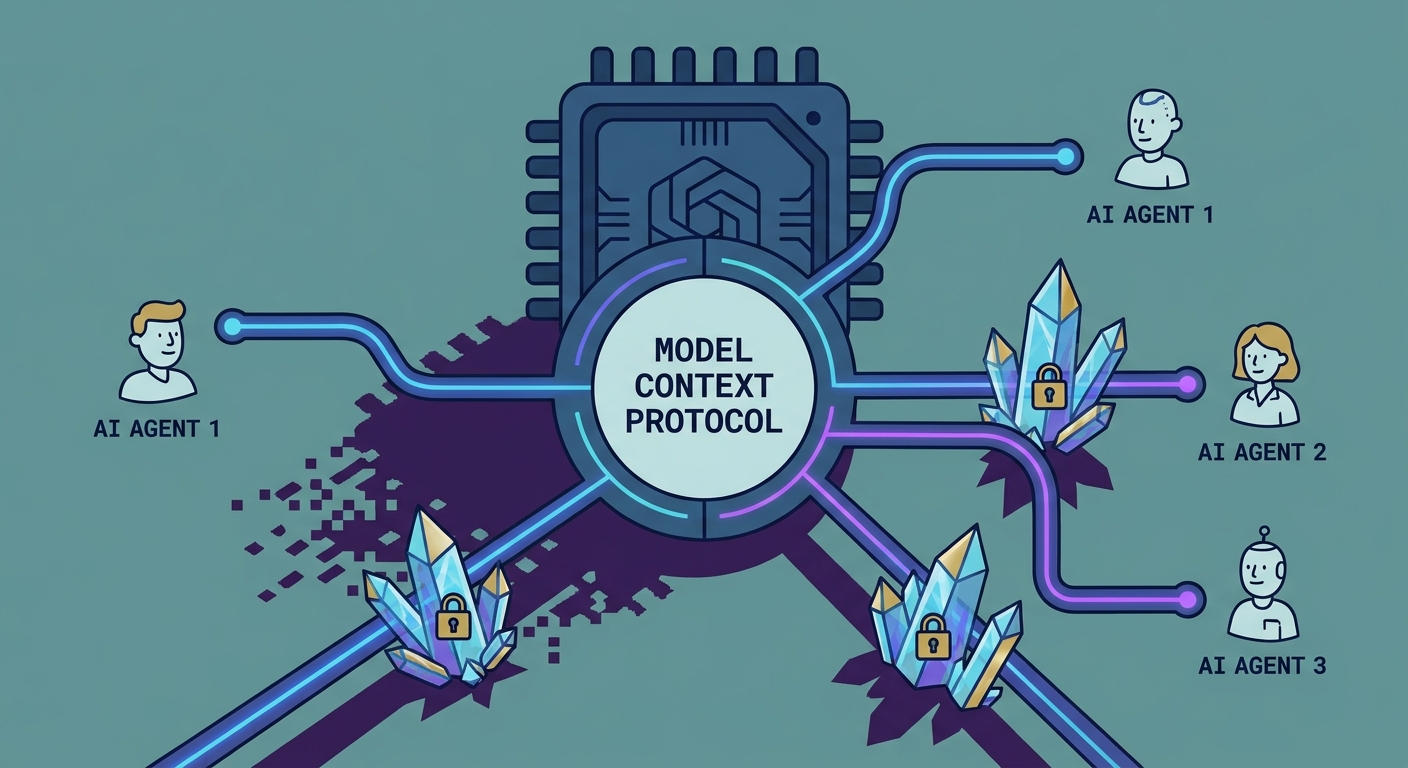
Think of MCP as an abstraction layer. It’s what lets a Large Language Model (LLM) reach out and touch diverse data sources through one standardized interface. Before this, every agent needed a custom integration for every single tool. It was a mess. Now, MCP acts as a universal translator. It makes scaling agentic workflows incredibly fast—you can swap out a data source in minutes.
But here’s the "Universal Connector" paradox: when you centralize the pathways an agent uses to access sensitive systems, you’re also rolling out the red carpet for attackers. If they compromise the protocol, they don’t just get one tool; they get a bridge into your entire operational architecture.
As highlighted in the NSA’s Security Design Considerations for AI-Driven Automation, the shift toward automated tool-use means we have to rethink trust and authentication from the ground up. We aren't just securing an API anymore. We’re securing the logic that tells an autonomous entity how to manipulate our business processes. That’s a different ball game entirely.
What are the Critical Threat Vectors in an MCP-Enabled Architecture?
The threat landscape for MCP is moving fast—faster than most security teams can patch. We’re seeing a shift from simple prompt injection (tricking the LLM) to sophisticated schema manipulation.
Imagine an attacker poisoning the tool definitions provided by your MCP server. By tweaking the schema, they can trick the LLM into thinking a malicious tool is perfectly legitimate. Or, they can manipulate the parameters for a sensitive command—like delete_file or transfer_funds.
Then there’s token theft and session hijacking. MCP often relies on long-lived connections between the agent and the server to maintain context. That open window is a goldmine for attackers. As outlined in Checkmarx’s analysis of 11 Emerging AI Security Risks, attackers are laser-focused on the "middle-man" vulnerabilities inherent in these persistent connections. If you don't have strict identity and session integrity, an agent can easily be coerced into acting as a blind proxy for a threat actor.
How Do We Map the Threat Landscape?
To defend your house, you have to know where the doors are. The diagram below shows how a schema-poisoning attack plays out when an adversary compromises an MCP server to hijack an LLM's decision-making.
The "MCP Security Proxy": Why You Need an Intermediary Layer
If you’re relying on the LLM to police itself, you’ve already lost. You have to move security out of the agent and into the transport layer.
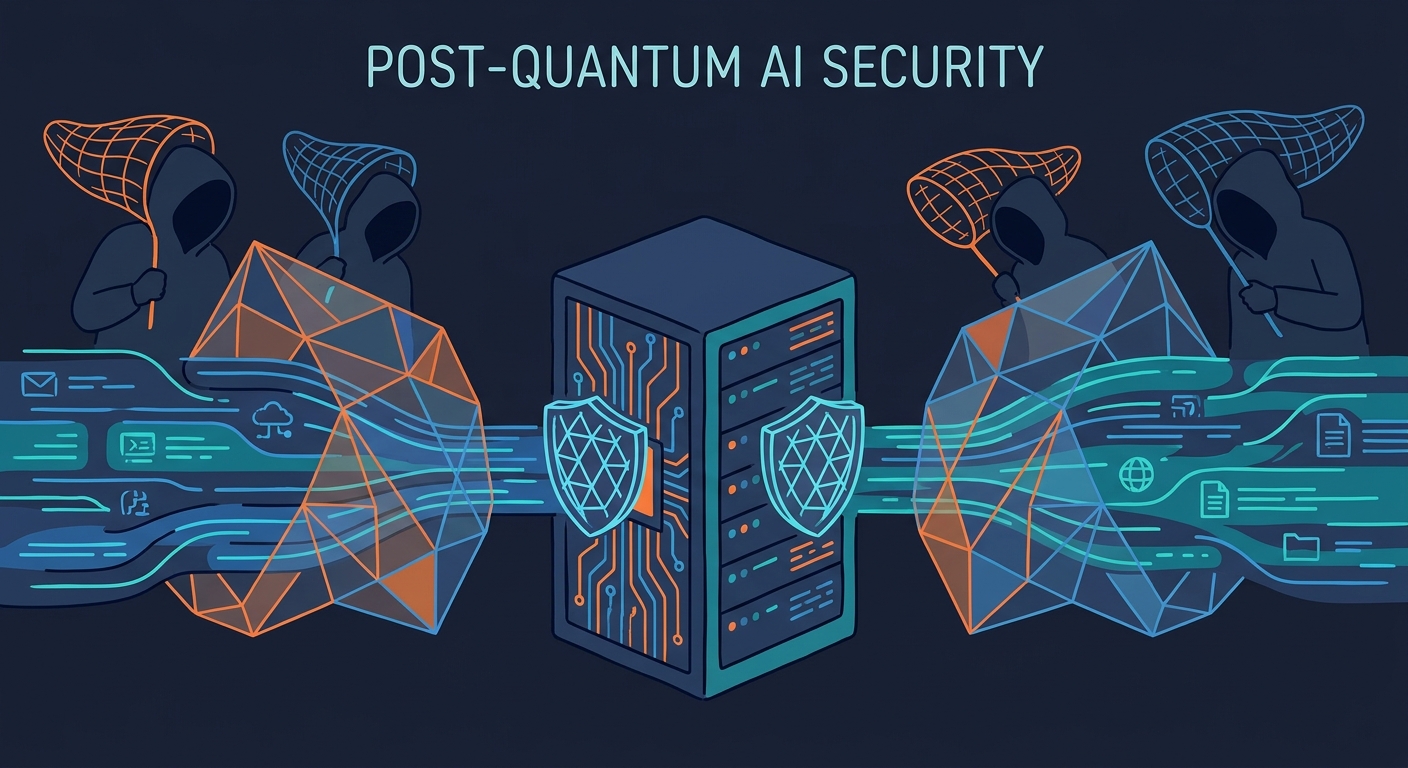
That’s why we advocate for an "MCP Security Proxy." By placing an intermediary layer between the agent and the MCP server, you create a chokepoint. This is where you enforce policies, audit tool usage, and scrub data before it ever hits the LLM’s context window.
The proxy is your gatekeeper. It validates schemas, runs real-time authorization checks, and strips out malicious payloads. For organizations scaling their AI footprint, our AI Infrastructure Security Services provide the blueprint for these defensive layers. Decoupling security from the model means you can update your threat detection without having to re-train or re-prompt your agents.
How to Build a Secure MCP Deployment (The Playbook)
Stop reacting. Start building. Here’s how to secure your infrastructure.
Phase 1: Secure-by-Design Server Development
Every MCP server you deploy needs strict schema validation. Don’t trust the LLM's inputs or the tool's outputs. Refer to the OWASP Practical Guide for Secure MCP Server Development to ensure your team is implementing guardrails—like input sanitization and schema locking—from the very first line of code.
Phase 2: Implementing Least Privilege for Agents
An agent should only have access to the specific tools it needs for its current task. This is the cornerstone of Agentic Governance. Use role-based access control (RBAC) to restrict tool definitions at the proxy level. If an agent is summarizing customer feedback, it has no business touching administrative tools—even if they’re on the same server.
Phase 3: Runtime Monitoring & Auditing
Continuous verification is mandatory. Treat MCP traffic like high-value network telemetry. Log every tool call, every parameter change, and every schema update. If the proxy spots an anomaly—like an agent calling a tool it hasn't used in months—block it immediately and alert your security operations center.
Preparing for the Future: Quantum Readiness and Beyond
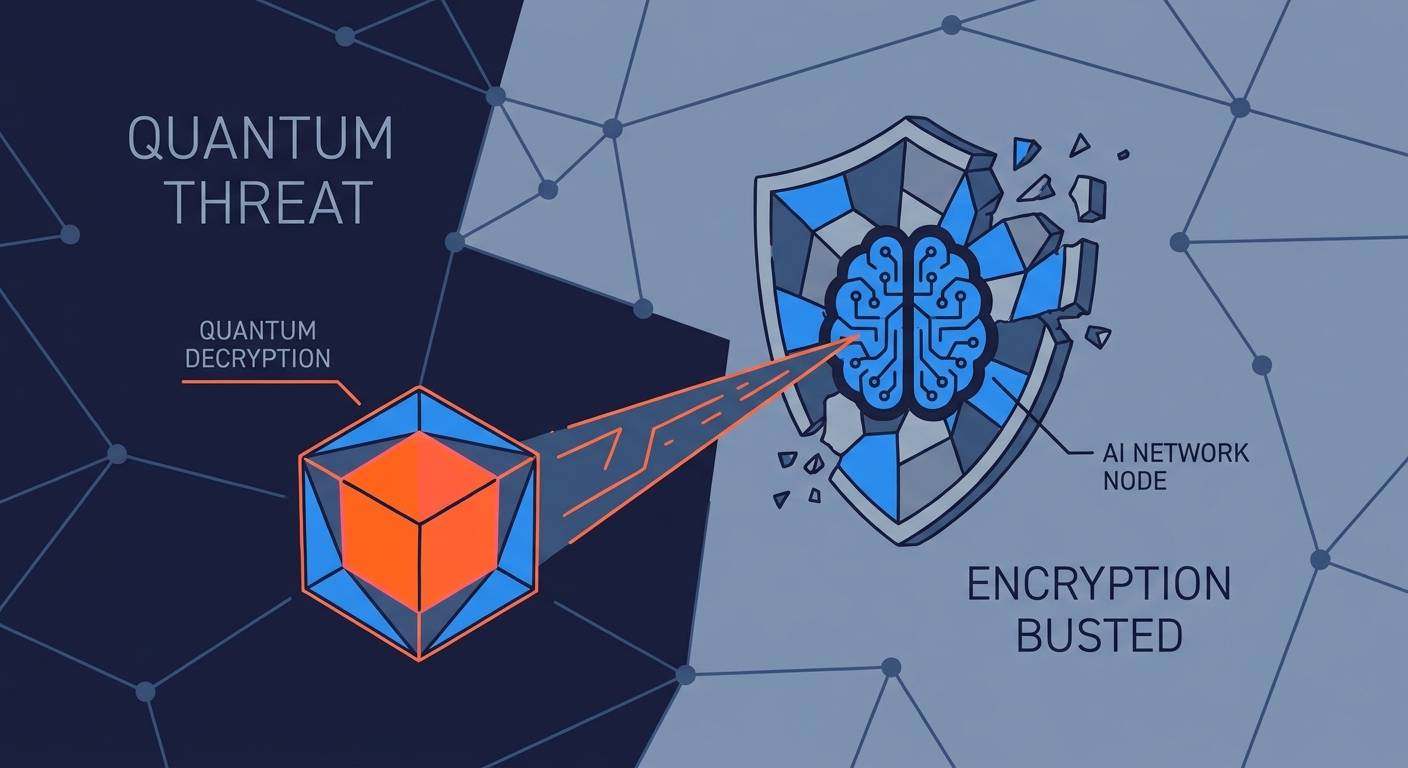
Right now, we're worried about schema manipulation. But the horizon is cloudier. Quantum-resistant authentication isn't just a sci-fi concept anymore; it’s a requirement for long-term data integrity. As AI agents start handling more high-value transactions, the handshake between the agent and the MCP server needs to be hardened against future decryption capabilities.
Agentic Governance is the only way to manage this risk long-term. Treat the protocol like a permanent piece of your architecture. As models evolve, your security posture will remain standing.
Conclusion: Moving from Reactive Patching to Proactive Governance
The Model Context Protocol isn't just a plugin. It’s infrastructure. If you treat it with the same scrutiny as your core network protocols, you can leverage agentic AI without opening your firm to unnecessary risk.
Stop the "patch-as-you-go" cycle. Build a framework where security is baked into the connection itself. Audit your MCP endpoints today, implement an intermediary proxy, and enforce least privilege. Your future-proof architecture starts now.
Frequently Asked Questions
What are the biggest security risks introduced by adopting the Model Context Protocol?
The primary risks are schema poisoning—where an attacker manipulates the tool definitions to trick an LLM—and the expanded attack surface created by having a "Universal Connector." Because MCP centralizes access, a breach at the protocol level provides a high-value entry point for lateral movement within your infrastructure.
How does MCP security differ from traditional API security?
Traditional API security relies on static endpoint protection and authentication tokens. MCP security is dynamic and context-dependent; it involves negotiating "tool-use" permissions in real-time between an agent and a server, requiring a focus on behavioral auditing rather than just static request filtering.
What is an "MCP Security Proxy," and do I need one?
An MCP Security Proxy is an intermediary layer that sits between your agent and the MCP server. It enforces policy, authenticates requests, logs activity, and sanitizes data. If you are operating in an enterprise environment where compliance and data integrity are mandatory, a proxy is an essential control.
How can I enforce the principle of least privilege for AI agents using MCP?
You enforce this by using an intermediary proxy to apply role-based access control (RBAC) to specific tool definitions. Instead of giving an agent broad permissions, you explicitly whitelist only the tools required for a specific task based on the user's identity and the scope of the request.
Are there industry-standard frameworks for securing MCP deployments?
Yes. Organizations like the NSA and OWASP are leading the way. The NSA’s Security Design Considerations and the OWASP Practical Guide for Secure MCP Server Development are currently the gold standards for building secure, resilient agentic architectures.