Quantum-Resistant Cryptographic Algorithms: A Technical Deep Dive for AI Architects

TL;DR
- ✓ Understand the critical threat of Store Now Decrypt Later attacks on AI data.
- ✓ Replace legacy RSA and ECC with NIST-approved ML-KEM and ML-DSA primitives.
- ✓ Secure persistent Model Context Protocol connections using quantum-resistant cryptographic tunnels.
- ✓ Mitigate vulnerabilities created by long-lived API connections in modern AI agent workflows.
It’s 2026. If you think "Store Now, Decrypt Later" (SNDL) is just another buzzword for the paranoid, you’re already behind. For AI architects, this isn't a theoretical math problem—it’s a direct threat to your infrastructure. Your current TLS 1.3 tunnels? They’re essentially glass walls. They might stop a common thief today, but they are transparent to the nation-state actors currently building Cryptographically Relevant Quantum Computers (CRQCs).
Every byte of proprietary training data, every high-value model weight, and every sensitive prompt you send today is being harvested. Adversaries are tucking it away, waiting for the day they can peel back your security layers like a cheap orange. Transitioning to quantum-resistant infrastructure isn't a "future project" for your roadmap. It’s a non-negotiable requirement of modern AI governance.
Why Your Current Encryption Is Failing
The modern internet is built on a single, fragile assumption: that factoring massive prime numbers or solving discrete log problems is too hard for computers to handle. RSA and Elliptic Curve Cryptography (ECC)—the foundations of your TLS 1.3 handshakes—rely on this.
Then came Shor’s algorithm.
On a sufficiently powerful quantum computer, those "impossible" math problems become trivial. It’s like using a master key on a padlock you thought was unpickable. Our current public-key infrastructure (PKI) is effectively living on borrowed time.
To fix this, the industry has migrated to the NIST Post-Quantum Cryptography Standards, specifically FIPS 203, 204, and 205. We’re moving toward lattice-based cryptography—a math-heavy approach that’s currently holding up against both classical and quantum assaults. For you, the focus is on ML-KEM (for key encapsulation) and ML-DSA (for digital signatures). Unlike RSA’s integer factorization, ML-KEM relies on the "Learning With Errors" problem. This isn't just a patch; it’s a total overhaul of the primitives securing your AI stack.
The AI/MCP Nexus: The Agent Weak Link
The Model Context Protocol (MCP) has been a godsend for efficiency. It creates persistent, standardized connections between your LLMs and local data. But there’s a catch: you’ve just expanded your attack surface significantly.
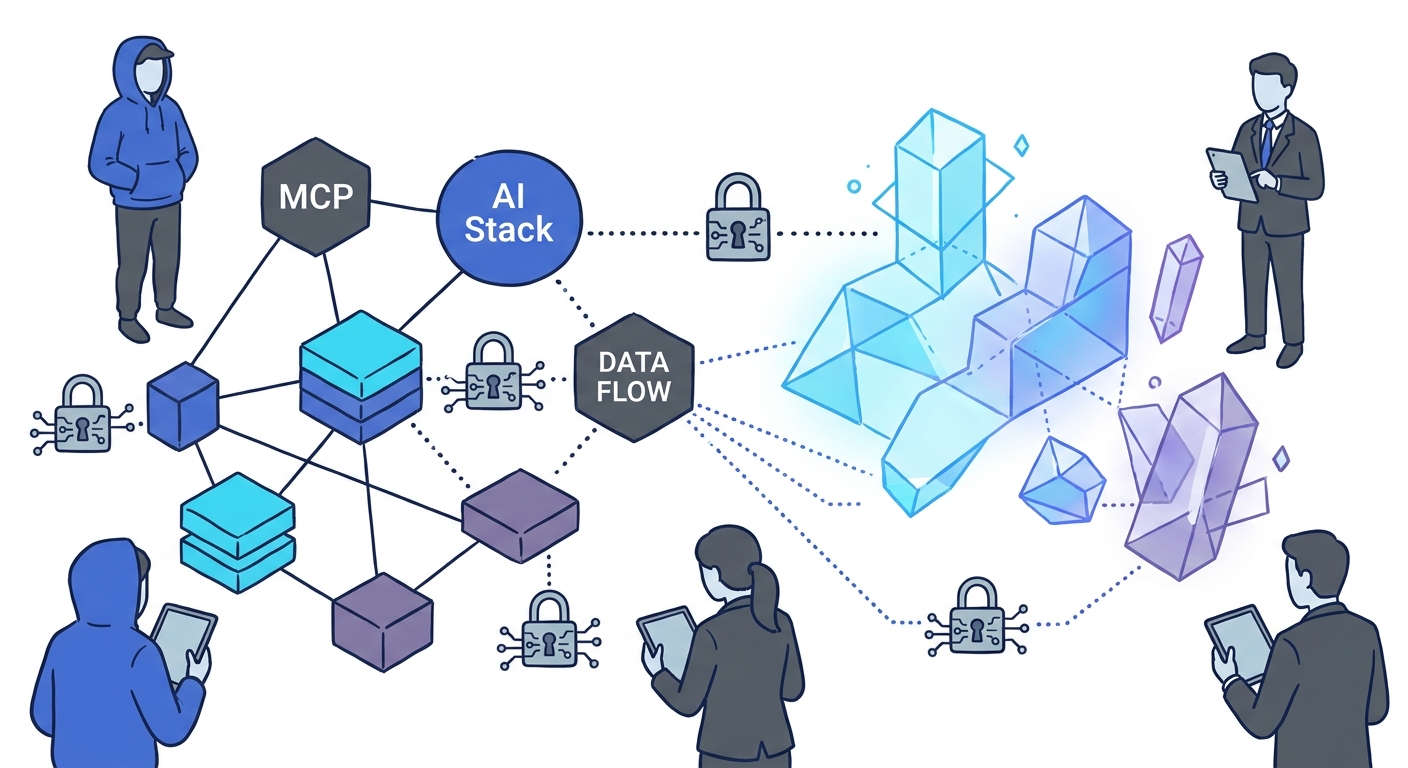
In the old days, API connections were often short-lived. MCP changes the game. By keeping a persistent connection open, you’re providing a stable target for interception. If an attacker manages a man-in-the-middle strike on an MCP link, they aren't just grabbing one query—they’re getting a live window into your internal data ecosystem. You need quantum-resistant tunnels for these connections, or you’re inviting disaster. For a deeper look at the specific vulnerabilities inherent in these agent-to-infrastructure handshakes, consult our guide on Securing Model Context Protocol (MCP).
Implementing Resilience Without Breaking Everything
Don't panic, and for heaven's sake, don't try a "rip and replace" strategy. Your models and vector databases are far too complex for that. You’ll just break your production environment.
The industry standard for 2026 is Hybrid Cryptography.
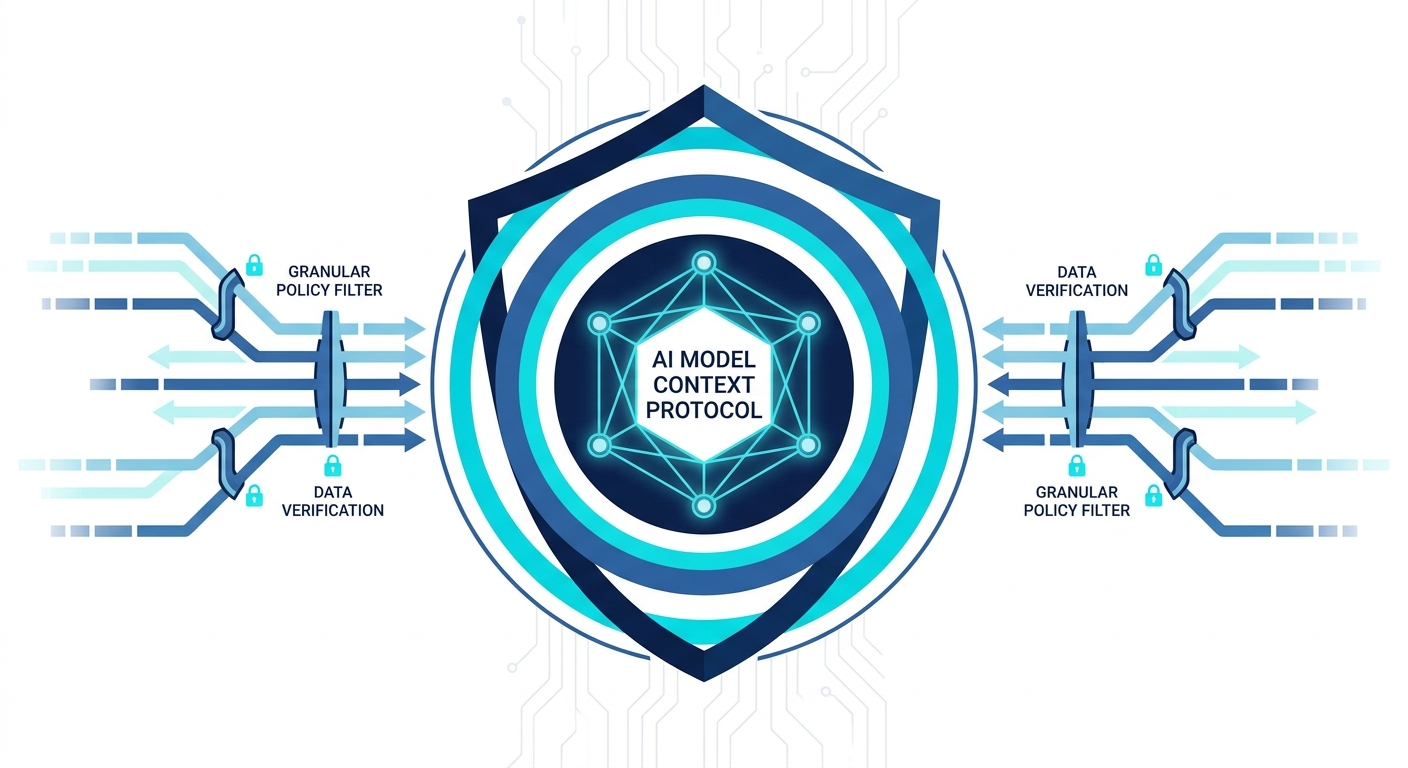
Think of it as a safety belt on top of a seatbelt. You layer a classical key exchange (like ECDH) with a PQC exchange (like ML-KEM). You get the best of both: backward compatibility for your legacy clients, plus a hurdle that requires the attacker to break both the classical and the quantum-resistant layers.
The Hybrid Handshake Process
Beyond the hybrid approach, you need Cryptographic Agility. If you hard-code your algorithms, you’re just building technical debt. Treat your crypto providers as modular, swappable components. When NIST drops the next update, your team should be able to swap the library without refactoring the entire agent logic.
A Practical Roadmap to Hardening Your Stack
Don't try to boil the ocean. Hardening is an iterative process. Focus on the data with the longest shelf life.
- Phase 1: Inventory. You can't secure what you can't see. Audit your endpoints, MCP connections, and data flows. Know exactly where your model weights and training sets live. For a comprehensive approach to this, refer to the Post-Quantum AI Infrastructure Security Framework.
- Phase 2: Risk Assessment. Not all traffic is created equal. Prioritize the high-value, long-term intellectual property. Don't sweat the transient, low-value prompt traffic as much as you sweat the proprietary model weights.
- Phase 3: Implementation. Roll out PQC-ready tunnels in stages. Start with your most sensitive internal infrastructure. For a step-by-step technical guide on the actual rollout, Keyfactor’s breakdown on Implementing PQC is an essential resource for engineering teams.
Encryption Isn't a Silver Bullet
Even with the best quantum-resistant math, your systems can be cracked through logic flaws or side-channel attacks. As noted in the NSA Security Design Considerations for AI-Driven Automation, security must be holistic.
Encryption keeps your data safe while moving, but you still need to watch for weird patterns. An attacker probing your network might leave footprints in the metadata before they even touch your encrypted payload. Your SOC needs to look for the "ghost in the machine"—treat your network as a Zero Trust environment where no connection is inherently safe.
Final Thoughts: The Quantum Horizon
The shift to quantum-resistant architecture is the defining challenge for AI architects right now. We are moving toward a world where Zero Trust AI is the standard. Stop viewing security as a peripheral annoyance and start treating it as the foundation of your AI performance. Audit your stack, implement hybrid crypto, and stay agile. The quantum horizon is approaching; those who prepare today will be the ones left standing tomorrow.
Frequently Asked Questions
Why is my current TLS 1.3 encryption insufficient against quantum threats?
While TLS 1.3 is secure against classical computers, it is vulnerable to the "Store Now, Decrypt Later" (SNDL) threat. Adversaries are currently intercepting and storing encrypted data, banking on the future development of quantum computers to retroactively decrypt and expose your most sensitive AI training data and intellectual property.
What is the difference between "Quantum-Resistant" and "Quantum-Safe" cryptography?
"Quantum-Resistant" refers to algorithms (like the NIST-approved ML-KEM or ML-DSA) specifically engineered to withstand quantum-based attacks. "Quantum-Safe" is often used as a marketing term and can be dangerously misleading; always verify that your infrastructure is using NIST-approved standards rather than unproven "quantum-safe" proprietary solutions.
How does the Model Context Protocol (MCP) increase the attack surface for AI models?
MCP creates persistent, standardized communication channels between AI agents and external data sources. This persistence provides a stable target for man-in-the-middle attacks, allowing adversaries to intercept context data that would otherwise be protected by more ephemeral, standard API security models.
Do I need to rewrite my entire AI stack to implement PQC?
No. You do not need to overhaul your models or application logic. By using a hybrid cryptographic approach, you can wrap your existing services in quantum-resistant tunnels, ensuring your data is protected without needing to rewrite the core architecture of your AI stack.
How do I maintain cryptographic agility in my AI development lifecycle?
Maintain agility by abstracting your cryptographic operations via a middleware layer or a centralized security service. This allows your engineering teams to swap out underlying algorithms as standards evolve, without needing to touch the business logic of your AI agents or data pipelines.