Is Your AI Model Context Protocol Ready for Quantum Computing Security Challenges?

TL;DR
- ✓ Model Context Protocol traffic is vulnerable to Harvest Now Decrypt Later attacks today.
- ✓ Current TLS encryption will be rendered obsolete by future quantum computing Shor algorithm capabilities.
- ✓ Adversaries are actively intercepting and storing encrypted AI agent data for future decryption.
- ✓ New 2026 security standards mandate immediate upgrades to quantum-resistant transport layers for AI.
Your Model Context Protocol (MCP) deployment is likely leaking sensitive data right now. You won’t see a breach notification. You won’t see a spike in traffic. But it’s happening. We’re currently caught in the crossfire between the "Agentic Revolution"—where autonomous systems orchestrate your most sensitive workflows—and the "Quantum Countdown."
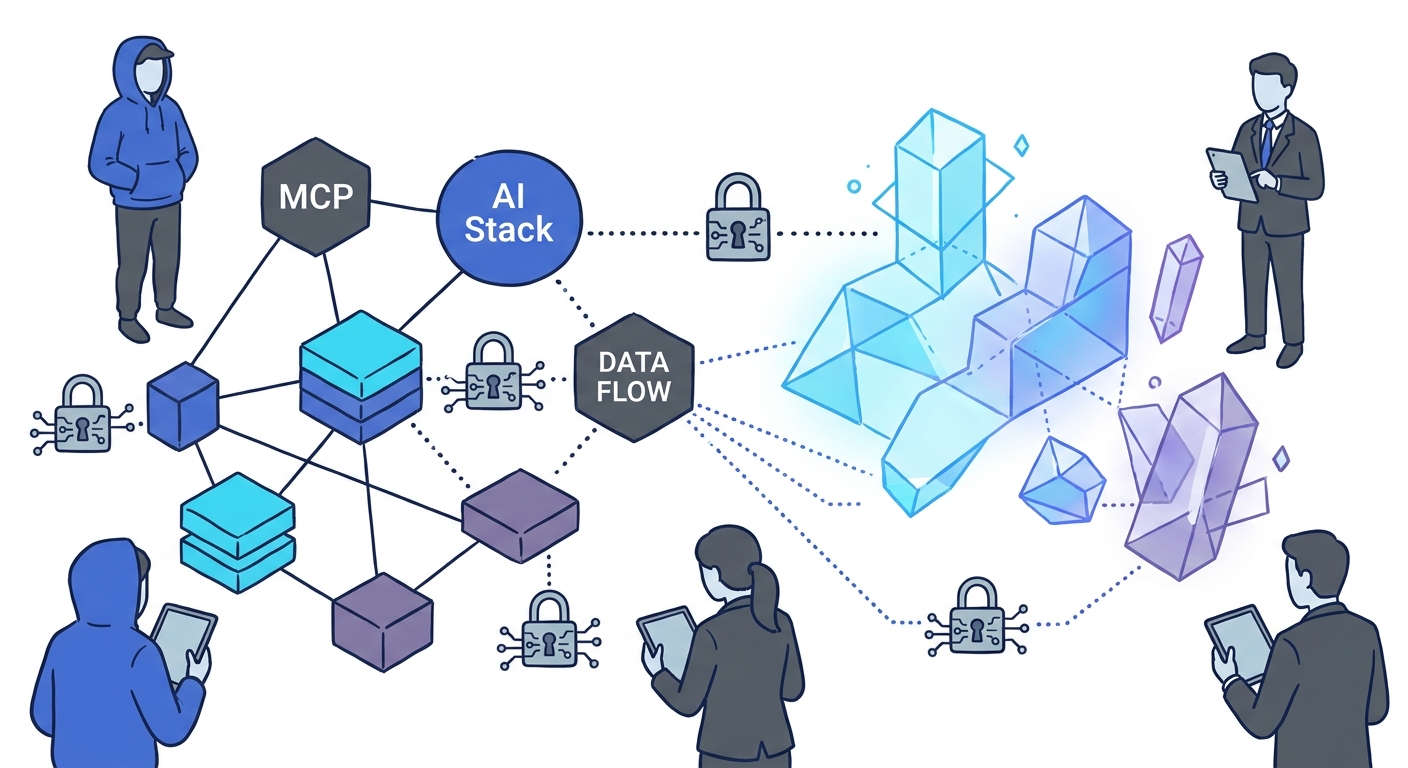
While security teams are busy playing whack-a-mole with schema-based injections, they’re missing a massive, existential threat: "Harvest Now, Decrypt Later" (HNDL). If your AI infrastructure isn't built to survive the eventual arrival of cryptographically relevant quantum computers, the context data your agents are swapping today is already being vacuumed up by state-sponsored actors. They’re just waiting for the day Shor’s algorithm turns your current TLS/SSL handshakes into transparent glass. This article breaks down the collision between immediate AI security and the long-term mandate for quantum resilience, a topic we cover in more depth in our comprehensive guide to AI infrastructure security.
The Anatomy of an HNDL Attack on MCP
The Model Context Protocol is the central nervous system of the modern AI stack. It’s how your agents trade private documents, database schemas, and tool permissions. Because this traffic is dense with high-value proprietary secrets, it’s the primary target for modern adversaries.
Forget the loud, messy denial-of-service attacks of the past. HNDL is a ghost. The attacker sits quietly on the wire, intercepts your encrypted packets, and tucks them away in a "Quantum Vault." They don't need to break your encryption today. They just need to wait for the hardware to catch up.
Current TLS/SSL handshakes lean on classical asymmetric encryption like RSA or Elliptic Curve Cryptography (ECC). These rely on the math of integer factorization or discrete logarithms—problems that quantum computers are essentially designed to crush. When you realize your agents are transmitting PII, API keys, and internal documentation over these protocols, the urgency of upgrading your transport layer moves from "theoretical" to "critical."
How 2026 Standards Influence Your MCP Deployment
The regulatory climate isn't just shifting; it's hardening. Since the July 2026 MCP security revisions, the burden of proof for "secure communication" has moved from a best practice to a hard compliance requirement. Organizations are now scrambling to map their MCP deployments to the broader AI governance landscape, ensuring that agentic autonomy doesn't outrun their security controls.
If you haven't yet reviewed the OWASP MCP Top 10: 2026 Guide, you’re likely operating with massive blind spots regarding how agents handle context and credentials. Furthermore, recent research into the security analysis of the Model Context Protocol highlights that protocol-level vulnerabilities are often compounded by sloppy implementation of key exchange mechanisms. Staying compliant in 2026 requires more than just patching libraries; it requires a fundamental shift in how you authenticate the "context" flowing between your servers and your agents.
Why NIST PQC Standards Are Non-Negotiable for AI Agents
Classical RSA and ECC are effectively dead-man-walking technologies. The NIST Post-Quantum Cryptography (PQC) standardization project has provided the roadmap for the industry, identifying algorithms like ML-KEM (Kyber) as the new foundation for securing digital communications.
For AI infrastructure, this isn't just about "upgrading the cipher suite." It’s about making sure your AI agents—which often run in distributed, high-latency environments—can perform these complex key encapsulations without stalling the entire agentic pipeline. The transition to PQC is non-negotiable because the "shelf life" of your data almost certainly exceeds the "time-to-quantum" horizon. If the intelligence you're feeding your agents today needs to remain confidential for even five years, you’re already in the danger zone.
Implementing a Hybrid Cryptographic Strategy Without Breaking MCP
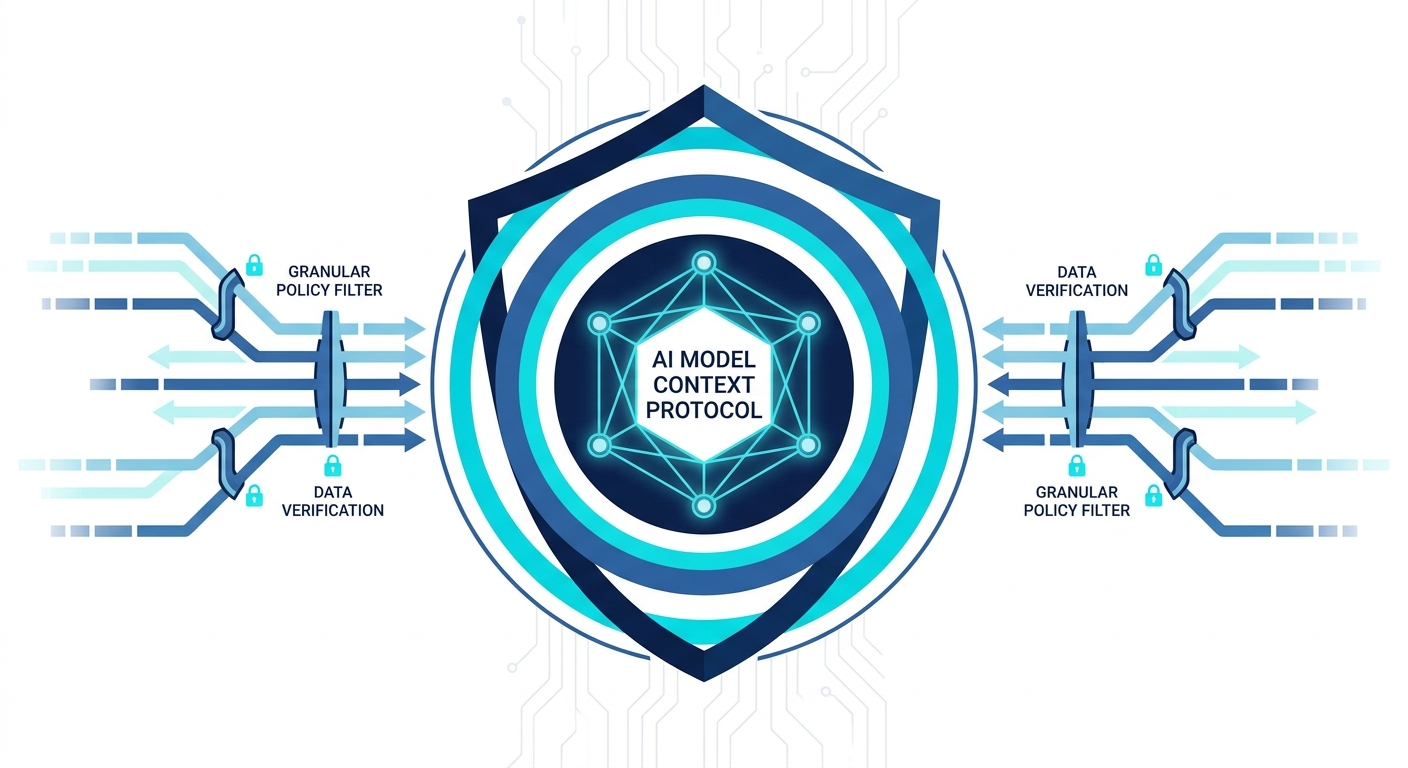
The biggest hurdle for infrastructure engineers? The fear that PQC will introduce massive latency or break compatibility with existing MCP clients. The solution is a "Hybrid Approach." By wrapping your current classical key exchange within a secondary PQC-based tunnel, you ensure that even if one layer is compromised, the data remains shielded.
This dual-layered handshake lets you keep backward compatibility while hardening your transport layers against future threats. For those looking to get into the weeds, we’ve published a deep dive into the recommended algorithms that balance security and performance for high-throughput agentic workflows.
Are Your Authorization Headers Truly Quantum-Ready?
Perimeter security is dead. In an agentic architecture, the authorization header is the "passport" of your data. If an attacker performs a man-in-the-middle (MITM) attack, they aren't just reading your data; they’re potentially hijacking your agent's identity.
Quantum-acceleration of MITM attacks means that an adversary could forge credentials or intercept tokens in transit. To counter this, you must move toward granular, short-lived, and quantum-hardened authorization tokens. Encapsulating these tokens within a PQC-protected channel is the only way to ensure your agent's authority cannot be spoofed or stolen by a quantum-capable actor.
The 2026 CISO Checklist: Auditing Your Infrastructure
If you find yourself asking where to start, follow this phased approach to audit your readiness:
- Endpoint Inventory: Identify every MCP client and server currently in production. Do not rely on documentation; use network traffic analysis to map the actual communication flows.
- Sensitivity Classification: Categorize flows based on the data they carry. Any flow involving PII, proprietary code, or financial data should be prioritized for PQC-hardened tunnels immediately.
- Proxy Implementation: Evaluate "PQC-ready" proxies that can handle the hybrid handshake without requiring a complete rewrite of your agentic codebase.
- Continuous Monitoring: Implement real-time logging for handshake failures. A sudden increase in failed hybrid-handshake attempts might indicate an adversary probing your defenses for weaknesses.
Proactive Defense in an Uncertain Future
The transition to quantum-resilient design isn't a weekend project. It’s a fundamental architectural shift. By moving away from reactive patching and toward a posture of proactive, quantum-resilient design, you protect more than just your current data—you protect the integrity of your future AI operations. The agents you deploy today will define your capabilities for years to come; secure them with the foresight that the quantum era demands.
Frequently Asked Questions
What is the 'Store Now, Decrypt Later' (HNDL) attack, and why does it affect my MCP deployment?
An HNDL attack involves an adversary intercepting and storing encrypted data today, intending to decrypt it once fault-tolerant quantum computers become available. It affects your MCP deployment because the context data exchanged between agents—such as internal API documentation and proprietary data—is often sensitive enough to remain valuable for years.
Do I need to abandon my current encryption standards immediately for MCP security?
No. You should not abandon classical encryption, as it remains robust against current threats. Instead, you should adopt a "Hybrid Approach," which layers NIST-approved post-quantum algorithms on top of your existing classical encryption to provide defense-in-depth without breaking backward compatibility.
How does the latest 2026 MCP update improve resilience against quantum threats?
The 2026 updates introduced stricter requirements for transport layer security and formal guidelines for integrating quantum-resistant key encapsulation mechanisms (KEMs) into the protocol handshake, significantly narrowing the window for interception.
What is the difference between securing the MCP protocol vs. securing the AI models behind it?
Securing the MCP protocol focuses on the integrity and confidentiality of the "pipe" through which data flows between agents. Securing the AI models themselves focuses on preventing prompt injection, jailbreaking, and model-level data leakage. Both are necessary, but they address entirely different threat vectors.
Can I implement quantum-resistant encryption without impacting the latency of my AI agent workflows?
Yes. By choosing optimized PQC algorithms (such as ML-KEM) and utilizing hardware acceleration where available, the overhead of the hybrid handshake is negligible for most enterprise AI applications. The minor latency impact is a necessary trade-off for long-term data security.