Quantum Cyber Security vs. Traditional Methods: Protecting AI Infrastructure in 2026

TL;DR
- ✓ Quantum computers render traditional RSA and ECC encryption methods obsolete for long-term data security.
- ✓ State-sponsored actors are using Store Now Decrypt Later tactics to harvest valuable AI assets.
- ✓ AI model weights and proprietary training sets require immediate protection against future quantum decryption.
- ✓ Organizations must adopt hybrid encryption strategies to safeguard data against advancing quantum hardware threats.
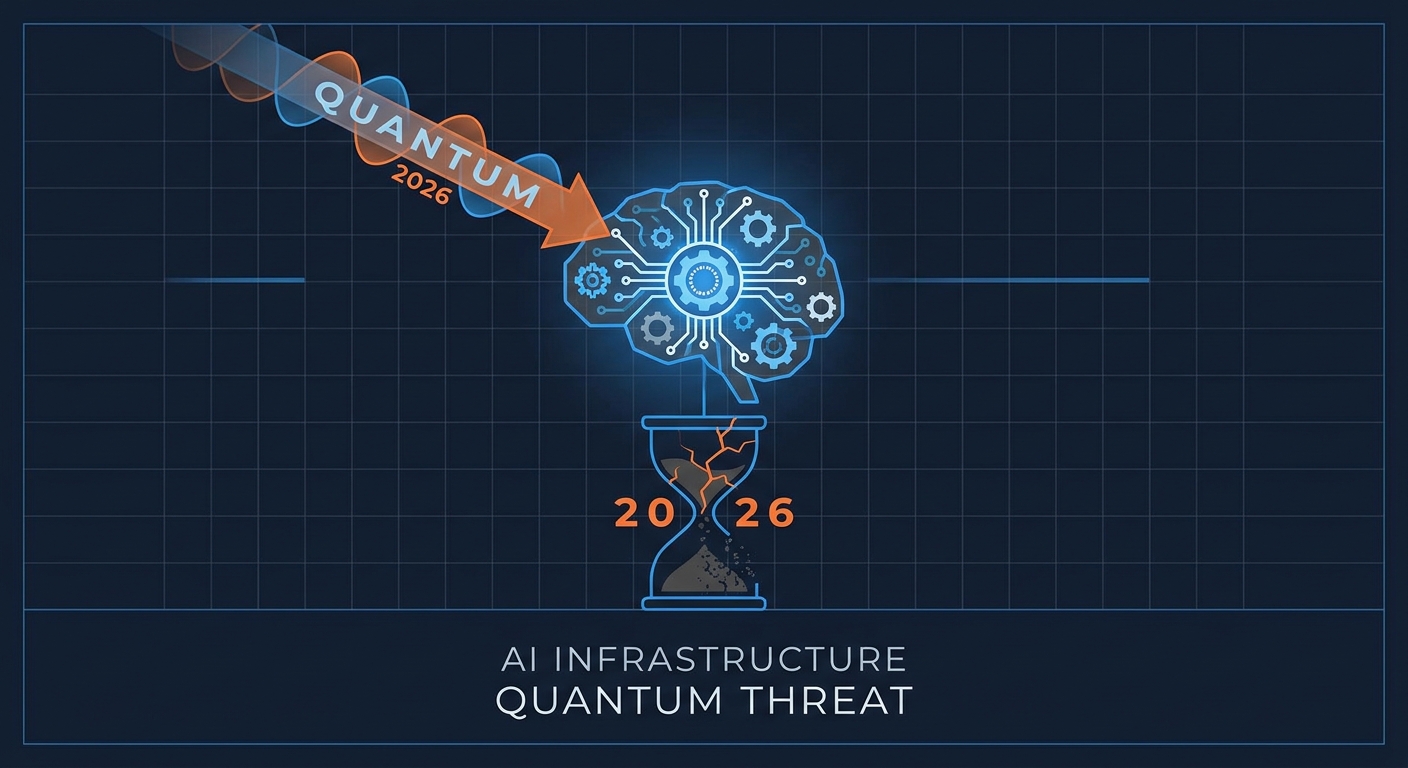
The year 2026 isn't just another calendar entry. It’s the moment the "Quantum Threat" stopped being a theoretical science project and started being a boardroom emergency. For years, we treated the Cryptographically Relevant Quantum Computer (CRQC) like a distant storm—something for the next decade's engineers to worry about.
That luxury is gone.
The collision of hyper-scale AI and rapidly maturing quantum hardware has turned our data pipelines into ticking clocks. We aren't just playing cat-and-mouse with brute-force attackers anymore. We’re in a race against the inevitable: the math that keeps your intellectual property locked up today is about to become an open book.
Why Is 2026 the Tipping Point for AI Infrastructure?
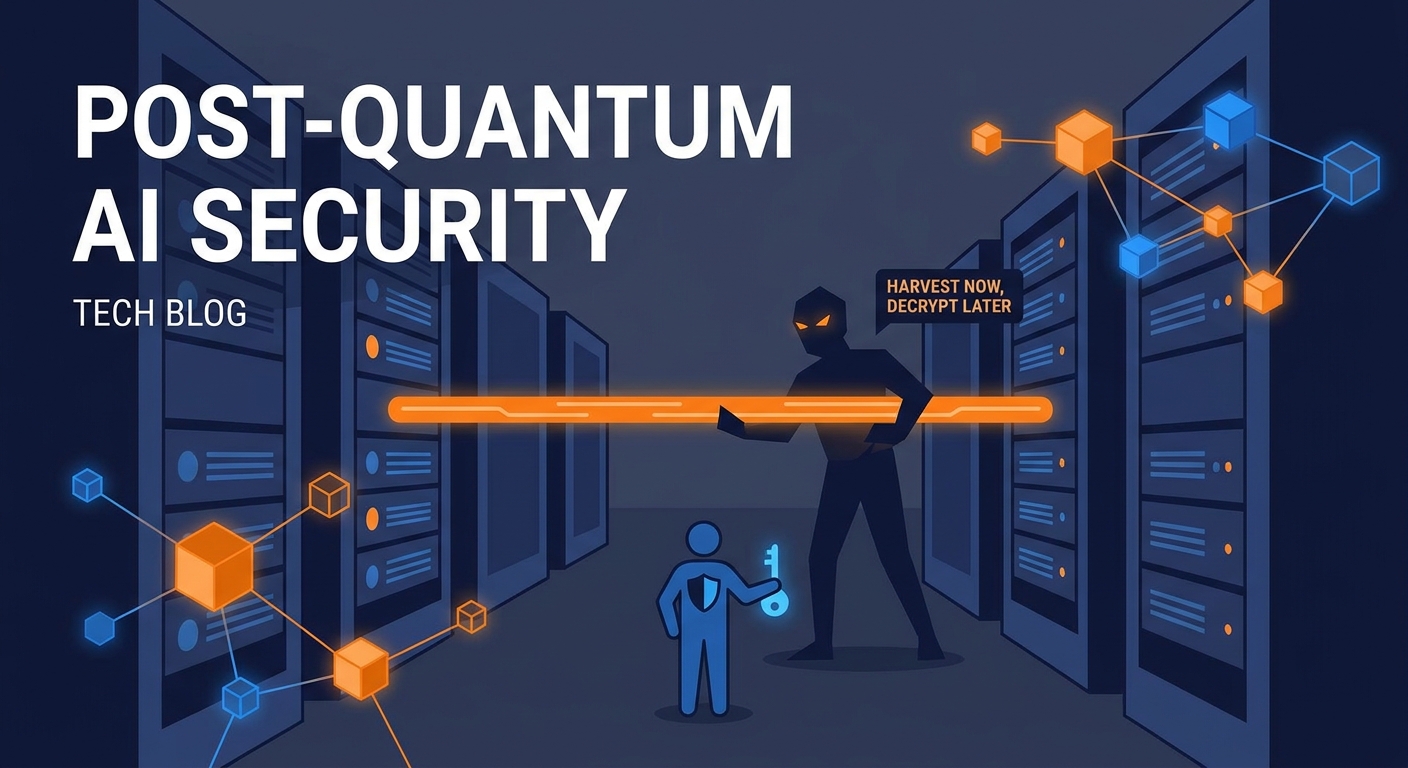
We’ve hit a wall. Large Language Models (LLMs) are everywhere, and quantum research has hit a stride that even the skeptics didn't expect. If you’re a CISO or an infrastructure architect, your biggest nightmare right now shouldn't be a smash-and-grab data breach. It should be the silent, patient threat of SNDL (Store Now, Decrypt Later).
SNDL isn't some sci-fi plot; it’s the standard operating procedure for state-sponsored actors and top-tier cyber syndicates today. They are vacuuming up your encrypted traffic, your model weights, and your proprietary training sets. They don’t need to hack you today. They just need to park your data in a digital graveyard and wait for a quantum computer running Shor’s algorithm to come online. Once that happens, your "secure" data is effectively published on the internet. As noted in the World Economic Forum: Quantum Computing Governance, waiting for the "right time" to upgrade is a strategy for failure. You have to move before the threat is live.
Why Are Traditional Encryption Methods Failing Our AI Models?
Look at the stack. Almost everything we rely on—TLS, API authentication, data-at-rest encryption—is built on RSA or Elliptic Curve Cryptography (ECC). These systems rely on the assumption that certain math problems, like integer factorization, are too hard to solve.
Quantum computers don't care how "hard" those problems are. They solve them in seconds.
For an AI shop, this is an existential crisis. Your model weights and fine-tuned parameters are "High-Value Long-Life" (HVLL) assets. They represent millions in compute costs and years of R&D. If someone steals them today, they are compromised for the rest of their existence. It doesn't matter if they can read the files right now; they own your secret sauce the second they hit that "decrypt" button in the future.
The MCP Security Gap: Protecting the New AI Attack Surface
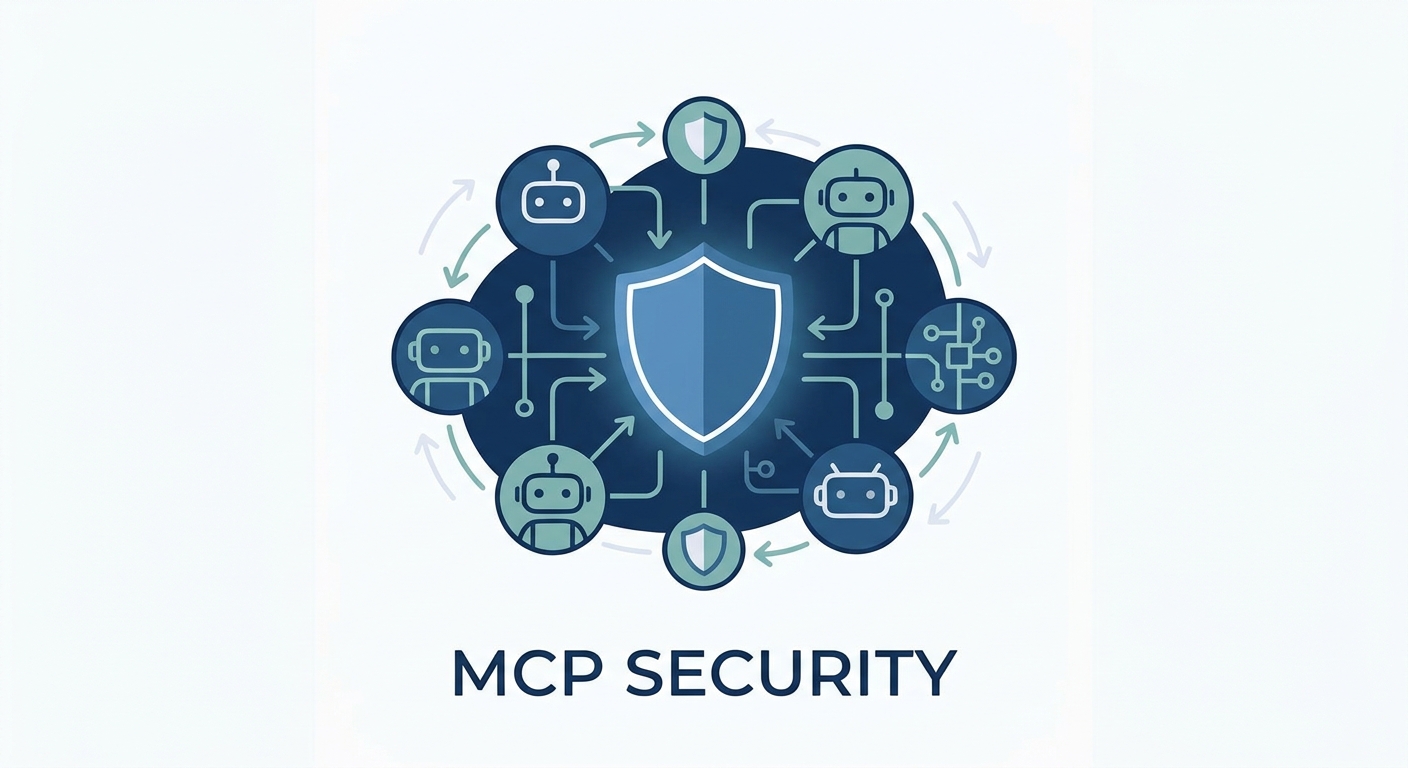
The Model Context Protocol (MCP) is a game-changer for AI integration. It lets models talk to local data and external tools with incredible speed. But that convenience comes with a massive security blind spot.
Most Web Application Firewalls (WAFs) and legacy API gateways are totally blind to the way MCP moves data. They see encrypted traffic and treat it as "opaque"—they don't know what it is, so they let it pass. This means if an attacker gets a foothold in your MCP-connected environment, they can pivot through your infrastructure like they’re walking through an open door. No alarms, no friction.
You need to close this loop. Check out our Post-Quantum MCP Security Guide for the specifics. While the Model Context Protocol (MCP) Documentation gives you the keys to the kingdom, it’s up to you to make sure those keys aren't made of glass.
What Is the "Crypto-Agility" Mandate?
If you’re hard-coding your encryption standards into your AI pipeline in 2026, you’re building your house on sand.
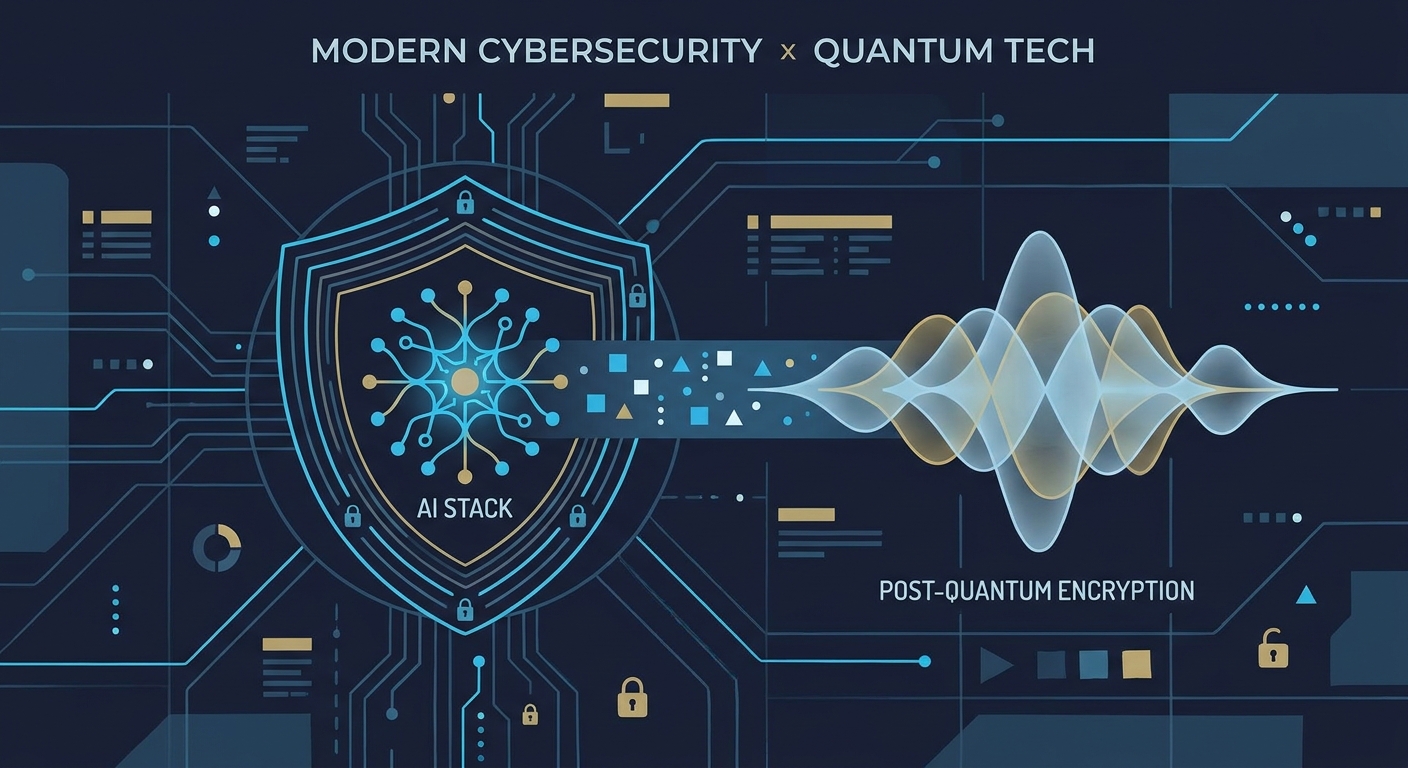
"Crypto-agility" is the ability to swap out your encryption methods without tearing down the entire building. The industry is pivoting to hybrid cryptography: pairing the reliable, battle-tested AES-256 with NIST-approved, post-quantum algorithms like ML-KEM (Kyber). By following the NIST Post-Quantum Cryptography Standards, you keep your current compliance happy while layering in a defense that can actually stand up to a quantum processor.
How Can We Implement a 2026 Roadmap to Quantum Resilience?
This isn't a weekend project. It’s a total shift in how you handle infrastructure.
- Step 1: Audit. You can’t protect what you don’t see. Catalog every piece of HVLL data you have—training sets, checkpoints, and model weights.
- Step 2: Hybridize. Stop using pure RSA/ECC. Move to dual-layer encryption for both data-in-transit and data-at-rest.
- Step 3: Monitor. You need security agents that understand protocol-level traffic, not just basic firewalls.
For a deep dive on how to execute this, read The 2026 Roadmap to Post-Quantum AI Infrastructure Security.
Can AI Actually Help Defend Against Quantum Threats?
It’s ironic, but the best way to fight the quantum threat is to use the very thing the threat is trying to steal: AI.
We are deploying autonomous security agents that can spot weird traffic patterns that would fly right past a human analyst. In a quantum-resistant setup, these agents act like a digital nervous system, catching probes and manipulation attempts before the bad guys even get close to the data. It turns your security from a static wall into a dynamic, living defense.
Frequently Asked Questions
If I don't have a quantum computer yet, why should I care about quantum security in 2026?
The SNDL (Store Now, Decrypt Later) threat is real. Adversaries are currently harvesting encrypted data that they cannot read today, anticipating that they will be able to decrypt it once quantum hardware reaches maturity. If your data needs to remain secret for more than 2-3 years, you are already at risk.
Does post-quantum cryptography slow down my AI model inference?
There is a minor latency trade-off due to the increased size of keys and signatures in PQC algorithms. However, modern hybrid implementations are optimized for high-performance AI environments, and the performance impact is negligible compared to the risk of total data exposure.
Is my current AI infrastructure "Quantum-Safe" by default?
No. Standard TLS and traditional encryption frameworks rely on RSA and ECC, both of which are inherently vulnerable to quantum attacks using Shor’s algorithm. They were designed for a pre-quantum world and require significant upgrades to be considered secure by 2026 standards.
How does Gopher Security help with MCP deployments?
Gopher provides a granular policy enforcement layer that sits between your AI models and your data sources. We ensure that all MCP traffic is encrypted using quantum-resistant standards, mitigating the risk of lateral movement and unauthorized model access.