Model Context Protocol Security: A Comprehensive Guide to Strengthening MCP Deployments

TL;DR
- ✓ Understand why the Model Context Protocol lacks built-in security controls by design.
- ✓ Learn to mitigate ambient authority risks during LLM and tool interactions.
- ✓ Adopt an AI-SPM mindset to treat every MCP server as a potential threat.
- ✓ Prevent confused deputy attacks and SSRF through granular access control policies.
The Model Context Protocol (MCP) has become the connective tissue of the modern enterprise AI stack. It’s everywhere. In fact, over 80% of enterprise cloud environments are already running it. But here is the uncomfortable truth: that rapid adoption has left a massive security vacuum in its wake.
MCP makes it incredibly easy for agents to discover and talk to tools. That’s the point. But the protocol was built for interoperability, not safety. By design, it lacks built-in security controls. When you deploy an MCP server, you’re effectively handing the keys to the kingdom to any runtime-discovered entity.
If you want to keep your infrastructure standing, stop thinking about perimeter defense. You need an AI Security Posture Management (AI-SPM) mindset. Treat every MCP server like a potential point of compromise, not a trusted friend.
The "Protocol Gap": Why MCP is Inherently Risky
The core issue is what we call the "Protocol Gap." The MCP spec focuses on the "how" of tool discovery and execution. It’s a language for machines to talk to machines. But it intentionally leaves the heavy lifting—authentication, authorization, and transport security—to you.
This creates a friction point that attackers love: the tension between developer convenience and system integrity.
The biggest threat here is "ambient authority." When you give an LLM access to an MCP server, that server inherits the permissions of your host environment. If your host can read and write to your production database, the agent can too. And if a malicious prompt is injected into that agent? Game over. The agent traverses multi-hop trust chains without a single human ever looking over its shoulder.
How Attackers Break Your MCP Deployments
You need to be paranoid. If you aren't thinking like an attacker, you've already lost.
The "Confused Deputy" problem is the classic nightmare scenario. A malicious user crafts a prompt that tricks the LLM into using a tool in a way the developer never intended. Maybe they bypass a file-read restriction by chaining together a series of legitimate, "safe" tool calls.
Then there’s Token Passthrough and Server-Side Request Forgery (SSRF). Many MCP servers operate on blind trust. If an attacker compromises the host, they can use the MCP server as a proxy, tunneling through your network boundaries to exfiltrate data from internal APIs that were supposed to be off-limits.
And don't forget the supply chain. Look at the 2025 Postmark Incident. A simple, legitimate tool update introduced a hidden exfiltration hook. Code signing isn't a "nice to have" anymore—it’s mandatory. If an attacker manages to inject a rogue server into your discovery path, they own your internal tool catalog.
The Lethal Trifecta: Why Your AI Agent is a Liability
Your AI agents are currently operating in a massive blind spot. Traditional security tools like EDR (Endpoint Detection and Response) are great at watching human-to-OS traffic. But they are completely blind to the semantic-heavy, complex chatter happening between an agent and an MCP server.
This creates a "Lethal Trifecta": untrusted input, high-privilege access, and total autonomy. As the NSA’s security design considerations for AI-driven automation point out, we lack visibility into agent-to-agent communication. Once an agent is compromised, lateral movement becomes trivial. Legacy tools just won't catch it.
Hardening Your MCP Infrastructure: A Survival Guide
How do you fix this? You build a multi-layered defense. Forget basic authentication; it’s not enough.
- Move to OAuth 2.1: Ensure every tool call carries a scoped, short-lived identity token.
- Mandate Attestation: Before your host executes a tool, verify the server’s identity against a known-good registry. If it isn't on the list, it doesn't run.
- Enforce Policy at Runtime: Use guardrails. Inspect the intent of the agent’s request before it hits the tool. If the request looks sketchy, block it—even if the agent has the right permissions.
The Quantum Reality: "Harvest Now, Decrypt Later"
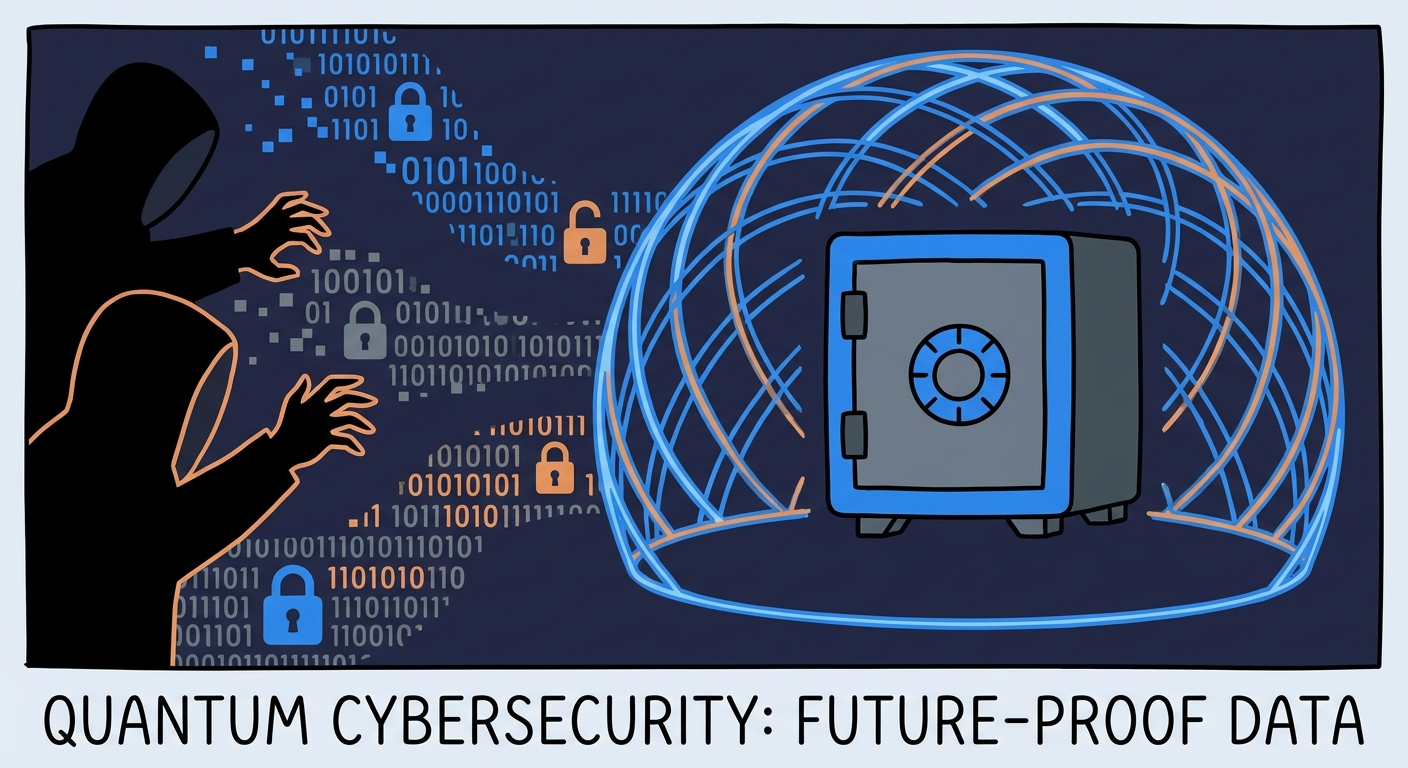
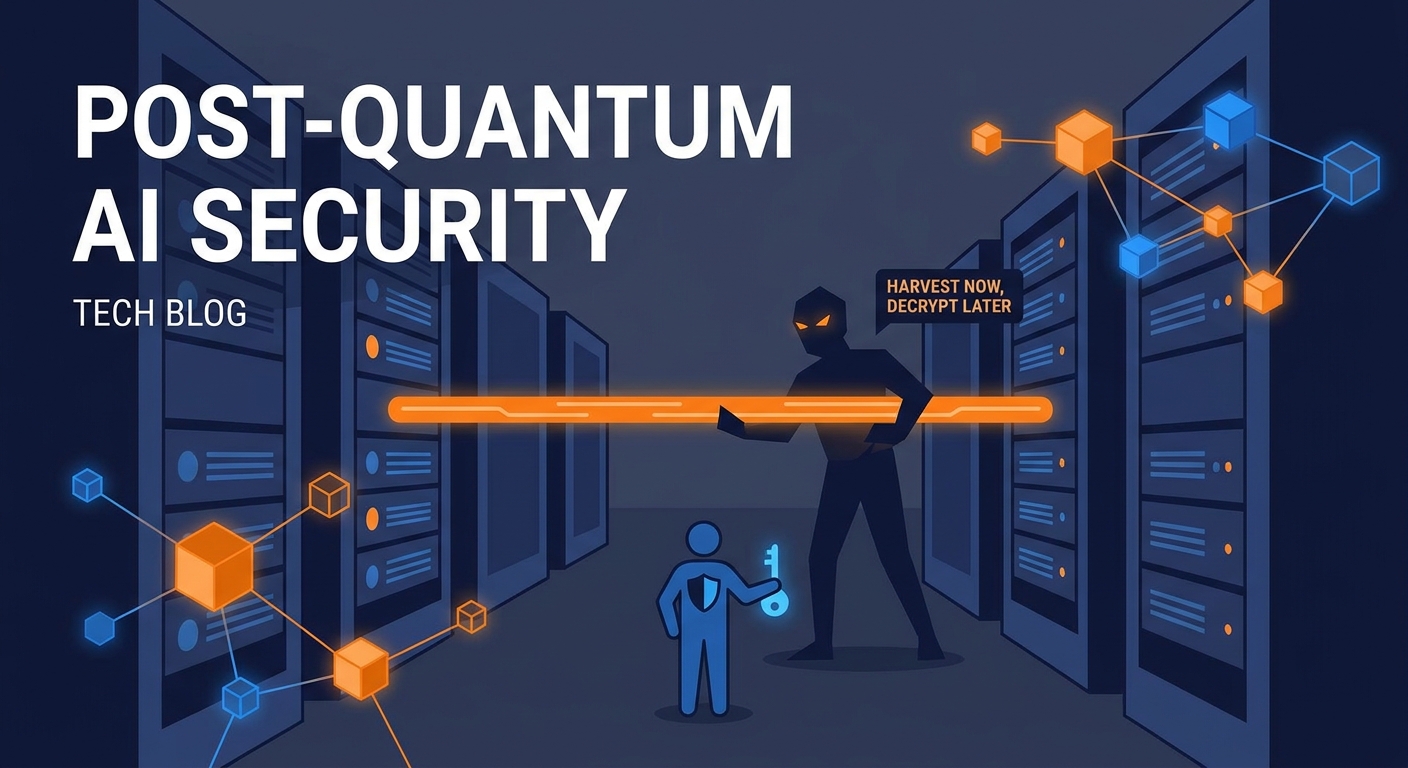
We have to talk about the long game. Adversaries are currently capturing encrypted agent-to-server traffic. They have no way to read it today, but they are betting on the future. They are playing the "Harvest Now, Decrypt Later" (SNDL) game, waiting for quantum computing to catch up.
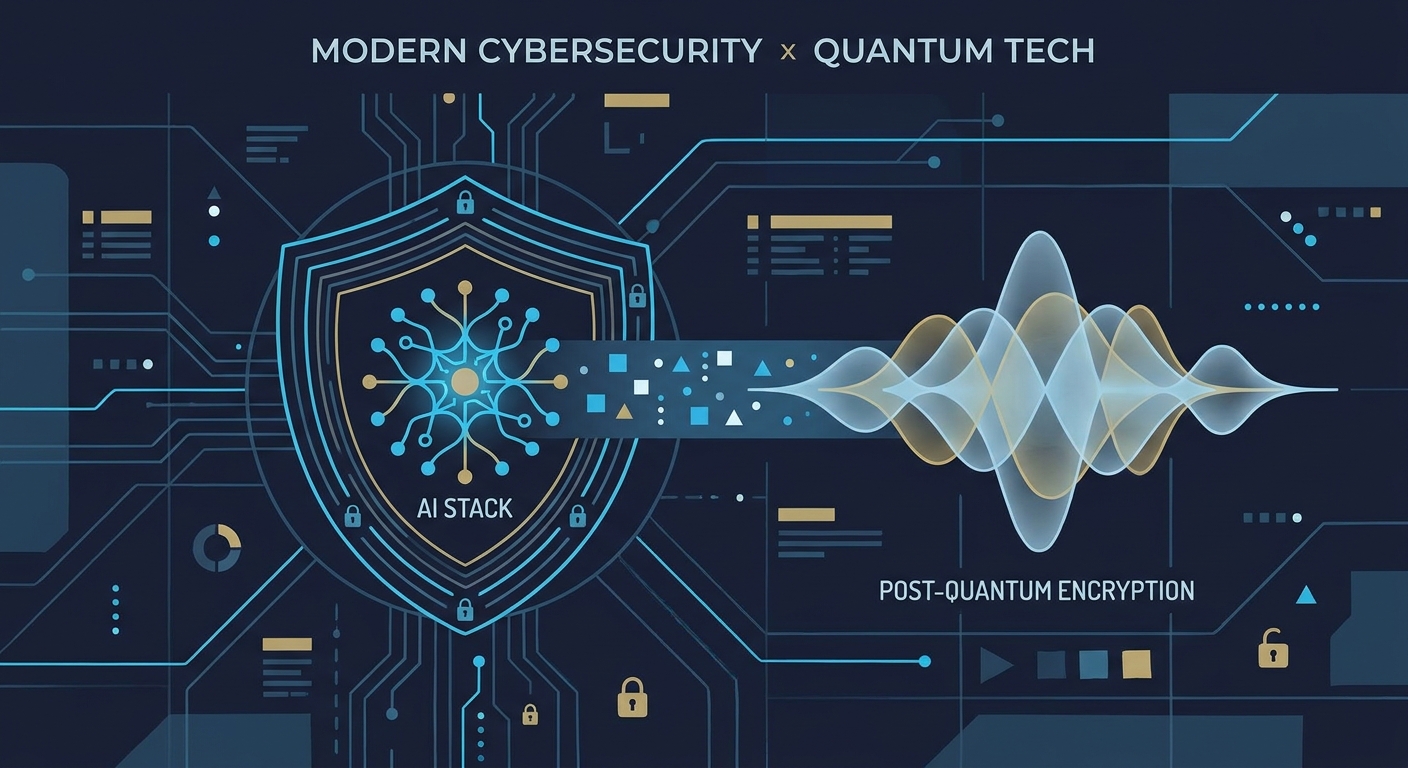
If your organization handles proprietary code or sensitive PII, post-quantum hybrid cryptography is your only baseline. Ignoring this is a gamble you cannot afford to take.
The 50-Point MCP Security Audit Checklist
Don't wait for a breach. Run this audit immediately:
- Infrastructure: Is your MCP traffic running on TLS 1.3? Are you using network segmentation? Do you have strict egress filtering on your server instances?
- Code-Level: Have you audited your custom MCP servers for command injection? Are you sanitizing inputs at the tool interface? Is your logging capturing not just the request, but the intent behind it?
- Supply Chain: Do you have a strict "allow-list" for MCP packages? Are you using cryptographic signatures for every internal tool? Is your dependency scanning automated?
If you're staring at this list and realizing you have no idea where your gaps are, assessing your AI infrastructure vulnerabilities is your next logical step.
Conclusion: Stop Trusting Your Agents
The shift to MCP-driven automation isn't optional—it’s the new normal. But you don't have to invite disaster to the party.
The era of "trust by default" is dead. If you want to survive, you have to treat your AI agents exactly how you treat your most dangerous, high-privilege users: with extreme skepticism. Embrace cryptographic verification, enforce runtime policies, and assume everything is a potential threat.
Frequently Asked Questions
Does the Model Context Protocol (MCP) include built-in security features?
No. The MCP specification focuses exclusively on standardizing tool discovery and execution. Security measures, including authentication, authorization, and transport-layer protection, remain the sole responsibility of the implementer.
How do I prevent 'Confused Deputy' attacks in my MCP deployment?
Mitigation requires moving away from broad permission scopes. You must implement granular, per-action authorization where the host verifies the intent and context of every tool call before execution, ensuring the agent cannot execute actions outside of the current task's scope.
Why is post-quantum security relevant to AI agents today?
Data exfiltrated via insecure agent traffic today can be stored by adversaries and decrypted once quantum computing matures. Protecting agent traffic with post-quantum hybrid cryptography is essential for long-term data confidentiality and compliance.
How can I verify that an MCP server is not malicious?
You must enforce strict supply chain governance, including code signing and cryptographic server attestation. This ensures that only authorized, verified MCP packages are registered and allowed to execute within your environment.