How to Secure Model Context Protocol (MCP) Deployments Against Quantum Computing Threats

TL;DR
- ✓ Model Context Protocol lacks native quantum-resistant encryption standards by design.
- ✓ Adversaries use Store Now Decrypt Later strategies to harvest sensitive AI data.
- ✓ Shor’s algorithm will eventually render current RSA and ECC encryption obsolete.
- ✓ Implementing post-quantum cryptographic agility is essential for securing long-term AI data.
- ✓ Secure your MCP infrastructure by moving beyond standard TLS 1.2 and 1.3.
Securing your Model Context Protocol (MCP) deployments against quantum computing isn't just another item for the risk management to-do list. It’s a foundational requirement for any business that actually cares about its data. The Model Context Protocol is the glue that lets AI agents talk to your databases, APIs, and file systems. It’s brilliant, flexible, and—unfortunately—completely crypto-agnostic.
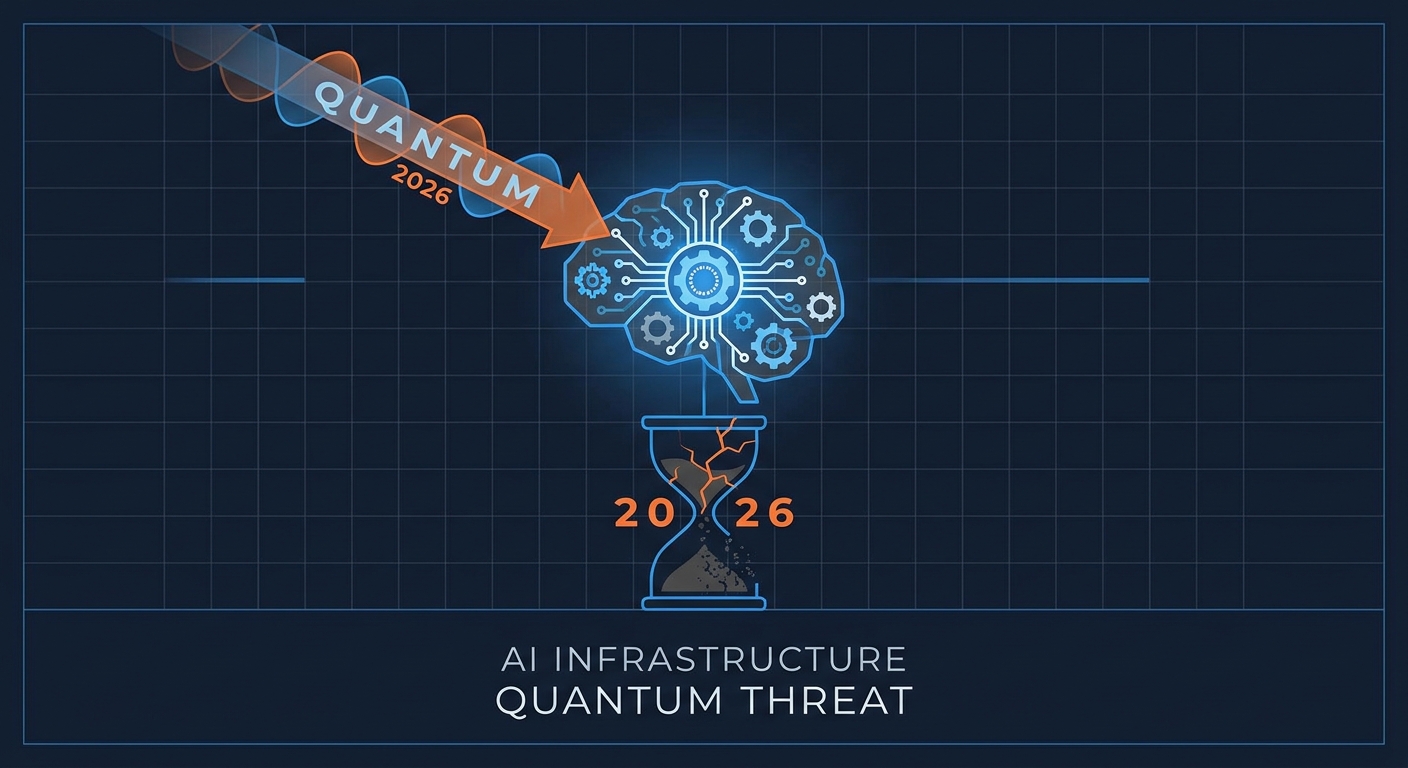
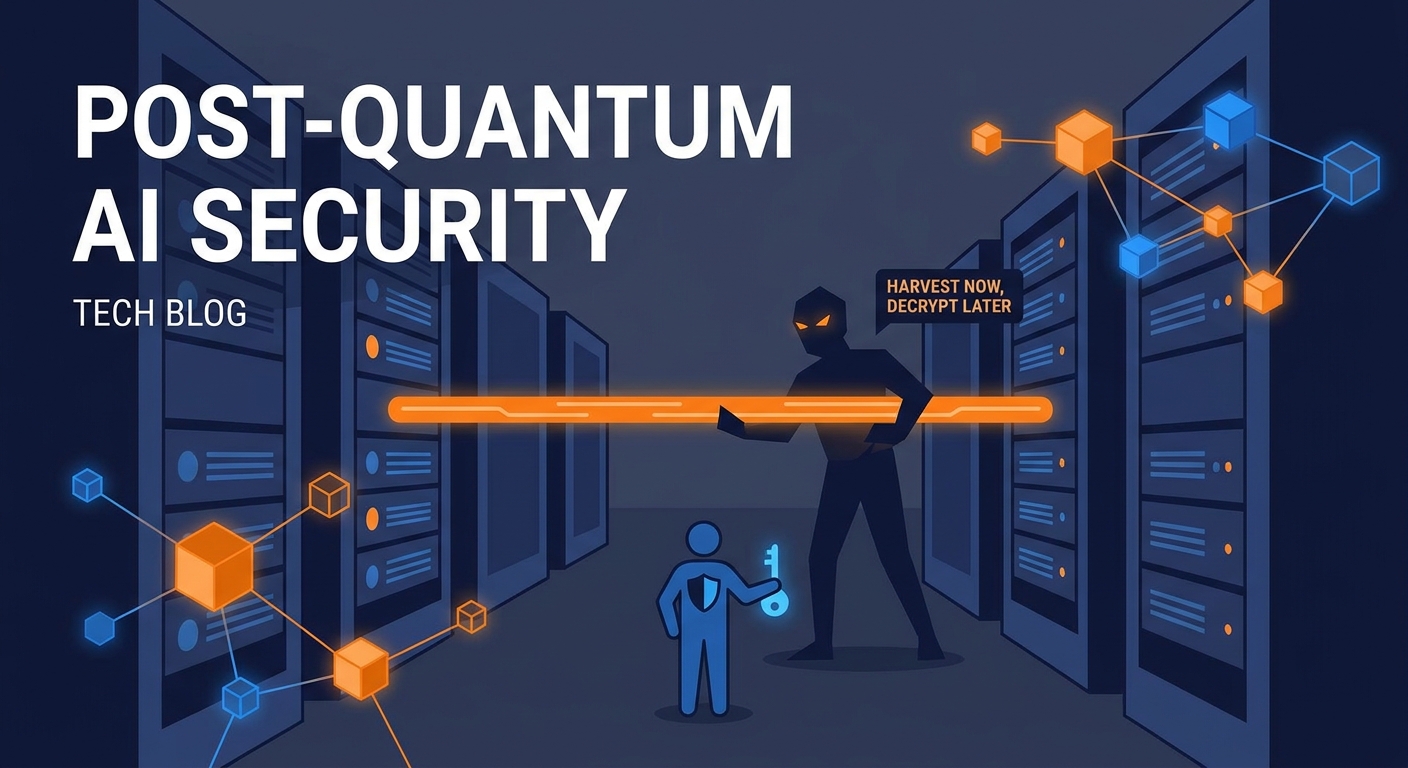
That means the burden of keeping that data safe falls squarely on your shoulders. We’re staring down the barrel of "Q-Day," that inevitable moment when quantum computers finally shatter the encryption standards we’ve relied on for decades. The biggest threat right now isn't an active hack; it’s the "Store Now, Decrypt Later" (SNDL) strategy. Bad actors are vacuuming up encrypted traffic today, waiting for the tech to catch up so they can crack it wide open tomorrow. To keep your AI-driven enterprise from becoming an open book, you need to ditch standard, vulnerable TLS and embrace post-quantum cryptographic (PQC) agility.
Why MCP is the New Ground Zero for Quantum Attacks
Think of MCP as a bridge. It collapses the distance between your locked-down data silos and the high-speed, hungry environment of an AI agent. By design, it’s meant to be lightweight and easy to implement. But that simplicity creates a "Protocol Responsibility Gap." Because the spec doesn’t force a specific, hardened security suite, most developers just treat MCP connections like standard internal traffic. They slap on some basic TLS 1.2 or early-stage TLS 1.3 and call it a day.
That’s a massive mistake.
When you funnel everything—financial records, proprietary code, customer PII—into a single, persistent stream for an AI agent, you’re basically gift-wrapping a high-value target for attackers. An adversary doesn't need to break your encryption right now. They just need to sniff the traffic and archive the ciphertext. Once Shor’s algorithm matures and renders RSA and Elliptic Curve Cryptography (ECC) obsolete, your "secure" agentic conversations become nothing more than clear-text history.
The Anatomy of an SNDL Attack on MCP
The SNDL attack is a long game. It’s patient. It’s quiet. It assumes that if the data is worth something today, it’ll be worth even more in ten or fifteen years. Every time your agent asks an MCP server for a schema or a dataset, the handshake is the first point of failure.
You don't need to be bypassed at the firewall to get hit. The attacker just needs to be sitting at a network hop or lurking within a cloud provider’s infrastructure. Because standard TLS handshakes rely on math problems that quantum machines will chew through in minutes, the protection on your context-heavy MCP sessions is strictly limited by time.
Why Standard TLS Fails the Quantum Test
Our entire internet security model is built on the belief that factoring massive prime numbers (RSA) or solving discrete logarithms (ECC) is just too hard for classical hardware. We’ve leaned on "Perfect Forward Secrecy" to convince ourselves that even if a server key leaks, past sessions stay locked.
In a post-quantum world, that’s a fairy tale.
Once a quantum computer capable of running Shor’s algorithm hits the scene, the math underpinning RSA and ECC effectively evaporates. Any traffic encrypted with these methods—even if it used Perfect Forward Secrecy—can be retroactively decrypted. If you’re trying to align your security posture, the NIST Post-Quantum Cryptography Standardization project is your new bible. Sticking with legacy TLS suites for sensitive AI context is like locking your front door with a paperclip while leaving your life savings in the driveway.
Implementing a Quantum-Resistant MCP Architecture
Security isn't about one magic fix; it's about building layers that prioritize agility over rigid, hardcoded protocols.
Step 1: The Hybrid Cryptography Approach
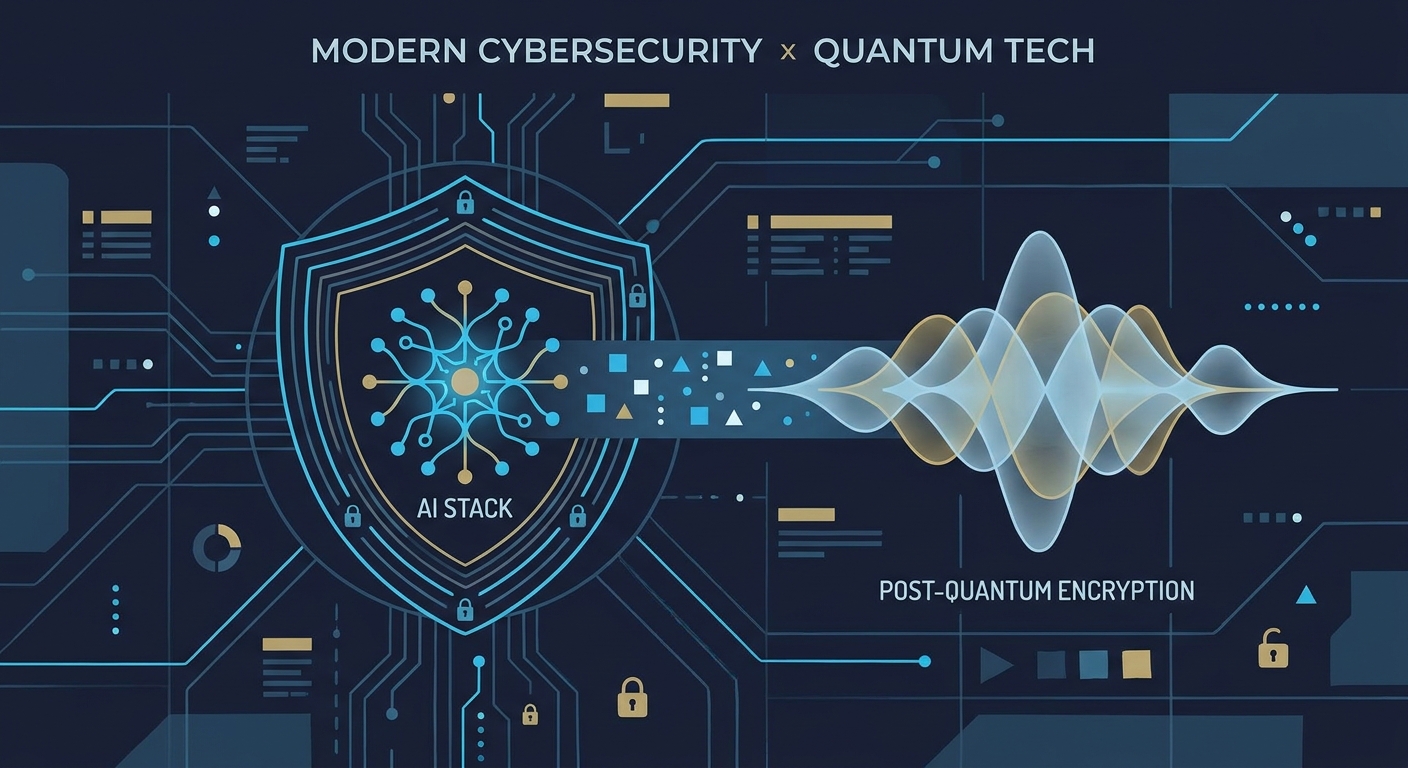
Don't throw out your classical encryption—wrap it. By layering classical AES-256 with NIST-standardized algorithms like ML-KEM (formerly Kyber), you force an attacker to break two entirely different types of math to get your data. It’s a hybrid approach that keeps you compliant with today’s regulations while creating a safety net for tomorrow’s quantum threats.
Step 2: Securing MCP Endpoints with Zero-Trust
Stop treating your MCP endpoints like trusted insiders. Treat them like they’re already compromised. Implement micro-segmentation that makes lateral movement a nightmare for attackers. Even if an MCP server gets popped, your security policies should force re-authentication for every single context-request cycle. When you’re setting this up, check out the OWASP AI Security Project. It’s the best resource for handling the prompt injection and data poisoning risks that usually travel alongside transport-layer vulnerabilities.
Step 3: Cryptographic Agility
Hardcoding your security stack is a recipe for disaster. You need to build your MCP wrapper to be cryptographically agile. Think of it as a modular design—you should be able to swap out algorithms without ripping the whole agentic stack apart. This flexibility lets you update your encryption as NIST standards evolve or as new PQC vulnerabilities pop up. We’ve outlined how to actually build this into your CI/CD pipelines in our Future-Proof Blueprint for 2026.
What Does a "Quantum-Ready" MCP Workflow Look Like?
A truly hardened MCP connection isn't just "connect and pray." It’s an active verification process that checks the server's identity against a quantum-hardened trust store before a single byte of context is exchanged.
Think about an enterprise agent pulling PII from a legacy database. In a standard setup, that data is streaming across the wire, just waiting for an SNDL attack. In a quantum-ready workflow, the agent hits a PQC-ready gateway first. The gateway validates the agent’s credentials and opens a hybrid-encrypted tunnel. If a bad actor tries to intercept that, they’re just grabbing high-grade, hybrid-encrypted noise. It’s useless to them now, and it’ll be useless to them even after Q-Day.
Operationalizing Security: The 2026 Compliance Checklist
Auditing your MCP deployments is a chore, but it’s a necessary one. You need to find every single spot where data might be leaking.
- Inventory: Map out every single MCP server and rank the sensitivity of the data they handle.
- Transport Audit: Check your current setup. Does it actually support TLS 1.3 with PQC extensions?
- Policy Review: Stop using static API keys. Move to time-bound tokens and enforce the principle of least privilege.
- Library Update: Scrub your codebase for outdated crypto libraries. Replace them with NIST-approved PQC primitives.
- Continuous Monitoring: If you aren't logging and alerting on weird handshake patterns, you’re flying blind.
For the nitty-gritty, check out our Post-Quantum AI Infrastructure Security FAQ. It’s got the code-level guidance you’ll need to get this done in common dev environments.
Navigating the Future: Cryptographic Agility as a Strategy
The best security teams stop chasing static "perfection" and start building for adaptation. Security debt is the silent killer here—it piles up every time you prioritize speed over the integrity of your data. If you treat your cryptographic stack as something that should be swappable and modular, you stop being a victim of technological shifts and start being an architect of your own resilience.
Security isn't a one-and-done patch. It’s a permanent state of hardening and re-evaluation. The quantum threat is just a catalyst for better, tougher engineering. Start your PQC audit today. Your AI agents are only as safe as the context they consume, and in this era of quantum uncertainty, that context is your most valuable asset. Protect it.
Frequently Asked Questions
Is the Model Context Protocol (MCP) inherently insecure against quantum attacks?
The MCP specification itself is crypto-agnostic, meaning it does not mandate specific encryption methods. It is not "insecure," but it is an empty vessel regarding security; the responsibility falls entirely on the developer to implement robust, future-proof transport layers to wrap the protocol.
Does my current TLS encryption protect me from future quantum decryption?
No. Standard TLS relies on RSA or ECC, both of which are vulnerable to Shor’s algorithm. Traffic intercepted and stored today using these methods will be decryptable once quantum computers reach sufficient scale, leaving your historical data exposed to an SNDL (Store Now, Decrypt Later) attack.
What is the "Hybrid" approach to PQC, and why is it recommended for 2026?
The hybrid approach combines classical encryption (like AES-256) with new post-quantum algorithms (like ML-KEM). It is recommended because it provides "defense-in-depth": if the new PQC algorithm is found to have a flaw, the classical layer still provides traditional security, and if the classical layer is broken by quantum, the PQC layer provides the necessary protection.
How do I audit my existing MCP agents for quantum readiness?
Start by identifying every endpoint that transmits sensitive data. Review your transport layer configuration to see if it allows for modern PQC algorithms. If your system depends on hardcoded RSA/ECC certificates without an option to swap to PQC-compliant ones, you have a critical vulnerability that requires immediate remediation.