The 2026 Guide to Post-Quantum AI Infrastructure Security: Protecting Model Context Protocol (MCP)

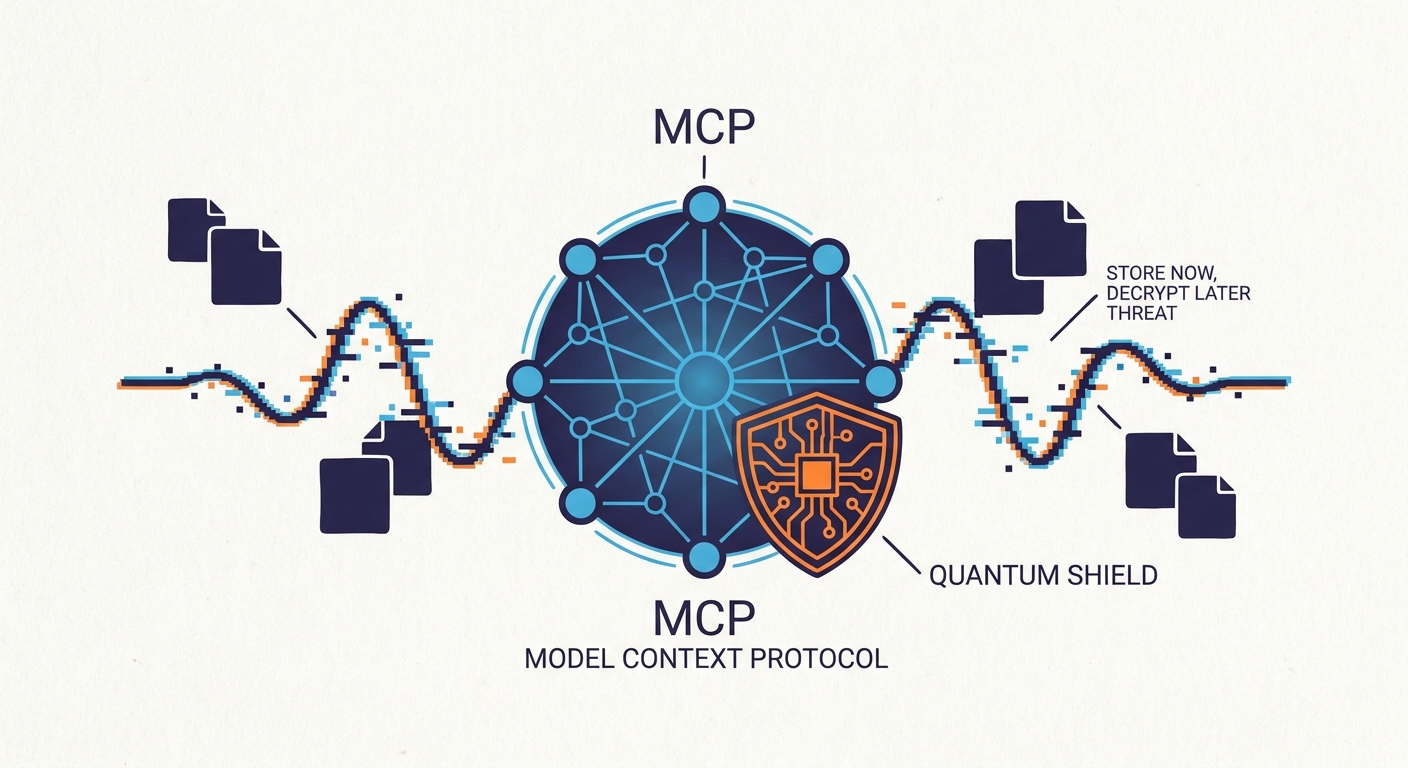
TL;DR
- MCP traffic is vulnerable to 'Store Now, Decrypt Later' quantum attacks.
- Current RSA/ECC encryption will be obsolete against future quantum computers.
- 2026 mandates quantum-readiness for all enterprise AI infrastructure.
- Implement hybrid cryptography (ML-KEM) to secure data without breaking legacy systems.
By 2026, the silence of your network traffic is a total lie. If you’re running agentic workflows via the Model Context Protocol (MCP), you are likely piping high-value proprietary data over legacy encryption standards that are, for all intents and purposes, transparent to state-level adversaries.
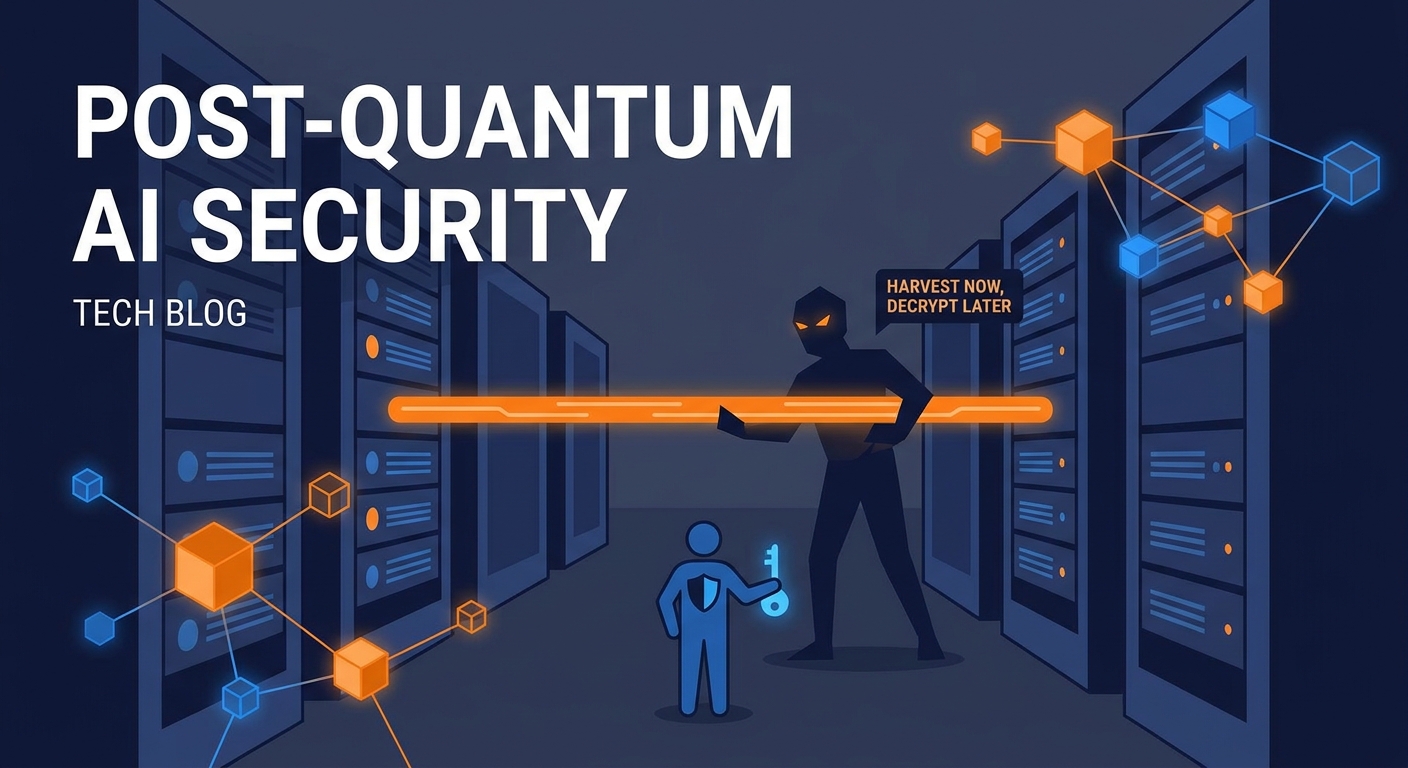
Let’s be blunt: the "Store Now, Decrypt Later" (SNDL) crisis isn’t a sci-fi problem for the 2030s. It is the immediate, burning reality for anyone building AI infrastructure today. Because MCP acts as the universal connective tissue between your AI hosts and your most sensitive enterprise data, securing that transport layer against quantum-enabled eavesdropping is the single most critical project on your 2026 roadmap. If you ignore this, you’re essentially handing your future secrets to whoever is harvesting your traffic right now.
Why the MCP Stack is a Quantum Liability
The Model Context Protocol (MCP) usually relies on JSON-RPC over Server-Sent Events (SSE) or WebSockets. It’s efficient. It’s fast. It’s great for real-time reasoning. But from a security standpoint, it’s built on sand. The underlying security—typically TLS 1.2 or 1.3 using RSA or Elliptic Curve Cryptography (ECC)—is fundamentally fragile.
These algorithms rely on integer factorization and discrete logarithms. They’re great at stopping a laptop-wielding script kiddie, but they are no match for a fault-tolerant quantum computer (FTQC). These machines will eventually tear through classical protections like they aren't even there.
The real danger? Interception. An adversary capturing your encrypted MCP streams today doesn't need to break them now. They just store the data. Once quantum hardware matures, they’ll retroactively peel back the layers of your historical traffic, exposing years of private prompts, API keys, and internal strategy documents. This isn't just alarmism. The ACSC Quantum Transition Milestones have signaled a massive regulatory shift. 2026 is the year "quantum-readiness" stops being an experimental checkbox and starts being a mandatory requirement for keeping your business alive.
Cryptographic Agility: Staying Secure Without Breaking Everything
The industry is buzzing about "cryptographic agility"—the ability to swap out encryption methods without blowing up your entire tech stack. You can't just flip a switch to "quantum-proof" without risking massive downtime or breaking legacy integrations. That’s a recipe for a disaster.
Instead, the move for 2026 is Hybrid Cryptography.
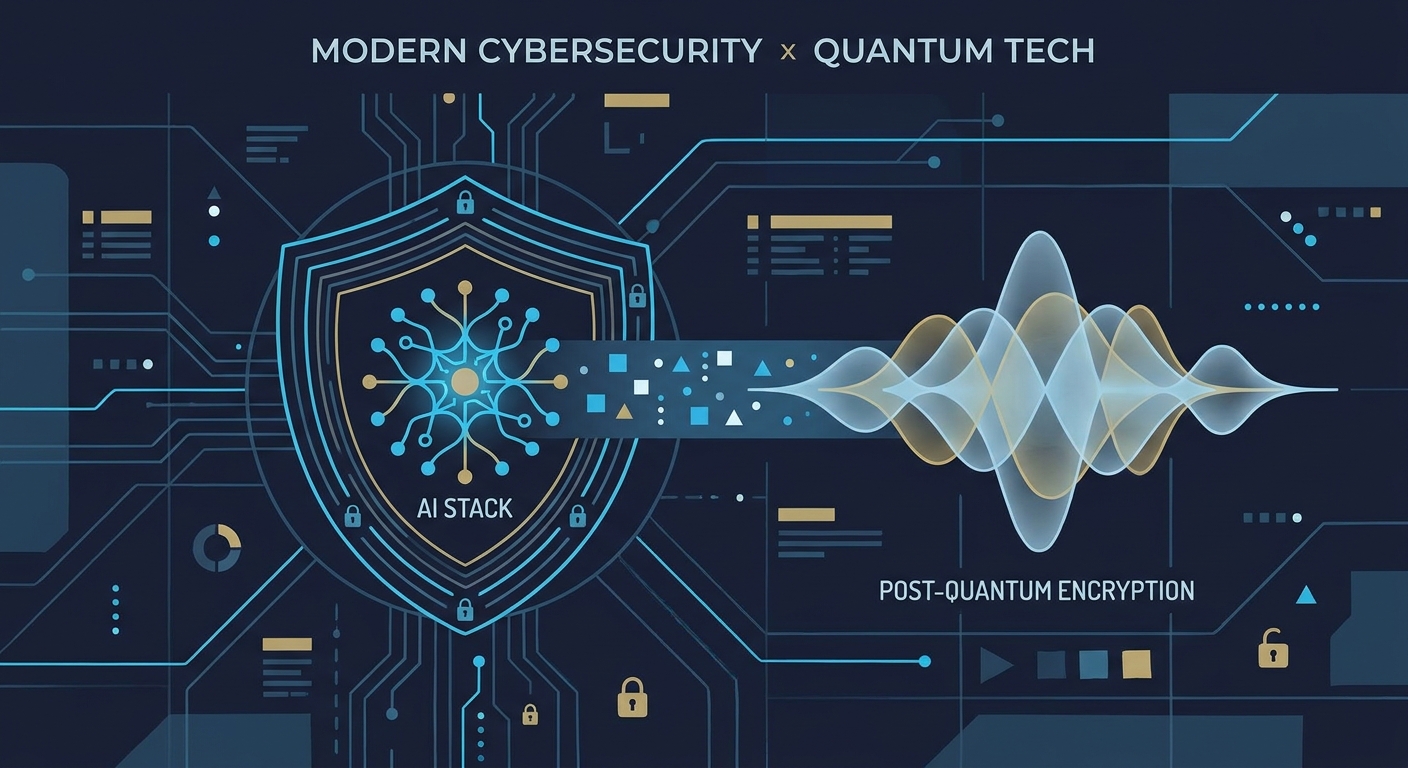
Think of it as a belt-and-suspenders approach. You layer post-quantum algorithms like ML-KEM (Kyber)—the NIST Post-Quantum Cryptography Standardization leader—right over your existing classical standards. If the classical layer gets cracked, your quantum-resistant layer is still holding the line. It keeps your MCP clients and servers talking to your legacy systems while slamming the door shut on future threats.
Where do you start? Audit your endpoints. If you’re staring at your architecture and have no idea where your most sensitive traffic lives, an Gopher Security Infrastructure Audit is the best way to figure out which MCP nodes need an immediate upgrade.
Mapping the MCP-Specific Threat Model
Transport security is only half the battle. Because MCP is designed to facilitate dynamic context injection, it creates a massive attack surface. A malicious prompt injected at the server level can poison your AI’s decision-making process before you even realize something is wrong.
Transport security (PQC) prevents interception, sure. But it does absolutely nothing to stop a compromised MCP server from feeding garbage or malicious context to your model. You need a dual-layered defense: PQC for the pipe, and strict policy enforcement for the data passing through it.
Beyond Encryption: Securing the "Context"
If your infrastructure is quantum-resistant but your prompts are unverified, you’ve basically built an impenetrable fortress that’s already housing a Trojan horse. The Model Context Protocol Specification gives you the framework for communication, but it doesn't do the hard work for you. It’s up to you to enforce the "who" and the "what."
Granular Identity and Access Management (IAM) is non-negotiable. Every single MCP tool call needs to be an authenticated, authorized request. Move toward policy-as-code. Stop relying on manual reviews and start using automated enforcement that inspects context payloads for prompt injection or data leaks before they touch your LLM. Using a proven approach to AI Policy Enforcement ensures that even if a transport layer is breached, the data itself remains locked down by strict access policies.
The 2026 Strategic Roadmap
Don't try to do this all in one weekend. Moving to a post-quantum architecture is an iterative grind. Follow this:
- Phase 1: Inventory. Catalog every MCP endpoint. Rank them by sensitivity. If it touches PII or your internal roadmap, it’s Tier 1. Treat it that way.
- Phase 2: Assessment. Use automated tooling to find high-risk traffic patterns and identify those legacy protocols that simply won't play nice with hybrid encryption.
- Phase 3: Pilot. Test hybrid transport layers on non-critical nodes. Check the latency. Make sure your connections stay stable under load.
- Phase 4: Full Transition. Standardize PQC across all enterprise-grade MCP integrations. Rip out the legacy-only endpoints. No exceptions.
Frequently Asked Questions
Does my current MCP implementation need a total rewrite to become quantum-resistant?
No. By implementing a hybrid cryptographic wrapper, you can secure your existing MCP infrastructure without rewriting your core agentic logic. Focus on upgrading your TLS termination points and gateways to support both classical and post-quantum key exchange mechanisms.
When should we realistically start implementing PQC in our AI infrastructure?
You should begin now. The "Store Now, Decrypt Later" threat means that data captured today is already at risk. For organizations handling sensitive or long-term data, the delay is already a liability.
Is PQC enough to secure an AI agent against prompt injection and data poisoning?
Absolutely not. PQC secures the transmission pipe, but it does not evaluate the intent of the data passing through it. You must pair transport-layer security with content-aware policy enforcement to mitigate adversarial prompt injection.
How do we balance the performance overhead of hybrid encryption with the latency requirements of real-time AI agents?
Hybrid encryption does introduce a slight latency penalty due to larger key sizes and complex mathematical operations. However, for most MCP-based workflows, this overhead is negligible compared to the inference time of the LLMs themselves. Optimize by offloading cryptographic operations to dedicated hardware security modules (HSMs) or optimized software libraries.