Protecting AI-Driven Environments: 5 Strategies for Post-Quantum Security

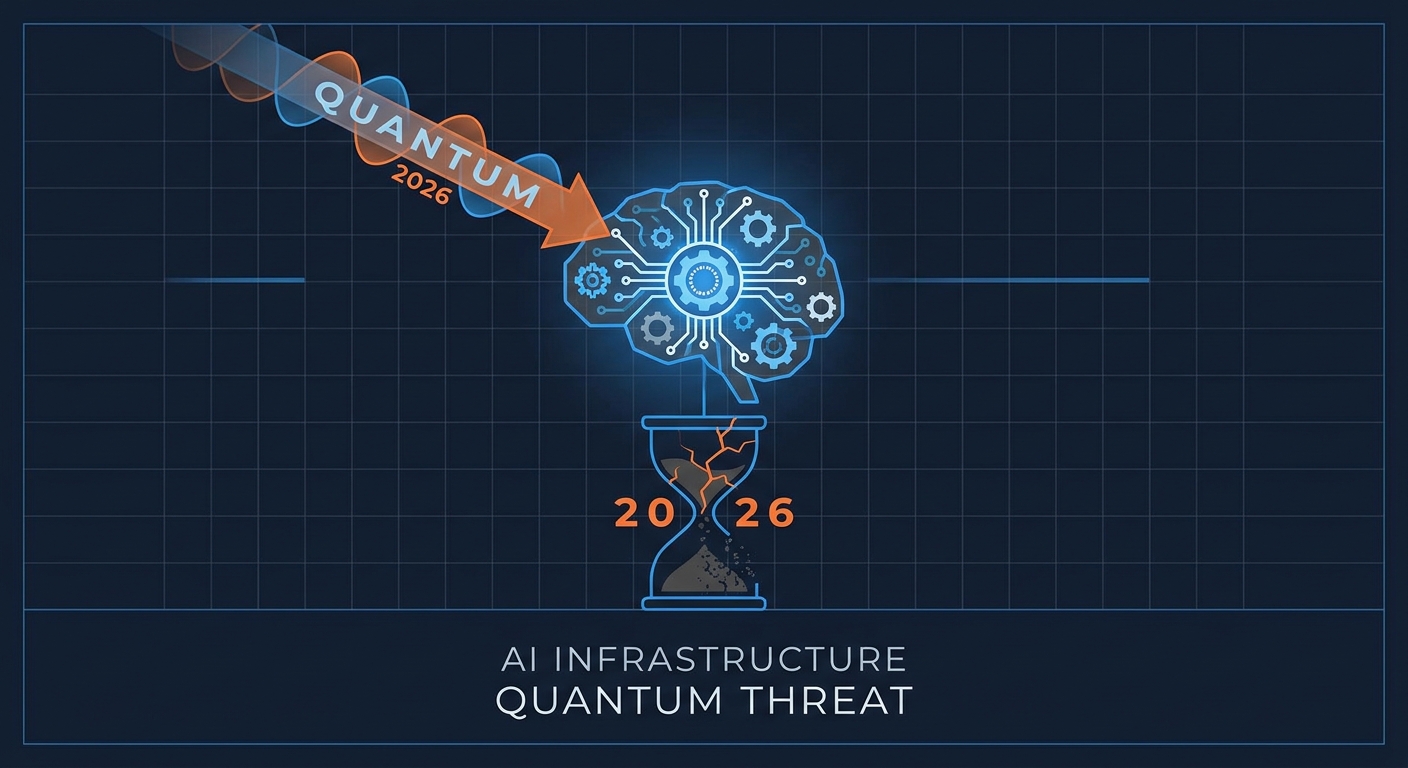
The clock is ticking toward a 2029 "Q-Day." That’s the moment when quantum computing power will effectively turn our current cryptographic standards—the very bedrock of the internet—into digital confetti. For enterprise CTOs, this isn’t some academic debate for the next decade. It is a direct, immediate threat to the integrity of every AI-driven ecosystem you’ve built.
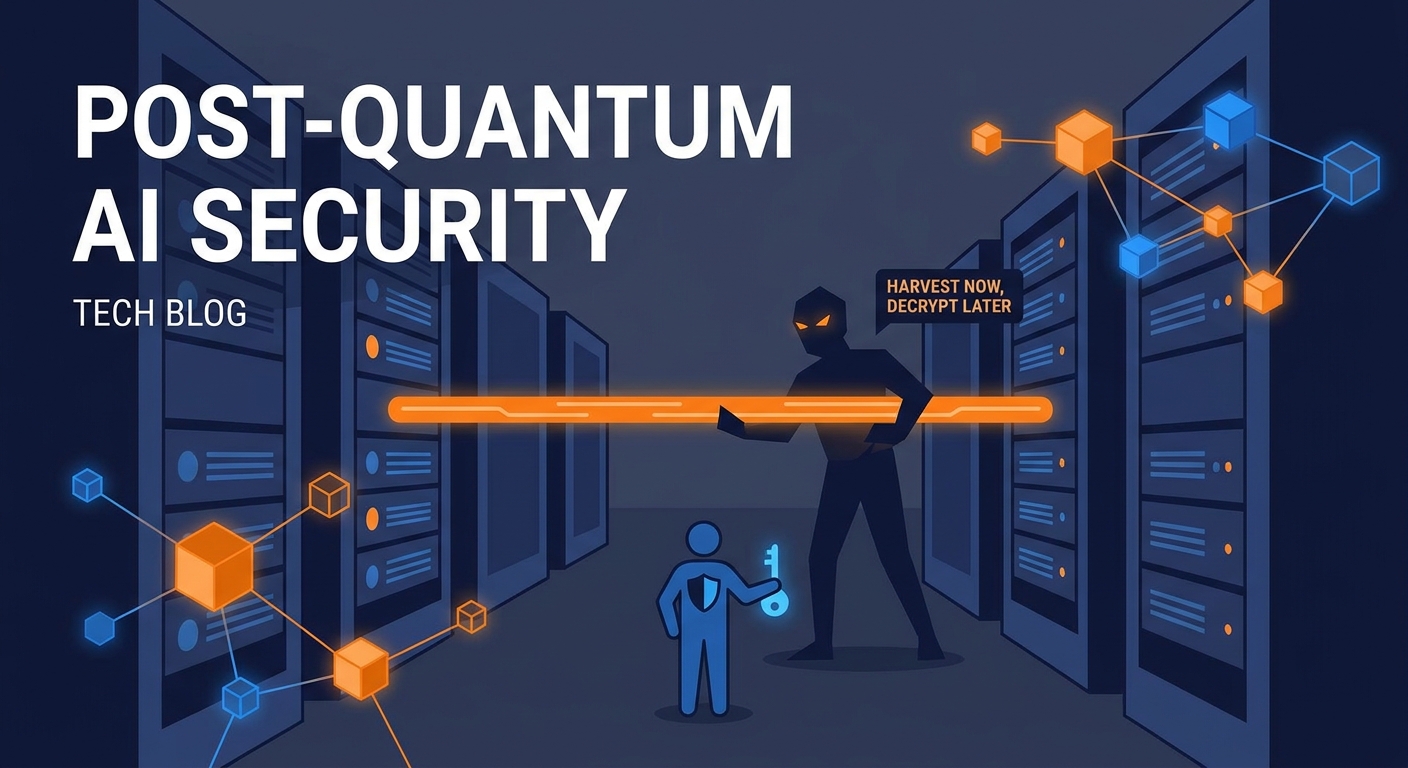
As detailed in the 2029 Q-Day Timeline, the window to get your act together is slamming shut. AI pipelines are particularly vulnerable. They ingest and process massive volumes of sensitive, long-lived data, making them the prime targets for "Harvest Now, Decrypt Later" (HNDL) attacks. If you’re still relying on static security models, you’re already behind. It’s time to pivot to structural crypto-agility.
1. Do You Know Where Your Sensitive AI Data Lives? (The Cryptographic Inventory)
Most AI security failures start with a simple, painful truth: nobody knows what’s going on. We call it "Shadow AI"—the wild west of LLMs and autonomous agents pulling data from obscure databases, file systems, and external APIs via the Model Context Protocol (MCP). If your security team can’t map every single point where data is decrypted for an agent to consume, you aren’t protecting it. You’re just hoping for the best.
A full-stack audit isn't a "nice-to-have" anymore. You need to map the entire lifecycle of your data. We’re talking about everything from the training sets sitting in your data lake to the inference endpoints where agents make real-time decisions. You need to see the movement:
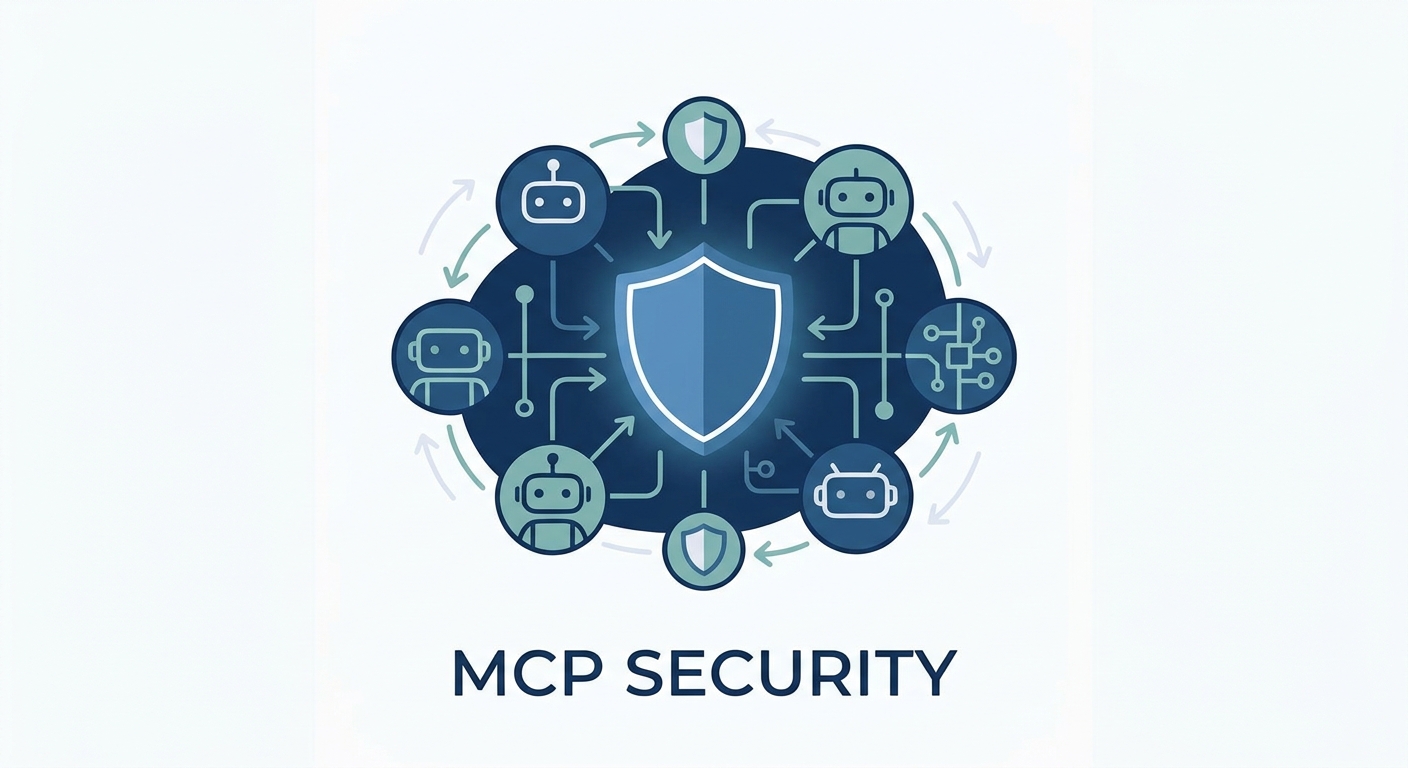
Visualize these gateways. Once you do, you’ll see exactly which nodes need quantum-resistant wrappers. If an agent is pulling proprietary model weights through an unencrypted or classically encrypted MCP tunnel, that data is already being harvested. Adversaries are just waiting for the hardware to catch up so they can crack the vault.
2. Why Should You Prioritize Long-Lived Data for Quantum Protection?
Not all data is created equal. The HNDL threat works because of a simple, cynical reality: encrypted data stolen today can be stored indefinitely. Attackers are just playing the long game, waiting for a cryptographically relevant quantum computer to hit the market.
If your AI training sets, proprietary model weights, or sensitive customer PII have a "shelf-life" of more than five years, they are the crown jewels. Quantum-readiness isn't about encrypting everything under the sun; it’s about triage. Categorize your data. A temporary session token? Sure, it’s important, but it doesn't need the same level of quantum-hardened protection as an intellectual property database that holds your core competitive advantage. Shield the assets with the longest tail of vulnerability first.
3. How Do You Build "Crypto-Agility" Into Your AI Stack?
The biggest mistake you can make? Betting the farm on a single cryptographic algorithm. "Rip-and-replace" is a recipe for a total system meltdown. Instead, design your architecture for crypto-agility. You want the ability to swap out cryptographic primitives without having to rewrite your entire codebase from scratch.
This requires an interface layer that abstracts your cryptographic libraries. By decoupling your application logic from the actual encryption, you can transition to quantum-resistant encryption as NIST standards evolve, all without breaking your AI agents. Think of it as a modular plug-in system. When a new PQC algorithm is validated, you update the library at the gateway, and your application keeps humming along, protected by a tougher shield.
4. Can You Secure Model Context Protocol (MCP) With Hybrid Cryptography?
The Model Context Protocol is the nervous system of modern AI, but let’s be honest: it was built for speed and functionality, not security. Standard TLS/SSL handshakes are essentially open doors to quantum-era decryption.
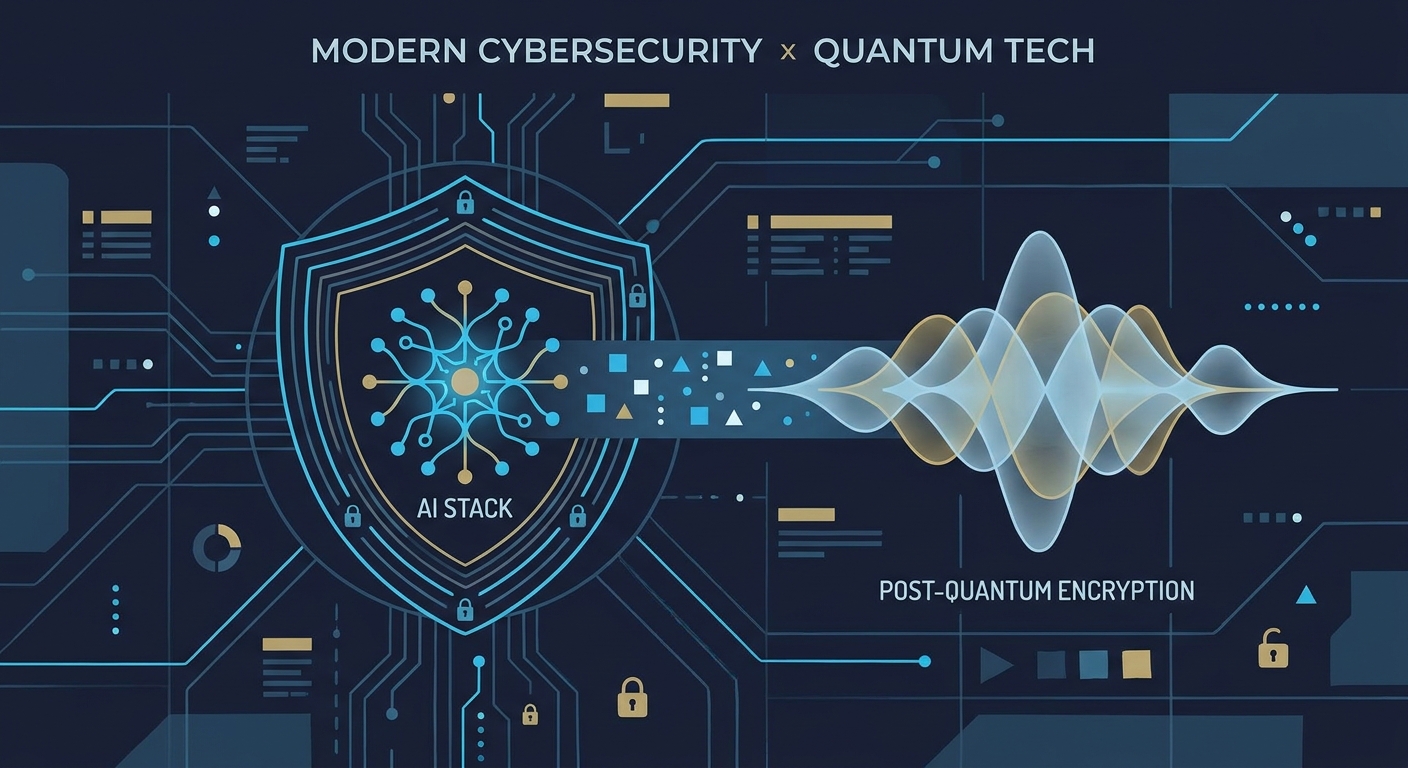
The industry-standard path forward? Hybrid cryptographic models. By combining classical algorithms (like RSA or ECC) with NIST-approved ML-KEM (Kyber), you create a "best of both worlds" safety net. If one part of the handshake fails, the other layer acts as a secondary barrier. This keeps legacy agents working while layering in the defenses you need for the future. For a deeper look at the mechanics, check out how PQC in MCP Transport is being implemented in production right now.
5. Is Your AI Monitoring Capable of Detecting Quantum-Assisted Reconnaissance?
Quantum-assisted attacks often start with subtle, quiet probing. You’ll see anomalies in traffic patterns that look like background noise, but they’re actually attempts to map your network topology for a future hit. Traditional firewalls are stone-blind to these signals.
You need an AI-native defense. By deploying machine learning models to monitor your context streams, you can identify the unique "fingerprint" of quantum-assisted reconnaissance in real-time. This is the shift from reactive, perimeter-based security to proactive, intelligence-driven defense. Learn more about this transition in our briefing on AI-Driven Anomaly Detection in Post-Quantum Context Streams. When your security stack understands the context of the data it protects, it becomes significantly harder for an adversary to hide their tracks.
Conclusion: The Path Forward (2026 Readiness Checklist)
The year 2026 is our deadline for preparation—not for total completion. To secure your AI-driven environment, follow these five steps:
- Inventory: Audit your data flows and identify the MCP gateways that handle your most sensitive, long-lived data.
- Prioritize: Catalog your data by shelf-life; prioritize the protection of assets that remain sensitive for 5+ years.
- Abstract: Implement an interface layer to ensure your crypto-agility.
- Hybridize: Transition your MCP tunnels to hybrid classical-PQC encryption.
- Monitor: Deploy ML-based anomaly detection to spot quantum-assisted reconnaissance.
Executive buy-in is the final—and often most difficult—piece of the puzzle. Regulatory compliance is catching up to the threat, and formal cryptographic inventories will be a standard requirement sooner than you think. Don't wait for the mandate. Start your audit today.
Frequently Asked Questions
What is the "Harvest Now, Decrypt Later" threat, and why does it impact AI data?
HNDL is an attack where adversaries intercept and store encrypted data today, intending to decrypt it once quantum computers are capable of breaking current asymmetric encryption. It impacts AI because training sets and model weights are high-value, long-lived assets that retain their worth for years, making them ideal targets for long-term storage and future decryption.
How does the Model Context Protocol (MCP) change the security perimeter for AI agents?
MCP expands the attack surface by creating a standardized, persistent connection between agents and various data sources. Because these connections often bypass traditional network firewalls, they require a new security layer that validates both the agent’s identity and the cryptographic integrity of the data stream.
Do we need to replace all our existing encryption immediately to be quantum-safe?
No. Immediate "rip-and-replace" is unnecessary and risky. A hybrid approach—layering quantum-resistant algorithms over existing classical ones—allows you to maintain system stability while achieving a state of "quantum-safe" readiness.
What is "Crypto-Agility" and how do we build it into our AI infrastructure?
Crypto-agility is the ability of an IT environment to rapidly modify its cryptographic protocols without requiring a total system overhaul. You build it by creating an abstraction layer between your applications and cryptographic libraries, allowing you to update or swap algorithms as newer, more secure standards emerge.
How does NIST-approved algorithms like ML-KEM (Kyber) actually protect our AI agents?
ML-KEM (Kyber) is a key encapsulation mechanism designed to be resistant to quantum computer attacks. It protects AI agents by establishing secure communication channels that cannot be decrypted using Shor’s algorithm, effectively shielding the data exchanged within the MCP from future quantum-powered interception.