Top 7 Quantum-Resistant Encryption Methods for Modern AI Pipelines

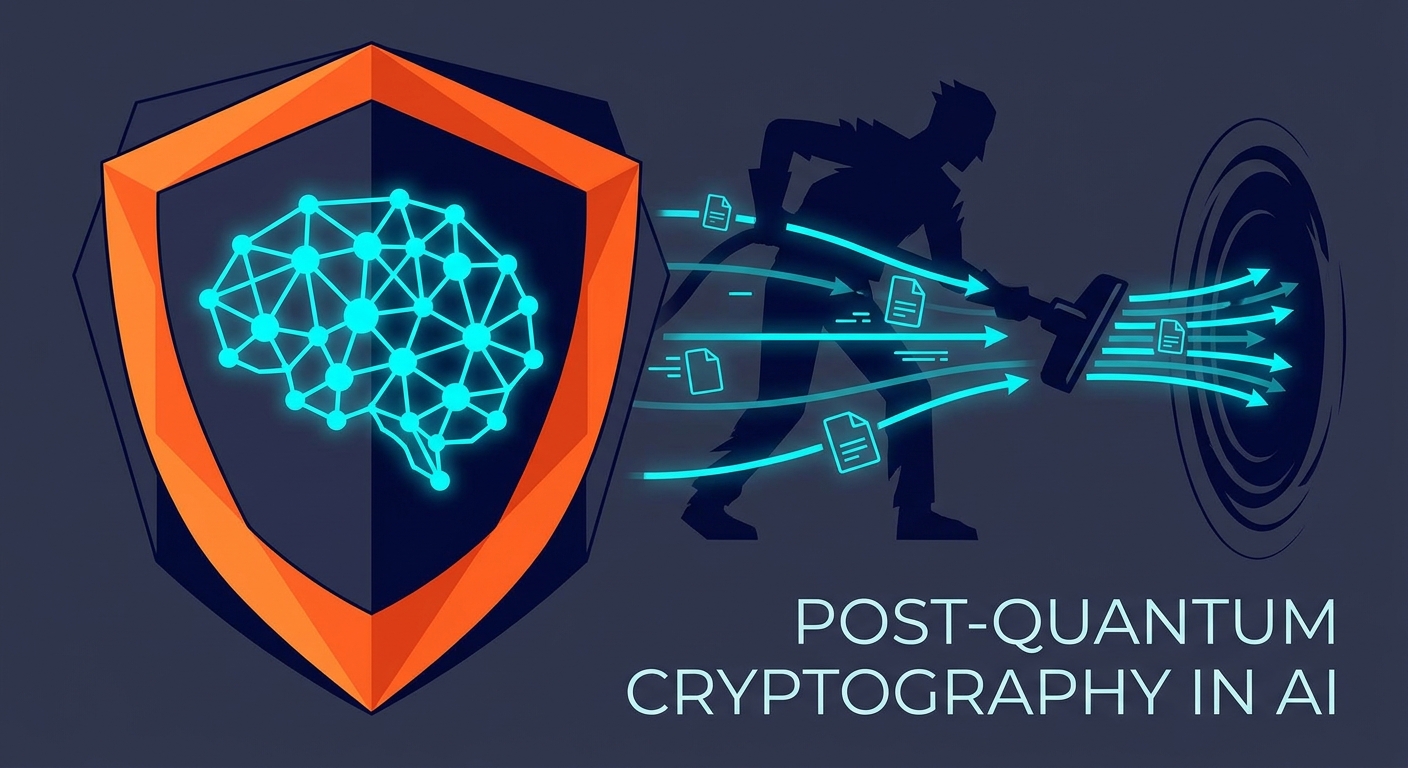
If you’re waiting for a massive, functional quantum computer to show up on the horizon before you secure your AI pipelines, you’ve already lost. Let’s be real: this isn't some sci-fi threat looming in 2040. It’s a data heist happening right under our noses.
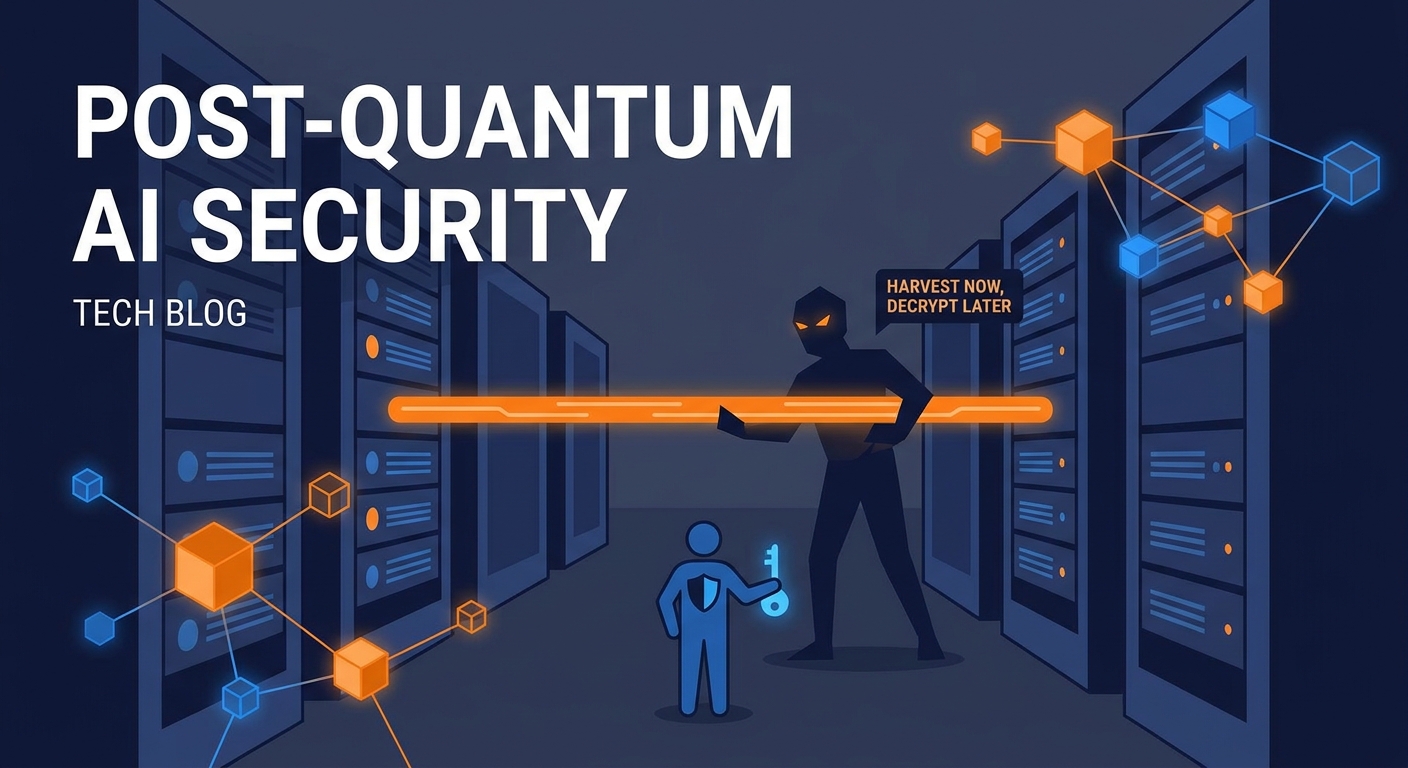
Adversaries are currently running "Harvest-Now-Decrypt-Later" (HNDL) campaigns. They’re vacuuming up massive troves of your encrypted AI training data, model checkpoints, and proprietary weights. They’re stockpiling this stuff like digital hoarders, just waiting for the inevitable arrival of Cryptographically Relevant Quantum Computers (CRQCs) to pop the lock on your intellectual property. By 2026, the "Quantum Runway" has basically collapsed. Moving from the old-school RSA and ECC standards to NIST-approved algorithms isn't just a "nice to have"—it’s the single most critical security move for anyone building an AI infrastructure today.
Need a roadmap? Check out The 2026 Roadmap to Post-Quantum AI Infrastructure Security.
1. Why Should Your AI Pipeline Fear the Quantum Threat?
Your AI pipeline is a goldmine of systemic risk. Think about it: unlike a basic web app, your pipeline is slurping up high-value training sets, crunching sensitive inference requests, and relying on model weights that represent millions in R&D.
When these assets move between your data lake and your inference engine, they’re usually wrapped in classical encryption—math that relies on the "difficulty" of factoring integers or solving logarithms. The problem? Quantum computers, specifically those running Shor’s algorithm, will chew through that math in seconds. Once the encryption breaks, your entire history of intercepted traffic goes transparent.
This is exactly why the CISA Post-Quantum Guidance is screaming for a shift toward quantum-safe infrastructure. If you aren't protecting the "brain" (the model) and the "memory" (the training data) of your AI, you’re basically leaving the back door to your competitive advantage wide open.
2. The NIST Standard Foundation: FIPS 203, 204, and 205
We’re past the point of theoretical debate. The NIST Post-Quantum Cryptography Project has locked in the FIPS standards that will dictate the next decade of security. If you’re an architect, you need to know these inside and out.
At the core, we’ve got ML-KEM (the artist formerly known as Kyber) for key encapsulation—the handshake security needed for your communication tunnels. Then there’s ML-DSA (Dilithium), our digital signature backbone. It ensures the model weights you’re deploying are the exact ones your data scientists built, not some tampered-with version injected by a bad actor.
3. Where Exactly Does PQC Fit in Your AI Stack?
Implementing PQC isn’t a "set it and forget it" task. You have to surgically insert these algorithms into the nodes of your pipeline where traffic is most exposed.
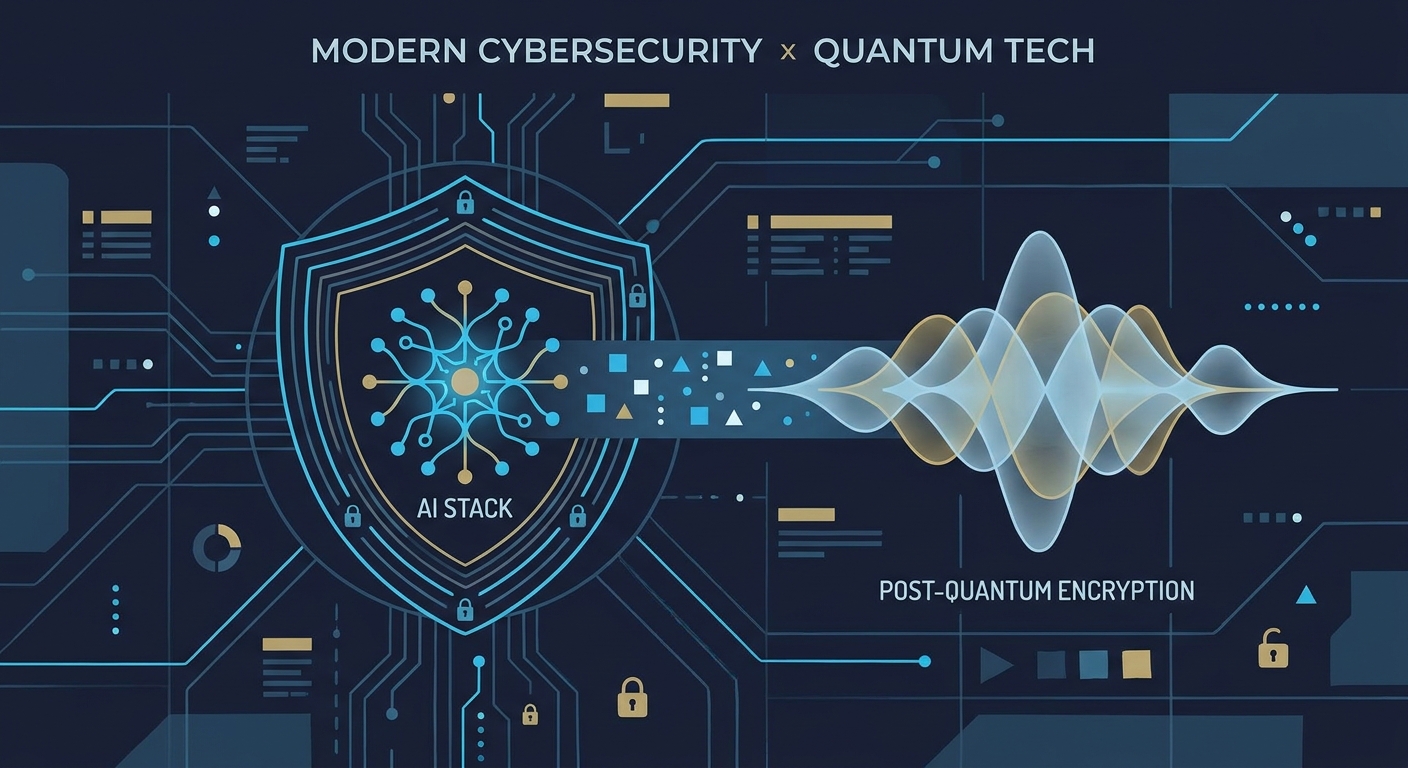
As the diagram shows, the API Gateway and the Model Inference Service are the prime targets for HNDL attacks. Even more critical? The link between your model and external tools—the Model Context Protocol—needs a hardened tunnel. Without one, you’re looking at tool poisoning.
4. The 7 Quantum-Resistant Methods for Modern AI
Method 1: Hybrid Key Exchange (Classical + ML-KEM)
For 2026, purity is a liability. Don’t bet the farm on new algorithms alone. Go hybrid. Combine classical elliptic curve Diffie-Hellman with ML-KEM. Think of it as a "belt and suspenders" strategy: if a flaw pops up in the new lattice-based math, the classical layer holds. If a quantum computer shows up, the ML-KEM layer provides the resistance.
Method 2: Quantum-Safe TLS 1.3 Implementation
Upgrading your transport layer is the most visible step you can take. Configure your load balancers and service meshes to prioritize hybrid key exchange suites. This ensures that every byte moving between your microservices is encrypted with quantum-resistant keys, blocking HNDL attempts at the network layer.
Method 3: PQC for Model Context Protocol (MCP) Connections
The Model Context Protocol (Anthropic) is a game-changer for AI, but it opens a massive surface area for credential theft. When your LLM calls an external tool, that handshake is a target. You need to secure it with PQC. Read more in our guide: How to Build Quantum-Resistant Infrastructure for Model Context Protocol Deployments.
Method 4: Lattice-Based Signature Schemes for Model Provenance
How do you actually know the model running in production is the one you trained? Use ML-DSA to digitally sign your model weights the second they leave your training cluster. This creates an immutable chain of custody, so nobody can swap in a backdoored version of your model behind your back.
Method 5: Hash-Based Signatures (SLH-DSA) for Firmware Integrity
ML-DSA is great for high-speed traffic, but SLH-DSA (Stateless Hash-Based Signatures) is your insurance policy for infrastructure. It’s a bit slower, sure, but it’s incredibly robust. It’s the perfect choice for signing firmware, bootloaders, and long-term configuration files in your GPU clusters.
Method 6: Policy-Driven Crypto-Agility
Hard-coding your encryption is a death sentence. You need a "black-box" crypto orchestration layer. This lets you update algorithms globally via policy—switching from one PQC standard to another without having to tear apart your entire application codebase.
Method 7: Post-Quantum Secret Management
Your vault—where you keep your API keys and database credentials—is your biggest single point of failure. If your secret manager is still using old RSA-based keys, your entire infrastructure is a house of cards. Migrate your secret management systems to PQC-compliant backends that support quantum-safe wrapping for all stored secrets.
5. Why "Crypto-Agility" Must Be Your Primary Goal
We’re in an era where encryption algorithms get deprecated faster than a TikTok trend. If your security team has to manually update every microservice in your stack every time NIST drops a new standard, you’re going to be permanently behind.
Crypto-agility means decoupling security policy from app logic. Your AI services should just ask an abstraction layer for "secure encryption," and that layer should handle the negotiation of the current, NIST-approved, quantum-resistant algorithm. It’s about building for change.
6. Overcoming the "Human-in-the-Loop" Operational Bottleneck
Manual certificate rotation is the Achilles' heel of modern security. In a world where quantum threats are real, you need machine identity management that handles PQC certificate lifecycles automatically. Humans are too slow and way too error-prone. You need systems that automate the issuance, rotation, and revocation of quantum-safe identities. Keep the humans for strategy; let the machines handle the rote work.
7. Actionable Checklist: A 4-Phase Migration Plan
- Discovery: Map out every asset in your AI stack. Where is the data stored? Where is it moving? If it’s high-value—like model weights or training sets—mark it in red.
- Planning/Pilot: Test the latency. Lattice-based algorithms have larger signatures and different computational needs. You need to know how this will affect your inference throughput before you roll it out to production.
- Intelligence: Deploy monitoring that looks for "quantum-ready" threat patterns. Watch for weird traffic spikes or unauthorized attempts to scrape archived, encrypted data.
- Continuous Automation: Shift to an "always-on" security model. Enforce crypto-agility by policy so your infrastructure updates its own security posture as standards evolve.
Frequently Asked Questions
Q: If we aren't using quantum computers yet, why do we need PQC in 2026?
A: You’re defending against the Harvest-Now-Decrypt-Later (HNDL) threat. Adversaries are recording your encrypted traffic today, storing it in massive databases, and waiting for the day they can flip a switch to decrypt your most sensitive proprietary AI data.
Q: Does enabling PQC slow down AI inference times?
A: There’s a computational cost, mostly in signature size and processing time for lattice-based algorithms. However, for most AI pipelines, the latency impact is manageable if you optimize the handshake and use hardware acceleration where you can.
Q: Is it enough to just update our SSL/TLS certificates?
A: Absolutely not. TLS is just the tunnel. PQC must be applied to data at rest (storage) and application-level data (model weights and MCP tool handshakes). Certificates only secure the tunnel, not the cargo.
Q: How does the Model Context Protocol (MCP) introduce unique risks?
A: MCP creates a dynamic, bidirectional channel between your LLM and arbitrary tools. It’s a massive surface for tool poisoning, where an attacker could potentially trick the model into executing unauthorized commands. You must wrap these specific handshakes in PQC-secured tunnels to ensure the integrity of the tool-to-model connection.