The 2026 Roadmap to Post-Quantum AI Infrastructure Security

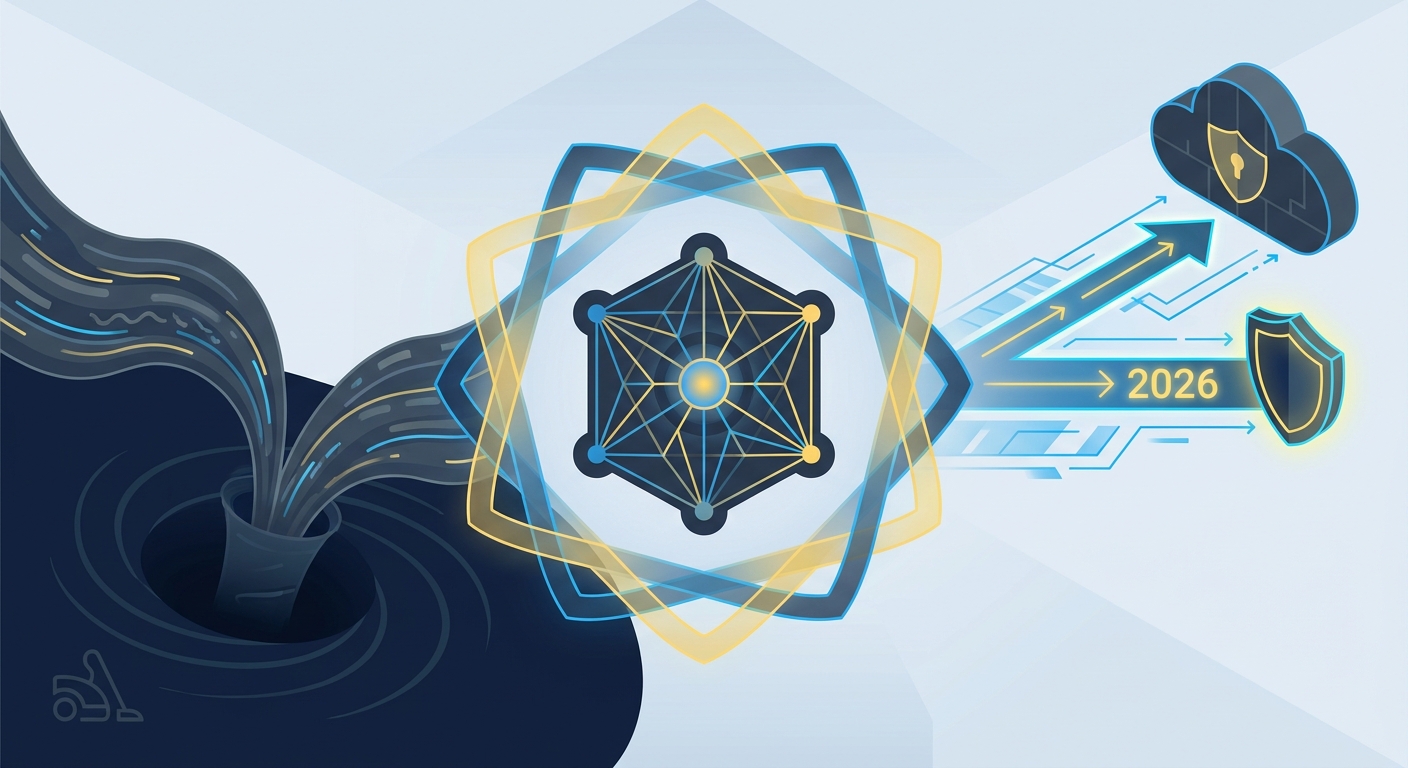
2026 isn't just another year on the calendar. For enterprise architects, it’s a reckoning. We’ve spent years debating the "what-ifs" of quantum computing, but the theoretical phase is over. We are now living in the era of "Store Now, Decrypt Later" (SNDL). Adversaries are vacuuming up encrypted traffic today, playing a long game, waiting for fault-tolerant quantum hardware to turn that data into an open book.
But here is the kicker: the threat has mutated. It’s no longer just about harvesting your data; it’s about weaponizing your AI agents. If your infrastructure relies on the old-school RSA or ECC handshakes to secure communication between your agents and their tools, you aren't just vulnerable. You’re already compromised.
Security today isn't about ripping out your entire tech stack and starting from scratch. It’s about "cryptographic agility." You need an infrastructure that can pivot, swapping out algorithms like a chameleon changes color as the threat landscape shifts under your feet.
Why the Model Context Protocol (MCP) is the New Frontline
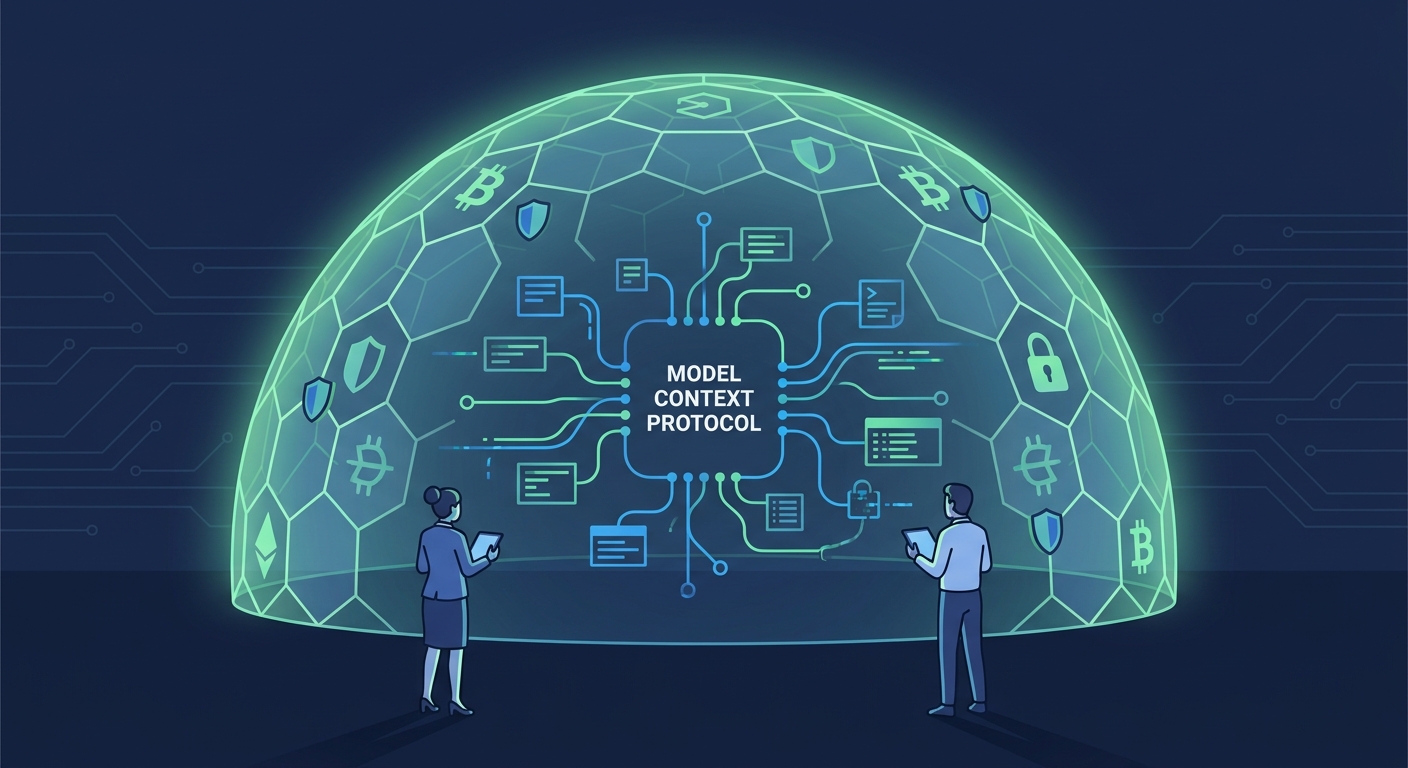
Over the last eighteen months, the Model Context Protocol (MCP) has quietly become the universal language of the AI stack. With nearly 100 million SDK downloads, it’s the invisible glue connecting LLMs to your private databases, your sprawling code repositories, and your most sensitive operational APIs.
Here is the problem: MCP was built for speed and fluidity. It was designed to make integration effortless. In doing so, it has inadvertently become the juiciest attack surface in modern enterprise architecture.
When an AI agent reaches out to grab a tool, that request—and the reasoning loop behind it—is typically wrapped in standard TLS. In a world where quantum-capable bad actors are circling, that’s a single point of failure. If an attacker intercepts and decrypts that MCP handshake, they aren't just stealing your data. They’re hijacking the agent’s brain. They can inject malicious instructions, spoof tool outputs, and pivot laterally through your internal systems at will.
As we outline in our guide on securing the Model Context Protocol, quantum-resistant encryption isn't a "nice-to-have" anymore. It’s the only way to keep the conversation between your model and your data private.
The 2026 Roadmap: A Step-by-Step Security Progression
You can’t just flip a switch and call yourself "quantum-proof." It doesn't work like that. You need a disciplined, phased approach to harden both your perimeter and your internal agentic loops.
Step 1: Inventory & Shadow AI Mapping
You can’t defend what you can’t see. Right now, most CISOs are fighting a losing battle against "Shadow AI"—those rogue, non-sanctioned connections between internal agents and external tools that fly right under the radar of traditional firewalls.
Your first mission for 2026? A comprehensive audit of every single MCP-enabled endpoint. You need a map of every agent-to-tool handshake happening inside your VPC. If an agent is talking to a tool over an unmonitored or legacy protocol, mark it as a liability. That’s your first target for remediation.
Step 2: Implementing Cryptographic Agility
Once you have the map, start the transition to hybrid encryption. The goal is to layer NIST Post-Quantum Cryptography (PQC) standards—specifically ML-KEM (Module-Lattice-based Key-Encapsulation Mechanism)—on top of your existing classical algorithms.
By using a hybrid approach, you get the best of both worlds: backward compatibility for your legacy systems and a quantum-resistant shield for your modern ones. This is the heart of cryptographic agility. You’re building systems that can negotiate newer, stronger ciphers on the fly without needing a total infrastructure overhaul every time a new threat emerges.
Step 3: Runtime Governance
Finally, move beyond static perimeter security. You need granular, runtime policy enforcement. You have to put guardrails on the agent's actual "thought process."
Does this agent actually have the authorization to run that specific SQL query? Is the output compliant with your data residency rules? By enforcing policy at the MCP gateway level, you ensure that even if an agent is compromised, the damage is contained. It’s a sandbox, not a playground. For a deeper look at how to structure this, check out our step-by-step guide for building quantum-proof AI infrastructure.
How Do You Protect the "Reasoning Process" of AI Agents?
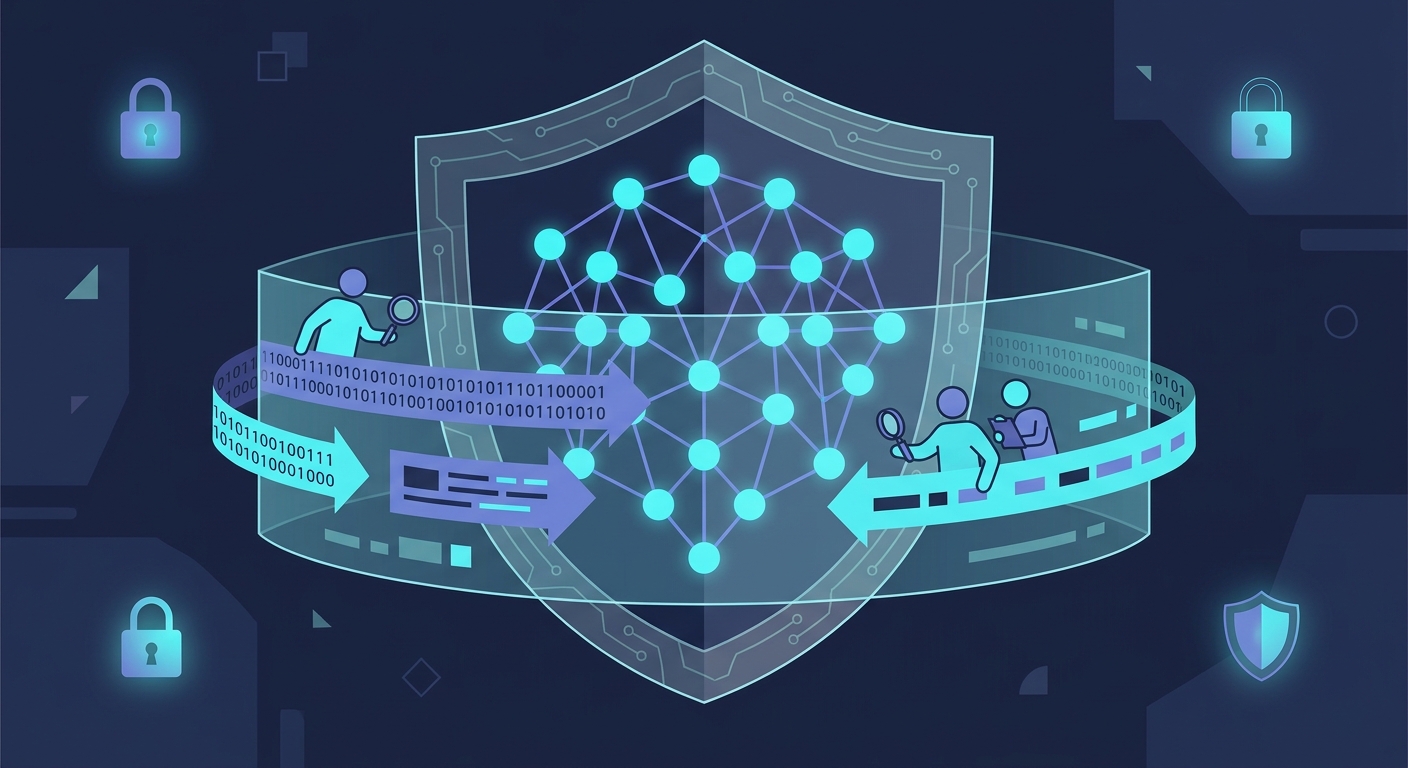
Securing data-in-transit is just table stakes. The real fight in 2026 is protecting the agent’s "thought process." When an agent works through a complex, multi-step problem, it generates intermediate states and signals—these are often just as sensitive as the final result.
We’re seeing a dangerous trend: agents are becoming "Lethal by Design." Their architecture allows them to perform high-privilege actions with almost zero human oversight. According to The "Lethal by Design" Agent Security Report, traditional monitoring tools are completely blind to the nuances of agentic logic.
To fix this, you need Cryptographic Provenance. You need to sign the agent’s reasoning steps. This allows you to verify the integrity of the process after the fact. By requiring an MCP-level handshake that includes PQC signatures, you ensure that the agent executing the action is the one you authorized, and that its instructions haven't been tampered with by a man-in-the-middle.
What Lies Beyond? Future-Proofing with ZKPs
As we push through the second half of 2026, Zero-Knowledge Proofs (ZKPs) are going to move from academic whitepapers to production necessities. ZKPs are the holy grail: they allow an agent to prove that it performed a calculation or followed a security policy correctly without revealing the underlying data or the internal logic of the model.
It’s the ultimate "Trust, but Verify" model. You don't need to see the agent's full chain-of-thought to know it stayed within the guardrails; you only need the cryptographic proof that the math checks out. Integrating this into your infrastructure means your AI agents stay autonomous and high-performing without forcing you to sacrifice privacy or security. You can explore the mechanics of this in our article on Zero-Knowledge Proofs for Privacy-Preserving AI Tool Execution.
The Quantum-Ready Mandate
The transition to quantum-resistant infrastructure is not a project you finish; it’s a posture you adopt. By 2026, the divide between organizations that have implemented cryptographic agility and those that haven't will be measured in their ability to survive automated, quantum-accelerated attacks. The reactive security models of the past simply don't work for the speed and opacity of modern AI.
The mandate is clear: Audit your MCP endpoints today. Move toward hybrid PQC implementations immediately. Build for agility, not just for the standards of today. Your infrastructure is only as secure as its weakest link, and in this climate, that link is almost certainly an unhardened agent-to-tool connection.
Frequently Asked Questions
Why is standard encryption insufficient for AI infrastructure in 2026?
Standard encryption relies on RSA or ECC, which are essentially glass houses in the face of Shor’s algorithm. Adversaries are currently utilizing "Store Now, Decrypt Later" (SNDL) tactics, capturing your encrypted AI traffic today so they can crack it wide open once quantum computing reaches the necessary scale.
What is the role of MCP in quantum-resistant security architectures?
Since the Model Context Protocol is the primary hub for all agent-to-tool communication, it is your most exposed attack surface. Implementing PQC at the MCP gateway ensures that the reasoning loop—the most sensitive part of the agent's workflow—is protected against both current and future quantum threats.
How can I start implementing post-quantum security without breaking existing AI workflows?
The secret is "Hybrid Encryption." By running PQC algorithms (like ML-KEM) in parallel with classical algorithms, you keep your legacy systems functioning perfectly while wrapping your infrastructure in a layer of quantum-resistant protection.
Are Zero-Knowledge Proofs (ZKPs) necessary for securing AI tool execution?
For basic connectivity, maybe not. But for high-assurance, enterprise-grade environments? Absolutely. ZKPs provide the only mechanism to verify that an AI agent followed security policies and executed tools correctly without you ever having to expose sensitive internal model logic or raw data.