How to Secure Model Context Protocol Deployments with Quantum-Resistant Cryptography

TL;DR
- ✓ Understand the Store Now Decrypt Later threat to Model Context Protocol data.
- ✓ Learn why traditional TLS 1.3 is insufficient against quantum-capable adversaries.
- ✓ Implement hybrid cryptography combining classical algorithms with NIST-approved PQC standards.
- ✓ Secure your agentic AI workflows using FIPS 203 and ML-KEM protocols.
If you’re running Model Context Protocol (MCP) in production, assume your data is being harvested. Right now.
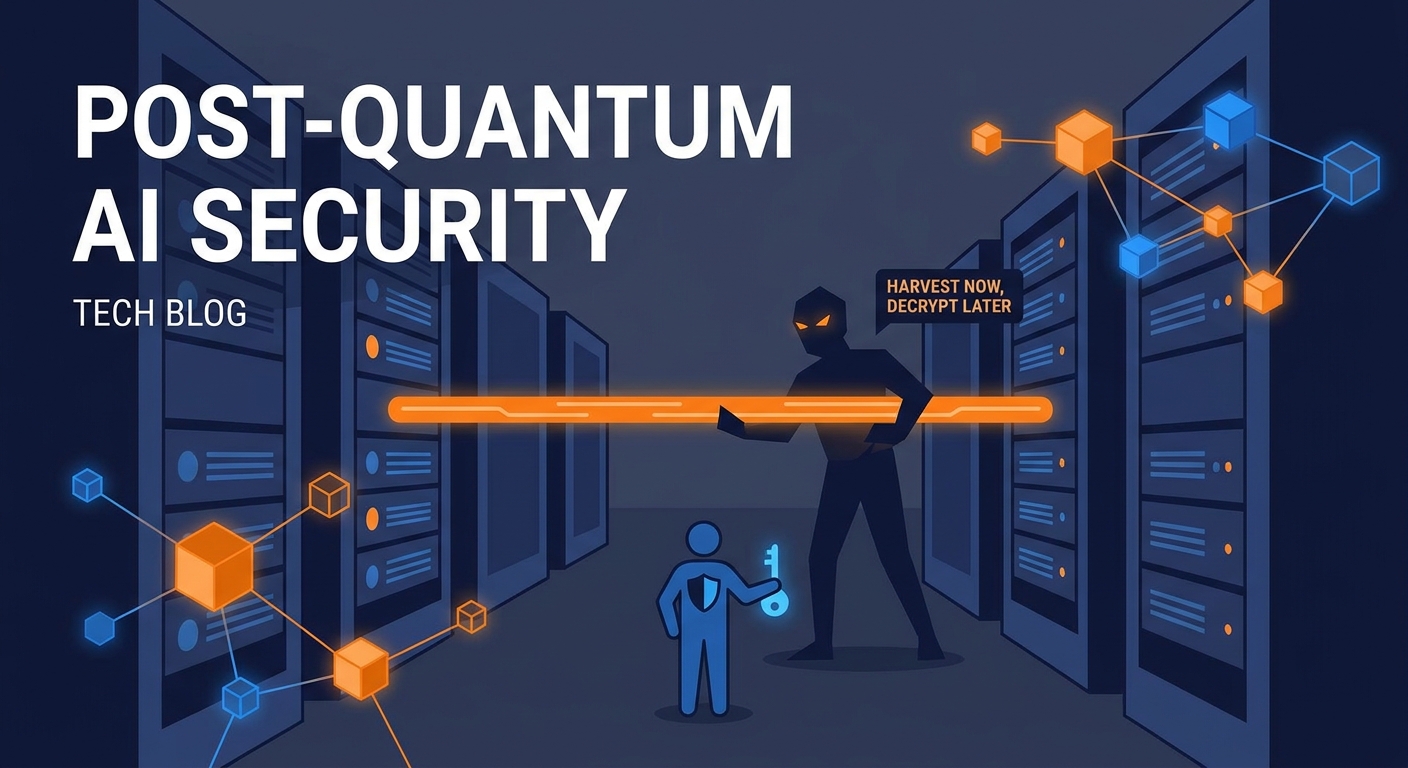
Adversaries are busy running "Store Now, Decrypt Later" (SNDL) campaigns. They’re vacuuming up encrypted traffic, hoarding it like digital gold, waiting for the day cryptographically relevant quantum computers (CRQCs) actually work. Because MCP acts as the nervous system for agentic AI—shuttling sensitive data between models and tools—your current TLS 1.3 setup is just a paper shield.
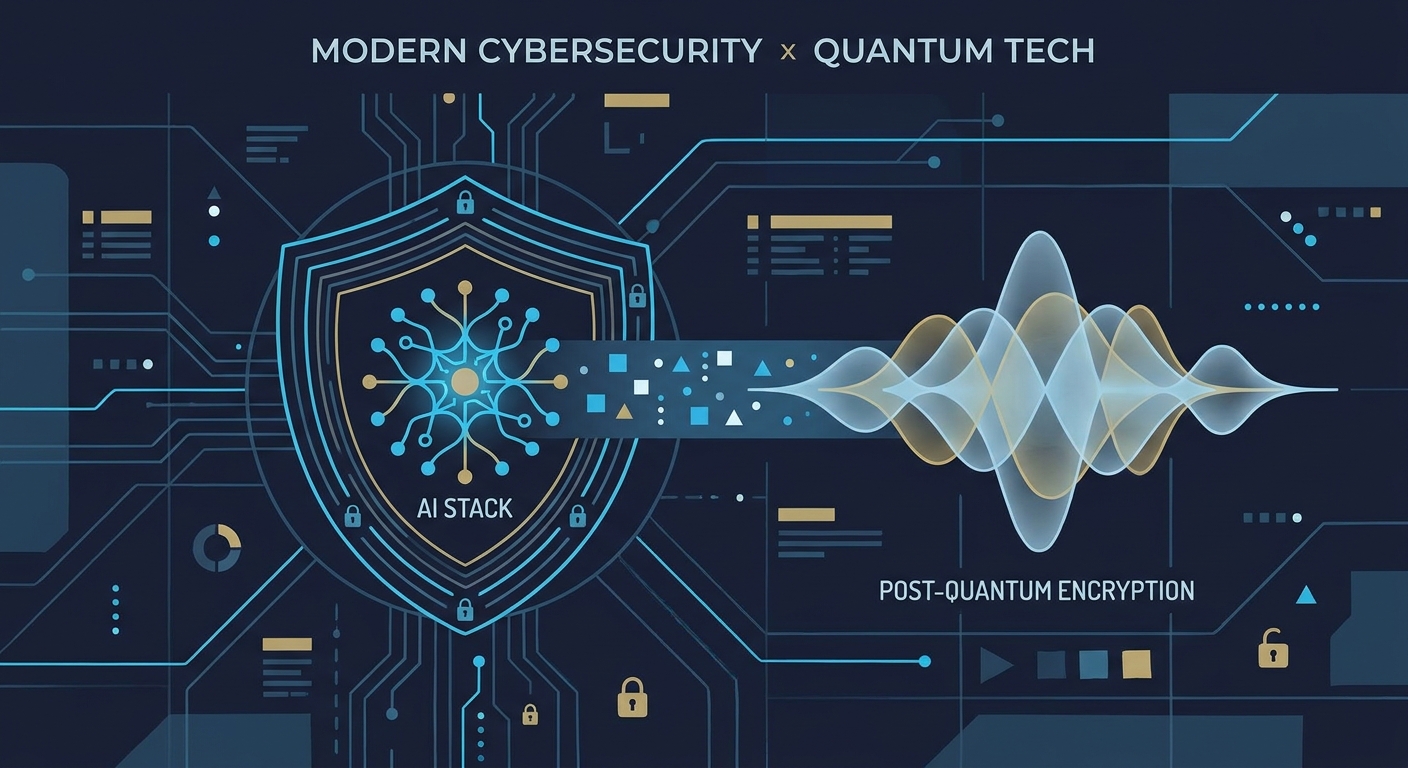
To lock down your infrastructure for the next decade, you need to pivot to hybrid cryptography. This isn't just mixing fancy math; it's a strategy that marries battle-tested classical algorithms with NIST-approved quantum-resistant primitives. Don't mistake this for a futuristic "nice-to-have." It is a foundational requirement for any post-quantum AI infrastructure security strategy in 2026.
Why MCP is the Ultimate Target for Quantum Adversaries
MCP is the connective tissue of modern agentic workflows. It dictates how AI agents talk to local files, databases, and third-party APIs. By design, it bridges the gap between static models and the messy, dynamic world of execution. That makes it a massive target for state-sponsored actors and cyber-criminals.
The SNDL threat is particularly nasty here. When an agent queries a private SQL database or pulls a sensitive API key via an MCP server, that communication is usually encrypted using something like X25519. It’s robust against classical computing, sure. But against Shor’s algorithm? It’s transparent. If an attacker intercepts your packets today, they don’t need to break the encryption in real-time. They just wait for a powerful enough quantum computer to come online. At that point, your entire historical record—proprietary code, sensitive user data, internal tool configs—is laid bare.
The Hybrid Cryptography Standard for 2026
The industry has largely walked away from the "rip-and-replace" fantasy. Instead, we’re betting on hybrid cryptography. The play is simple: perform a dual key exchange. One using a classical algorithm (like X25519) and one using a post-quantum algorithm (like ML-KEM-768).
Why run both? Because nobody is 100% certain about the long-term resistance of these new PQC algorithms yet. By wrapping your traffic in a double layer, you force an adversary to break both the classical and the quantum-resistant layers. If the PQC algorithm turns out to have a hidden bug, the classical layer holds the line. If a quantum computer cracks the classical side, the PQC layer keeps the data safe.
This is the path forward according to NIST Post-Quantum Cryptography Standards. Focus on the FIPS 203, 204, and 205 standards. They prioritize ML-KEM and ML-DSA because they actually balance security with real-world performance.
How the Hybrid Handshake Works
To pull this off, your MCP client and server need to negotiate a hybrid key exchange during the TLS handshake. This ensures that even the very first packet of your connection is protected against future decryption.
Step-by-Step: Implementing PQC in Your MCP Infrastructure
Step 1: Audit Your Attack Surface
Before you touch a line of code, map the flow of your MCP traffic. Which servers handle the high-sensitivity data? Think credentials for production databases or PII. Prioritize these for immediate migration. Use network telemetry to separate local, low-risk MCP connections from those traversing untrusted segments of your network.
Step 2: Upgrade the TLS Stack
Do not try to write your own crypto. Seriously, don't. Use peer-reviewed, battle-tested libraries. The Open Quantum Safe (liboqs) project provides the wrappers you need for common TLS libraries like OpenSSL and BoringSSL. Integrating these lets you enable hybrid key exchange without tearing down your entire MCP application layer.
Step 3: Manage Your Certificates
PQC isn't just "more crypto"—it introduces new headaches regarding key sizes and signature lengths. PQC keys (specifically ML-KEM) are significantly larger than traditional ECC keys. This can lead to packet fragmentation and may cause timeouts in older network hardware. Make sure your infrastructure can handle larger handshake messages. Keep a close eye on certificate lifecycles, as PQC-ready root CAs are still maturing. For a deeper look at the transition, review the Top 5 Quantum-Resistant Cryptographic Algorithms to ensure you’re choosing the best algorithm for your performance needs.
Can You Maintain Low-Latency AI Interactions with PQC?
Latency is the silent killer for any engineer building agentic systems. If your handshake takes an extra 50ms, your agent feels sluggish. Users notice that. However, the performance penalty of ML-KEM is often overstated when you’re using modern hardware.
If you use AVX-512 instructions or dedicated crypto-acceleration, the overhead of a hybrid handshake becomes negligible for most MCP workloads. The secret is library selection and ensuring your environment actually supports CPU-level acceleration.
Aligning MCP Security with 2026 Compliance
Compliance is moving fast. The Cloud Security Alliance: AI Security Research now explicitly calls for "quantum-readiness" in high-risk AI deployments. Check your internal audit. Does your transport-layer security use hybrid key exchange by default? If not, start documenting a transition plan now. Auditors love a proactive stance, especially when it comes to defending against the SNDL threat.
Future-Proofing: Beyond the TLS Layer
Transport security is the fire drill, but you also need to look at the application layer. Integrity is everything. If an attacker injects malicious tool definitions into your MCP stream, encryption won't save you. Moving toward ML-DSA (Dilithium) for digital signatures on agent-to-tool communications is the next logical step. It provides the quantum-resistant integrity checks necessary to block sophisticated "man-in-the-middle" prompt injection attacks.
Frequently Asked Questions
Is current TLS 1.3 encryption enough to protect my MCP traffic?
No. TLS 1.3 is great for today, but it’s a sitting duck for quantum-based decryption. If someone captures your traffic now, they can just wait for a CRQC to decrypt it later. You have to implement hybrid key exchange.
Will adding quantum-resistant encryption slow down my AI agents?
It can, yes. These algorithms use larger keys and signatures, which adds latency. But with the right hardware acceleration and optimized libraries like liboqs, you can keep that overhead low enough that your users won't even notice.
Do I need to replace my entire infrastructure to be "quantum-safe"?
Definitely not. The move is toward the "hybrid" approach. Think of it as "wrapping" your current encryption in an extra layer of quantum-resistant security. It allows for a phased, non-disruptive transition.
Are there specific NIST standards I should prioritize for MCP?
Yes. Focus on the NIST-finalized algorithms: ML-KEM for key encapsulation and ML-DSA for digital signatures. These are the gold standard for your 2026 security posture.