Securing Model Context Protocol: Granular Policy Enforcement for AI Environments

TL;DR
- ✓ MCP lacks native security mechanisms for zero-trust enterprise environments.
- ✓ AI agents act as privileged insiders requiring strict security gateway oversight.
- ✓ Security gateways intercept tool calls to enforce granular access policies.
- ✓ Prompt injection 2.0 poses critical risks to unmanaged AI tool connections.
- ✓ Identity-centric governance is essential for protecting AI-driven infrastructure.
The Model Context Protocol (MCP) has become the "USB-C for AI." It’s the universal adapter we’ve all been waiting for—a standardized way to plug AI agents into the data and tools they need to actually get work done. But there’s a catch. And it’s a big one.
While it’s incredibly convenient, this protocol creates a massive security vacuum. As documented in Anthropic's MCP Documentation, the protocol was built for interoperability, not for a hostile, zero-trust world. It assumes that the host, the client, and the server are all playing nice in a sandbox. In reality? That’s a dangerous gamble for 2026. If you’re relying on the protocol’s built-in security, you’re in trouble—because those mechanisms simply don’t exist. To integrate AI without leaving your front door wide open, you have to stop relying on static API keys and start building real, identity-centric governance at the infrastructure level.
Why Your AI Infrastructure Needs a Security Gateway
At its heart, MCP is a three-way conversation between the Host (the AI app), the Client, and the Server (the tool or data provider). This relationship is the perfect breeding ground for the "Confused Deputy" problem.
Think about it: an AI agent is essentially a powerful, often over-privileged employee. In an unmanaged environment, it can easily be tricked into using its connection to an MCP server to poke around in your sensitive internal databases or run commands you never authorized. Because the server trusts the connection, it assumes the request is legitimate. It’s like a security guard letting someone into a vault just because they’re wearing a uniform—even if they don't have the clearance.
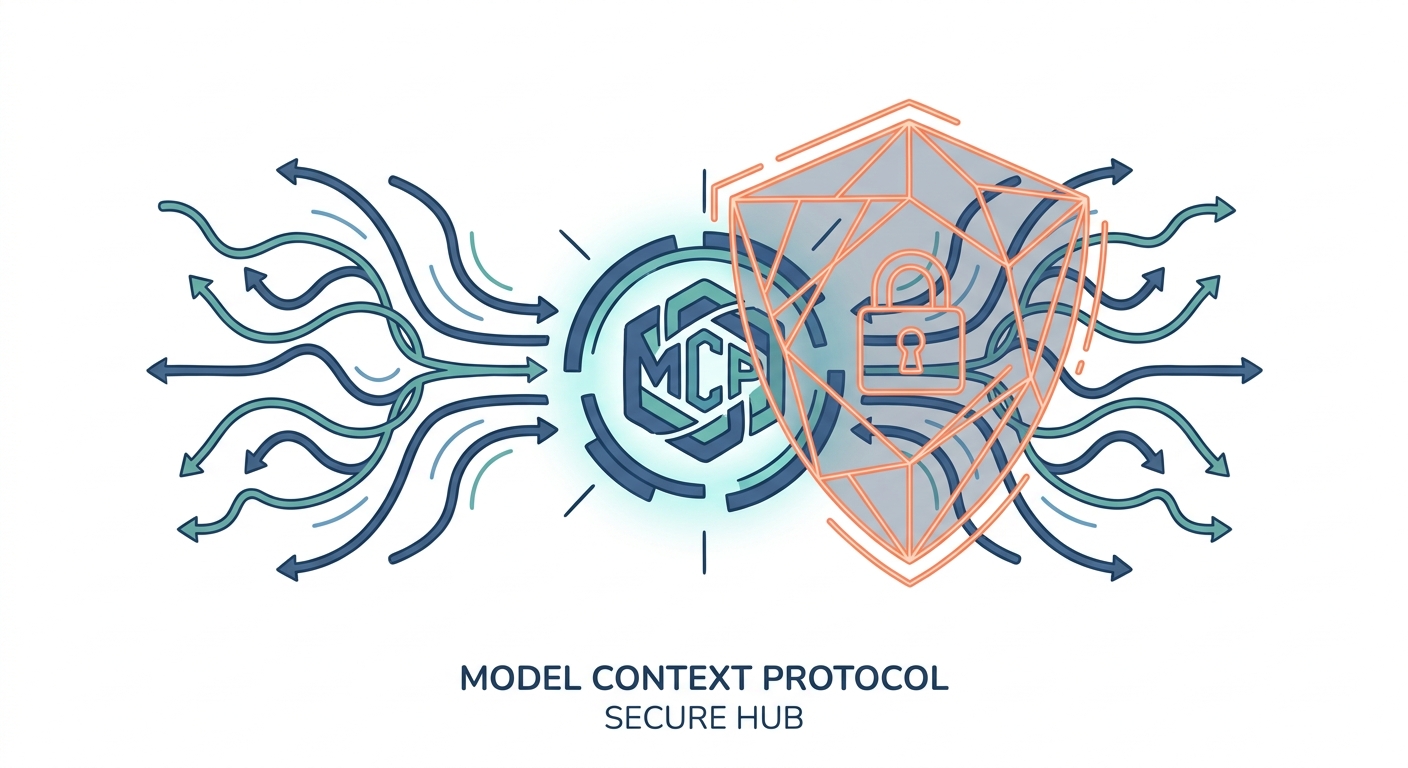
To stay safe, you need to intercept these requests. A security gateway acts as your Policy Enforcement Point (PEP). It sits in the middle, staring down every tool invocation and checking it against your organization’s security posture before anything happens.
Without a gateway, your AI agents are basically "privileged insiders" with zero supervision. They’re free to wander through your infrastructure, guided only by whatever prompt they happen to receive. That’s not a strategy; it’s a liability.
Critical MCP Attack Vectors in 2026
The threats have evolved. We’re moving past simple chat tricks into something much more dangerous: tool-based manipulation. We’re seeing "Prompt Injection 2.0," where an attacker hides malicious instructions in a data source. The agent consumes it, follows the instructions, and suddenly it’s running tools it has no business touching.
Then there’s the stdio transport issue—the standard way MCP talks locally. It’s a prime target for lateral movement. If an agent is running on a local machine and the MCP server gets compromised, the attacker can use that as a foothold to escalate privileges on your host. If you want to see how this is playing out in the wild, check out the OWASP MCP Top 10 Project. It’s the definitive baseline for understanding how these automated interfaces are being turned into weapons. Bottom line: you can’t just secure the model anymore. You have to secure the pipe.
Implementing Granular Policy Enforcement
Binary "yes/no" access is dead. It’s too blunt. To scale AI safely, you need to move toward Attribute-Based Access Control (ABAC).
Stop asking, "Does this agent have access to the database?" Start asking, "Is this specific agent, acting on behalf of this user, at this time of day, actually allowed to use this specific tool?"
By looking at attributes—who the user is, what the agent is capable of, how sensitive the tool is, and what the current environment looks like—you finally achieve the principle of least privilege. If your team is ready to get serious, MCP Security 101: Gopher Security is the best place to start. It provides the framework to restrict tool signatures at the transport layer and stop the "Confused Deputy" in its tracks.
The Reality of Post-Quantum Security for AI
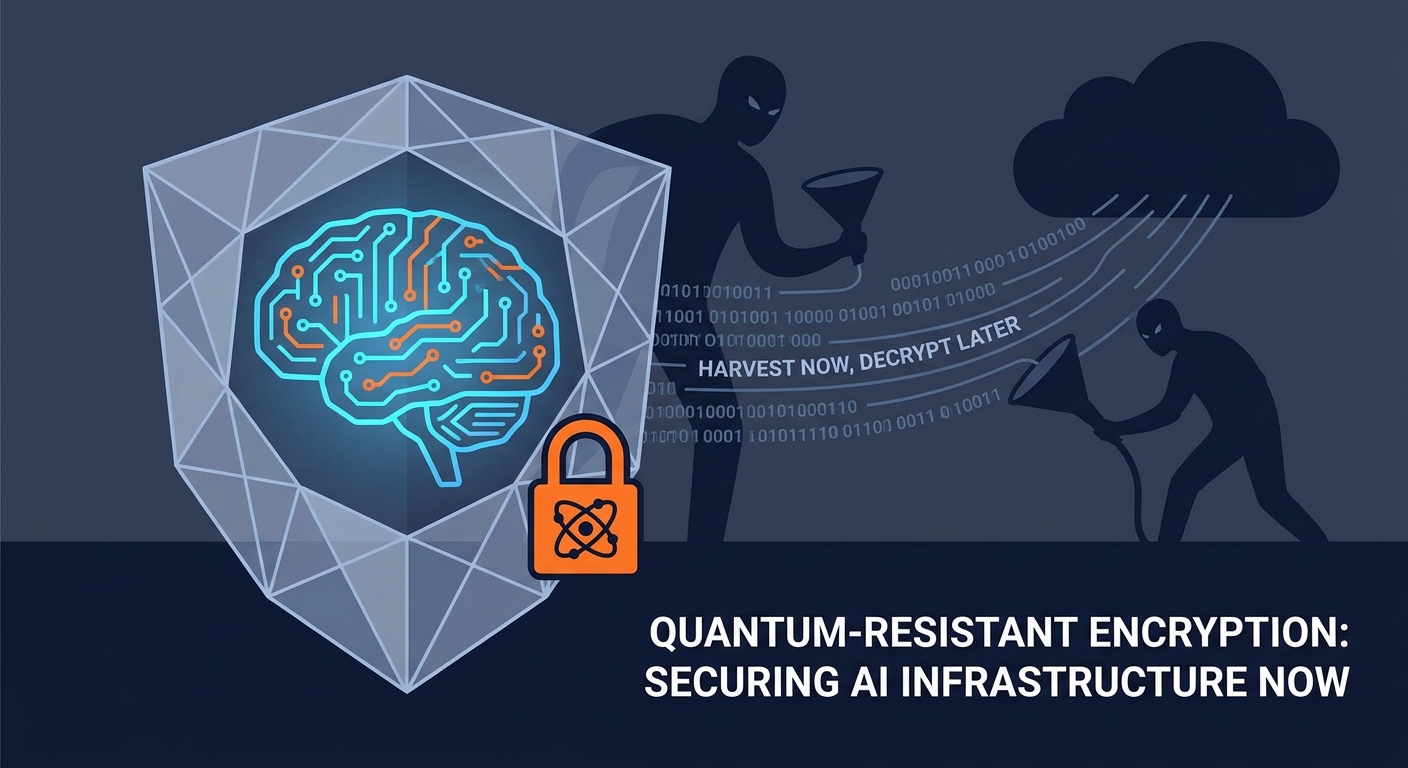
Prompt injection is the fire in the kitchen, but the "Harvest Now, Decrypt Later" (SNDL) threat is the slow-burning fuse in the basement. Attackers are capturing traffic right now—including context logs and datasets fed into MCP servers—with the intention of decrypting it the moment quantum computing becomes viable.
According to the Cloud Security Alliance: Quantum Risk to AI, we shouldn't be waiting. Infrastructure providers need to start integrating hybrid post-quantum cryptography (PQC) into their transport layers today. Neglecting this is a failure of basic data stewardship. If you want to future-proof your setup, read The 2026 Guide to Post-Quantum AI Infrastructure Security.
Hardening Your MCP Deployment
Securing this requires a systematic, disciplined handshake. You need a centralized Policy Enforcement Point that logs every single request and validates it against your policy in real-time.
If you want to lock this down, follow these three rules:
- Centralize the PEP: Don't allow peer-to-peer connections that skip your logs. Force all MCP traffic through a dedicated gateway.
- Audit Everything: Every single tool call needs to be logged with the full context. If an agent goes rogue, you need a forensic trail to see exactly when and how it happened.
- Dynamic Credential Rotation: Stop using static keys. Use identity-bound tokens that expire automatically. If one leaks, the blast radius is tiny.
Future-Proofing the AI Supply Chain
Your AI supply chain is only as strong as its weakest MCP integration. Treat every third-party server like a high-risk SaaS vendor. Constant monitoring isn't an "add-on"—it’s a core piece of infrastructure management. Vet every integration. Draw hard lines around what each server can touch. Assume, at some point, one of your agents will be compromised. If your policy enforcement is granular enough, that compromise will be contained to one specific tool, rather than your entire enterprise network.
Frequently Asked Questions
Does the Model Context Protocol have built-in security?
No. MCP is an interface specification designed for connectivity, not a security protocol. It lacks native authentication and authorization, which means you must implement an external security layer—such as a policy gateway—to manage access control and identity.
How do I prevent an AI agent from running unauthorized commands via MCP?
You must implement granular ABAC policies at the transport layer. By restricting specific tool signatures and evaluating the context of every request (user, intent, and time), you can ensure that an agent only executes authorized commands, effectively preventing the "Confused Deputy" scenario.
Why is post-quantum security relevant to MCP?
Because MCP traffic often contains sensitive data and context logs. Attackers can capture this data today and decrypt it in the future using quantum computers. Integrating post-quantum cryptography ensures that your current AI training sets and proprietary data remain protected against future threats.
What is the "Confused Deputy" problem in AI agents?
The "Confused Deputy" occurs when an AI agent is granted broad permissions and is then tricked into using those permissions to perform unauthorized actions on behalf of an attacker. By implementing scope-limiting policies and granular authorization, you prevent the agent from acting outside of its intended function.
How does an MCP Gateway differ from a standard API Gateway?
A standard API Gateway is typically designed for REST or GraphQL traffic, which is often stateless and request-response driven. An MCP Gateway must be capable of handling stateful, context-heavy interactions and long-lived connections, specifically validating tool-call invocations within the protocol's unique transport mechanisms.