Can Your AI Intrusion Detection System Withstand a Quantum Attack?

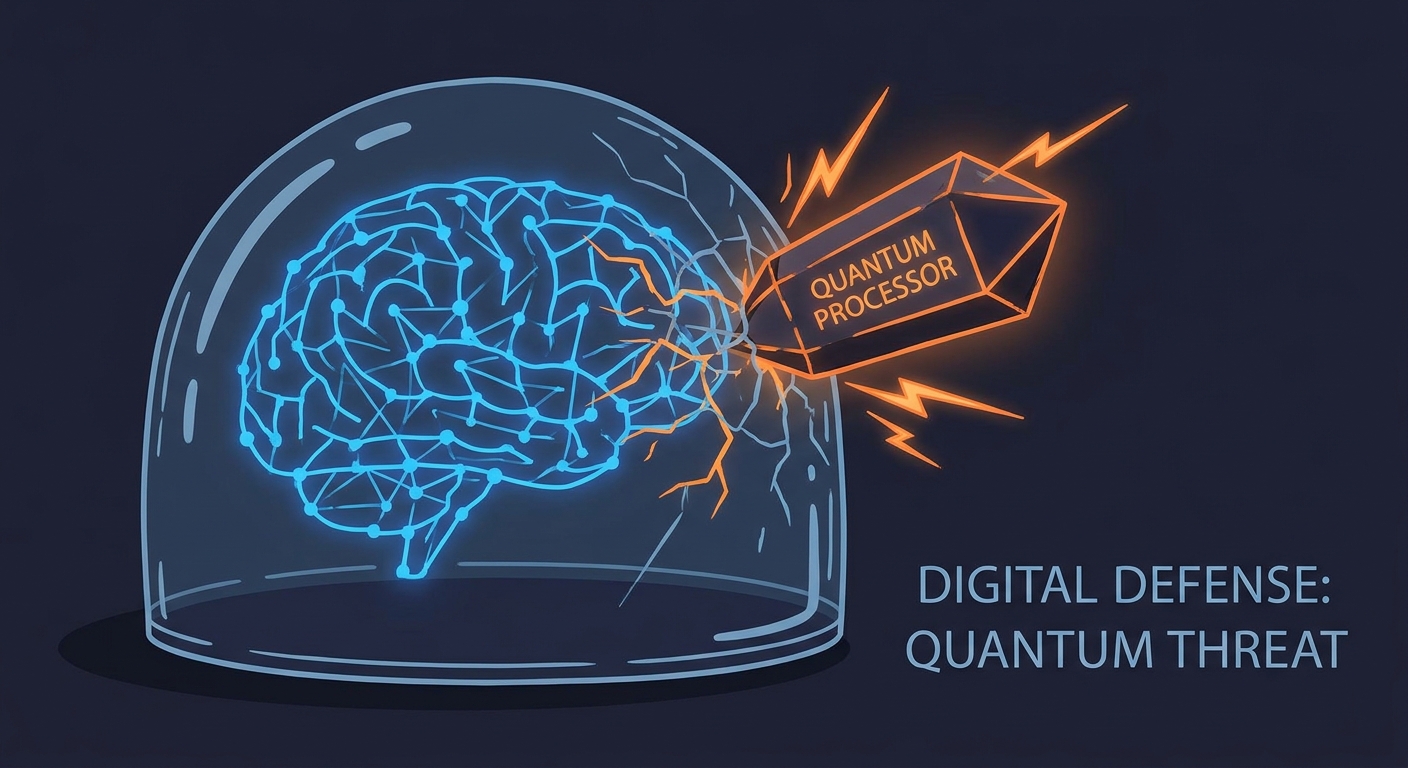
TL;DR
- ✓ AI-IDS systems using RSA or ECC encryption are vulnerable to modern quantum threats.
- ✓ Quantum-capable adversaries can bypass detection by compromising the underlying transport layer encryption.
- ✓ The Harvest Now Decrypt Later strategy turns archived traffic into future security liabilities.
- ✓ Organizations must transition to quantum-resistant standards to protect sensitive AI data logs.
The short answer? Absolutely not.
If your AI-powered Intrusion Detection System (AI-IDS) is still leaning on the old guard—RSA or ECC encryption—you’re essentially leaving your front door wide open. You might have the most sophisticated, high-performance model on the market, capable of spotting a needle in a digital haystack, but it doesn’t matter. If the road that data travels on is compromised, your AI is effectively blind.
A quantum-capable adversary doesn’t need to break your AI. They don’t need to trick your model or bypass your detection logic. They just need to peel back the encryption protecting the data before it ever hits your sensor. Once the transport layer is cracked, your AI is looking at a sanitized, manipulated, or bypassed feed. It’s a ghost in the machine, and you won’t even know it’s there.
The 2026 Reality: Why Quantum-Resilience Isn't Just Theory Anymore
We’ve officially blown past the "theoretical" phase. We’re in the era of weaponization.
Rewind to 2024, and the idea of a quantum computer capable of shredding modern encryption was a fun topic for academic journals and high-level defense briefings. Not anymore. The narrative has shifted from "what if" to "how soon." We are now seeing quantum-inspired optimization algorithms baked into automated exploit kits. Attackers are using these to scan enterprise infrastructure for vulnerabilities with terrifying speed and precision.
This isn't just about waiting for a million-qubit supercomputer to drop from the sky. It’s about the shift from lab research to real-world exploitation. When you look at the current Quantum Cybersecurity Risks, it’s clear that "Q-Day"—the moment public-key encryption becomes a relic of the past—is moving closer every single day. For CISOs and security architects, this isn't a "future problem." It’s an active, burning operational risk.
The "Harvest Now, Decrypt Later" (SNDL) Threat
The biggest threat to your AI-IDS today isn't a real-time quantum hack. It’s the long game. It’s the "Harvest Now, Decrypt Later" strategy.
Think of it like this: attackers are currently siphoning off massive amounts of your encrypted traffic. They’re dumping it into cold-storage data centers, waiting for the day they can bring a fault-tolerant quantum computer to bear on that ciphertext. If your AI-IDS logs sensitive metadata, user behavior, or traffic patterns, those logs are prime targets.
You need to start treating your current data as "already compromised." Assume that every bit of sensitive information moving over your classical TLS tunnels is being recorded and archived. If you aren't protecting that data with quantum-resistant standards right now, you aren't just missing a security patch—you’re providing a roadmap to your own future vulnerabilities.
Is Your AI-IDS Actually Quantum-Resistant? (Spoiler: No.)
There’s a dangerous myth floating around boardrooms: "My AI model is smart enough to detect quantum anomalies."
It’s a fallacy. Your AI-IDS is just a software layer. It’s only as good as the data it’s fed. If an attacker uses a quantum-assisted brute force attack to shatter the transport layer, that traffic is decrypted while it’s still in transit. By the time it reaches your AI-IDS, the game is already over. The traffic has been intercepted, potentially altered, and re-encrypted. Your AI is looking at a clean, perfectly normal-looking feed because the malicious payload was stripped away before it ever reached the sensor.
The gap in visibility is the killer. If your AI-IDS relies on classic key exchange, it is effectively blinded by the very infrastructure it’s supposed to be protecting.
The June 2026 Executive Order: A Seismic Shift
The regulatory floor just dropped out. With the White House Executive Order June 2026, the rules of the game changed. This isn't just a suggestion for federal agencies; it’s a mandate that ripples through the entire supply chain.
If you’re a vendor for critical infrastructure, the "trickle-down" effect is immediate. Compliance isn't just about checking boxes anymore. It’s about proving you have a concrete roadmap toward a quantum-resistant architecture. Fail to align your AI-IDS and your broader security stack with these directives, and you’re looking at lost contracts and a major competitive disadvantage.
Securing the Model Context Protocol (MCP)
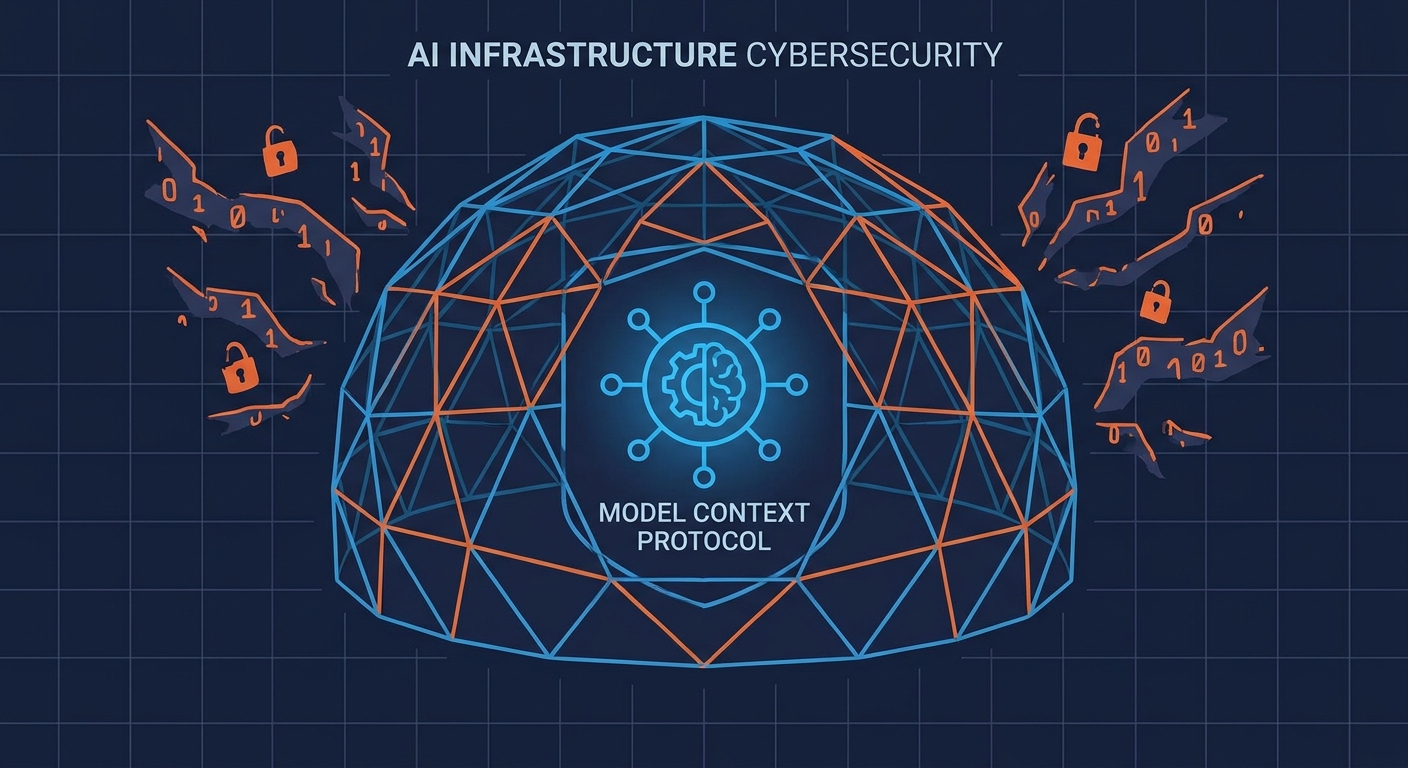
As organizations scramble to connect AI models to data sources using the Model Context Protocol (MCP), they’re inadvertently blowing a massive hole in their own security.
Standard API keys and basic access controls? They’re tissue paper against a quantum-assisted brute force attack. When you link your internal data lake to an LLM via MCP, you’re essentially creating a high-value pipeline. If that pipe is only secured by classical cryptographic handshakes, it’s a sitting duck. If you’re deep in the weeds on this, our Protecting Model Context Protocol (MCP) guide is required reading. We break down how to implement quantum-resistant authentication so your AI context stays private, even in a post-quantum environment.
The Hybrid Cryptographic Migration Strategy
Don't fall for the "Rip and Replace" trap. It’s a great way to break your systems and ruin your weekend. You can't just flip a switch to a fully quantum-resistant environment without causing a total meltdown of your legacy dependencies.
The industry-standard move? Hybrid cryptographic migration.
Think of it as adding a new lock to your door without removing the old one. By combining your existing classical encryption (RSA/ECC) with NIST-approved PQC algorithms (like Kyber or Dilithium), you get the best of both worlds. You keep the proven reliability of classical systems while adding the quantum-hardened security of lattice-based cryptography. Check out the NIST Post-Quantum Cryptography Standards to see where the industry is heading.
Your 5-Step Quantum Readiness Checklist for 2026
To survive this transition, you need a plan. Follow this framework (detailed in our Post-Quantum AI Infrastructure Security Framework):
- Inventory: Audit your data. Which logs, model weights, and training sets have a shelf-life of five years or more? Those are your "SNDL-critical" assets. Secure them first.
- Prioritize: You can't do everything at once. Rank your AI-IDS endpoints based on the sensitivity of the data flows they monitor.
- Hybridize: Layer NIST-standard PQC wrappers over your TLS connections. Keep your classical encryption, but add the PQC shield on top.
- Monitor: Deploy quantum-resistant logging. Ensure that the logs your IDS generates are encrypted with algorithms that can actually stand up to Shor's algorithm.
- Audit: Stress-test your defenses against quantum-inspired optimization attacks. Get your red team to simulate how an adversary would use quantum tools to bypass your detection logic. Find the holes before they do.
Handling Legacy Systems
What about the old-school hardware that can't be patched for PQC? Don't panic. You use "quantum-wrapping."
Set up a secure gateway or proxy in front of the legacy device. Terminate all traffic at this quantum-resistant gateway, decrypt it, and then pass it to the legacy IDS via a physically isolated or strictly restricted local segment. You’re essentially building a hardened perimeter around the vulnerable tech. It’s not elegant, but it’s effective.
Frequently Asked Questions
Does my AI-based intrusion detection system already protect against quantum attacks?
No. Your AI is a software layer, not a cryptographic shield. If the transport layer (TLS/SSL) is broken by a quantum computer, the data is intercepted and decrypted before your AI ever gets a look at it.
What is "Harvest Now, Decrypt Later" and why should I care if I'm not a bank?
SNDL is the practice of stealing encrypted data now to decrypt it later once quantum hardware is powerful enough. Even if you aren't a bank, your IP, employee data, and strategy are valuable. If your data is sensitive for 3-5 years, it is a target.
Do I need to replace my entire infrastructure to be quantum-resistant?
Definitely not. "Rip and replace" is a recipe for disaster. A hybrid approach—layering PQC on top of your existing classical infrastructure—is the standard, safer path.
How does the June 2026 Executive Order affect my private company?
While the order focuses on federal agencies, it sets a new baseline for the entire supply chain. If you’re a vendor for these entities, expect to be contractually required to align with PQC standards soon.
Can AI be used to help build quantum-resistant defenses?
Absolutely. AI is already being used to stress-test crypto, optimize PQC performance, and spot vulnerabilities in hybrid implementations that humans might miss. It’s one of your most powerful tools for the post-quantum era.