How to Protect Model Context Protocol (MCP) Deployments Against Quantum Threats

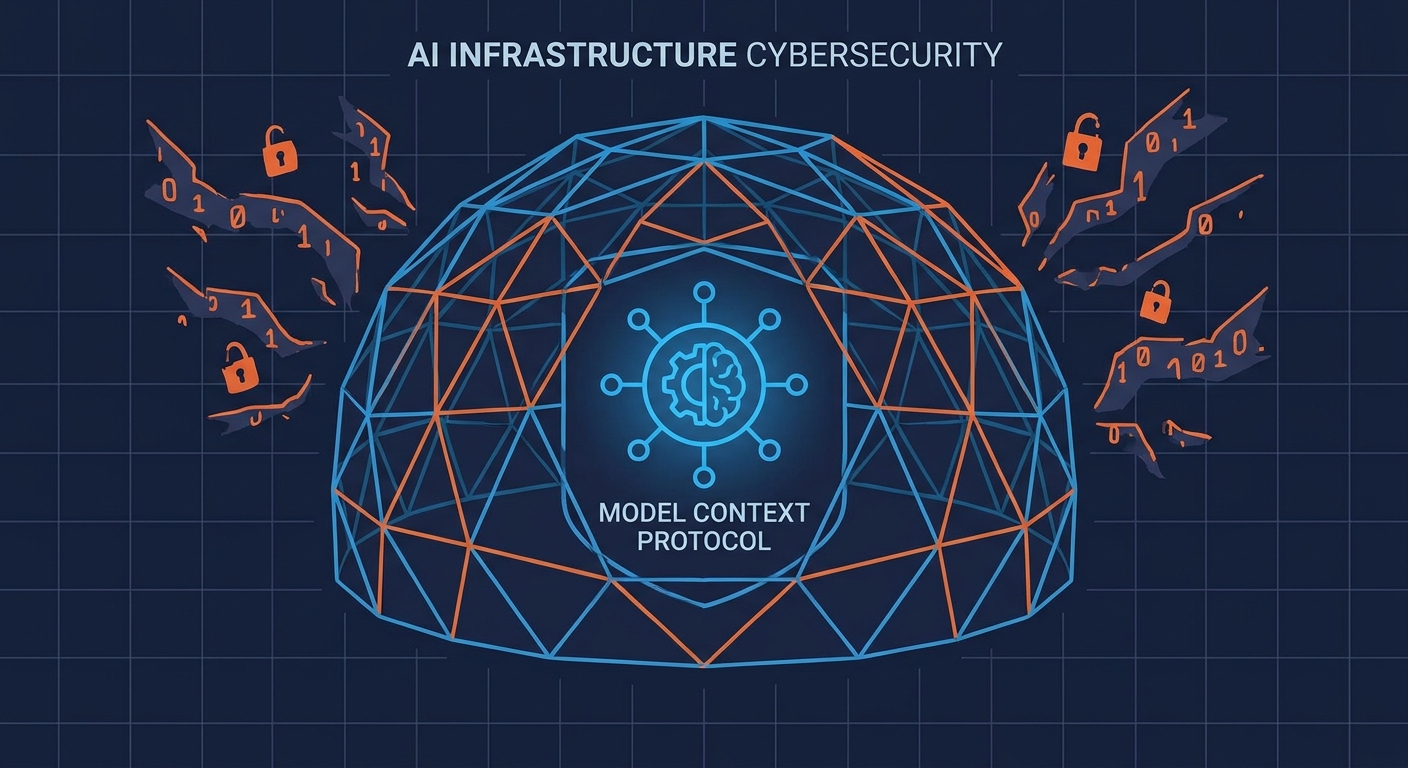
TL;DR
- ✓ Sensitive MCP traffic faces long-term risks from Harvest Now Decrypt Later quantum attacks.
- ✓ Current TLS 1.3 standards are vulnerable to future quantum-based decryption via Shor's algorithm.
- ✓ MCP's persistent stateful conduits create unique vulnerabilities like schema poisoning and MitM attacks.
- ✓ Organizations must shift to Quantum-Secure-by-Construction architectures to protect critical AI agent workflows.
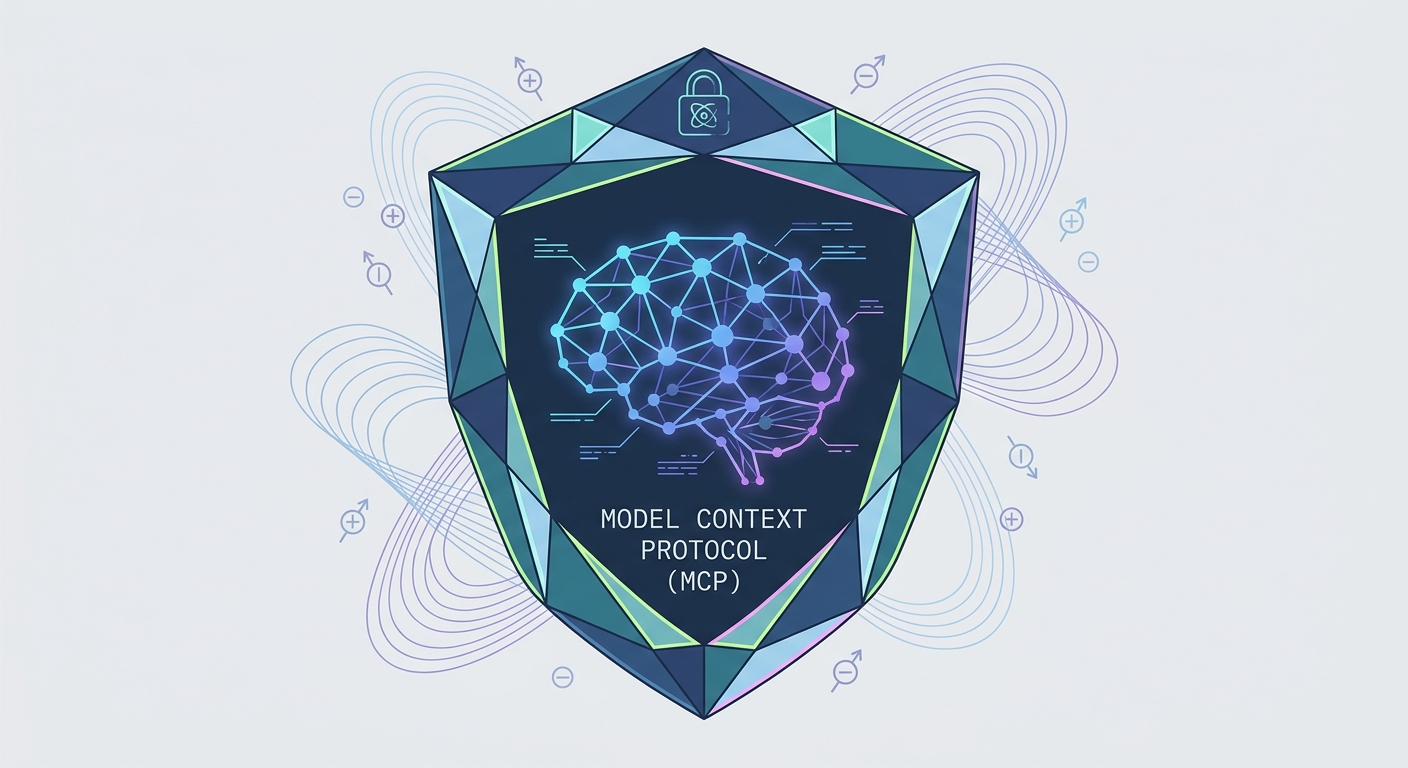
The Model Context Protocol (MCP) has become the connective tissue of the agentic AI era. It’s how LLMs talk to the databases, tools, and enterprise systems that actually make them useful. But there’s a catch. This architectural convenience has created a silent, ticking time bomb: the "Harvest Now, Decrypt Later" (HNDL) paradigm.
Because MCP often carries sensitive enterprise context, PII, and proprietary logic, any traffic intercepted today by nation-state actors can be stored. Once fault-tolerant quantum computers hit the scene, that stored data becomes an open book. Security teams can no longer hide behind standard perimeter defenses. You have to pivot to Quantum-Secure-by-Construction (QSC) architectures today, or your current AI workflows will inevitably become tomorrow’s massive data breaches.
Why TLS 1.3 isn't enough
For years, we’ve treated TLS 1.3 as the gold standard. It’s great at stopping classical eavesdropping, sure. But it’s built on elliptic curve cryptography (ECC) and RSA. These rely on mathematical hurdles—like integer factorization—that Shor’s algorithm can bypass with terrifying efficiency once a cryptographically relevant quantum computer exists.
The danger isn't that your MCP traffic gets cracked tomorrow morning. The danger is the shelf life of the data you’re moving. API keys, internal documentation, customer records, proprietary codebases—this stuff doesn't expire quickly. If a malicious actor captures your encrypted MCP streams today, they’re just waiting for the day they can unlock the secrets of your organization’s AI operations. To understand exactly which standards will eventually render your current setup obsolete, check out the NIST Post-Quantum Cryptography Standardization documentation. It’s the roadmap for where the industry is going.
The unique attack surface of the MCP ecosystem
Most web APIs use ephemeral REST or GraphQL calls. MCP is different—it’s built on persistent, stateful conduits. This changes the game for attackers. In a standard web setup, they hunt for a tiny window of opportunity during a request-response cycle. In the MCP model, they’re looking to compromise the "context exchange layer" itself.
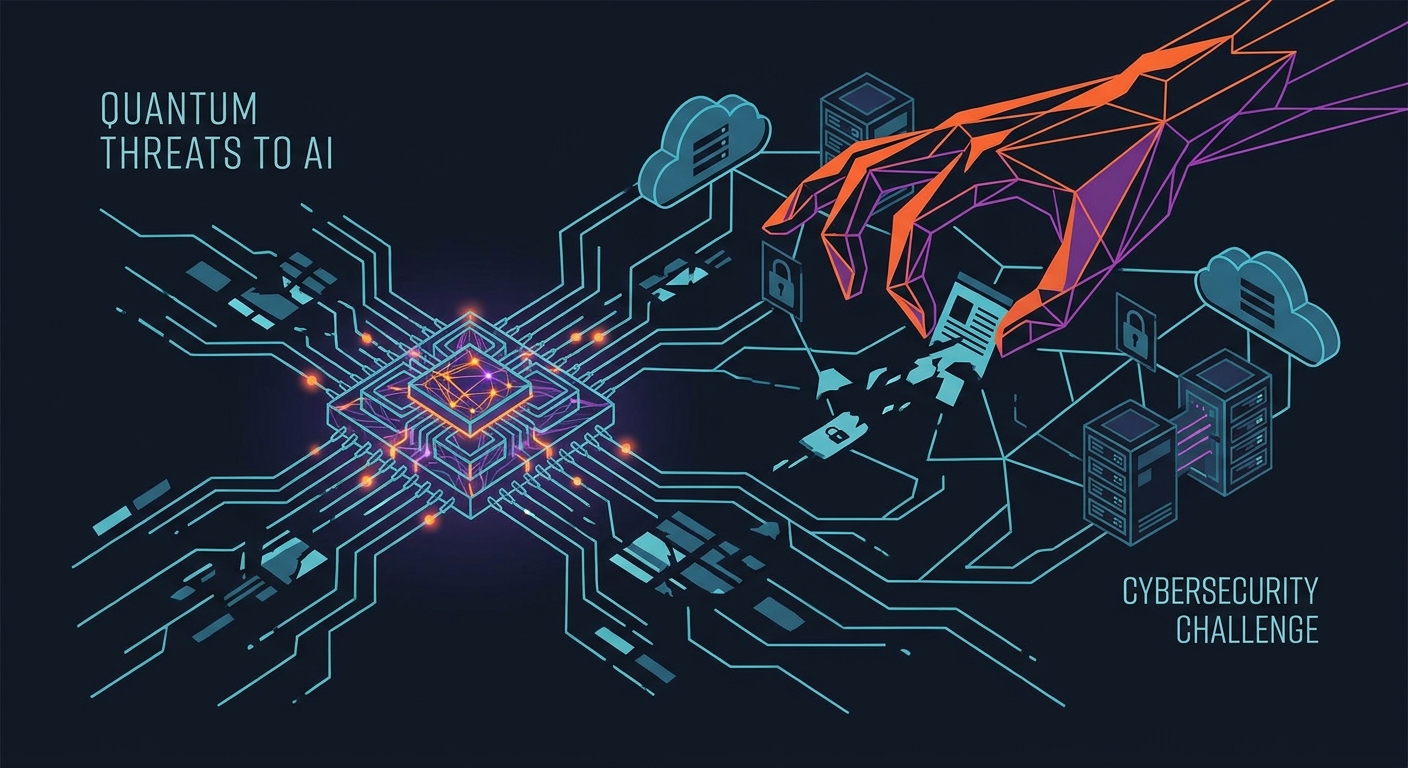
The risk gets worse with "Schema Poisoning," a vector specific to AI agents. If an attacker pulls off a Man-in-the-Middle (MitM) attack, they aren't just sniffing traffic. They’re actively manipulating the tools the agent is allowed to use. By tweaking the schema definitions moving between the MCP server and client, an attacker can trick the LLM into executing unauthorized commands—like exfiltrating data or changing system configs—all while appearing as a perfectly legitimate tool interaction.
Is your current MCP architecture "Quantum-Ready"?
Assessing your vulnerability starts with a map of your data flow. Every point where an MCP server exposes a tool or provides context to an agent is a potential bottleneck for cryptographic upgrades. If you’re handling PII or high-value enterprise data, you need to audit your protocol negotiation phase immediately. Most current implementations default to classical key exchange, which is exactly where the failure happens.
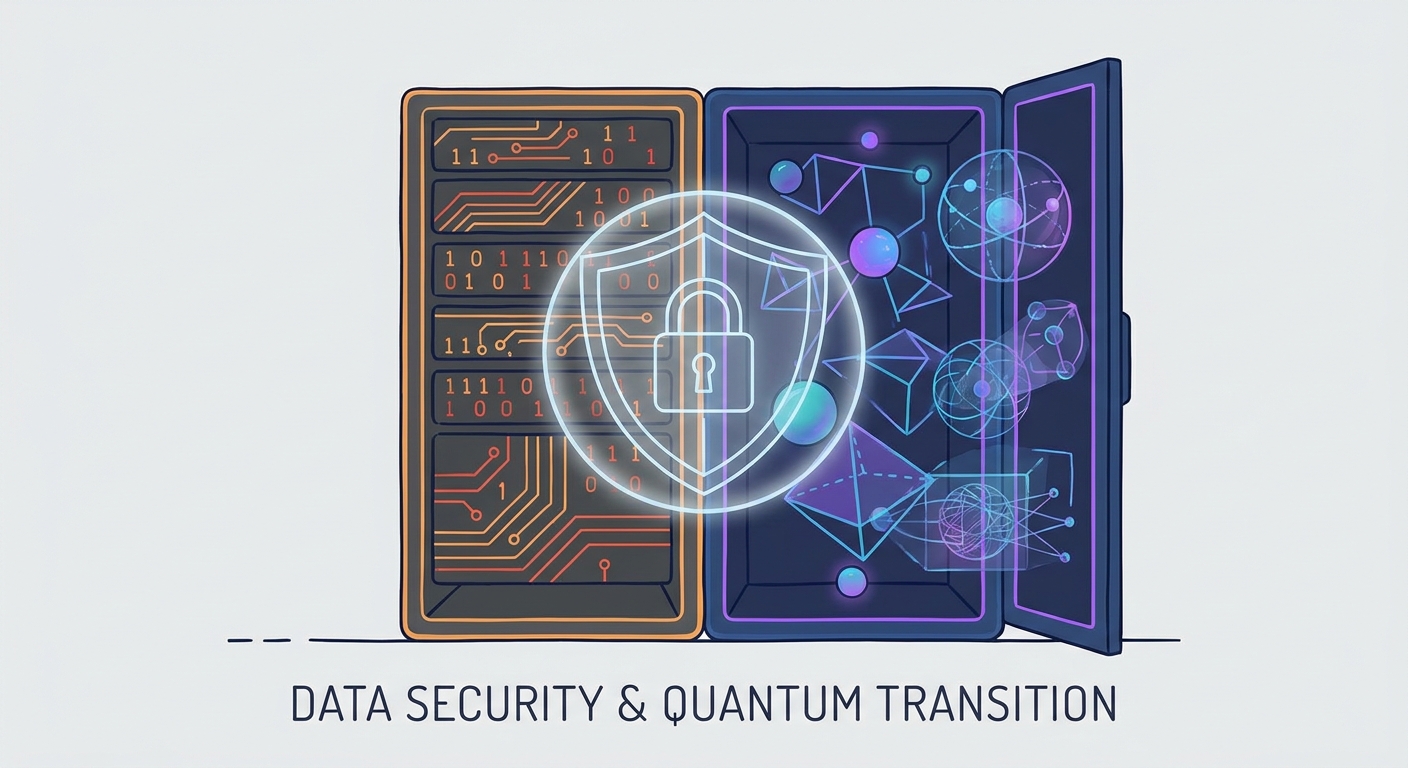
Smart organizations are moving toward a "Hybrid PQC" mandate. This means wrapping existing classical ECC/RSA key exchanges with NIST-approved algorithms like ML-KEM (formerly Kyber). By combining both, you’ve got a safety net: even if one layer is compromised—either by a classical exploit or a future quantum breakthrough—the other should hold. If you want to standardize your approach, the MCP Security Hardening Framework is an essential read for finding these cryptographic weaknesses before they go into production.
The migration roadmap to Hybrid PQC
Migrating to a quantum-resistant architecture isn't a "rip and replace" job. It’s an iterative process of hardening what you already have.
Phase 1: Inventory & Auditing
You can't protect what you don't see. Map every MCP server endpoint. Tag the ones that process PII, API credentials, or sensitive business logic. These are your "High-Value Targets." Prioritize them first.
Phase 2: Protocol Negotiation
Your MCP client and server need to be "algorithm agile." Update your implementation so the handshake offers both classical and quantum-resistant algorithms. If the client supports PQC, the connection should upgrade to a hybrid state. If it doesn't, it should fail closed or at least log a high-severity alert.
Phase 3: Testing for Latency
Post-quantum signatures and key encapsulations are heavier than their classical counterparts. You have to test your agent latency. A 10ms increase in handshake time might be fine, but a 200ms delay could kill real-time agentic workflows.
Stopping the fire at your doorstep: Schema Poisoning
While quantum threats are the big, scary monster on the horizon, schema poisoning is the fire currently burning in your living room. Agentic systems are only as secure as the tool definitions they trust. If an MCP server defines a read_file tool, the agent has to be able to verify that the definition hasn't been tampered with.
Strict input validation is your first line of defense. Never trust a tool definition from an external MCP server unless you’ve checked its cryptographic signature. Also, apply the principle of "Least Privilege." An agent should only have access to the specific tools it needs for a specific task. If your agent is writing code, it shouldn't have access to your HR database tools. For a deeper look at these operational security measures, refer to the Cloud Security Alliance: Agentic MCP Security Best Practices, which outlines the necessary governance for AI-integrated environments.
Future-proofing your agentic infrastructure
The goal here is cryptographic agility. You want to design systems that don't require an entire re-architecture every time a new NIST standard drops. By abstracting your cryptographic providers, you can swap out algorithms as the PQC landscape evolves. This is why we advocate for monitoring traffic patterns for anomalous tool execution—don't rely solely on static encryption standards.
Continuous monitoring helps you detect when an agent is acting weird—like deviating from its known operational profile. That’s often a sign that the schema has been compromised or the agent is being manipulated. For architects building for the long term, we have compiled additional guidance on maintaining this posture in our guide to Secure Your AI Infrastructure.
The role of the official specification
The Model Context Protocol GitHub Repository is the ultimate source of truth. As the community iterates, security extensions are becoming a priority. Keep a close eye on the official repo for upcoming updates regarding native support for signing MCP messages and standardized metadata for security policies. By aligning your implementation with the upstream spec, you ensure your security hardening efforts stay compatible with the broader ecosystem as it matures.
Frequently Asked Questions
Does my existing TLS 1.3 implementation protect my MCP traffic from quantum computers?
No. While TLS 1.3 is the best protection we have today against classical eavesdropping, it relies on mathematical problems that quantum computers will eventually solve. Because it lacks PQC key encapsulation, it is vulnerable to "Harvest Now, Decrypt Later" attacks, where intercepted traffic is stored for future decryption.
What is the most immediate threat to an MCP deployment: Quantum or traditional injection?
Traditional injection and schema poisoning are the most immediate threats. While quantum computers represent a long-term existential risk, schema poisoning allows attackers to manipulate your AI agents in real-time to leak data or take unauthorized actions, making it a higher priority for daily operational security.
How do I implement quantum resistance without breaking my current AI agent performance?
The most effective way is to use a hybrid cryptographic approach. By layering PQC algorithms over existing classical ones, you maintain compatibility with current systems while adding a quantum-hardened security layer. This allows you to scale up security without the overhead of a pure, unoptimized PQC implementation.
Is it possible to retrofit existing MCP servers for quantum resistance, or is a rebuild required?
You do not need a full rebuild. MCP is designed with a modular architecture, meaning you can often implement quantum resistance through middleware, updated server libraries, or proxy layers that handle the cryptographic handshake before passing traffic to your existing server logic.