Can Your AI Infrastructure Withstand Quantum Decryption? Essential Strategies for 2026

TL;DR
- ✓ Quantum computers threaten the long-term security of your proprietary AI model weights.
- ✓ Harvest Now Decrypt Later attacks allow adversaries to store current traffic for future decryption.
- ✓ Current standards like RSA and ECC are vulnerable to Shor’s algorithm and quantum hardware.
- ✓ Migrating to quantum-resistant cryptography is essential for protecting your enterprise intellectual property.
- ✓ Implementing secure protocols is critical as AI systems integrate more external data sources.
If you’re waiting for a massive, functional quantum computer to show up in your network logs before you start locking things down, you’ve already lost. That’s not how this works. By the time that machine is humming away, your secrets will be long gone.
Securing your enterprise AI in 2026 isn’t about stopping today’s script kiddies. It’s about protecting your data from the decryption power of tomorrow. If your architecture isn’t built on crypto-agility and quantum-resistant foundations, your model weights, proprietary training sets, and real-time inference streams are just sitting in an open vault. They’re waiting for a key that hasn't been cut yet.
Why is AI Infrastructure So Vulnerable?
Your AI infrastructure isn't just another piece of the IT puzzle. It’s a massive, concentrated pile of your most valuable intellectual property.
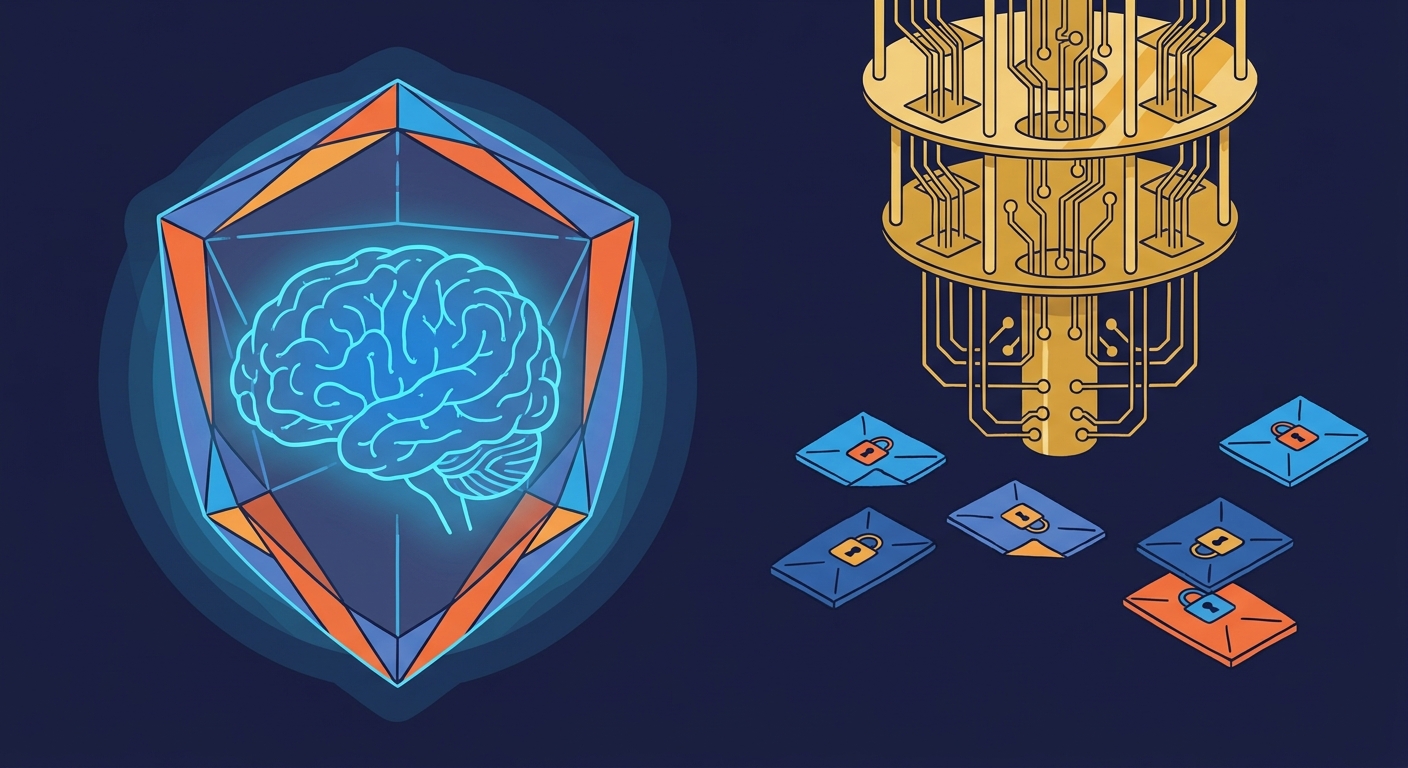
Think about it. Standard transactional databases are noisy and change by the second. AI, on the other hand, is built on long-lived assets. You spend months—sometimes years—fine-tuning these models. They are the "crown jewels" of your company. If someone exfiltrates those models today, they don’t just have a snapshot of a database; they have the engine that drives your entire business. And that value doesn't expire.
Most of our current security—RSA, Elliptic Curve Cryptography (ECC)—is built on math problems that are, frankly, easy for a quantum computer to chew through using Shor’s algorithm. We use these standards to keep data safe in transit, but they’re hitting an expiration date. Here’s the kicker: network security usually cares about the now. AI security has to care about the forever. If your training data or model checkpoints are intercepted today, they’ll be wide open in a few years. Your current "secure" storage is becoming a liability.
The "Harvest Now, Decrypt Later" (HNDL) Reality
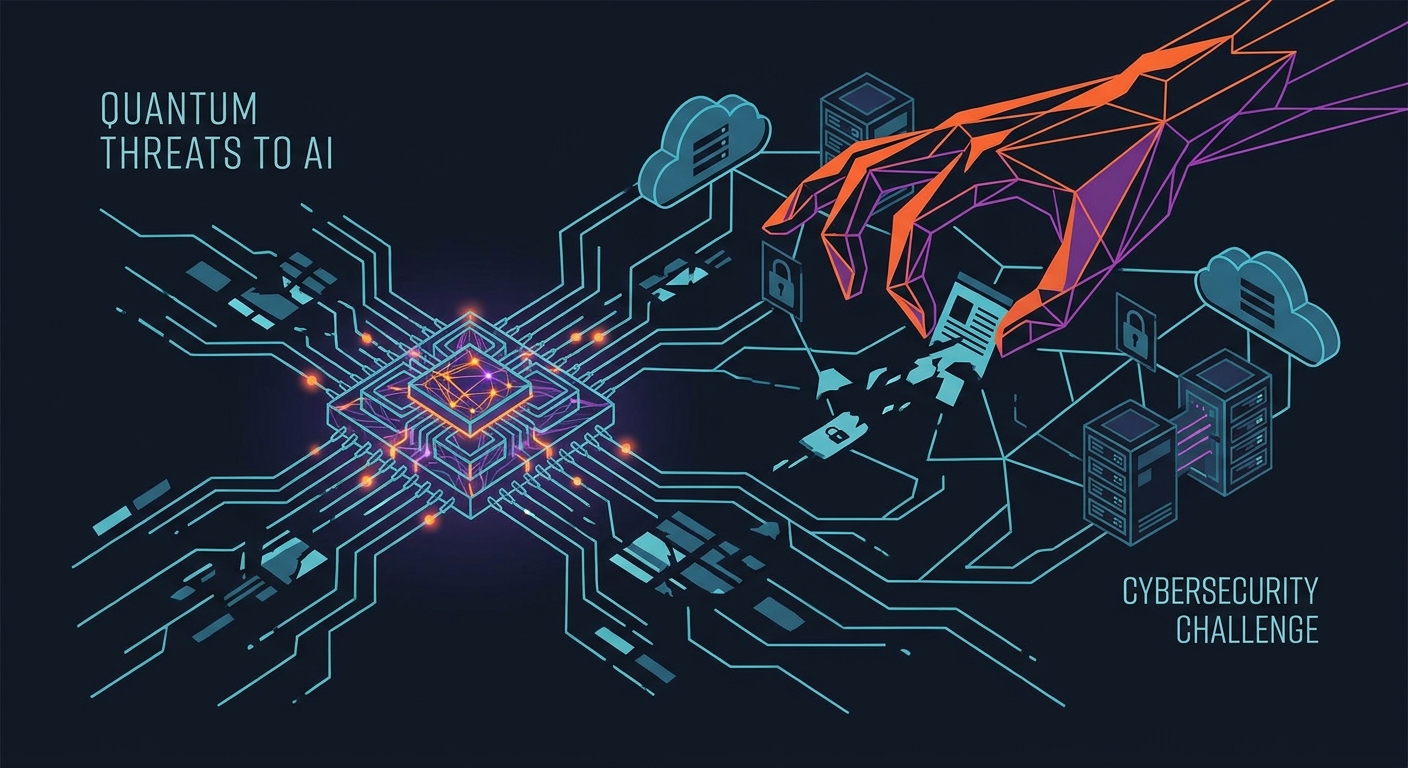
The most dangerous threat to a CTO right now is the Harvest Now, Decrypt Later (HNDL) model.
Let’s be clear: state-sponsored actors and cyber-syndicates aren't trying to break your encryption in real-time. That’s too hard. Instead, they’re just scraping and storing your encrypted traffic. They’re building a library of ciphertext. They’re waiting for the day quantum hardware catches up so they can unlock it all at once.
For an AI architect, this is a nightmare. Your API keys, your model weight vectors, your prompt history—it’s all being vacuumed up. Every time your LLM talks to a backend or pulls a document from a RAG-indexed database, that traffic is a potential HNDL target. If you’re dragging your feet on migrating to quantum-resistant standards, you aren't just being cautious. You’re handing over your future IP to people playing the long game.
How the Model Context Protocol (MCP) Expands the Attack Surface
The Model Context Protocol (MCP) is a godsend for connecting LLMs to external tools and databases. But there’s a catch. It creates a persistent, high-bandwidth bridge between your "brain" and the outside world.
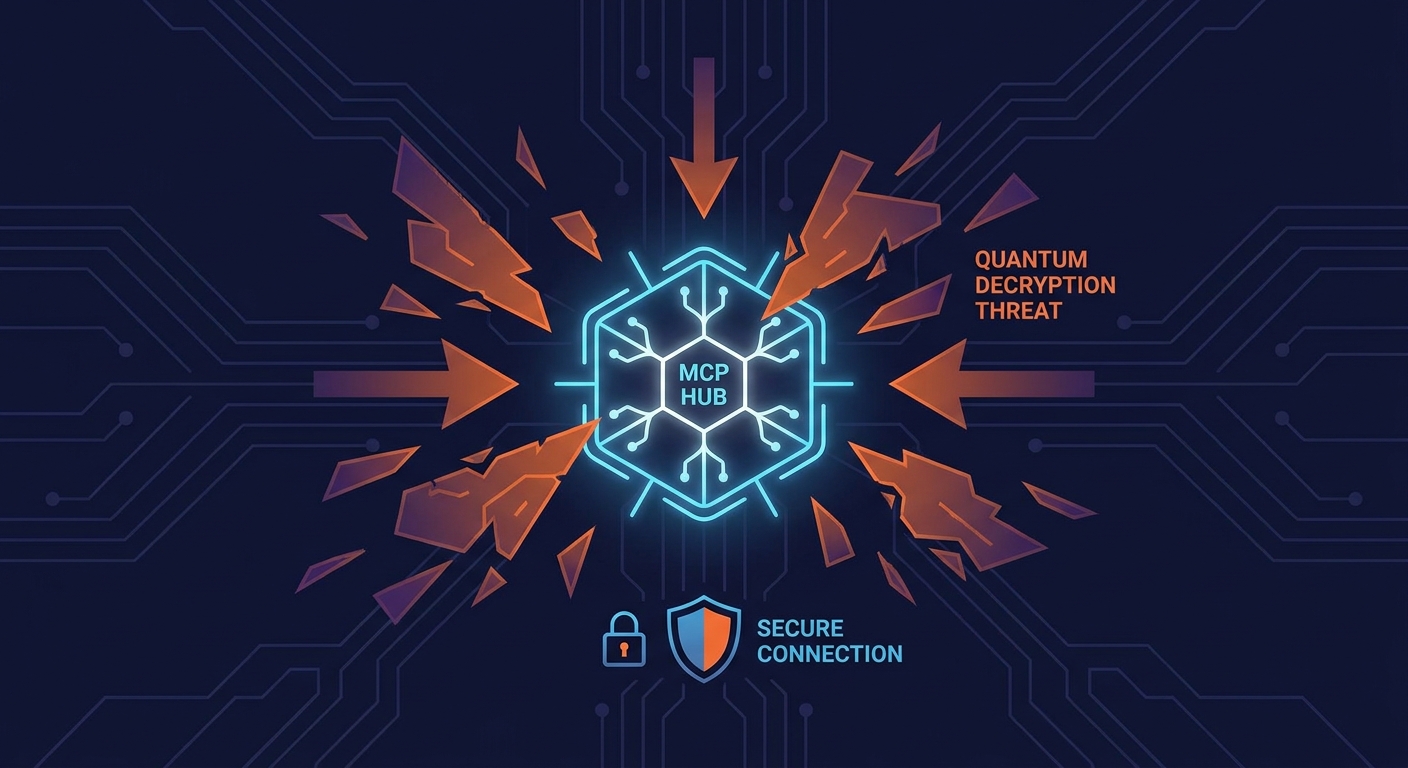
Usually, these connections run on TLS. It’s reliable against standard brute-force, sure. But it’s totally transparent to a quantum observer.
Because MCP connections constantly feed sensitive context and tool-use triggers, they are gold mines. If you’re just wrapping your MCP integrations in standard TLS, you’re ignoring the reality that those tunnels are see-through to future quantum systems. To secure your MCP deployments, you need to move toward quantum-resistant tunnels. You need to wrap these calls in a layer of PQC-hardened encryption so that even if someone grabs the traffic, they’re looking at static noise.
Why "Crypto-Agility" is the Gold Standard for 2026
The "set it and forget it" era of security is dead. If your encryption is baked into your stack, you’re stuck. And if you’re stuck, you’re vulnerable.
Crypto-agility is exactly what it sounds like: the ability to swap out your cryptographic primitives on the fly. You shouldn't have to tear down your entire AI stack just to change an algorithm. You should be able to move from classical ECC to a lattice-based signature scheme without a total system meltdown.
Treat encryption like a modular service. By abstracting your crypto operations, you can deploy patches or update your algorithms the moment NIST completes its Post-Quantum Cryptography (PQC) standardization. If you can’t update your encryption protocols in an afternoon by 2026, you aren't just behind the curve. You’re structurally insecure.
Your 2026 Strategic Roadmap
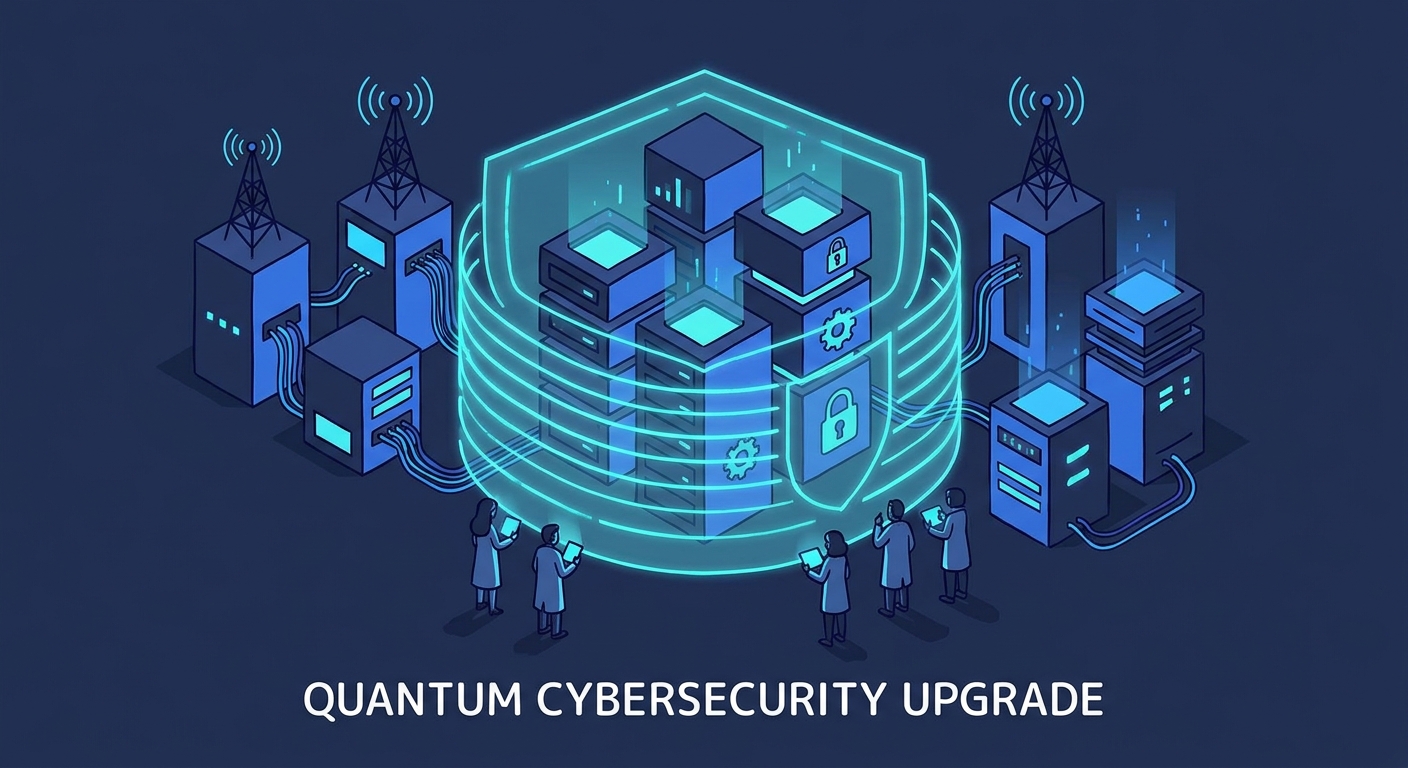
You don't need to rip out your entire infrastructure to get quantum-ready. That’s a recipe for disaster. Take a phased approach instead.
Phase 1: Inventory & Classification
Not all data is created equal. Start by categorizing your AI assets based on their "Shelf-Life." A model that’s going to be obsolete in three months doesn't need the same protection as a foundational model that will run your operations for the next decade. Audit your API keys, your training datasets, and your vector database exports. Ask yourself: "If someone decrypts this in five years, would it destroy us?"
Phase 2: Hybrid Cryptography
Don't throw away your classical encryption yet. The gold standard for 2026 is a hybrid approach. Use current AES-256 standards alongside NIST-recommended PQC algorithms—like CRYSTALS-Kyber for key encapsulation or CRYSTALS-Dilithium for digital signatures. This gives you "defense-in-depth." If the PQC layer has a hidden bug, the classical layer is still there. If the classical layer fails, the PQC layer holds the line.
Phase 3: Regulatory Alignment
The regulators are finally waking up. Look at the CISA Post-Quantum Cryptography Initiative. If you’re in a critical sector, you’re expected to have a roadmap. This isn't optional anymore. It’s a requirement for staying in business.
Monitoring in a Post-Quantum World
Traditional perimeter defense is useless against someone who is just "harvesting" your data. You need continuous cryptographic monitoring.
You should be looking for anomalous traffic patterns—signs that someone is trying to force a handshake or bypass a secure protocol. You need total visibility into the "cryptographic health" of every single node in your AI pipeline. If a service is still using a legacy, quantum-vulnerable handshake, your dashboard should be screaming at you. Treat it like the critical security debt it is.
Conclusion: It’s a Journey, Not a Patch
Quantum readiness isn't a final destination. It’s a design philosophy. Audit your data, harden your MCP integrations, and make your stack agile. Resilience isn't something you bolt on at the end; it’s something you build into the foundation.
For those ready to get their hands dirty, our 2026 AI Security Checklist breaks down exactly how to start this transition. The quantum horizon is coming. Build your infrastructure to weather it.
Frequently Asked Questions
Does my AI infrastructure need quantum protection if a quantum computer doesn't exist yet?
Yes. Because of "Harvest Now, Decrypt Later" (HNDL) threats, attackers are intercepting and storing your encrypted data right now. They are just waiting for the day they can unlock it. If your data needs to remain secret for more than a few years, it’s already at risk.
How does the Model Context Protocol (MCP) increase quantum risk?
MCP creates a persistent, high-value bridge between your LLMs and external tools. If these connections use standard, quantum-vulnerable TLS, the entire context stream—including sensitive API keys and proprietary data—is exposed to future decryption.
What is "crypto-agility" and why is it essential for AI in 2026?
Crypto-agility is the ability to update cryptographic algorithms without overhauling your entire system. It is essential because PQC standards are still evolving, and you must be able to switch to newer, more secure algorithms as they are standardized by NIST.
What are the first steps an organization should take to achieve quantum readiness?
Start by auditing your AI data for "shelf-life" to identify what needs long-term protection. Once prioritized, implement a hybrid cryptographic scheme that layers classical encryption with NIST-recommended PQC algorithms like CRYSTALS-Kyber.