What is Post-Quantum AI Infrastructure Security and Why Does It Matter for MCP?

TL;DR
- ✓ MCP infrastructure is highly vulnerable to Harvest Now Decrypt Later quantum attacks.
- ✓ Current encryption standards like RSA and ECC are compromised by future quantum computers.
- ✓ Organizations must prioritize NIST post-quantum standards to secure AI agent connectivity.
- ✓ Moving to quantum-resistant security is essential for protecting proprietary AI training data.
Let’s cut the tech-bro jargon for a second. If you’re running an AI stack in 2026, you’re likely using the Model Context Protocol (MCP). It’s brilliant. It’s the "USB-C of AI," a universal language that lets your agents talk to your databases, your local files, and your internal mess of APIs. But there’s a massive, looming problem that most CTOs are choosing to ignore: the quantum threat.
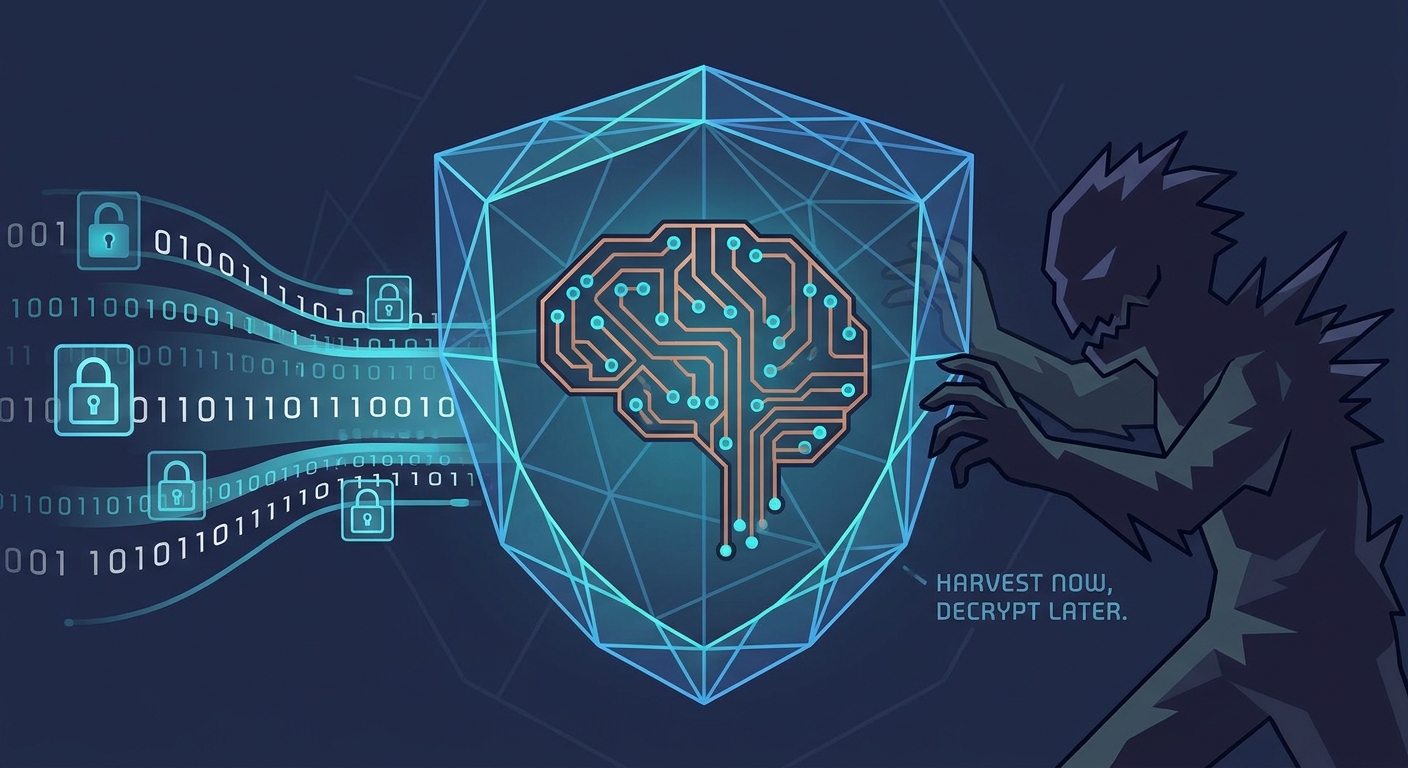
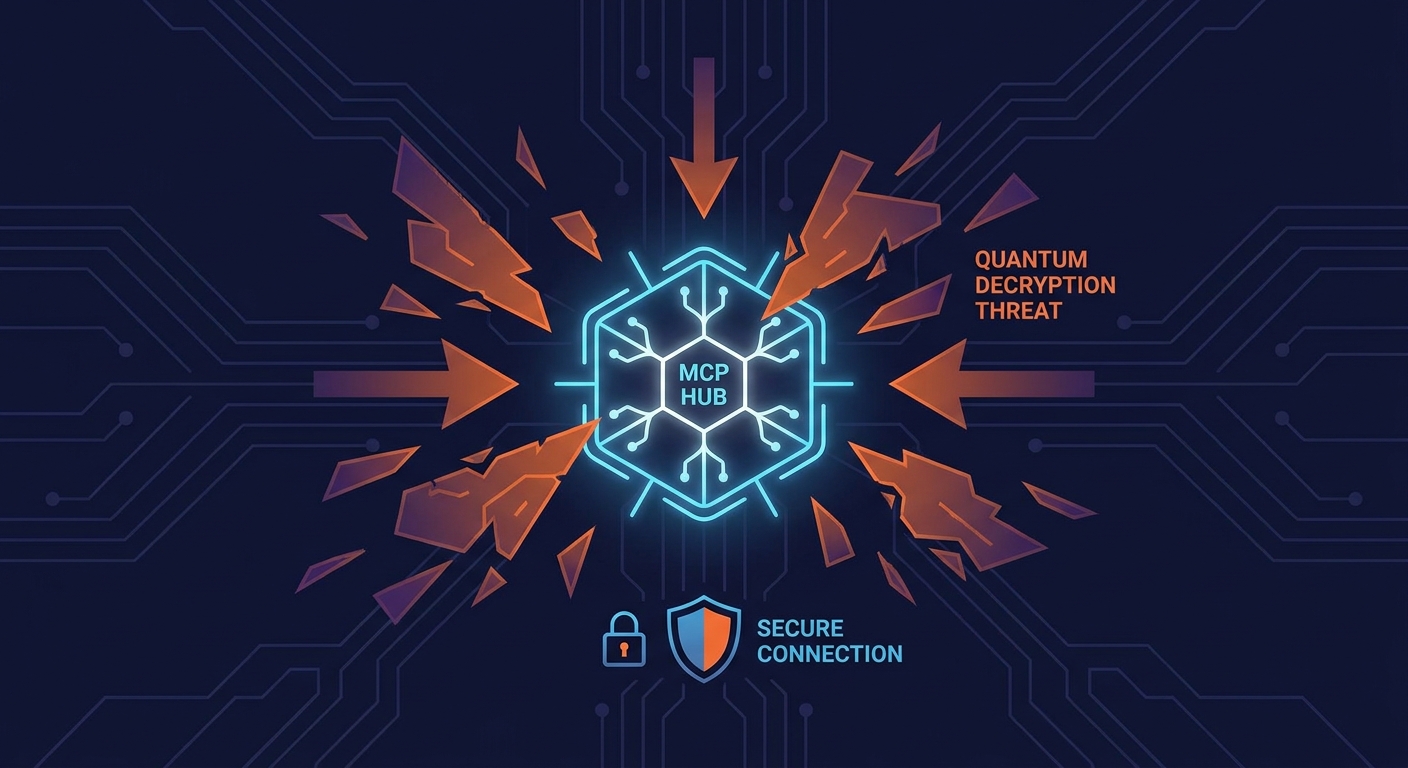
We aren’t talking about some sci-fi scenario for the 2040s. We’re talking about "Harvest Now, Decrypt Later" (HNDL). Right now, bad actors are sucking up your encrypted traffic—the very data your MCP servers are piping into your LLMs—and storing it in digital vaults. They can’t read it today. But the moment a cryptographically relevant quantum computer hits the scene, your "secure" data becomes an open book.
If your infrastructure isn't post-quantum ready, you’re just handing your future to the highest bidder.
The MCP Gold Rush: Security Left Behind
The industry sprinted toward MCP because it solved the "last mile" problem of AI. It turned local tools into extensions of the model, which is a game-changer for productivity. But we’ve moved too fast. As we discussed in our analysis on the evolution of AI agent connectivity, the simplicity that makes MCP a winner is the exact same thing making it a security nightmare.
When you deploy an MCP server, you’re essentially punching a hole between your LLM and your OS. In 2026, the race to ship features has completely eclipsed the need for hardened security. Everyone is obsessed with getting the agent to work—to query the database, to summarize the doc—but almost nobody is asking, "What happens if this transport layer is intercepted?"
We are building skyscrapers on sand.
The HNDL Reality Check
Let’s get technical for a moment, but keep it grounded. Current encryption (TLS 1.3, RSA, ECC) is great against classical computers. It’s rock solid. But it’s a house of cards when faced with Shor’s algorithm.
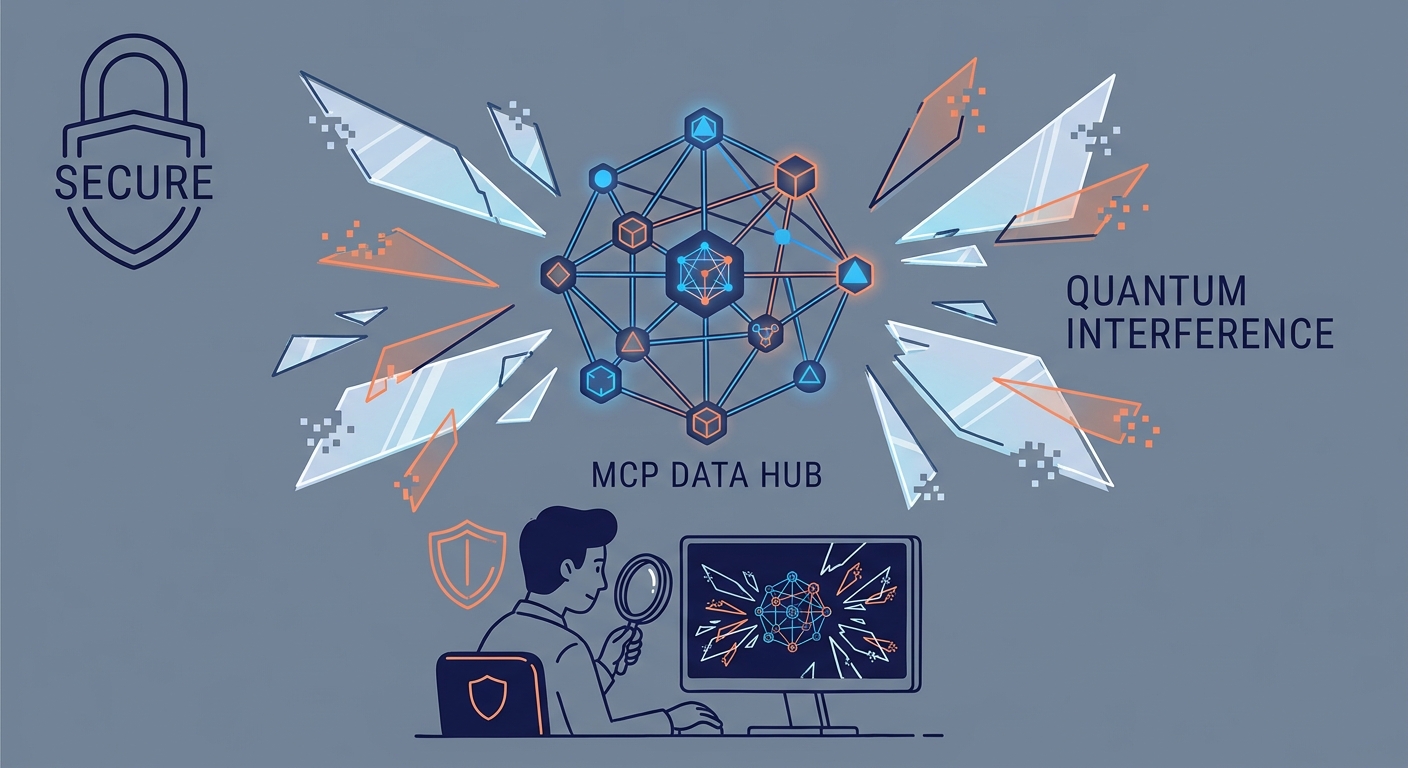
Quantum computers don't just "calculate faster"; they break the fundamental math that keeps RSA and ECC secure. That’s why HNDL is so terrifying. An adversary doesn't need to crack your encryption today. They just need to wait. Once they have the hardware, every proprietary RAG training set, every hard-coded API key, and every bit of sensitive PII you’ve streamed into your agents over the last year will be laid bare.
If you’re still relying on legacy standards, you’re effectively broadcasting your secrets to the future. To start fixing this, you need to be looking at the NIST Post-Quantum Cryptography Standards. This isn't optional anymore; it’s the new baseline for survival.
MCP: A Different Beast Entirely
Moving from standard API security to MCP security is like moving from guarding a door to guarding a city. RESTful APIs are predictable. They’re stateless. You hit an endpoint, you get a response, you move on.
MCP is different. It’s stateful. It’s command-driven. It’s a persistent conversation between your agent and your infrastructure.
The Command Injection Nightmare
Most MCP implementations lean on STDIO (standard input/output) to shuttle data between the host and the server. It’s elegant, sure. It’s also a massive target. If an attacker manages to inject a command into that stream, they aren't just sniffing packets—they’re executing code inside your runtime environment.
Think about that. You’ve given your agent access to your file system. If an attacker takes the wheel, they can traverse your directories and exfiltrate your environment variables before you even know something is wrong.
Tool Poisoning: The Hidden Trap
Then there’s the "poisoned context" issue. Imagine an agent that summarizes your internal documentation. It’s a great tool, right? But what if the MCP server feeding that documentation is compromised? An attacker can inject malicious "hidden" instructions into the documents themselves.
The AI reads the prompt, thinks it’s following a standard procedure, and suddenly it’s leaking data or executing unauthorized actions on your behalf. It’s not a bug; it’s an architectural flaw.
The Path Forward: Hardening Your Stack
So, how do we survive?
- Audit your transport: Is your MCP traffic running over standard, vulnerable channels? Start planning your migration to quantum-resistant encryption protocols now.
- Zero Trust for Tools: Treat every MCP server as a potential point of failure. Don't give your agents permission to touch anything they don't absolutely need. If they don't need write access, lock it down.
- Monitor the stream: Most companies monitor their API calls but ignore the internal MCP traffic. Start logging and analyzing the commands being passed through your MCP channels. If you see something weird, you need to know about it before the data leaves the building.
The future of AI is bright, but it’s also dangerous. We’ve spent the last few years building the engine. It’s time we started worrying about the brakes. Don't wait for a quantum computer to show up to realize your security model is a relic of the past.
The clock is ticking. What are you going to do about it?