The 2026 Guide to Post-Quantum AI Infrastructure Security: Securing MCP Deployments

TL;DR
- ✓ Protect AI training sets from Harvest Now Decrypt Later quantum threats.
- ✓ Treat MCP endpoints as privileged internal actors rather than external APIs.
- ✓ Implement granular data-level authorization to prevent agentic lateral movement.
- ✓ Achieve cryptographic agility to neutralize future quantum decryption risks.
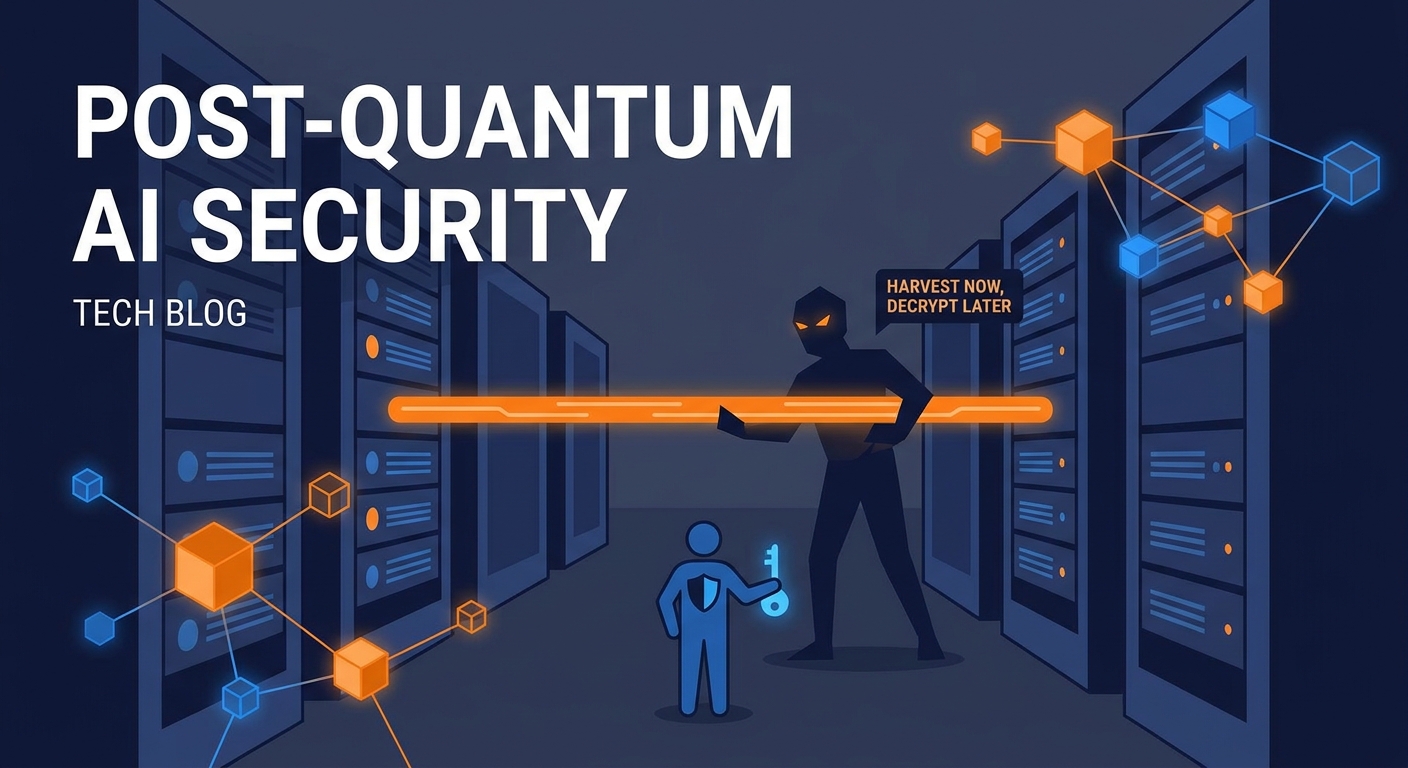
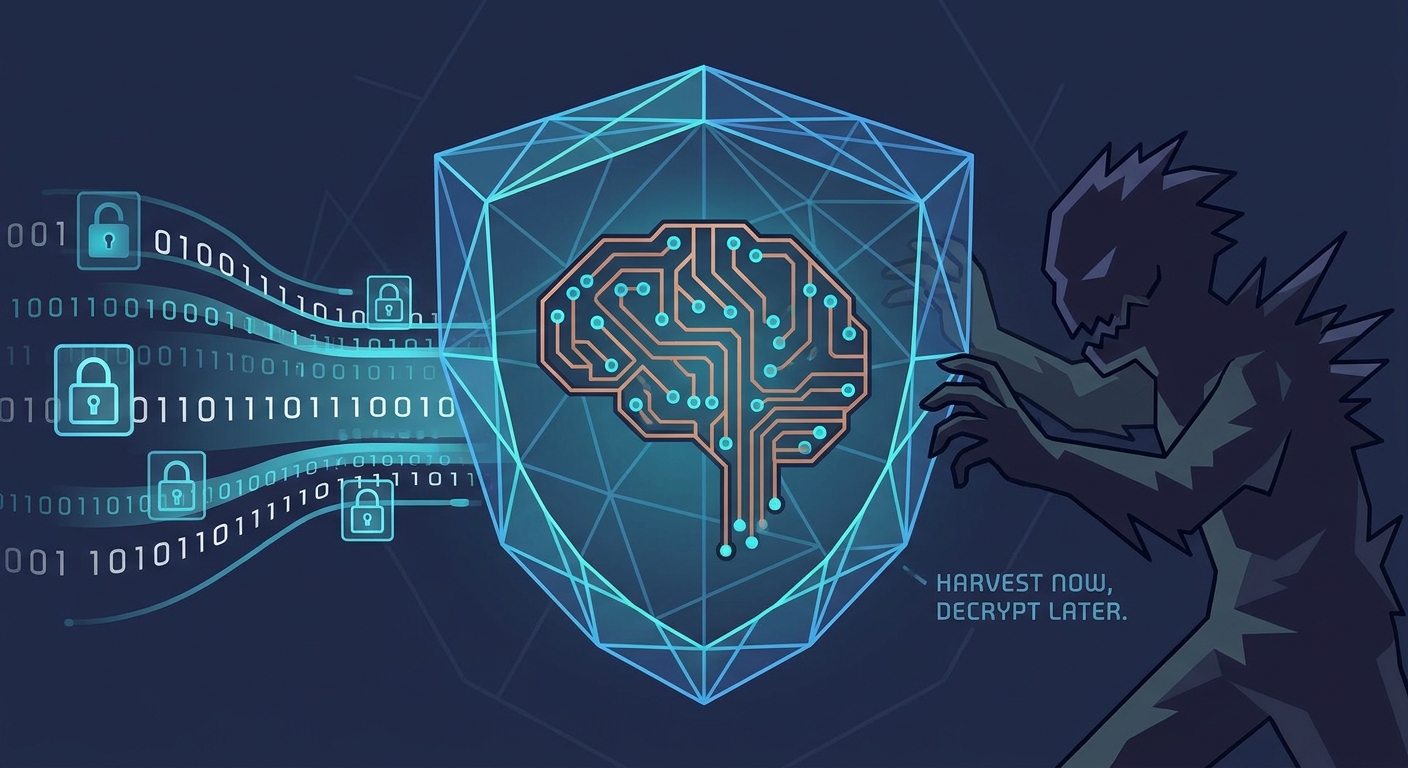
The clock is ticking on your cryptographic infrastructure, and it’s doing so silently. We are currently living through the "Harvest Now, Decrypt Later" (HNDL) era. Right now, adversaries are vacuuming up high-value encrypted traffic—your AI training sets, proprietary model weights, and sensitive agentic context—with one goal in mind: to crack it open the moment cryptographically relevant quantum computers hit the mainstream.
When you layer this existential threat on top of the reckless, breakneck adoption of the Model Context Protocol (MCP), you aren’t just looking at a standard sprint to patch a few holes. You are looking at a potential architectural disaster. Security in 2026 is no longer about building a stronger wall around your perimeter. It’s about cryptographic agility and granular, data-level authorization that assumes your network is already a sieve.
Why MCP is a Whole New Kind of Headache
If you’re still treating MCP like it’s just another flavor of REST or gRPC, you’ve already lost the plot. Traditional APIs are boring, stateless, and transactional. They do one thing, return a result, and shut up.
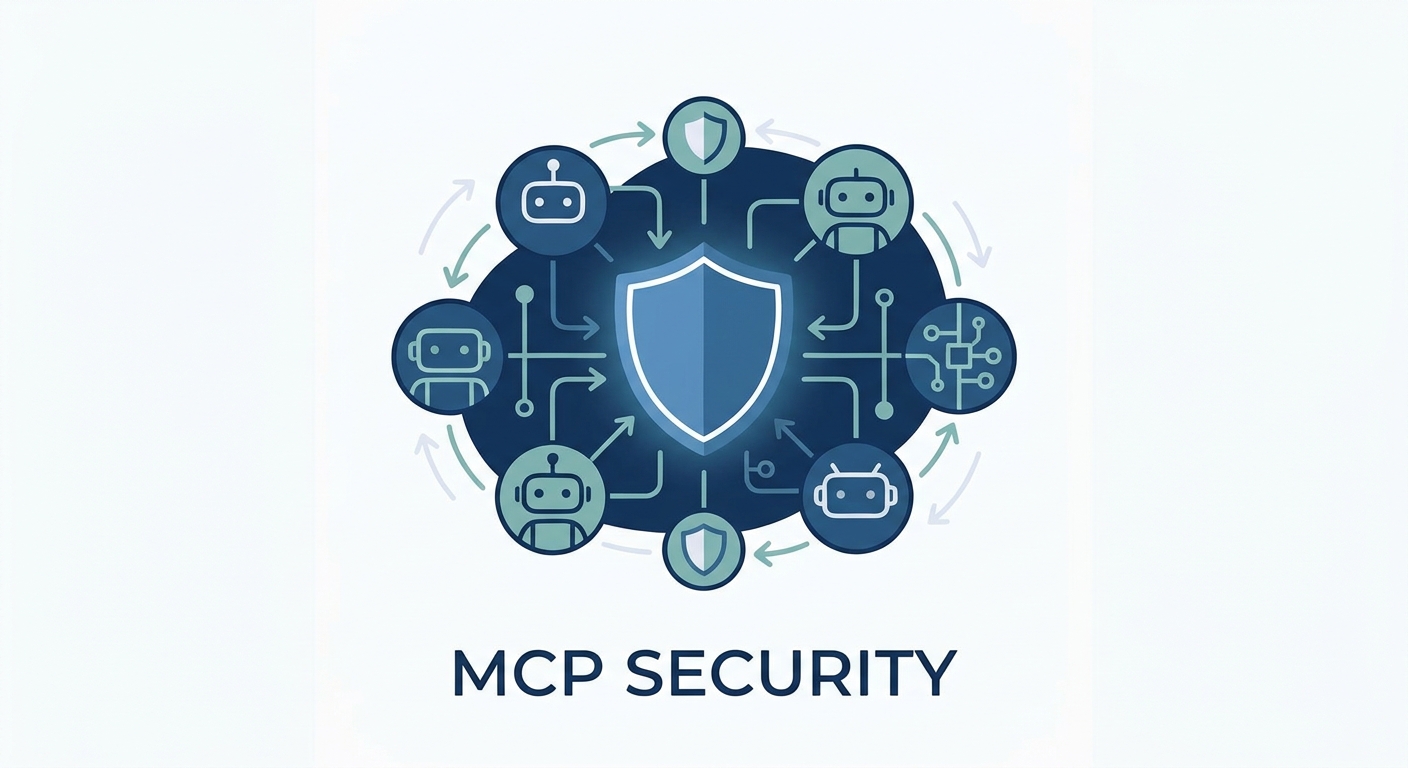
MCP is different. It’s an agentic bridge—a persistent, stateful conduit that lets an AI model reach out and "touch" your internal databases, private codebases, and systems.
The real danger here lies in the "delegated permission" model. When you grant an agent access to an MCP server, you’re essentially handing it a proxy for your own intent. If that agent gets tricked, coerced, or hijacked, it becomes a high-speed vehicle for lateral movement. As the OWASP Gen AI Security Project points out, developers need to stop treating MCP endpoints like external clients and start treating them like privileged internal actors. The attack surface is absurdly wide: you've got command injection via natural language, unauthorized tool execution that blows right past your access control lists, and context poisoning—where your agent is fed malicious instructions disguised as harmless data.
Are You Vulnerable to HNDL? (Yes, You Are)
HNDL is the ghost in your machine. It doesn't matter if you haven't seen a quantum computer in your own server room. The threat isn't that they’re reading your data today; it’s that they are stealing it to read tomorrow. By the time quantum hardware matures, the "secret sauce" of your 2026 AI deployments—the raw context fragments and logs of how your agents interact with internal systems—will be sitting in a vault, waiting to be decrypted.
As noted in the Cloud Security Alliance: AI Infrastructure Research, AI infrastructure is uniquely vulnerable because it relies on data that refuses to die. A credit card transaction expires in minutes. Your AI’s knowledge base and the logs of its tool-use represent a persistent footprint. If that data is captured today, the exposure is permanent. You aren't just protecting against current-day hackers; you are protecting against the retroactive exposure of your entire intellectual property stack.
Building a 5-Layer Defense-in-Depth for MCP
Securing an agentic ecosystem requires moving beyond the "firewall-and-forget" mentality. You need a layered approach that treats every single function call like a potential security event.
Layer 1: Identity & Authentication
Static API keys are a liability. They get stolen, leaked, and hard-coded into commit histories before you can blink. Kill them. Move to mTLS (mutual TLS) using quantum-resistant certificates. By ensuring both the AI model host and the MCP server authenticate each other through a quantum-secure handshake, you shut the door on any man-in-the-middle attacker trying to spoof your agent.
Layer 2: Session Isolation
Stop running monolithic MCP servers. Sandbox them. Use micro-segmentation or ephemeral containers that exist only for the duration of a single task. If an agent gets compromised, the "blast radius" should be limited to that one, short-lived session. Don't let an attacker pivot into your production databases because you didn't isolate the environment.
Layer 3: Data-Level Zero Trust
This is where the rubber meets the road. Every tool call needs to be validated by a Policy Enforcement Point (PEP).
By validating the intent of the tool call against a dynamic authorization policy—rather than just checking if the "user" is allowed to call the function—you stop the agent from performing actions that deviate from its intended behavior.
Layer 4: Cryptographic Agility
Build your infrastructure so it’s "swap-out" ready. If a specific algorithm is compromised—or if a new, faster post-quantum standard drops—you shouldn't have to re-architect your entire stack. Abstract your cryptographic modules. Treat your encryption standard like a configuration change, not a code rewrite.
Layer 5: Continuous Monitoring
In an agentic world, "normal" is a moving target. You need observability that hunts for anomalies: an agent suddenly requesting access to a tool it has never touched, or a spike in data retrieval that makes no sense. Real-time detection is your final safety net. If you aren't watching the logs, you’re flying blind.
Implementing Hybrid Cryptography
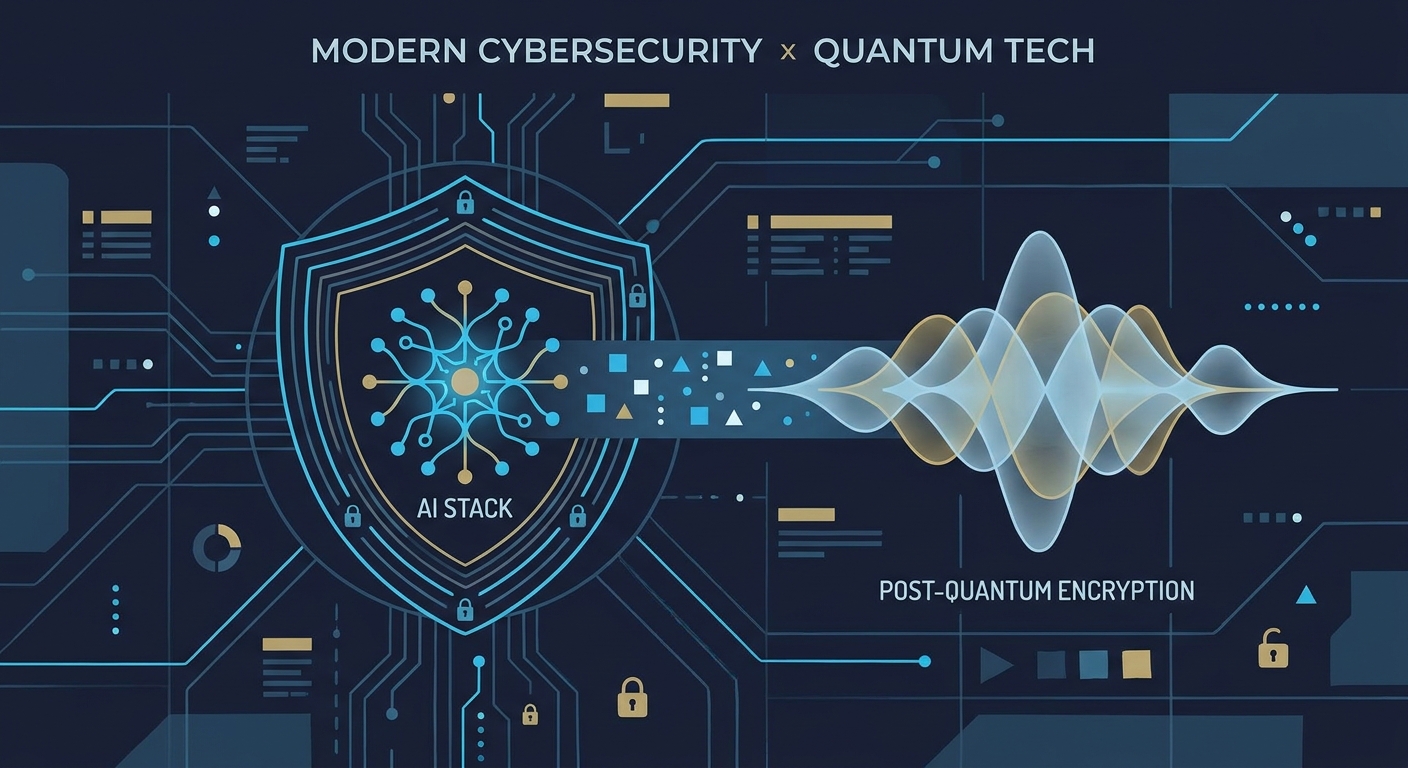
You don't need to "rip and replace" everything. The industry standard right now is the "Hybrid" approach. This involves wrapping your existing classical keys (RSA or ECC) with a layer of NIST-approved post-quantum algorithms, like ML-KEM (formerly Kyber).
By implementing a hybrid scheme, you keep your data secure against today’s classical threats while building a quantum-resistant envelope. You can find the technical specs at the NIST Post-Quantum Cryptography Standards project page. If you're ready to actually build this, our Secure MCP Server Deployment Guide shows you how to integrate these libraries into your transport layers without breaking your connections.
The Roadmap: 2026 and Beyond
Migration is a marathon, not a sprint. We break this down into three phases to ensure you don't break production while you harden your posture.
Phase 1 is about visibility. You can't secure what you don't know you have. Conduct a cryptographic inventory to find every instance where RSA or ECC is protecting long-lived data. Phase 2 is pilot testing in a sandbox environment where you can tune your hybrid crypto performance. Phase 3 is governance—making sure your security posture actually meets the requirements for things like FedRAMP and NATO procurement. For a deeper dive into the milestones, check out our Post-Quantum AI Infrastructure Roadmap.
Future-Proofing: Beyond the Infrastructure
Security isn't just an infrastructure problem; it’s an orchestration problem. If your orchestration layer isn't PQC-conscious, it’s the weakest link in the chain. You need "AI-Native" security policies where the security logic is embedded directly into the agent's context window. Your agent needs to be aware of its own permissions, and your system needs to be able to yank those permissions in real-time if an anomaly pops up.
Don't wait for a quantum breakthrough to start hardening. The threat isn't coming; it’s happening right now, in the logs you are generating today.
Frequently Asked Questions
What is the most significant security risk to MCP deployments in 2026?
The systemic risk is the combination of command injection and the lack of mature, PQC-ready transport layers. Since MCP lets agents execute tools based on input, an attacker can trick the agent into calling tools it shouldn't. If those connections rely on vulnerable classical encryption, the entire session is exposed to future decryption.
How does "Harvest Now, Decrypt Later" affect my AI infrastructure if I'm not using quantum computers yet?
The threat isn't that someone is using a quantum computer to read your data today. The threat is that they are scraping your encrypted traffic and storing it. When a cryptographically relevant quantum computer eventually arrives, they will be able to retroactively decrypt all that stored data, exposing your proprietary AI context and historical interactions.
Do I need to replace my entire infrastructure to achieve post-quantum security for MCP?
No. Adopt a "Hybrid" strategy. By layering NIST-approved post-quantum algorithms over your existing classical schemes, you maintain compatibility with current systems while future-proofing your data against quantum-enabled decryption.
How does Model Context Protocol (MCP) differ from a standard REST API in terms of attack vectors?
REST APIs are largely stateless and request-response driven. MCP is stateful and permission-delegated. The agent acts as a proxy for the user, carrying the user's authority into the MCP server. This creates a risk where a compromised agent can perform actions at the tool level that a standard API user would never be authorized to touch.
What is the first step an organization should take to secure their MCP ecosystem?
Run a comprehensive cryptographic audit. You must identify every location where classical encryption (RSA/ECC) is currently protecting long-lived, high-value AI context data. This inventory is the foundational requirement for any successful post-quantum migration strategy.