Securing Model Context Protocol (MCP) Deployments Against Quantum Computing Risks

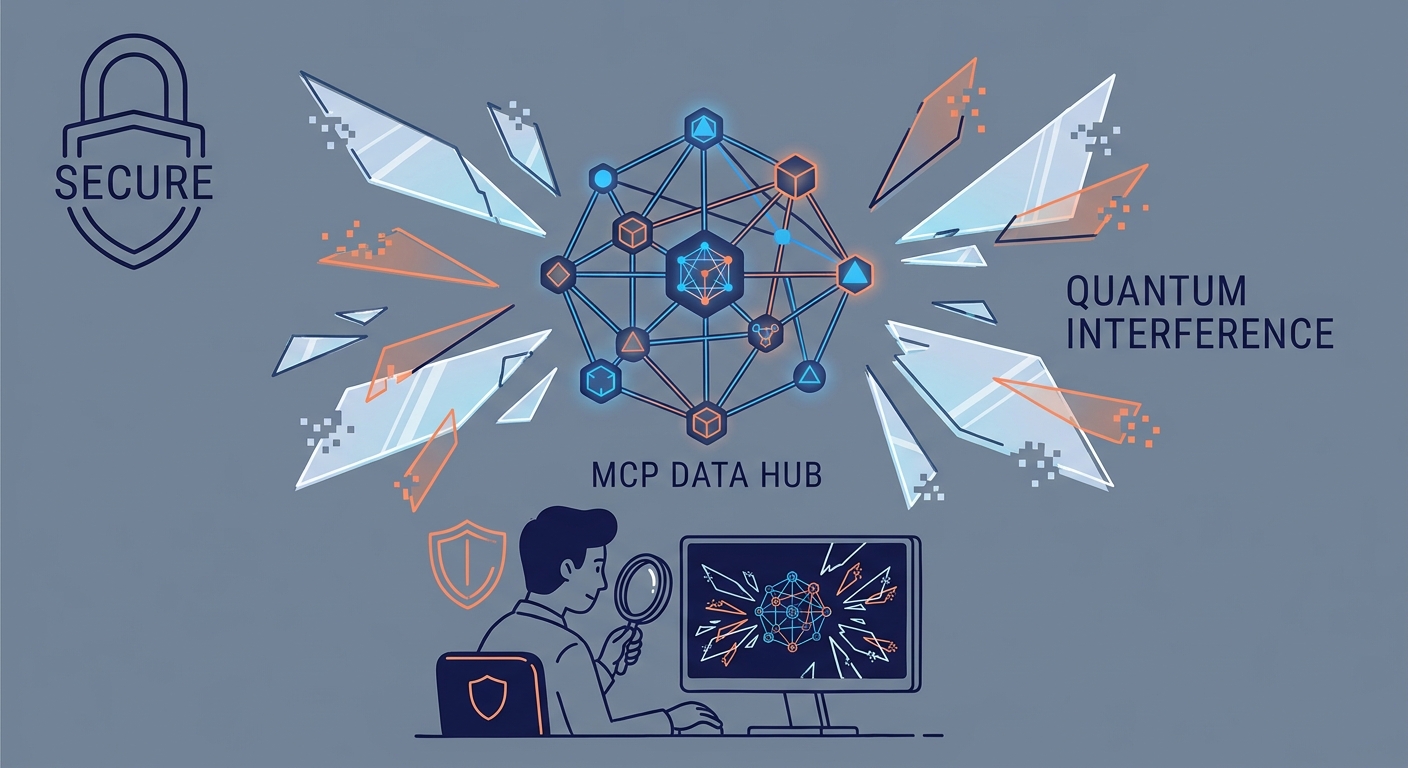
TL;DR
- ✓ Model Context Protocol creates high-value targets for future quantum-enabled interception attacks.
- ✓ Harvest Now Decrypt Later threats render current classical TLS encryption insufficient for long-term data.
- ✓ MCP streams leak critical enterprise logic and tool architecture to sophisticated threat actors.
- ✓ Implementing post-quantum security is essential for protecting sensitive AI context and internal workflows.
The Model Context Protocol (MCP) has become the connective tissue of the modern AI enterprise. It lets your LLMs talk to your tools, your databases, and your proprietary workflows. It’s efficient. It’s elegant. And, as it stands today, it’s a massive security liability.
We are currently building our most sensitive AI logic on a foundation that will soon be transparent to anyone with a quantum computer. If you’re treating your AI context as a long-term strategic asset, you cannot afford to ignore the risk of quantum-enabled interception. This isn't a "future" problem. It’s a "right now" problem.
Why MCP is a Prime Target for Quantum Attackers
Think about how your stack has evolved. We aren't just sending simple prompts back and forth anymore. MCP is the bridge that lets an agent "see" your internal databases, run code in sandboxes, and pull credentials out of thin air.
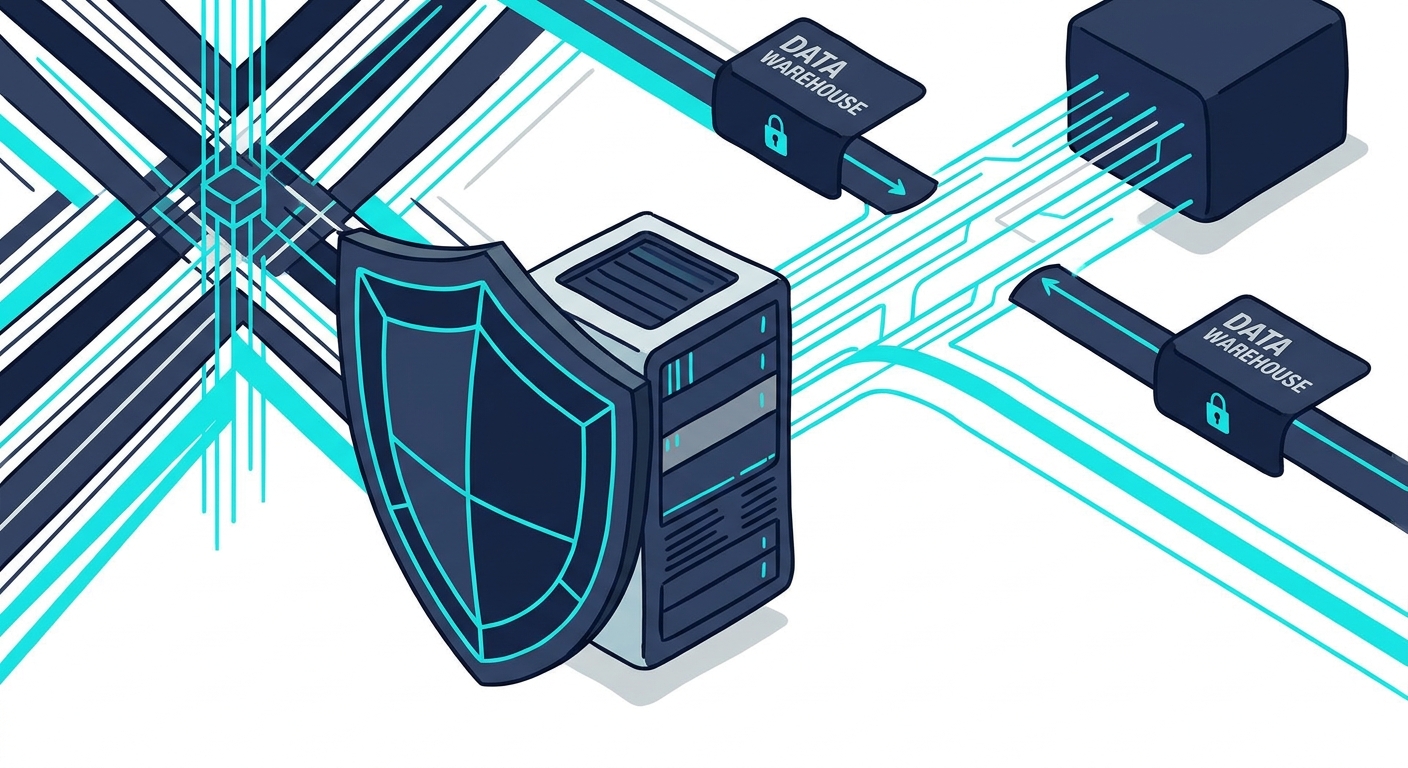
This isn't just data movement; it’s the transfer of capability. By standardizing how agents interact with your resources, MCP creates a high-volume, centralized pipeline of your most valuable information. If an attacker taps into an MCP stream, they aren't just grabbing a document. They are mapping the logic, permissions, and internal architecture of your entire AI operation. It’s a goldmine for anyone looking to reverse-engineer your enterprise workflows.
The "Harvest Now, Decrypt Later" Reality
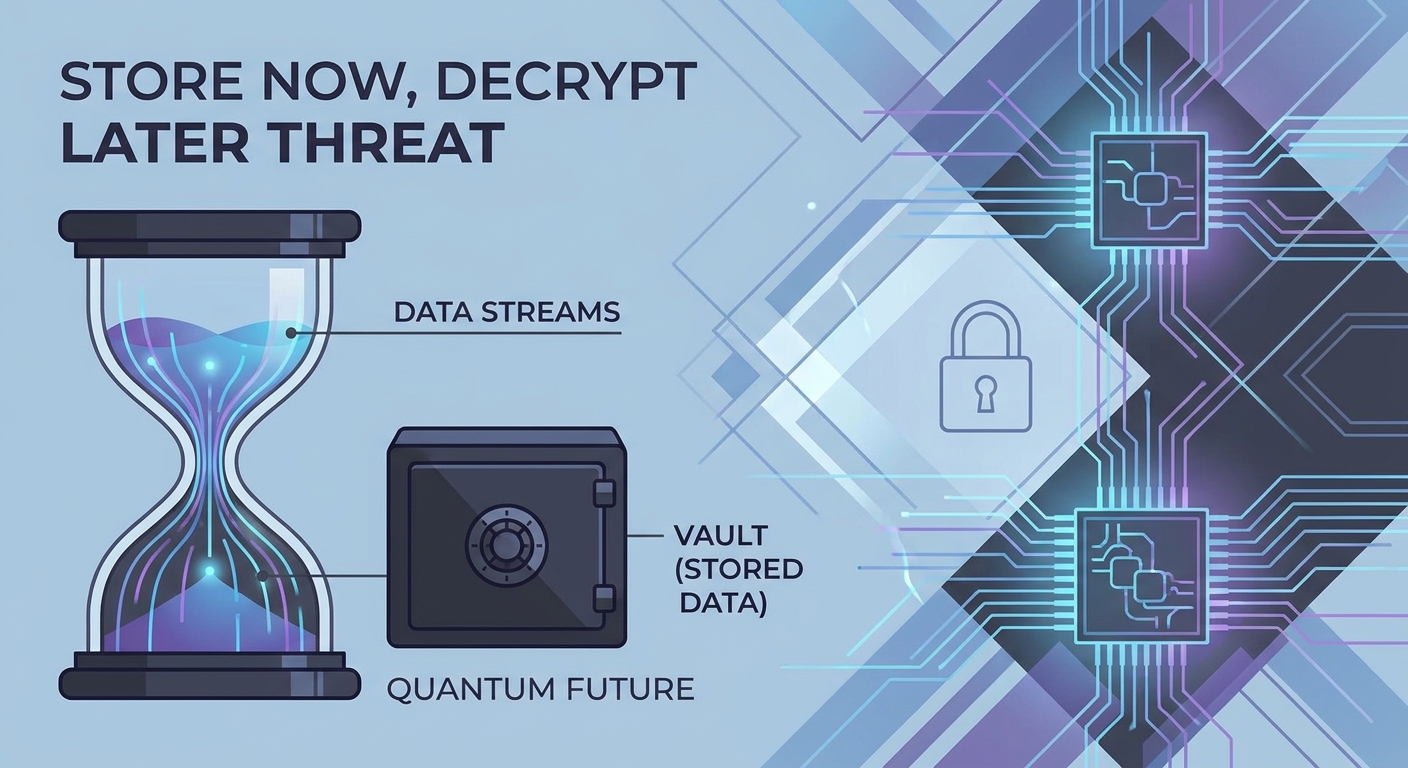
The most dangerous threat you face today is the "Harvest Now, Decrypt Later" (HNDL) attack. According to Cloud Security Alliance research, sophisticated threat actors are already scraping and storing encrypted traffic from enterprise networks.
They don't need to break your current TLS/SSL encryption today. They know they can't. So, they simply archive the traffic. They are waiting for the arrival of a Cryptographically Relevant Quantum Computer (CRQC). Once that threshold is crossed, your "secure" traffic—containing years of API keys, proprietary tool definitions, and sensitive business logic—will be laid bare.
The lifecycle of AI context is long. The data you transmit today will remain sensitive for years. If you’re relying solely on classical TLS, you are essentially leaving your front door wide open for whoever has the patience to wait for the technology to catch up.
The Top 3 Quantum Security Risks for MCP
When we look at the threat surface of a typical MCP implementation, three specific vectors keep security teams up at night:
Data Interception: MCP is chatty. It’s context-heavy. A single session can leak an enormous amount of information about your tool-use environment. An attacker capturing these streams can identify exactly which APIs you use and how your agents are authorized to touch them.
Authentication Forgery: Modern authentication relies on the assumption that certain math problems are too hard for classical machines. Shor’s algorithm changes that. If an attacker can forge a handshake, they can impersonate a legitimate MCP client and start pulling data directly from your backend.
Tool-Access Escalation: This is the nightmare scenario. By manipulating the protocol handshake, an attacker might trick your MCP server into granting an agent elevated privileges it was never meant to have. For a deeper dive into these vulnerabilities, see our Quantum Computing Risks for AI Infrastructure analysis.
Building a Quantum-Safe Roadmap
You can’t "patch" your way to quantum safety. You have to re-architect the transport layer. Here is how you do it, in three phases.
Phase 1: Inventory You can't protect what you can't see. Map every MCP server and client endpoint in your stack. Separate the connections that handle proprietary data from those that are merely functional. This is your foundation.
Phase 2: Cryptographic Agility Stop hardcoding your encryption parameters. You need a system that supports pluggable algorithms so you can swap out ciphers as NIST standards evolve.
Phase 3: Hybrid Implementation We aren't ready to fully trust post-quantum algorithms in every environment yet. The gold standard is a "Hybrid KEM" (Key Encapsulation Mechanism). This combines traditional elliptic-curve cryptography (like X25519) with a quantum-resistant algorithm (like ML-KEM-768). Your traffic gets the best of both worlds: classical security and quantum-hardened protection.
[VISUAL: MERMAID - Hybrid Key Exchange Process]
Why NIST-Approved Algorithms (ML-KEM/ML-DSA) Matter
There is no room for "rolling your own" crypto. The NIST Post-Quantum Cryptography Standardization project is the only reliable path for enterprise-grade security. Algorithms like ML-KEM (formerly Kyber) and ML-DSA (formerly Dilithium) have been put through the ringer of public scrutiny. Using these standards ensures your security is compliant, auditable, and actually resilient against modern cryptanalysis.
Building the "Hybrid Bridge"
To build this bridge, you’re essentially wrapping your MCP traffic in a hybrid tunnel. If your team is working in C or C++, libraries like Open Quantum Safe (liboqs) provide the building blocks for these hybrid handshakes.
Integrate these into your transport layer. You can maintain compatibility with legacy clients while forcing quantum-secure negotiations for modern endpoints. Start by auditing your TLS termination points—make sure they are configured for FIPS-compliant, quantum-ready cipher suites.
Case Study: Preventing "Agent Exfiltration"
Imagine an enterprise agent designed to query your CRM for quarterly reports.
Scenario A (Standard TLS): An attacker captures the traffic during the handshake and stores it. Years later, they use a quantum computer to break the TLS session, extract your CRM API keys, and scrape your customer data.
Scenario B (Hybrid ML-KEM-768): The attacker captures the same traffic. They try to use their quantum computer to derive the shared secret. They fail. The ML-KEM layer is computationally infeasible to break. Your keys stay secure, your business logic stays private, and the attacker is left with nothing but a worthless pile of ciphertext.
Strategic Next Steps
The era of "wait and see" is officially over. The EU AI Act and updated NIST guidelines are already signaling that quantum-readiness will soon be a baseline requirement for enterprise AI. If you are building on MCP, you are building the core of your company’s future intelligence. It’s time to treat that core with the security it deserves. For a detailed breakdown of how to manage these keys, review our Post-Quantum Key Management FAQ.
Frequently Asked Questions
Does the Model Context Protocol (MCP) have native quantum-resistant encryption?
No. MCP currently relies on the underlying transport layer (typically TLS), which must be explicitly configured to support quantum-safe ciphers.
How does the "Harvest Now, Decrypt Later" attack specifically affect AI model context?
If your MCP traffic contains proprietary tool definitions, API keys, or sensitive enterprise data, attackers can store that traffic now and decrypt it once they have access to a cryptographically relevant quantum computer.
Is it too early to implement quantum-resistant security for MCP?
No. Given the sensitivity of AI agent data and the long lifecycle of enterprise infrastructure, planning for quantum-readiness is essential for compliance and long-term risk mitigation.
What is the most effective way to start transitioning to PQC for my MCP stack?
Begin by adopting hybrid key exchange mechanisms (combining traditional ECC with NIST-standardized PQC) to maintain compatibility with legacy systems while ensuring future-proof security.