Quantum Cyber Security: Why Your MCP Deployment Needs an Upgrade Now

TL;DR
- ✓ MCP deployments create massive, unmonitored attack surfaces for modern enterprise AI systems.
- ✓ Traditional WAFs fail to secure intent-based, multi-hop agentic traffic and lateral movement.
- ✓ Shadow AI risks arise when developers bypass IT perimeters to connect internal systems.
- ✓ Quantum-resistant encryption is essential to defend against Harvest Now Decrypt Later attacks.
Your current AI infrastructure is a house of cards, and the wind is picking up.
By adopting the Model Context Protocol (MCP), you’ve woven together a sophisticated web of agentic workflows. It’s impressive, sure. But in your rush to enable seamless data exchange, you’ve inadvertently turned your network into a sieve. You’ve built a massive, unmonitored attack surface.
Welcome to the "Shadow AI" crisis.
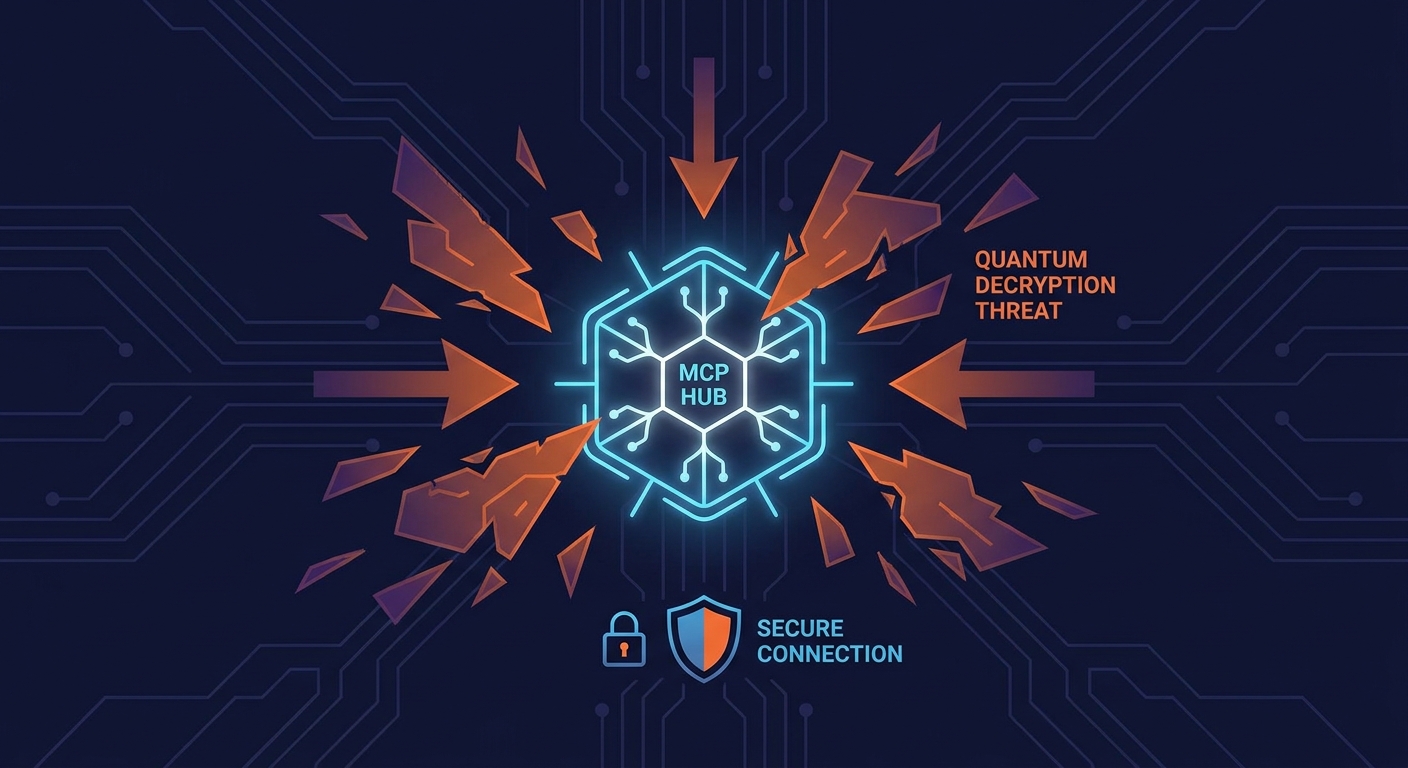
Developers are bypassing traditional IT perimeters to wire agents directly into internal systems. You’re effectively blind to the data moving through these multi-hop chains. To make matters worse, the encryption securing this traffic is a ticking time bomb. The "Harvest Now, Decrypt Later" (HNDL) threat isn't some sci-fi plot for high-net-worth targets; it’s a fundamental reality for anyone who cares about the shelf-life of their data.
If your MCP deployment isn't quantum-resistant today, you aren't just running a protocol. You’re publishing your future trade secrets, legal maneuvers, and R&D breakthroughs to the open internet.
The Silent Vulnerability in Your AI Stack
The allure of the Model Context Protocol is undeniable. It promises a universal language for AI models to talk to local and remote data, turning your disparate silos into a cohesive intelligence layer. It’s the dream of frictionless AI.
However, the protocol’s greatest strength—its flexibility in creating recursive, multi-hop agentic chains—is also its greatest security failure.
When you deploy an MCP server, you’re extending a handshake to an agent. That agent might handshake with three others. Then those three talk to five more. Traditional security perimeters were built for a world of static REST APIs and predictable JSON payloads. They were designed to inspect traffic at the front door.
But in an agentic architecture, the "door" is everywhere.
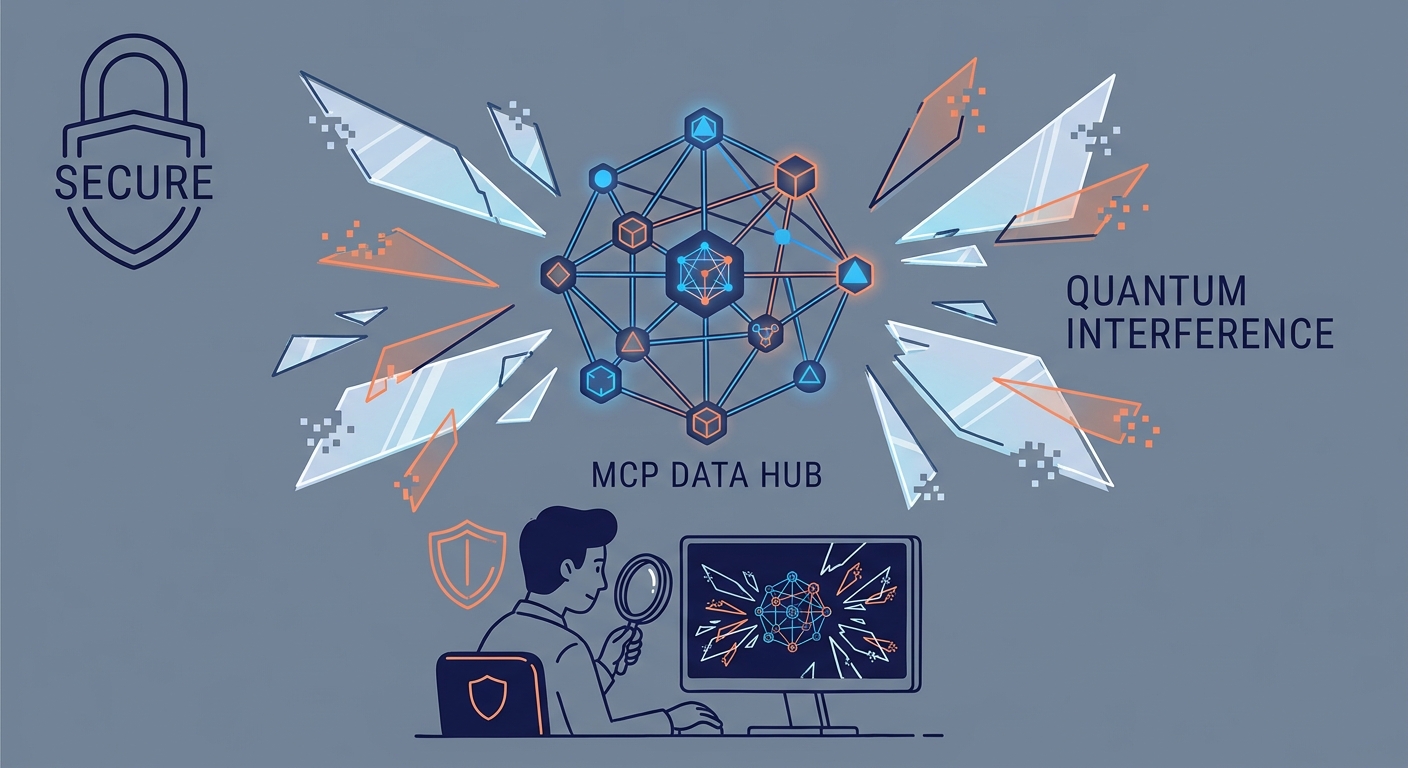
Because these agents operate on intent rather than simple request-response cycles, they can bypass standard WAFs that have zero concept of "context accumulation." You might be monitoring ingress at your API gateway, but you’re completely blind to the lateral movement of data between agents that have already been granted access.
This is where "Shadow AI" thrives—in the gaps between your security tools. It’s where a developer’s quick-and-dirty agent script pulls sensitive data from a database and pipes it to an unverified third-party model. You didn’t sign off on it. You didn’t even know it was happening.
Why Your Legacy Gateways Are Failing
Think of your WAF as a bouncer who only checks IDs at the main entrance. Meanwhile, the back door is wide open, the fire escape is unlocked, and the venue is hosting an infinite, unlisted house party. Traditional gateways are fundamentally ill-equipped to handle the multi-hop, intent-based nature of modern agentic requests.
When Agent A calls Agent B, and Agent B recursively queries a sensitive internal service, the "context" being accumulated is invisible to a gateway that only understands standard HTTP headers.
This is "Context Poisoning."
An adversary doesn't need to break your encryption if they can manipulate the agentic chain to feed malicious or misleading data into the model's current context window. By the time the final output reaches your user, the "truth" has been fundamentally altered. Your security tools are none the wiser because they were looking for SQL injection strings, not intent-based manipulation. They’re fighting yesterday’s war with yesterday’s weapons.
The HNDL Threat: Why "Quantum-Ready" is No Longer Optional
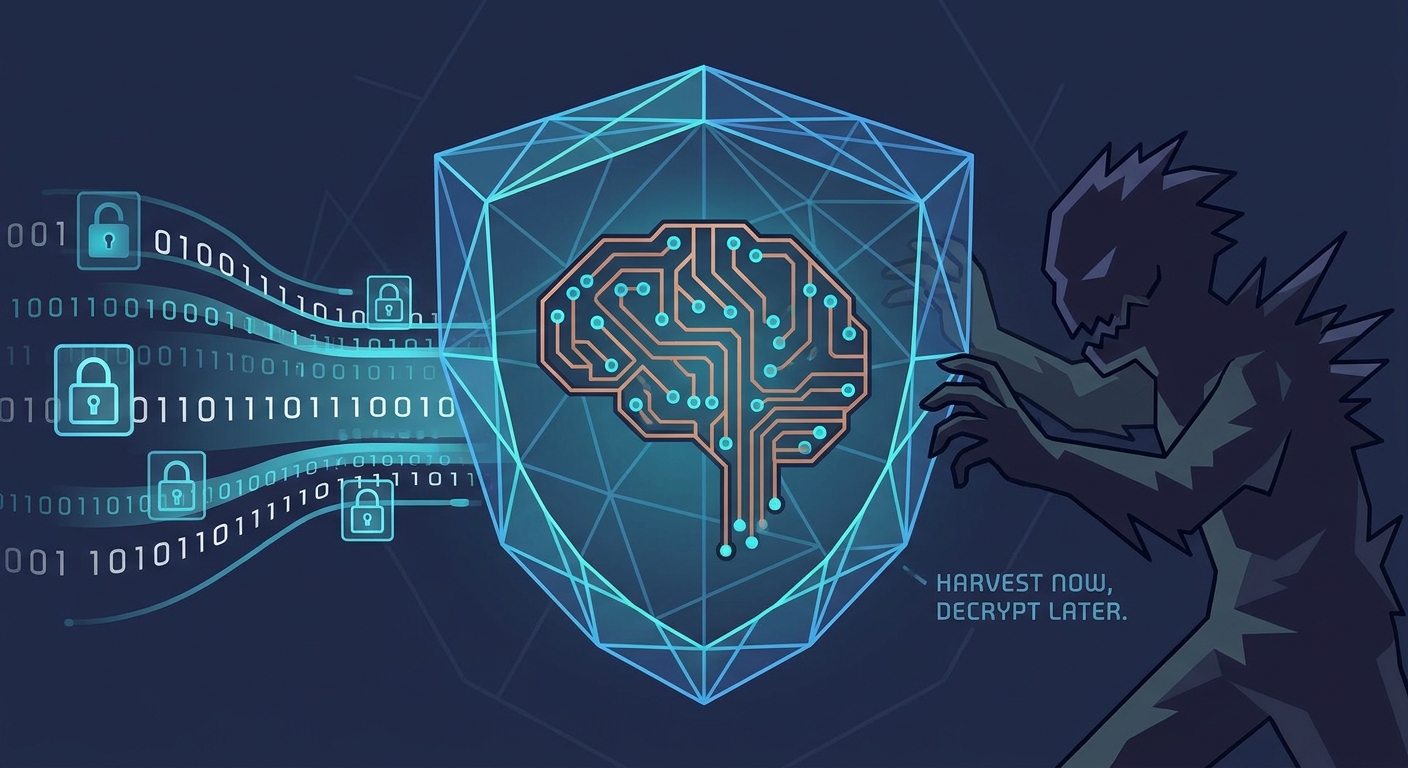
We are living in the era of "Harvest Now, Decrypt Later" (HNDL). It sounds like a premise from a dystopian novel, but it’s the standard operating procedure for state-sponsored cyber operations today.
Adversaries are actively scraping and storing massive volumes of encrypted traffic. They know they can't read it yet. They’re playing a long game, waiting for the maturation of fault-tolerant quantum hardware.
The mathematical backbone of our digital world—RSA and Elliptic Curve Cryptography (ECC)—is built on the assumption that certain mathematical problems, like integer factorization, are computationally impossible to solve. Shor’s Algorithm proves that a sufficiently powerful quantum computer will render these assumptions obsolete in a heartbeat.
If your organization’s R&D, legal strategy, or employee PII is intercepted today, it will be transparent to an attacker in a decade. If that data has a sensitivity lifespan of ten or more years, you’re already compromised. The urgency isn't about tomorrow. It’s about the fact that your data is already being harvested.
What Does a Quantum-Resistant MCP Architecture Look Like?
To survive the quantum transition, you must move beyond the "bolt-on" security mentality. You can’t just patch a hole in the roof and call it a day when the foundation is shifting.
Moving to lattice-based cryptography is the starting line, not the finish.
1. Zero-Trust for Agentic Chains
Stop trusting tokens just because they originated from an internal IP. We need to implement identity-based authentication for every single hop in the agentic chain. If Agent A wants to talk to Agent B, it needs to prove its identity, its purpose, and its authorization level—every single time.
2. Contextual Guardrails
Standard WAFs look at packets. You need to look at intent. Deploy guardrails that can analyze the content of the context window. If an agent suddenly starts requesting database schemas it has no business knowing about, the system should kill the session instantly.
3. PQC (Post-Quantum Cryptography) Migration
Start auditing your data transit now. Identify where you are using RSA or ECC and begin the transition to NIST-approved post-quantum algorithms. It’s a heavy lift, sure. But it’s the only way to ensure that the data you’re transmitting today remains secure when the quantum computers finally come online.
4. Visibility Over Everything
You cannot secure what you cannot see. If your developers are spinning up MCP servers in the wild, you need an automated discovery layer that maps these connections in real-time. If it isn't documented, it shouldn't be running.
The Bottom Line
The transition to agentic workflows is inevitable. It’s going to make us faster, smarter, and more efficient. But it also creates a surface area for attack that we haven't seen in the history of enterprise computing.
You have a choice. You can keep playing the game of "wait and see," hoping that quantum threats stay in the realm of theory. Or, you can take a hard look at your current MCP deployment, acknowledge the gaps, and start building a security architecture that actually matches the complexity of the systems you're deploying.
The "Shadow AI" era is here. Stop letting your agents run the asylum. The future of your data depends on it.