Top 7 Quantum Computing Risks Facing AI Infrastructure in 2026

TL;DR
- ✓ Harvest-Now-Decrypt-Later attacks put your sensitive AI model data at immediate risk today.
- ✓ Current classical encryption methods fail to protect long-term data from future quantum decryption.
- ✓ The Model Context Protocol introduces new, dangerous interception vectors into your AI environment.
- ✓ Enterprises must adopt quantum-resistant encryption to secure proprietary model weights and training sets.
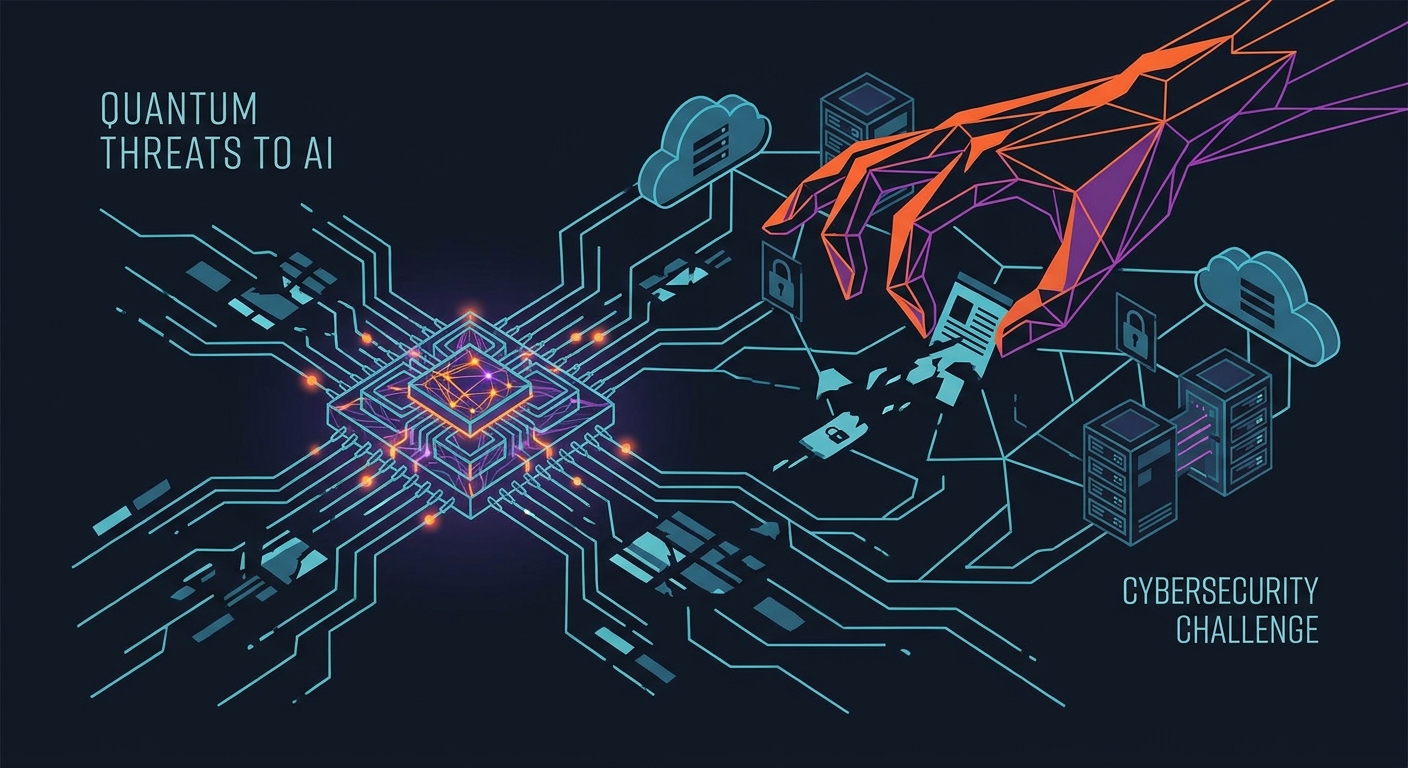
The quantum threat isn’t some sci-fi plot set in the 2040s. It’s here. It’s quiet. And if you’re running an AI-heavy shop, it’s currently siphoning your most valuable secrets.
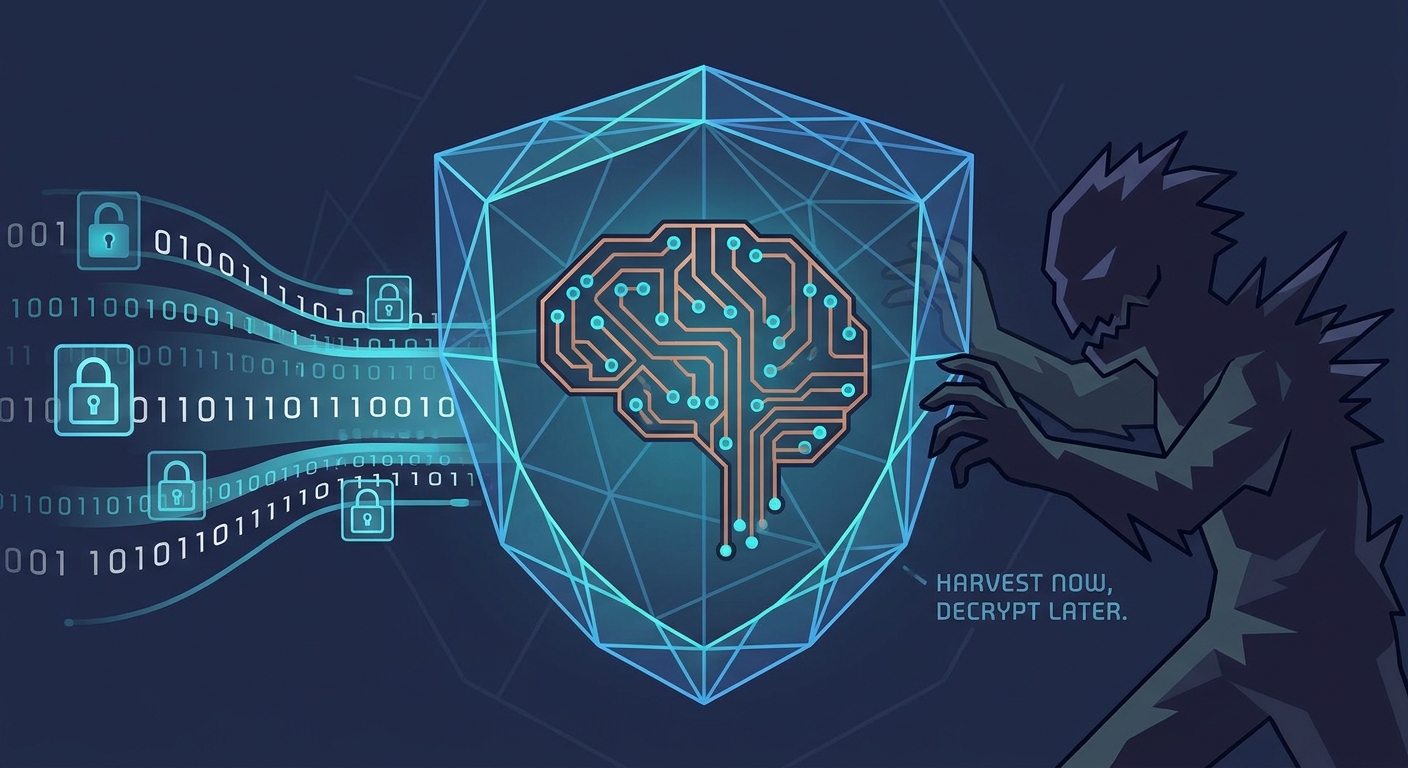
We’ve spent years obsessing over "fault-tolerant" quantum hardware—the massive, building-sized machines that will eventually shred every standard encryption algorithm on the planet. But while we wait for those machines to boot up, a much more immediate threat has taken hold: Harvest-Now-Decrypt-Later (HNDL).
Adversaries are scraping your AI training data, your proprietary model weights, and your sensitive logs right now. They aren't trying to crack them today. They’re just storing them, waiting for the day the encryption breaks. If your security strategy relies on standard RSA or ECC, you’re basically leaving your vault door wide open and hoping the thief doesn't have a key yet.
Here is why your 2026 infrastructure is living on borrowed time.
1. The "Harvest-Now-Decrypt-Later" Trap
HNDL is the silent killer of modern AI strategy. Think about what goes into your models. We’re talking about years of R&D, legal discovery caches, medical records, and the secret sauce that makes your AI actually perform. This data has a "shelf life" of years, sometimes decades.
As noted in The Quantum Insider’s recent analysis of security convergence, the gap between quantum progress and corporate readiness is becoming a chasm.
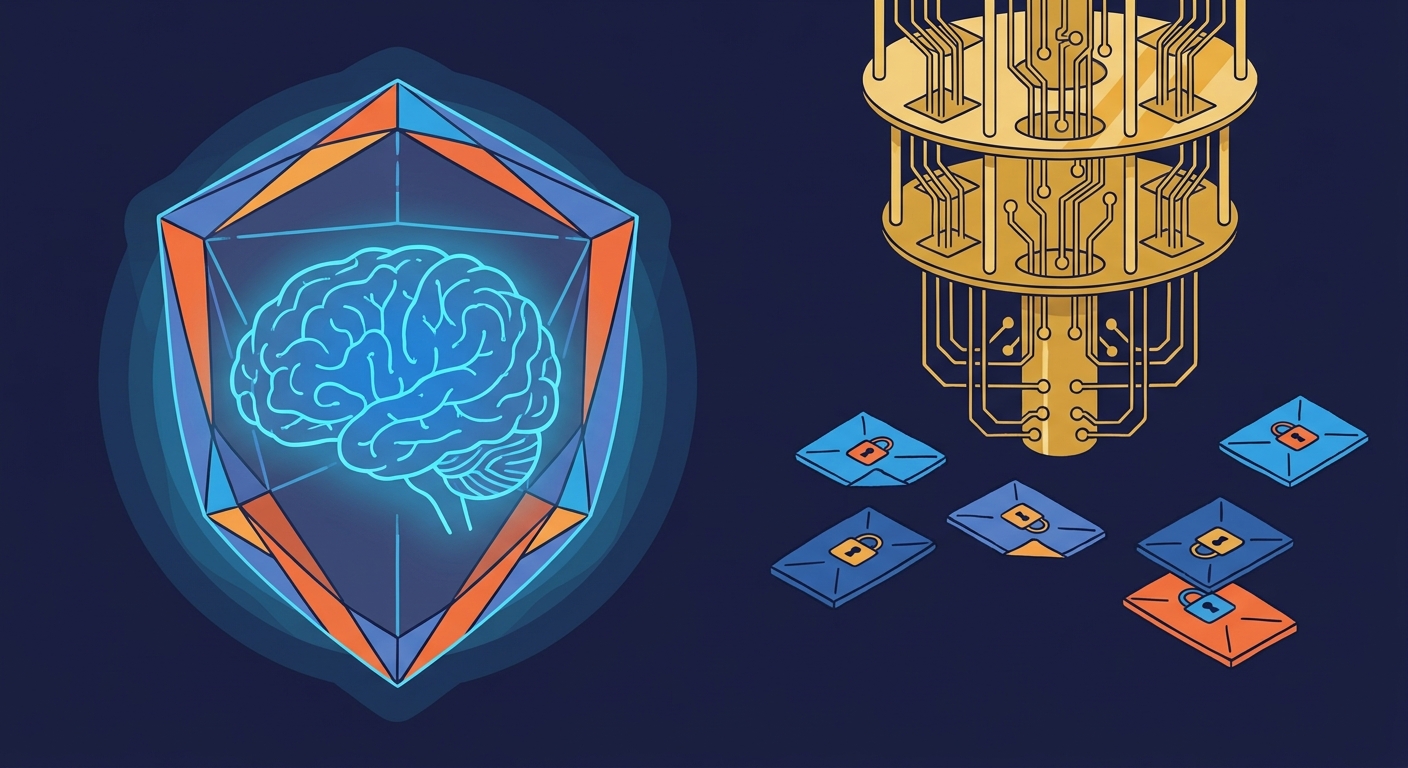
When you send model weights or training sets across a network using classical encryption, you’re betting that the code will stay unbroken for the entire lifespan of that data. That’s a bad bet. Any data intercepted today is essentially a ticking time bomb. Once quantum cryptanalysis hits the mainstream, your competitive advantage won't just be stolen—it will be public domain. All those millions spent on model development? Poof. Gone.
2. Is the Model Context Protocol (MCP) Your Newest Security Choke Point?
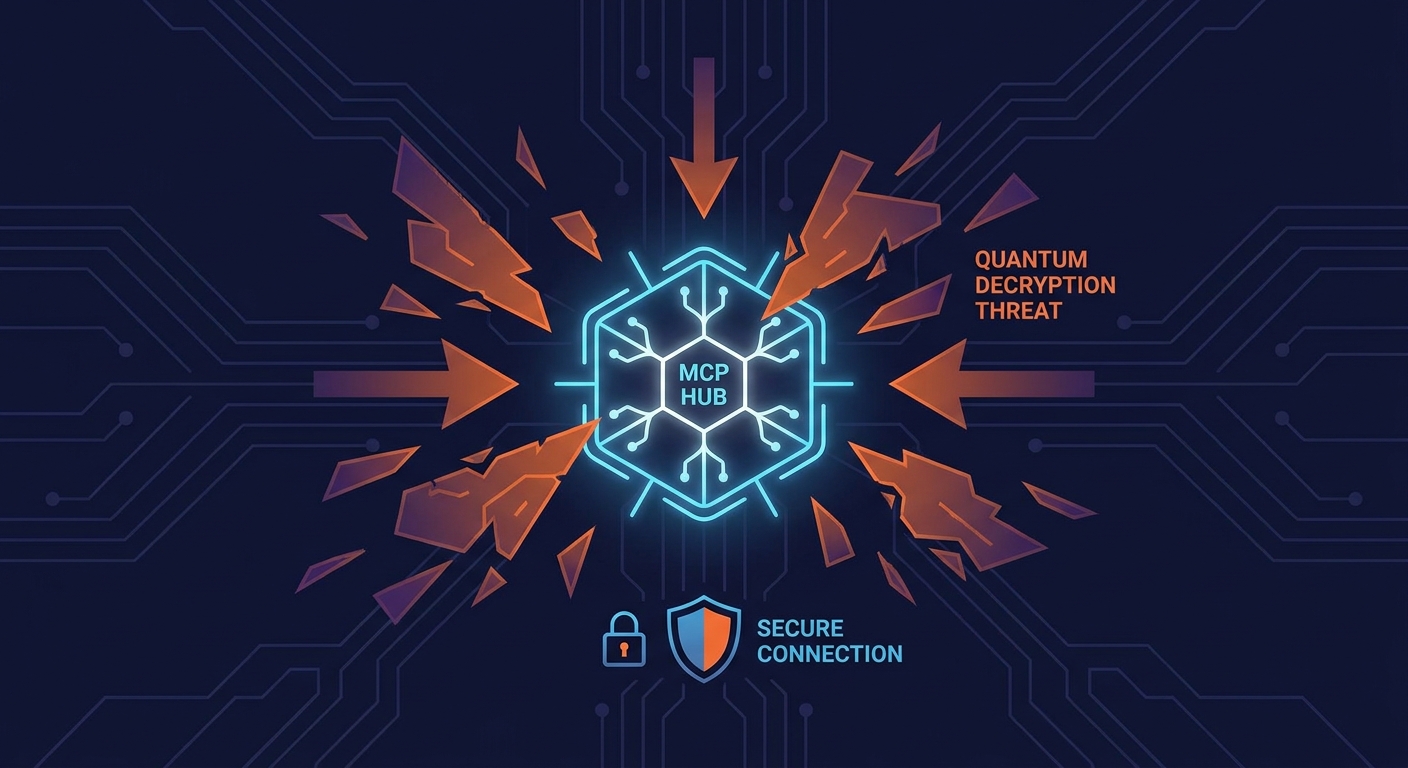
The Model Context Protocol (MCP) is a godsend for developers trying to bridge internal models with external data. But let’s be real: convenience is usually the enemy of security. MCP creates a persistent, bidirectional bridge between your secure AI environment and the wild, messy world of third-party repositories.
This "context-injection" phase is a prime target. If your transport layer doesn't use quantum-resistant handshakes, a man-in-the-middle attack is trivial. You’re essentially inviting quantum-capable actors to watch exactly what data is feeding your agents. For a deeper look at how to lock this down, check out our guide on how to secure Model Context Protocol deployments against quantum threats. Without hardening these bridges, you’re handing the keys to your AI’s "brain" to whoever is listening on the wire.
3. How AI-Accelerated Cryptanalysis Changes the Timeline
We’ve created a nasty feedback loop. We’re using AI to build smarter, faster tools, but so are the bad guys. Adversaries are now using specialized machine learning models to optimize Shor’s algorithm and other cryptanalytic attacks.
They aren't just brute-forcing keys; they’re using AI to spot patterns in how we implement classical encryption. They’re finding the weak links in your key exchange protocols, allowing them to focus their limited quantum resources on the exact spots that are most likely to snap.
In 2026, "Q-Day"—the moment standard encryption becomes obsolete—is being pulled forward by the very ML innovations we thought would be our greatest defensive assets. It’s ironic, in a terrifying way.
4. The "Crypto-Agility Deficit": An Organizational Time Bomb
The biggest danger isn't the quantum computer. It’s your own code. Most enterprises have "hard-coded" their encryption models deep into their CI/CD pipelines and inference engines. This is the "crypto-agility deficit."
When you eventually realize you need to swap out legacy algorithms for quantum-resistant cryptographic algorithms for AI infrastructure in 2026, you’re going to be facing a massive, expensive, and potentially catastrophic refactoring project.
Crypto-agility is simple: can you swap your encryption primitives without breaking the whole application? If the answer is no, you’re building a "legacy trap." The organizations that survive the next few years will be the ones that can pivot their encryption standards in their sleep. Everything else? They’ll be stuck in emergency-mode, trying to patch a sinking ship.
5. Third-Party APIs: The Weakest Link in Your Chain
Modern AI agents are orchestrators. They call dozens of APIs for data, math, and actions. It’s a massive, messy supply chain, and you’re only as strong as the weakest integration.
You might have the most secure, quantum-hardened internal environment, but if your agent is pulling data from a third-party weather feed or a cloud storage API that hasn't moved to Post-Quantum Cryptography (PQC), your entire chain is compromised.
In 2026, treat every API call like it's being monitored. If your vendor isn't talking about PQC, assume your data is being harvested. Don't trust; verify.
6. The Nightmarish Combo: Quantum Compute + Model Poisoning
This is the frontier of bad news. It’s not just about stealing your data; it’s about changing it. Imagine a quantum actor intercepting your traffic and performing an adversarial injection. They don't just read the data—they subtly alter it in transit.
Because this happens at the cryptographic layer, your integrity checks might not even flag it. Your model is being fed poisoned data that looks perfectly legitimate, but it’s mathematically skewed to force the model into making biased or incorrect decisions. The AI is still "working," but it’s being steered by an invisible hand. That is the ultimate integrity breach.
7. Are You "NIST-Ready" Yet?
The shift to NIST Post-Quantum Cryptography standards isn't optional anymore. With FIPS 203, 204, and 205 now finalized, the blueprint for a quantum-hardened future is sitting on the table. But readiness isn't a light switch—it’s a migration. As the CISA Quantum Readiness Guide points out, you need a phased approach.
You don't need to rip and replace everything today. Start with a hybrid model. Layer PQC over your existing classical infrastructure. It’s the safest, most pragmatic path to survival.
The 2026 Crypto-Agility Checklist
- Inventory Everything: You can’t secure what you can’t see. Audit every single instance where data is encrypted in transit. Map your dependencies.
- Prioritize the "Crown Jewels": Don't try to boil the ocean. Identify your high-value, long-life data—model weights, training logs, PII—and prioritize those for PQC migration first.
- Go Hybrid: Don't wait for a perfect PQC stack. Layer NIST-approved algorithms over your current setup. If one layer fails, you’ve still got the other. It’s a cheap insurance policy for your infrastructure.
Conclusion: Inaction is a Choice
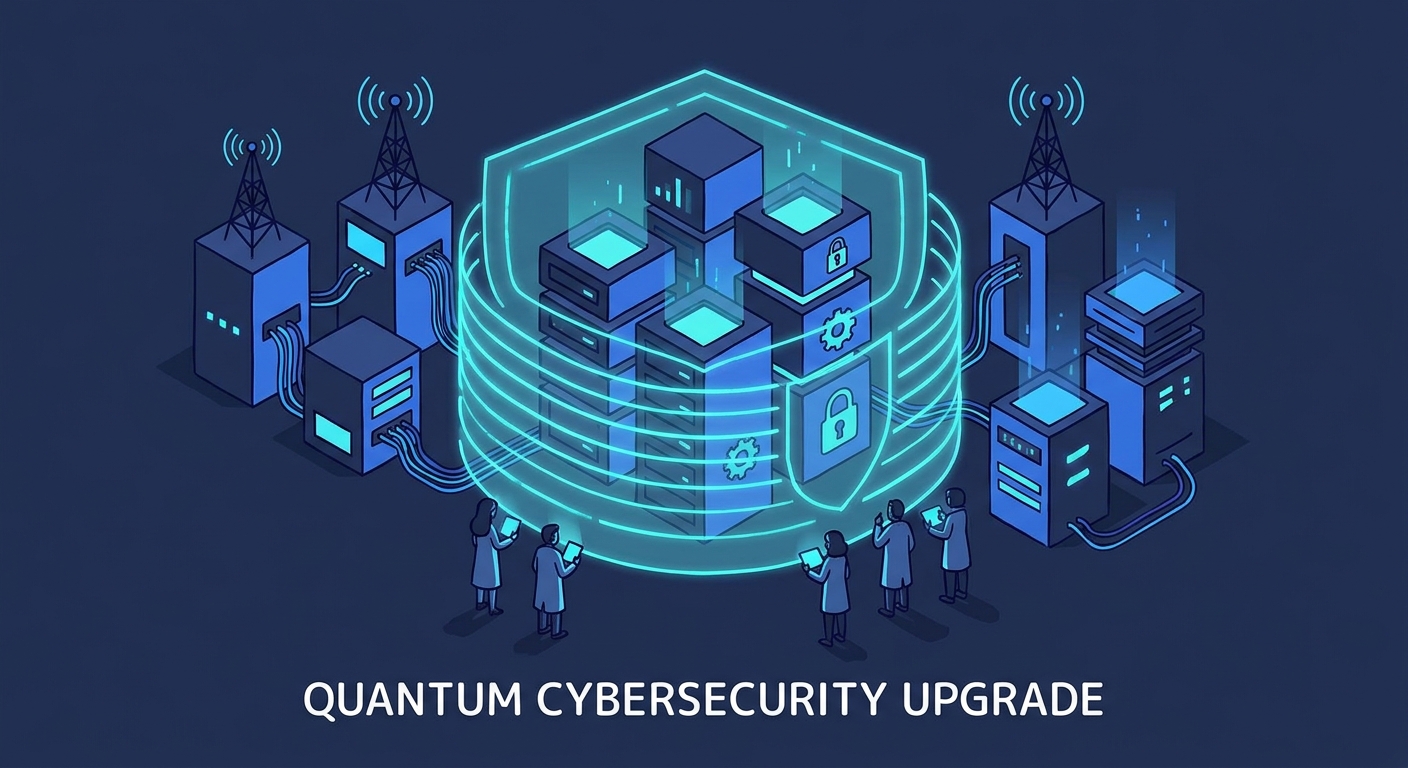
The quantum threat isn't a distant cloud. It’s the storm hitting your front door right now. If you're waiting for a convenient time to upgrade your security, you're just waiting to be harvested.
The cost of acting today is a fraction of the cost of a catastrophic breach tomorrow. Audit your systems, layer your encryption, and get your team ready for a post-quantum world. Because the people trying to break your security aren't waiting for the perfect time—they’re already working.
Frequently Asked Questions
Is the quantum threat to AI infrastructure an immediate concern in 2026?
Yes. While full-scale fault-tolerant quantum computers are still developing, the "Harvest-Now-Decrypt-Later" attack is active today, meaning your most sensitive AI training data is currently at risk of being stored for future exposure.
How does the Model Context Protocol (MCP) increase quantum risks?
MCP acts as a bridge between AI models and external tools. If this communication channel is not quantum-resistant, it creates an unencrypted or weakly encrypted path for lateral movement and data exfiltration by quantum-capable adversaries.
What is "crypto-agility" and why is it essential for AI systems?
Crypto-agility is the ability of an IT system to switch between cryptographic algorithms without requiring massive, fundamental changes to the infrastructure. It is essential because NIST standards for PQC will evolve; systems that cannot easily update their encryption will become "legacy traps."
Can I implement PQC without disrupting my current AI production models?
Yes, through a hybrid approach. By layering NIST-approved PQC algorithms alongside existing classical encryption, you can maintain compliance and security without forcing a complete, high-risk refactor of your production inference engines.