Hardening AI Data Security: Implementing Quantum-Resistant Cryptography in MCP Environments

TL;DR
- ✓ Identify the risks of Store Now Decrypt Later attacks on current AI infrastructure.
- ✓ Learn how Model Context Protocol exposes data through traditional RSA and ECC encryption.
- ✓ Discover strategies to implement quantum-resistant cryptography within your agentic workflows.
- ✓ Secure your internal enterprise data against future cryptographically relevant quantum computers.
The Model Context Protocol (MCP) started as a clever way to bridge the gap between AI models and local tools. Now? It’s the backbone of the modern enterprise. By letting LLMs reach into databases, codebases, and internal systems, MCP has effectively turned the keys to the kingdom over to our agents. It’s powerful, it’s efficient, and it’s a security nightmare waiting to happen.
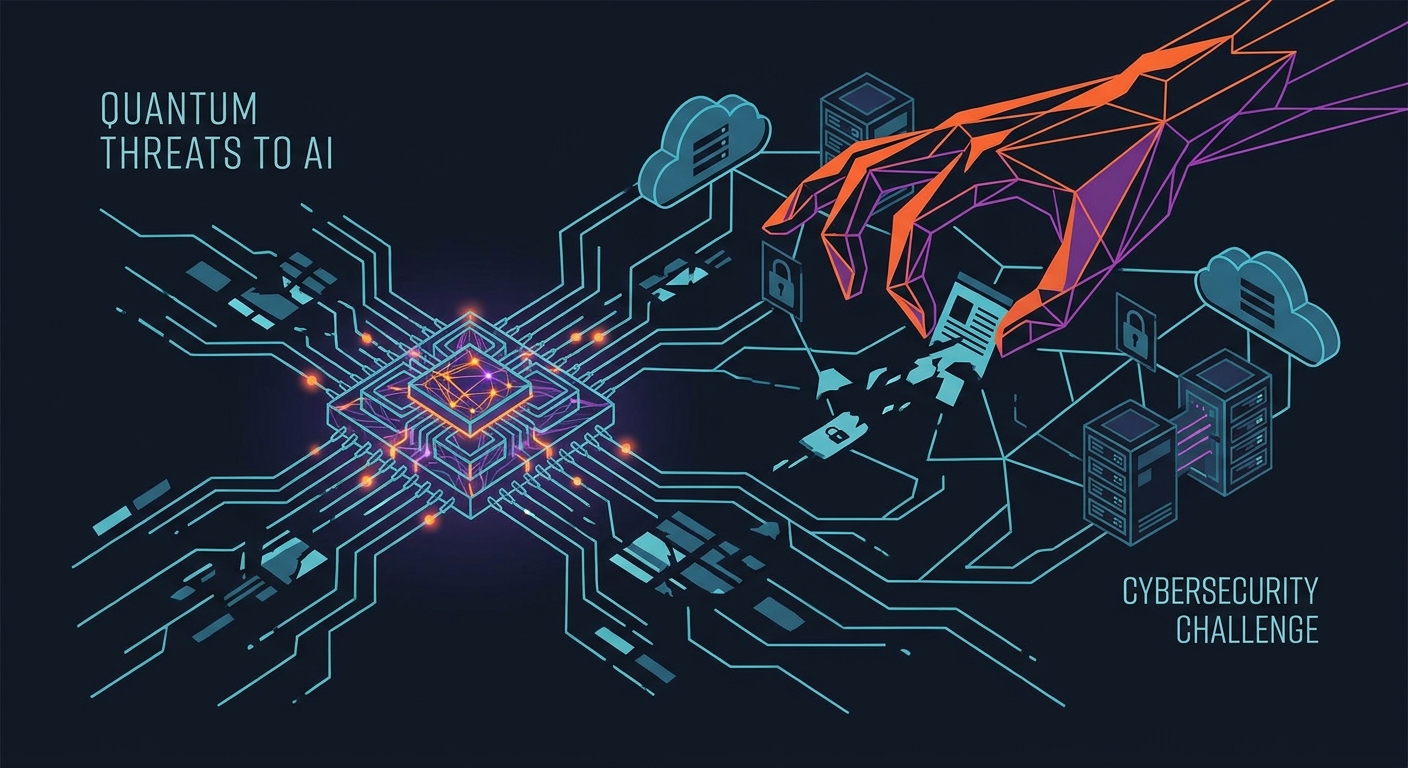
We’re relying on encryption methods that are effectively walking dead. If you’re building agentic workflows, you need to face a hard truth: the "Store Now, Decrypt Later" threat is real. Adversaries are scooping up your encrypted traffic right now, just waiting for the day a cryptographically relevant quantum computer (CRQC) makes short work of today’s RSA and ECC standards. This isn't a sci-fi plot; it’s an existential risk for any company putting sensitive data through an AI agent.
The Agentic Security Crisis
AI agents aren't just chatty interfaces anymore. They are active, autonomous workers digging through your enterprise stack. The Model Context Protocol (Official Docs) is the bridge that makes this possible, but it relies on a trust-heavy transport layer.
In a standard MCP setup, an AI Host calls an MCP Server to grab data. This conversation happens over traditional encryption—usually RSA or Elliptic Curve Cryptography (ECC). These methods are fine for today’s script kiddies, but they’re brittle against the quantum future. Every time your agent pulls customer data or API keys, it’s sending that information through a pipe that will eventually turn transparent. If your transport layer isn't hardened, you’re essentially broadcasting your data to anyone with a long-term storage strategy and a future quantum machine.
How Does the MCP Architecture Expose New Attack Surfaces?
MCP runs on a three-part relationship: the AI Host, the Client, and the Server. The Host orchestrates, the Client manages the lifecycle, and the Server provides the goods. The vulnerability hides in the transport layer—the conduit for every JSON-RPC message passing between these entities.
Most security perimeters are built to guard the front door. They completely ignore the lateral movement MCP enables inside the perimeter. If an attacker manages to slip into your network, they can sit in the middle of these JSON-RPC messages and listen to every secret your agent shares with your backend. It’s an architectural blind spot. We’ve prioritized ease of use over security, and that trade-off is becoming increasingly expensive.
Why is Quantum-Resistant Cryptography (QRC) Essential for AI Context?
Here is the problem: your AI data lives forever. A document processed by an agent today might sit in a vector store or a log file for years. If the encryption securing that transmission is based on RSA or ECC, it’s effectively an open book to a future quantum adversary.
The NIST PQC Standards (CSRC) are our only real shield here. NIST has finalized algorithms—FIPS 203, 204, and 205—built on lattice-based cryptography. Unlike the old-school math problems that quantum computers can solve in seconds, these primitives are designed to hold up even when quantum systems are firing on all cylinders. Ignoring these standards isn't just "tech debt"—it’s a massive gamble with your intellectual property and PII.
What are the Primary Security Risks in Modern MCP Deployments?
Beyond the quantum threat, we have immediate, tactical headaches. "Context poisoning" is the big one. Imagine a compromised MCP server feeding your AI a fake schema. An attacker can trick your agent into executing functions it shouldn't or leaking sensitive data to an external endpoint.
Then there’s the "God-mode" token problem. We see it everywhere: over-privileged keys that give agents access to everything, not just what they need. According to SOC Prime: MCP Security Risks, these loose permissions are a goldmine for lateral movement. If an attacker cracks that insecure transport layer, they aren't just seeing traffic; they’re using the agent's identity to walk through your entire infrastructure. Zero-trust, stateless authentication is no longer optional. It’s the floor.
Implementing NIST-Standard PQC: A Technical Framework
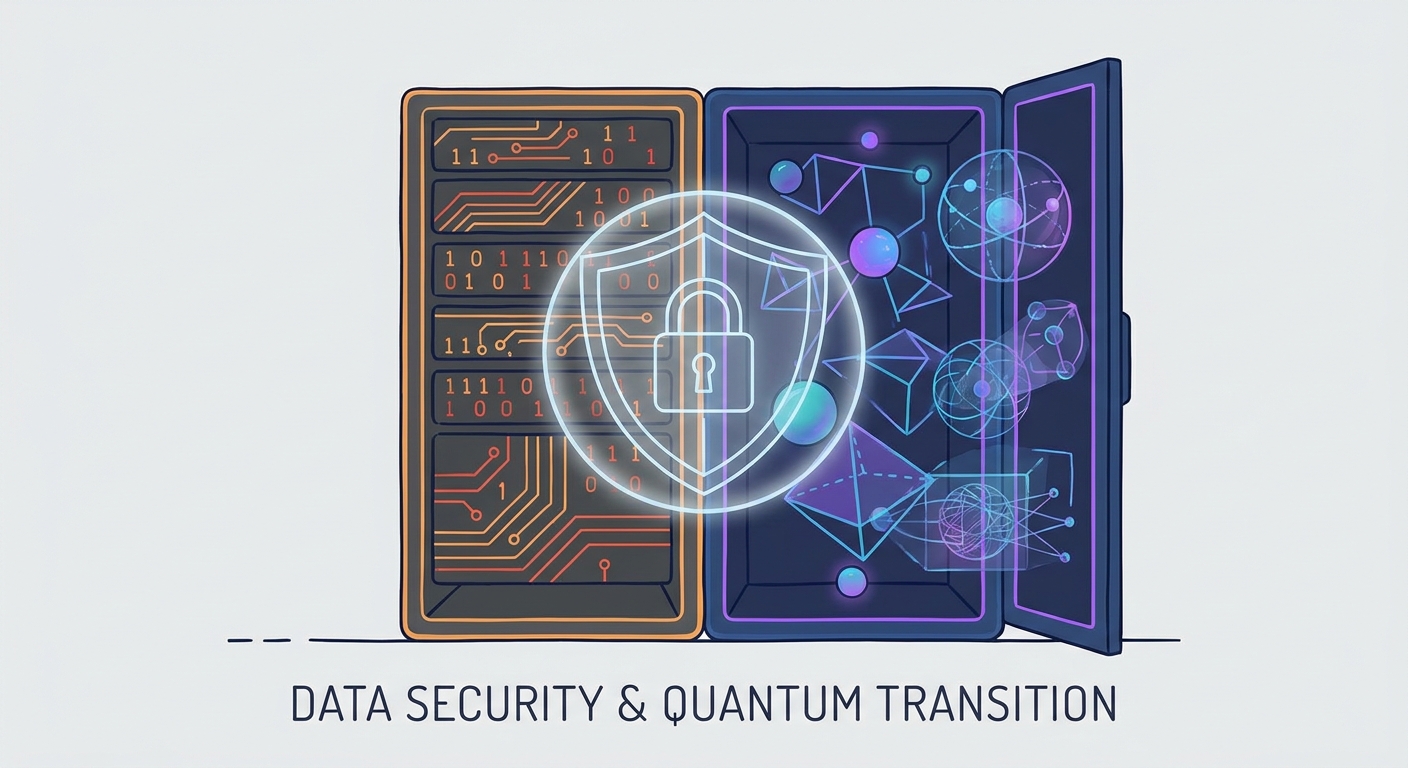
You need "crypto-agility." You need to be able to swap out your cryptographic guts without tearing down your entire agentic stack. The answer is a hybrid handshake: mix your legacy security with the new NIST primitives.
By using FIPS 203 (ML-KEM) for key exchange and FIPS 204 (ML-DSA) for signatures, you’re covered. Even if someone finds a way to break the ECC component, the PQC layer keeps the handshake secure. It’s the gold standard for this transition period. If you want to see how to actually build this, our Post-Quantum AI Infrastructure Guide breaks down the technical roadmap.
Code-Level Hardening: How Do You Secure the MCP Transport Layer?
Upgrading your MCP server’s mTLS configuration is where the rubber meets the road. Stop relying on default OpenSSL settings. You need wrappers that support current NIST FIPS standards.
Don't let the "latency" excuse fool you. Yes, PQC algorithms take more juice than classical ones, but the hit is negligible compared to the time it takes for an LLM to actually think. If you’re worried about performance, offload the handshake to hardware-accelerated modules. If you need a pro to look under the hood, Gopher Security Services can audit your MCP transport layer to find those weak spots before an attacker does.
The Agentic Audit: How to Evaluate Your Current MCP Exposure?
If you’re running MCP in production, stop and run this audit today. List every MCP server connected to your AI hosts. For every single one, ask:
- Scope of Access: Does this server have "God-mode" access? If it doesn't need to see the entire database, trim its permissions. Do it now.
- Authentication Status: Are you using static, long-lived tokens? If yes, switch to stateless, cryptographically signed requests.
- Transport Integrity: Is it TLS 1.3 with forward secrecy? If you’re using anything older, you’re asking for trouble.
Do this every quarter. In the world of agentic AI, a secure system today is a liability in three months.
Frequently Asked Questions
Why does my AI infrastructure need Quantum-Resistant Cryptography today if quantum computers aren't fully operational?
Because of "Store Now, Decrypt Later." If your data is sensitive enough to matter in five years, it’s at risk today. Adversaries are already harvesting that data, waiting for the day their quantum hardware catches up.
Does implementing PQC in MCP environments break existing integrations and cause latency?
Not if you use a hybrid approach. By layering PQC alongside your current encryption, you keep your old systems happy while adding a quantum-safe wall. The performance hit is barely noticeable compared to the time spent on LLM inference.
What is the most common security flaw in current MCP deployments, and how can I fix it immediately?
Over-privileged access tokens. Fix it by implementing the principle of least privilege—only give the MCP server the keys to the specific resources it needs, and rotate those tokens constantly.
How do I balance "crypto-agility" with the need for high-performance agentic reasoning?
Build modularly. Use NIST-compliant libraries that let you swap cryptographic primitives as they evolve. This keeps your security stack fresh without requiring you to rewrite your entire server from scratch every time a new standard drops.