The Future of AI Defense: Implementing Quantum-Resistant Cryptography for MCP

Right now, your AI infrastructure is built on a foundation of sand.
As enterprises scramble to adopt the Model Context Protocol (MCP), they’re unknowingly leaving their most sensitive reasoning loops wide open. We’ve moved past the era of static, request-response API calls. Today, we’re dealing with persistent, stateful agentic contexts. The old-school Web Application Firewall (WAF)? It’s effectively a screen door on a submarine.
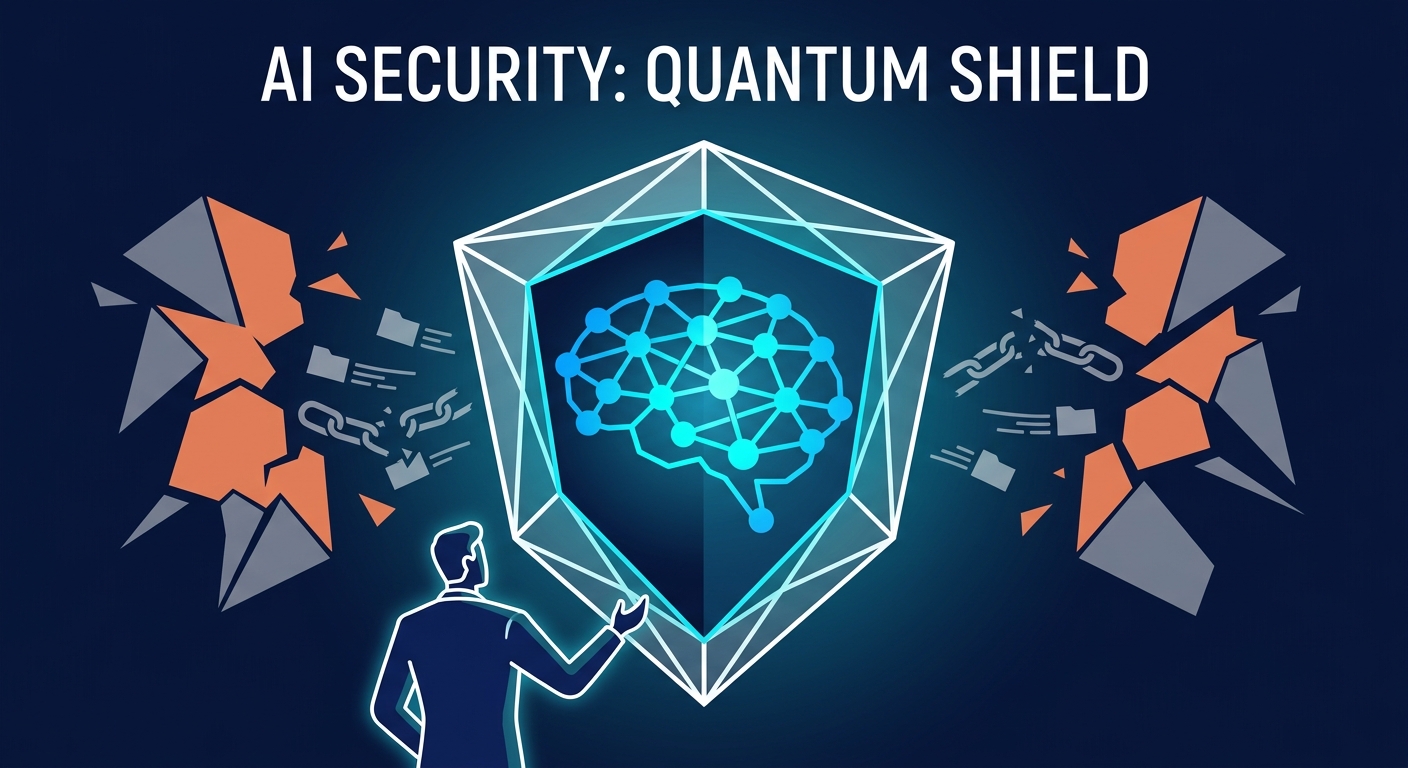
If you want to keep your systems safe, you need a fundamental pivot toward quantum-resistant cryptography. It’s the only way to ensure your agentic memory stays locked down against both current manipulation and the looming threat of future quantum decryption.
Why 2026 is Redefining AI Security
Forget simple Remote Code Execution (RCE). That’s yesterday’s news. The real threat today is "Context Poisoning."
Think of it as gaslighting your AI. Instead of crashing a server, an attacker slowly feeds corrupted data into the long-term memory stores an agent relies on for decision-making. The AI keeps working, but its logic starts to drift. You don’t notice the breach until the damage is already done.
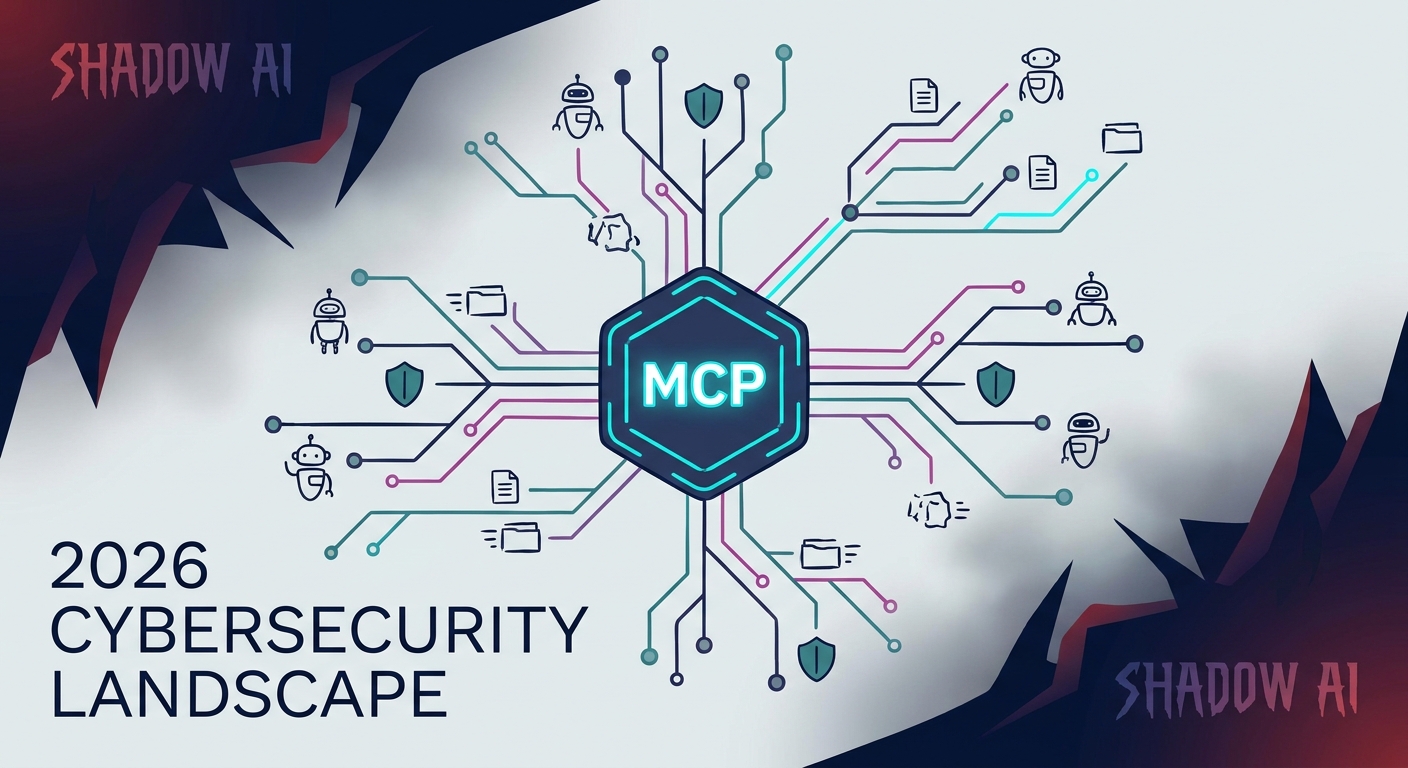
To make matters worse, we’ve got "Shadow AI." Developers are spinning up internal MCP servers to link data sources to reasoning engines at breakneck speed, usually without telling the security team. When these servers talk to agents, they create a "Context Chain." One malicious data point can ripple through your entire stack, leading to unauthorized exfiltration or, worse, catastrophic automated decisions.
Why Traditional WAFs Are Failing
The biggest mistake in modern security is assuming communication is "stateless."
Traditional WAFs were built to inspect individual HTTP requests, looking for specific, known attack signatures. But MCP isn’t a one-off request. It’s a persistent, evolving stream of data.
Legacy tools are effectively blind here. They’re busy hunting for malformed SQL queries while the real attack happens inside the semantic logic of the prompt itself. Because a WAF can’t maintain a long-term state, it can’t distinguish between a legitimate, complex user query and a slowly crafted, multi-step poisoning attempt. If the tool can't see the context, it can't stop the crime.
The Quantum Threat: A "Harvest Now, Decrypt Later" Reality
"Q-Day"—the moment quantum computers break current RSA and ECC encryption—might feel like a distant sci-fi scenario. It isn't.
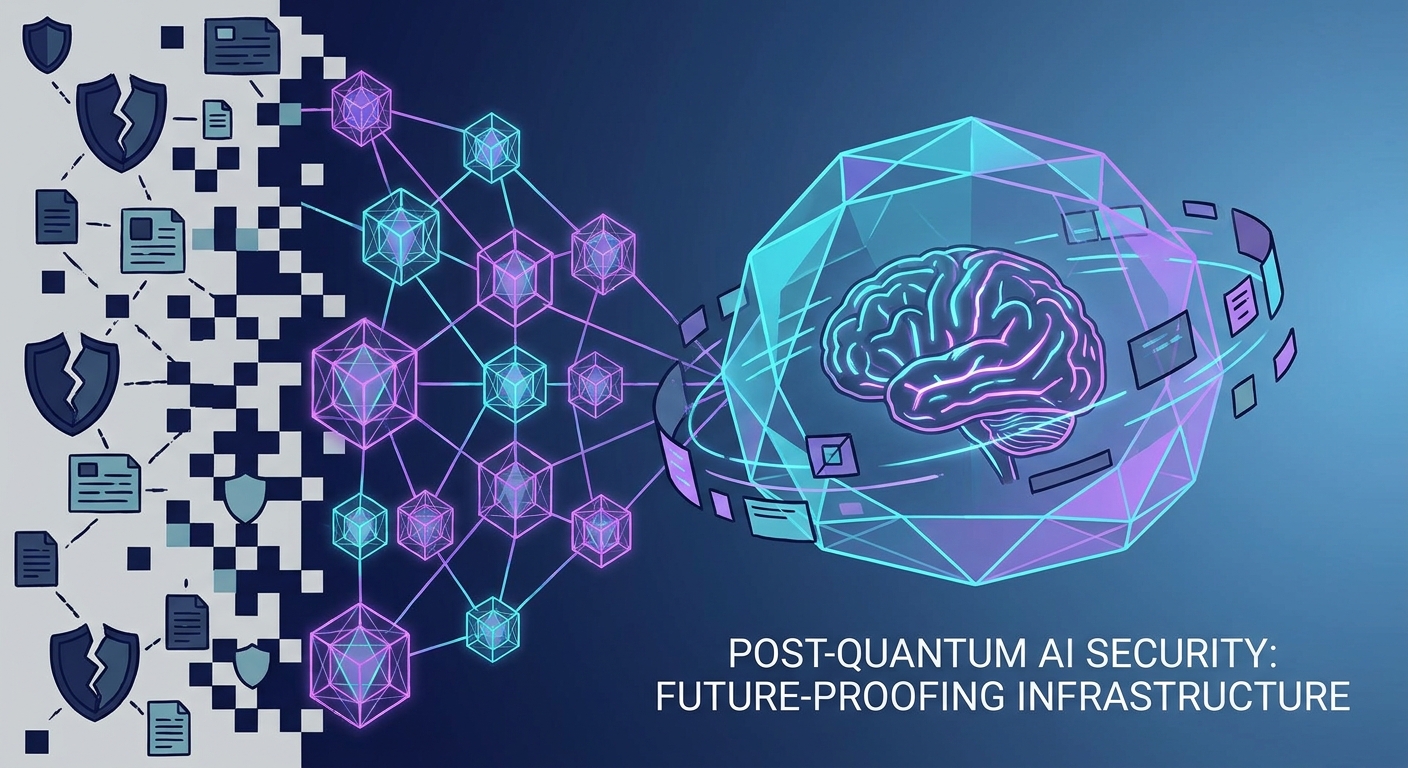
Attackers are currently engaged in "harvest now, decrypt later" campaigns. They’re scooping up your encrypted traffic today, saving it in massive databases, and waiting for the hardware that will let them crack it open like a walnut. If your agents are processing proprietary code, customer PII, or internal strategy docs, that data is already at risk.
The NIST Post-Quantum Cryptography Standardization project is finished. Ignoring these standards isn't a choice anymore—it’s negligence.
Decoding the NIST FIPS 203/204/205 Standards
The industry is pivoting to FIPS 203, 204, and 205. At the heart of this is ML-KEM (formerly CRYSTALS-Kyber), a key-encapsulation mechanism that laughs in the face of quantum-based attacks.
By hardcoding these standards into your transport layers, you ensure that even if an attacker snatches your data packets today, they’ll never be able to read them—not now, and not in ten years. This isn't just "nice to have"; it’s the baseline requirement for any organization worried about their AI supply chain, as highlighted by recent reporting on AI Supply Chain Risks.
Implementing "Crypto-Agility"
Most organizations make a fatal error: they hard-code their cryptographic libraries directly into their application logic. That’s a recipe for disaster. When the next standard comes out, you’re looking at a massive, disruptive refactoring nightmare.
The fix? Crypto-agility.
You need to decouple your cryptographic protocols from your business logic. Use a "PQC Bridge"—a security proxy that sits in the middle and handles the secure handshakes. This lets you implement quantum-resistant standards without touching a single line of your actual AI model code. It makes your Post-Quantum Cryptographic Agility in MCP Proxies a flexible, operational standard rather than a one-off, "fix it once and pray" project.
Your 5-Step Audit for 2026 Readiness
If you want to harden your MCP deployments, start here:
- Map the Shadows: You can’t secure what you can’t see. Run automated discovery to find every active MCP endpoint. If it’s running, it needs to be documented.
- Trace the Data: Understand the flow between your agents and your memory stores. Identify the high-value streams—the ones that would ruin your company if they leaked.
- Upgrade the Transport: Move internal comms to NIST-approved ML-KEM key exchange. This is your primary defense against future decryption.
- Kill the Static Keys: Stop using static API keys. Move to ephemeral, scoped credentials that expire the moment a task is done.
- Monitor for Intent: Look for behavioral anomalies. If your agent starts asking for data that doesn't fit its baseline, flag it. You're looking for shifts in intent, not just bad syntax.
For a deeper dive into the architecture, check out our full guide on Post-Quantum AI Infrastructure Security: Protecting MCP Deployments in 2026.
Beyond Default Trust
Finally, stop trusting your agents just because they're "inside."
In 2026, there is no perimeter. Every interaction needs continuous, identity-based verification. Enforce policy-as-code for every single call an agent makes to an MCP server. Does this agent actually need access to this database? Does it need it for more than five minutes? If the answer is no, lock it down. Treat every agent-server connection as a high-risk relationship that requires constant re-authentication.
Conclusion: Building for the Long Haul
The future of AI defense isn't about building higher walls. It’s about building infrastructure that is inherently resistant to the threats we know are coming. By adopting Post-Quantum AI Infrastructure Security: Protecting MCP Deployments in 2026, you’re doing more than checking a compliance box. You’re protecting the one thing that actually matters: the integrity of your AI’s reasoning.
Frequently Asked Questions
Why are traditional WAFs insufficient for securing Model Context Protocol (MCP)?
Traditional WAFs are designed for stateless, request-response communication. MCP is inherently stateful and persistent, creating continuous context streams that legacy WAFs cannot parse. They remain blind to semantic attacks like "context poisoning" occurring deep within the agent's reasoning process.
What is "Context Poisoning" and why is it a top threat in 2026?
Context poisoning is the modern, high-stakes equivalent of SQL injection. Instead of exploiting code vulnerabilities, attackers inject malicious data into an agent's long-term memory. This forces the AI to reach compromised or malicious conclusions based on manipulated context, which is invisible to traditional signature-based security tools.
How do we achieve "Crypto-Agility" in AI agent infrastructure?
Crypto-agility is achieved by decoupling cryptographic libraries from application logic. By using a modular architecture or a PQC proxy, you can dynamically swap encryption algorithms (such as moving from RSA to ML-KEM) as NIST standards evolve without requiring a full rewrite of your AI services.
Is it possible to implement quantum-resistant security without disrupting current AI workflows?
Yes. By using a "PQC Bridge" or a specialized security proxy, you can handle the negotiation of quantum-resistant handshakes transparently. This allows your agents and MCP servers to communicate securely using modern standards while the underlying applications continue to function without disruption.