New Industry Report Outlines Strategic Defense Frameworks Against Harvest Now, Decrypt Later Quantum Threats

TL;DR
- HNDL is a silent data theft strategy targeting future quantum decryption capabilities.
- AI infrastructure and intellectual property are primary targets for state-level actors.
- Current encryption standards are vulnerable to future quantum-powered Shor’s algorithm attacks.
- Organizations must adopt crypto-agility and implement new NIST PQC standards immediately.
The Quantum Time Bomb: Why "Harvest Now, Decrypt Later" is Already Here
There is a quiet, patient heist happening right under our noses. It’s not a smash-and-grab job; it’s a long-game play. Cybersecurity experts are increasingly sounding the alarm on "Harvest Now, Decrypt Later" (HNDL)—a strategy where adversaries vacuum up massive amounts of encrypted data today, tuck it away in cold storage, and simply wait for the day quantum computers become powerful enough to crack the code.
It’s the ultimate "set it and forget it" crime. Research from the Cloud Security Alliance (CSA) Labs and studies in MDPI Telecom make one thing clear: if your data needs to stay secret for more than a few years, you’re already in the crosshairs. We aren’t just talking about stolen passwords; we’re talking about intellectual property, state secrets, and the very blueprints of our AI infrastructure.
The Mechanics of the Long Game
The math behind HNDL is as simple as it is terrifying. The security of your data is only as good as the time it takes an adversary to break the encryption. If your data needs to remain confidential for ten years, but a quantum computer capable of running Shor’s algorithm arrives in seven, your encryption is effectively a ticking time bomb.
Unlike a typical ransomware attack that screams for attention, HNDL is a ghost. It’s a passive, invisible siphon. By the time you realize your traffic was intercepted, the data has already been sitting in a server farm for years, waiting for the technology to catch up.
Why AI is the Ultimate Prize
If you’re wondering who the primary targets are, look no further than the AI boom. Proprietary model weights, massive training sets, and the complex, interconnected architectures that power our modern AI systems are gold mines for state-level actors. If a bad actor harvests these components today, they aren't just stealing a snapshot—they’re stealing the ability to reconstruct or manipulate the future of that technology.
The problem is that our global infrastructure was built for speed and connectivity, not "crypto-agility." We’ve spent decades hardening our systems against current threats, but we’ve largely ignored the fact that our current encryption standards have an expiration date. Many organizations are currently hoarding data without a thought for how that data will look to a quantum-capable adversary in 2030 or 2035.
The Roadmap to Quantum Resilience
The good news? We have a plan. In August 2024, the National Institute of Standards and Technology (NIST) finalized the FIPS 203, 204, and 205 standards. These aren't just suggestions; they are the new foundation for a post-quantum world.
| Milestone/Requirement | Deadline | Details |
|---|---|---|
| NIST PQC Standards | August 2024 | Finalization of FIPS 203, 204, 205. |
| CNSA 2.0 Compliance | Jan 1, 2027 | NSA requirement for new National Security Systems. |
| RSA/ECC Phase-out | 2035 | NIST plans to disallow legacy RSA/ECC standards. |
Moving Beyond the Perimeter
Waiting for "Q-Day"—the moment quantum computing makes current encryption obsolete—is a recipe for disaster. If you wait until the threat is knocking on your door, it’s already too late. Here is how organizations are shifting their defensive posture:
- Audit Your Data: Not all data is created equal. Identify what needs long-term secrecy—healthcare records, trade secrets, and government data—and prioritize moving those to quantum-resistant standards first.
- Build for Agility: Stop hard-coding your cryptographic choices. Design your systems so that when the next, stronger algorithm comes along, you can swap it out without tearing down your entire network.
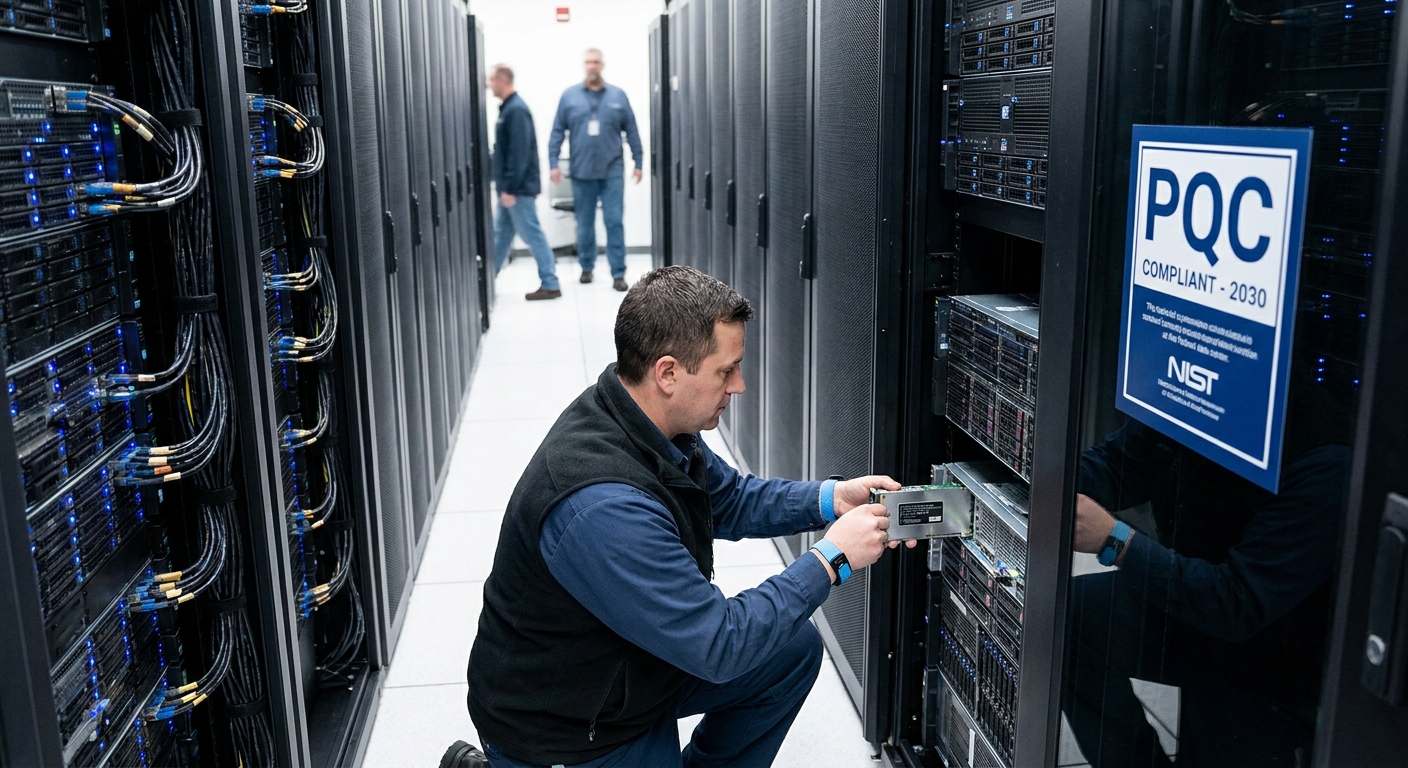
- Adopt NIST-Validated Standards: If you’re buying new tech, make sure it speaks the language of FIPS 203, 204, and 205. If it doesn't, you're buying legacy debt.
- Watch the Egress: While HNDL is subtle, it isn’t invisible. Keep a close eye on your network monitoring tools for unusual spikes in data leaving your environment. Large-scale harvesting often leaves a footprint if you know where to look.
The transition to post-quantum cryptography is, at its heart, a shift in mindset. It’s about recognizing that data has a shelf life, and that shelf life is currently being shortened by the march of quantum computing. As noted in the resources from Palo Alto Networks, the clock starts the moment your data crosses the wire.
Ultimately, defending against HNDL isn't just about patching software; it's about future-proofing the very foundation of our digital lives. As 5G, 6G, and AI continue to weave themselves into the fabric of the global economy, the ability to secure data against the threats of tomorrow will be the only thing that separates the resilient from the exposed. We are in a race against the calendar, and the time to start moving is now.