Security Experts Warn RSA and ECC Algorithms Face Imminent Obsolescence From Quantum Computing Advancements

TL;DR
- Quantum algorithm breakthroughs have drastically reduced the qubits required to crack RSA/ECC.
- RSA-2048 and ECC-256 are now vulnerable to threats arriving within three years.
- Malicious actors are utilizing 'Harvest Now, Decrypt Later' to store encrypted data.
- Current cryptographic defensive perimeters are collapsing faster than industry projections.
The Clock is Ticking: Why RSA and ECC Are Nearing Their Expiration Date
The digital world is built on a foundation of math that, until recently, seemed unbreakable. We’ve spent decades trusting RSA-2048 and ECC-256 to guard everything from private emails to the global banking system. But the ground is shifting beneath us. Recent leaps in quantum algorithmic efficiency have shredded the timelines we once relied on. What was supposed to be a "future problem" for our grandchildren is rapidly becoming the most pressing security crisis of the decade.
The reality is sobering: the computational muscle required to crack these protocols has plummeted over the last twelve months. We aren't just looking at better hardware; we’re looking at smarter, sharper software. Through breakthroughs in error correction and algorithmic optimization, the "impossible" is becoming routine. Experts now warn that a major quantum-enabled cyber threat could arrive within three years. We are staring down a "timeline collision" where our critical infrastructure is left exposed before we’ve even finished building the lifeboat.
The Shrinking Threshold for Cryptographic Failure
Why are we suddenly so vulnerable? Asymmetric encryption relies on math problems—integer factorization and discrete logarithms—that make classical computers choke. But quantum systems? They eat these problems for breakfast, thanks to Shor's algorithm.
As of March 2026, the math has turned against us. The number of qubits needed to dismantle RSA-2048 has cratered to under 100,000. Just a year ago, in May 2025, the industry was still citing a requirement of 20 million qubits. That’s not a minor adjustment; that’s a collapse of our defensive perimeter.
Elliptic Curve Cryptography (ECC-256) is faring no better. It currently secures the backbone of the internet, including Transport Layer Security connections and the underlying assets of Bitcoin and Ethereum. It’s fragile. Estimates now suggest that fewer than 500,000 qubits could shatter ECC-256 in about nine minutes. Meanwhile, Grover's algorithm continues to lurk in the background, effectively halving the strength of our symmetric encryption standards.
| Metric | May 2025 Estimate | March 2026 Estimate |
|---|---|---|
| Qubits to break RSA-2048 | ~20 Million | < 100,000 |
| Qubits to break ECC-256 | High (Unspecified) | < 500,000 |
| Estimated Time to Break | Years | ~9 Minutes |
The "Harvest Now, Decrypt Later" Risk
If you think you’re safe because you aren't a high-value target today, think again. The most insidious threat isn't what happens tomorrow; it's what’s being stolen right now. This is the "Harvest Now, Decrypt Later" strategy. Malicious actors are currently vacuuming up encrypted traffic, storing it in massive data centers, and waiting for the day they can flip the switch on a cryptographically relevant quantum computer (CRQC).

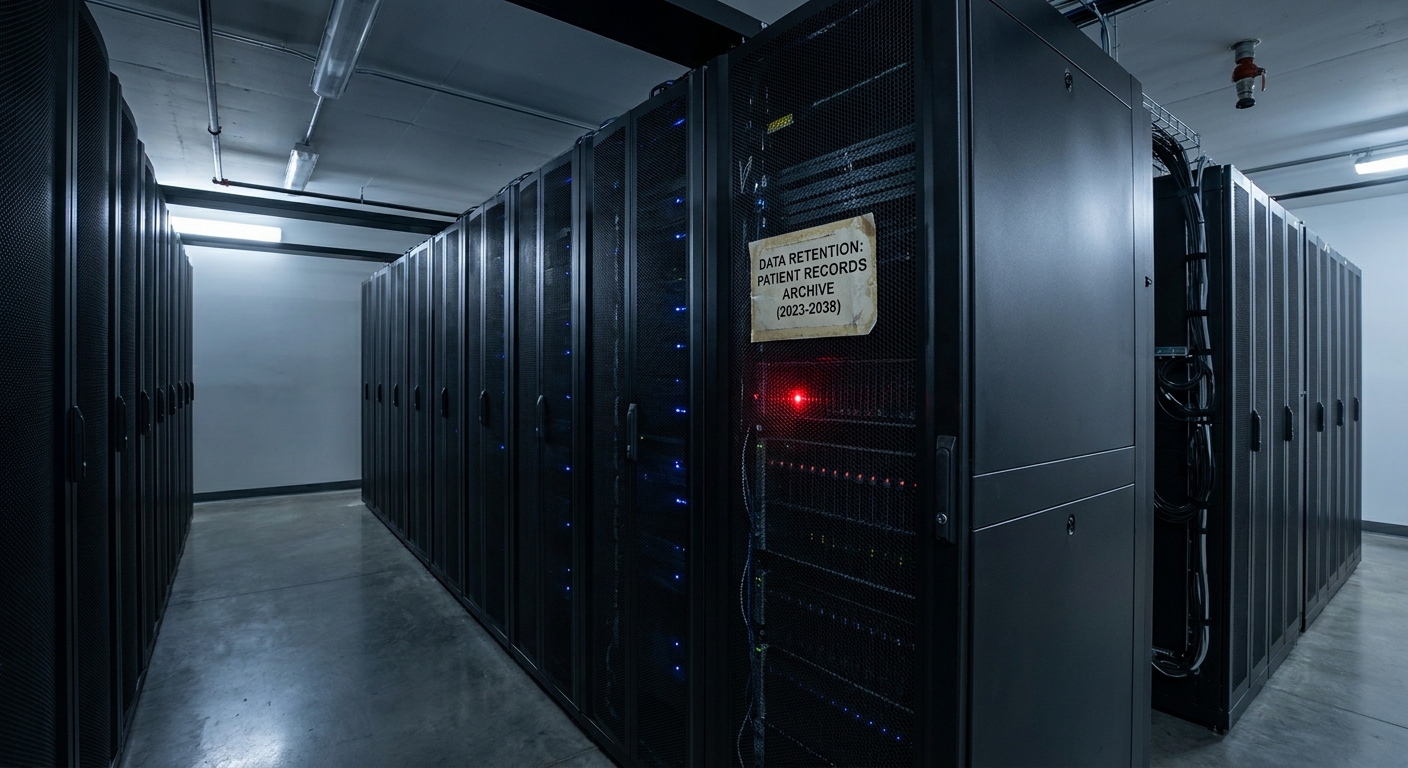
Healthcare is the canary in the coal mine. Patient records are sensitive, legally required to be kept for decades, and essentially permanent. If that data is intercepted today, its security is already void. As noted in this analysis of quantum computing and healthcare vendor risk, we’ve reached an inflection point. The moment your health data hits the wire, it’s effectively public record for anyone with a long-term plan and a quantum future.
Global Preparedness and the Migration Gap
Despite the flashing red lights, the world is moving with the urgency of a Sunday stroll. Only 38% of organizations have even bothered to start a formal strategy for the quantum era. This apathy is dangerous, especially when experts peg the probability of a functional CRQC appearing within the next decade at 19% to 34%.
Some giants are waking up. Google, for instance, has set a 2029 deadline to move its services to quantum-resistant standards. But for most, the problem is structural. You can't just "update" the internet. We are dealing with legacy systems buried so deep in global supply chains that untangling them feels like performing surgery on a moving train.
Consider these factors currently defining our security landscape:
- Algorithmic Efficiency: The game has changed because we’ve figured out how to make quantum systems run better without needing massive hardware scaling.
- Sector-Specific Vulnerability: Industries holding long-lived data—like healthcare and finance—are the primary targets for retroactive decryption.
- Industry Sentiment: Roughly 67% of healthcare and life sciences professionals are deeply concerned, yet action remains stalled.
- Infrastructure Interdependence: You might have your house in order, but if your vendor doesn't, your security is only as strong as their weakest link.
The Path Toward Quantum Resistance
Moving to post-quantum cryptography (PQC) isn't just another patch or a software update. It is a fundamental rewrite of the rules of digital trust. We are replacing the very primitives that keep the internet from falling apart.
Research published in nature.com makes it clear: integrating quantum-resistant algorithms must be a top-tier priority, not a background task. With widespread quantum capability expected between 2030 and 2035, the window to audit and replace these vulnerable modules is closing fast.
For the enterprise, this is as much an operational nightmare as it is a technical one. You can’t fix what you can’t see. Most organizations don't even have a full inventory of where RSA and ECC are buried in their networks. Without a rigorous audit, you’re just patching the front door while the back door is wide open.
The convergence of these algorithmic breakthroughs and the looming threat of retroactive decryption demands a shift in mindset. We have to stop viewing traditional asymmetric encryption as a permanent solution and start seeing it for what it is: a ticking clock. The transition to post-quantum standards will be expensive, exhausting, and complex. But in the face of the quantum landscape, it is the only way to keep our digital lives from being laid bare.