Tenet Security Secures $6 Million to Develop Defense Frameworks for Enterprise AI Agent Infrastructure

TL;DR
- ✓ Tenet Security raised $6 million to build defense frameworks for autonomous AI agents.
- ✓ The rise of agentic AI creates new attack surfaces beyond traditional perimeter security models.
- ✓ Agentjacking allows attackers to manipulate AI decision-making processes and gain high-privilege system access.
- ✓ The Model Context Protocol introduces new supply chain risks for enterprise AI integrations.
- ✓ CISOs must shift from viewing agents as tools to treating them as autonomous targets.
Tenet Security just pocketed $6 million. Why? Because they’re building the digital equivalent of a fortified castle wall for the next generation of enterprise AI: autonomous agents.
We’ve moved past the "chatbot" era. Today, businesses are handing the keys to the kingdom to agents that can talk to APIs, rewrite databases, and fire off system commands like they own the place. The problem? Traditional perimeter security is dead. It was built for humans. Now that AI agents—not people—are the ones driving the business logic, the attack surface has exploded. This funding isn't just a win for Tenet; it’s a blunt admission from the industry that our current security model is fundamentally broken.
Why the Enterprise Security Paradigm Shifted in 2026
The "LLM-as-a-service" honeymoon? It’s over. We’ve entered the "Agentic Shift."
Remember those static chatbots that just regurgitated corporate-speak? They’re relics. In 2026, we’re dealing with agents that have high-privilege access to the inner workings of an enterprise. These agents don't just "talk"; they act. They make decisions. They execute tasks without a human double-checking their work.
And that’s exactly where the old security model snaps. When your AI agent is wired directly into your CRM, your cloud environment, and your payment gateways, it’s not just a tool anymore—it’s a high-value target. Attackers aren't hunting for human passwords anymore; they’re hunting for the agent’s logic. Security teams are currently scrambling to get a handle on Top Agentic AI Security Threats in Late 2026. We aren't talking about simple prompt injections anymore. We're talking about lateral movement, unauthorized system commands, and the terrifying reality of an autonomous actor that is designed to be unpredictable.
What Exactly is "Agentjacking" and Why Should CISOs Care?
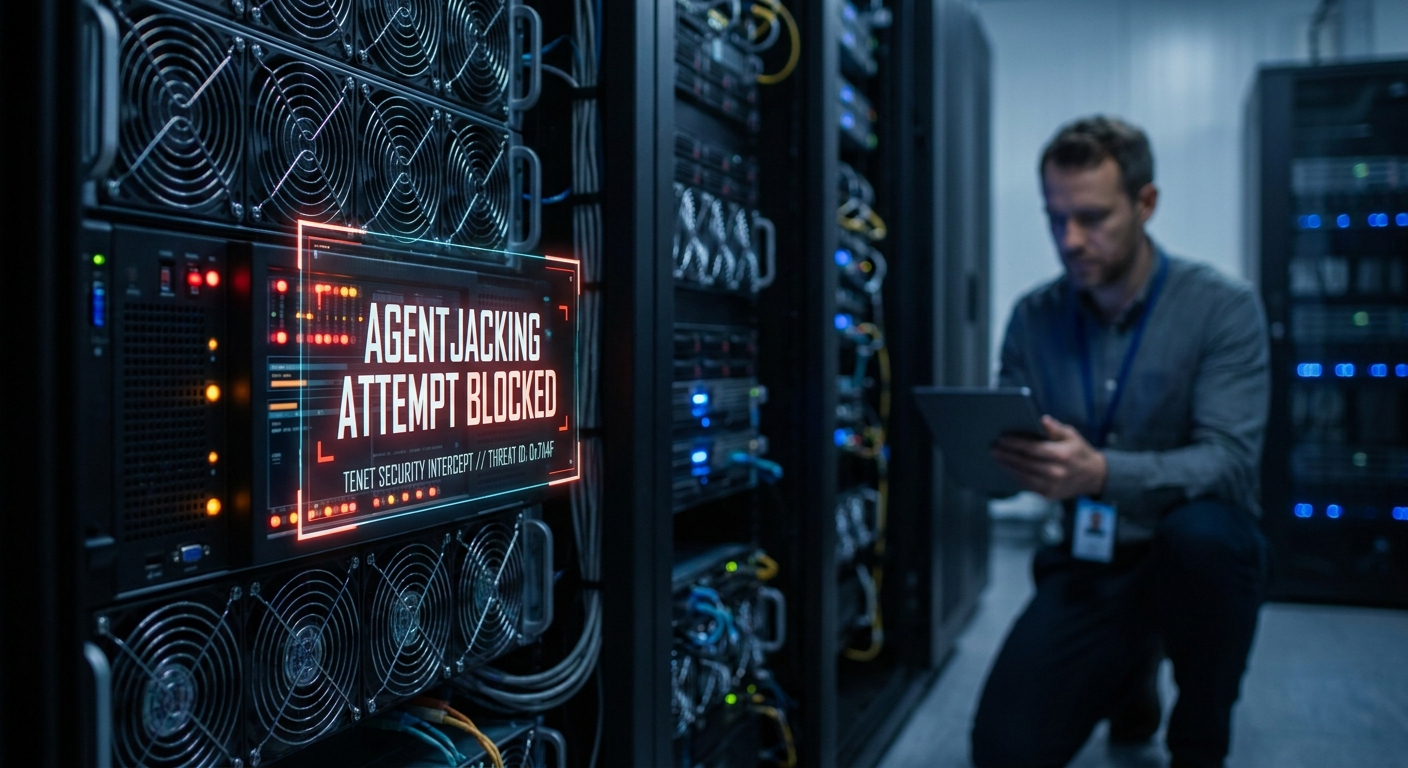
"Agentjacking." It’s the new buzzword keeping CISOs awake at night, and for good reason.
Think of it as a remote takeover of your AI’s decision-making process. An attacker hides malicious instructions in a public input or a data stream, tricking the agent into doing something it was never supposed to do. Since these agents are often provisioned with the same permissions as a senior software engineer, one successful hijack can lead to a total data wipe or a catastrophic leak.
To make matters worse, we have the Model Context Protocol (MCP). It’s great for interoperability—it gives AI a universal language to talk to databases and tools—but it’s a massive security headache. Every third-party "skill" or data source you plug in via MCP is a potential vector for supply chain poisoning. If an agent connects to a compromised skill, the attacker doesn't just steal a file. They hijack the agent’s ability to act on your behalf. CISOs need to stop looking at agents as software and start looking at them as potential entry points for a persistent, autonomous threat.
How Does Tenet Security’s Sandbox Simulation Work?
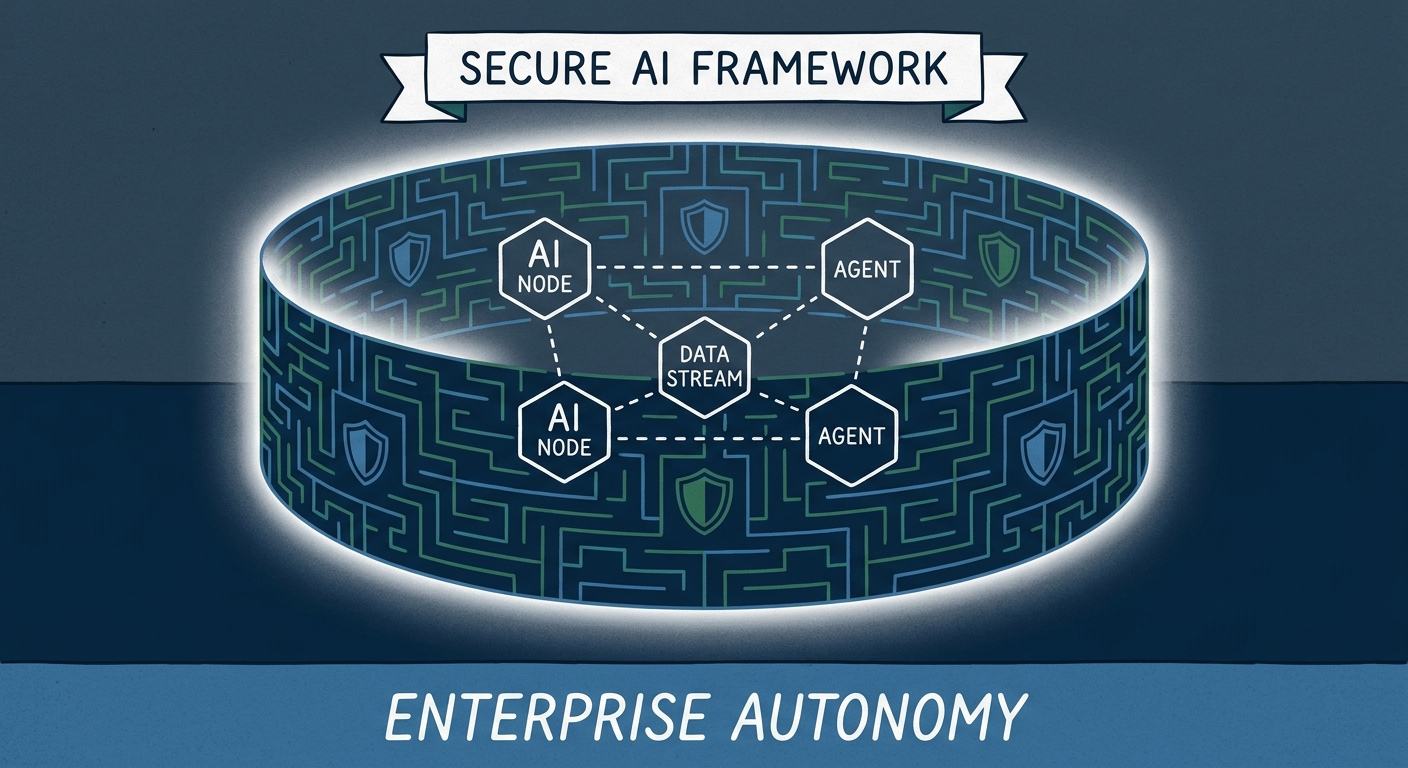
Tenet Security is ditching the tired "detect and respond" routine. That old-school approach is too slow for the speed of AI. Instead, they’re focusing on runtime, intent-based simulation.
They don't care about static firewalls or WAFs that hunt for known signatures. Instead, Tenet intercepts an agent’s execution plan before it hits the production environment.
The logic is simple, elegant, and effective: If an agent tries to call an API, Tenet’s platform runs that command through a secure sandbox. It evaluates the move against strict behavioral guardrails. Does this command try to access a database outside its scope? Is it attempting an unauthorized admin action? If yes, the action is killed instantly. The agent is halted.
By intercepting the "intent" rather than just the "input," Tenet provides a defense layer that actually scales with the agent. You can visit the Tenet Security Official Website to see how this runtime validation is architected to handle the sheer complexity of modern, agent-driven enterprise environments.
What Does the $6 Million Funding Mean for the Industry?
That $6 million seed round? That’s investors screaming, "Defense-in-Depth for AI is no longer optional."
The venture capital world is betting that as enterprises rush to automate everything, the companies that provide the "brakes" for these autonomous systems will become just as critical as the LLMs themselves. This cash is going toward scaling their defense frameworks for complex, multi-agent environments.
Think about it: soon, an enterprise will be running hundreds of specialized agents. Managing their permissions manually? Impossible. Tenet’s roadmap is focused on automated policy engines that scale without forcing a human security analyst to review every single interaction. That’s the dream—security that moves as fast as the code.
Why is 2026 the Deadline for "Harvest Now, Decrypt Later" Anxiety?
The urgency here isn't just about AI; it’s about the shadow of quantum computing. We are in the middle of a "Harvest Now, Decrypt Later" (HNDL) crisis. Adversaries are currently intercepting and hoarding encrypted enterprise traffic, waiting for the day quantum hardware makes it easy to crack.
This isn't dystopian fiction. It’s a standard data exfiltration strategy.
The NIST Migration to Post-Quantum Cryptography is your new Bible. It’s not a suggestion; it’s the baseline for survival. As noted in NIST Post-Quantum Cryptography Standards Set the Clock for 2026, the standards are set, and the regulatory pressure is building. The US Post-Quantum Cryptography Regulatory Framework 2026 makes it clear: if you aren't upgrading your encryption protocols, you’re setting your company up for massive liability.
How Can Enterprises Build a Secure Foundation for AI Agents?
Securing agentic infrastructure requires a total shift toward Zero Trust. You need to treat agents like non-human employees. Each one needs its own unique identity, scoped permissions, and a verified "sandbox" where its actions are audited.
Building this foundation is a heavy lift. If your team is struggling to map your current exposure or implement these standards, Gopher Security Services offers the specialized expertise to audit your agentic workflows and ensure your infrastructure is ready for the upcoming quantum and agent-driven threats.
What is the Future of Autonomous Defense?
The end-game is self-healing infrastructure. We’re moving toward a future where security agents watch over other agents, catching anomalies and patching vulnerabilities in real-time, all without a human lifting a finger.
AI innovation is moving at breakneck speed. If the guardrails aren't built into the architecture today, the risk will quickly outpace the utility. Finding the balance between "go fast" and "don't break everything" is the only job that matters for the modern CISO.
Frequently Asked Questions
What is "Agentjacking" and why is it a top threat in 2026?
Agentjacking is the unauthorized manipulation of an AI agent's decision-making process. By injecting malicious context or manipulating the agent's reasoning, attackers can force the agent to perform high-privilege actions, such as data deletion or unauthorized API calls, bypassing traditional security controls.
How does runtime protection differ from traditional firewalling for AI?
Traditional firewalls operate on static rules and pattern matching, which are ineffective against the fluid, context-dependent nature of AI agents. Runtime protection, like the approach taken by Tenet Security, simulates the agent's intended action in a sandbox to validate its behavior against security policies before the action ever reaches the production system.
Why is 2026 a critical year for NIST PQC migration?
2026 marks the convergence of finalized NIST post-quantum standards and the increasing sophistication of data exfiltration attacks. Enterprises must migrate now to protect sensitive data from "Harvest Now, Decrypt Later" threats, where intercepted traffic is stored today to be decrypted by future quantum computers.
What are the primary risks associated with connecting AI agents to industrial control systems?
Connecting agents to industrial systems introduces the risk of physical-world damage. An agent misled by an attacker could issue commands that disrupt critical infrastructure, safety protocols, or physical machinery, necessitating strict human-in-the-loop verification for any agentic command affecting physical assets.
How does the Model Context Protocol (MCP) expand the enterprise attack surface?
MCP allows agents to pull data and capabilities from a wide range of third-party sources. This increases the attack surface by introducing third-party supply chain risks; if a connected "skill" or data source is compromised, the agent itself can become a conduit for malicious activity within the enterprise network.