PQ-Compliant Secure Multi-Party Computation for Model Contexts
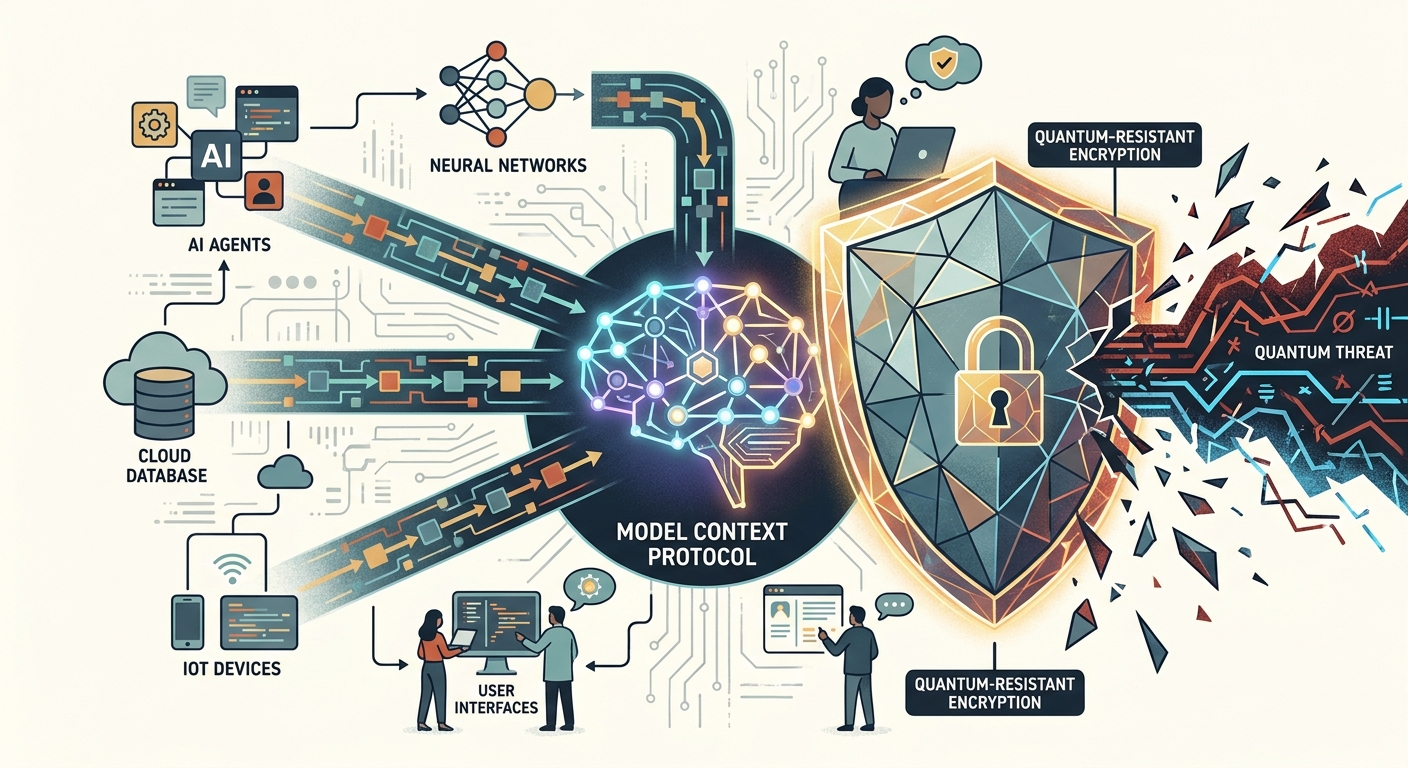
Learn how Post-Quantum (PQ) Secure Multi-Party Computation protects Model Context Protocol (MCP) deployments from quantum threats while ensuring AI data privacy.
Cutting-edge insights on post-quantum cryptography, AI cybersecurity, and zero-trust architectures. The Gopher Security Blog explores advanced security solutions for Model Context Protocol (MCP), homomorphic encryption, and privacy-preserving technologies to future-proof your enterprise against emerging quantum and AI threats.
Learn how Post-Quantum (PQ) Secure Multi-Party Computation protects Model Context Protocol (MCP) deployments from quantum threats while ensuring AI data privacy.
Learn how Attribute-Based Access Control (ABAC) secures AI capability negotiation and MCP deployments against quantum threats and tool poisoning.
Secure your AI tool definitions and MCP deployments with stateful hash-based signatures (LMS/XMSS). Learn quantum-resistant integrity for AI infrastructure.
Explore how entropy-rich synthetic data generation strengthens PQC key material for Model Context Protocol. Secure your AI infrastructure with quantum-resistant encryption.
Learn how to secure AI infrastructure with quantum-hardened granular resource authorization policies. Explore PQC, MCP security, and zero-trust strategies.
Learn how automated cryptographic agility frameworks protect AI resource orchestration and MCP deployments against quantum threats and tool poisoning.
Learn how to protect Model Context Protocol (MCP) metadata from side-channel attacks using quantum-resistant masking and advanced threat detection.
Learn how to protect Model Context Protocol (MCP) from quantum-enabled adversarial attacks using automated threat detection and post-quantum security.
Discover how to secure Model Context Protocol deployments using quantum-safe neural telemetry and lattice-based cryptography to detect anomalous prompts and puppet attacks.