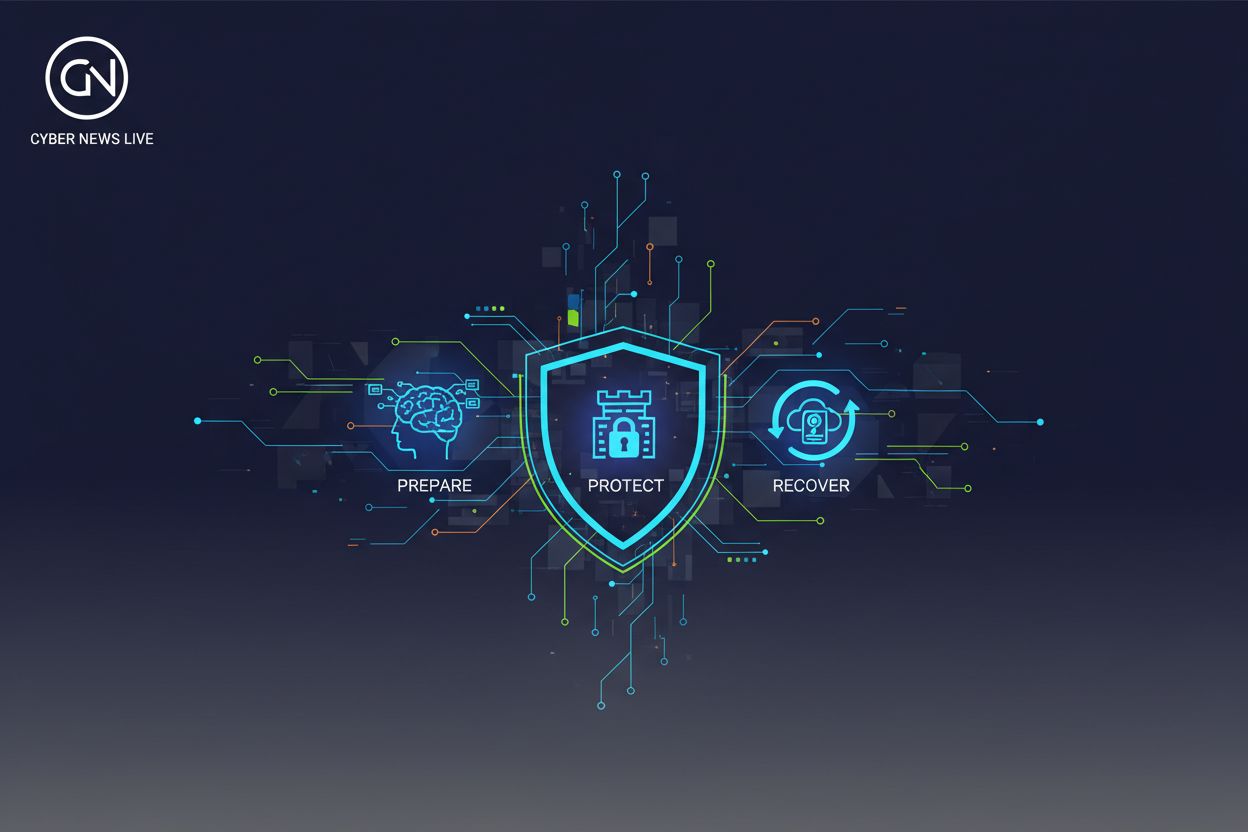
Building Ransomware Resilience: Prepare, Protect, and Recover

TL;DR
- The UK's ban on ransomware payments highlights the growing importance of organizational resilience. This shift requires a focus on robust backups, effective incident response plans, and continuous employee training to withstand and recover from cyberattacks. Organizations can no longer rely on ransom payments, making a proactive, resilience-first strategy essential for long-term security and operational continuity.
The Imperative of Resilience in the Face of Ransomware
The UK government's ban on ransomware payments for public sector bodies and critical national infrastructure signals a shift towards prioritizing resilience. This policy change highlights the vulnerability of organizations lacking robust defenses, making them more susceptible to breaches and operational disruptions. Organizations must now focus on comprehensive resilience strategies that include strong backups, thorough incident response planning, and continuous employee training. #CyberNewsLive https://lnkd.in/eS4dHGmD
The Realities of Resilience
Many organizations, especially in the public sector, are ill-equipped to handle the ban's practical implications. While awareness of necessary security measures is high, budget, personnel, and time constraints hinder implementation. Legacy infrastructure, particularly within the NHS, relies on unsupported software, creating vulnerabilities that threat actors exploit. Even when patching is feasible, updating large, complex environments is slow, risky, and can cause service interruptions. Without increased funding and support, addressing underlying resilience challenges will remain difficult, increasing the likelihood of ransomware breaches. media
The private sector faces different challenges, especially regarding cyber insurance. With ransom payments increasingly outlawed or excluded from coverage, insurers are likely to shift their focus to forensics, legal support, PR, and recovery assistance. This complicates matters for organizations that previously relied on their insurers for ransom payments. Resilience extends beyond ransom costs, as demonstrated by significant post-attack losses at companies like Marks & Spencer, the Co-Op, and Jaguar Land Rover (JLR). These incidents highlight that resilience failures, not just ransom costs, carry the most significant financial burden. £300 million £1.5bn
People, Processes, and Technology
With ransom payments off the table, organizations must understand how effectively they can withstand, respond to, and recover from attacks. This involves focusing on people, processes, and technology. Human error remains a significant factor in security breaches. While technology plays a role in minimizing mistakes, awareness training and education are crucial for building a strong security culture. Instead of assigning blame, organizations should view their employees as their strongest line of defense.
Effective security behaviors are supported by robust processes. Organizations should align with recognized frameworks such as NIST Cyber Security Framework 2.0, the NCSC’s Cyber Assessment Framework, ISO 27001, and ISO 22301. Regular incident response and business continuity testing are essential to ensure these processes can address emergency cyber security risks. Secure organizations also extend their resilience strategies to the wider supply chain to mitigate vulnerabilities from external dependencies. Technology priorities for resilience and recovery should include immutable or air-gapped backups, as attackers often target backups first. Good housekeeping practices, such as disciplined patching, are crucial, even when dealing with legacy systems.
Managed detection and response services provide real-time visibility and rapid containment capabilities, limiting the scope of potential breaches. By combining these elements, organizations can significantly reduce the window of opportunity for successful ransomware attacks. managed detection and response services
The Rise of Exfiltration-Only and Double Extortion Attacks
A concerning trend is the increase in data exfiltration-only attacks. Attackers are stealing sensitive data and using it for ransom leverage, often paired with double extortion, where both encryption and data leaks are used to coerce payment. Attackers are also moving faster, reducing dwell time from weeks to hours. Without round-the-clock detection and response, many organizations are unaware of breaches until a ransom note arrives. Texas-based, always-on Cyber Fusion Center
The Shift in Ransom Payment Dynamics
The overall value of ransom payments decreased in 2024, with approximately 36% of victims choosing not to pay. Those who did pay often paid less than the original demand. This is because organizations are recognizing that attackers cannot be trusted and are instead investing in independent recovery strategies. This shift is reinforced by legal and regulatory frameworks that discourage ransom payments, alongside initiatives like the International Counter Ransomware Initiative, which encourages organizations to strengthen their defenses. immutable backups
Recovery Starts with Resilience
Organizations that prioritize proactive data resilience recover from ransomware attacks up to 7x faster. This resilience is built on:
- Frequent and verified backups
- Immutable backup storage
- Clear incident response protocols
- 24/7 threat detection and containment
- Executive alignment across IT, security, and leadership
Many organizations overestimate their preparedness, with fewer than half including crucial components like backup frequency or defined chains of command in their ransomware response plans. This often leads to a drop in confidence after an attack, particularly among CIOs. vCISO advisory program
Best Practices for Storage and Backup Resilience
To achieve true ransomware resilience, organizations should implement these best practices:
- Ensure Immutable Backups: Immutable backups prevent alteration or deletion of recovery points, ensuring clean, uncompromised backups for restoration.
- Strengthen Backup Security with Isolation and Access Controls: Strict access controls limit ransomware's attack surface. The 3-2-1 backup rule
- Automate Backup Testing: Automated backup testing validates recovery readiness and prevents silent data corruption.
- Keep Backup Infrastructure Patched and Hardened: Regularly patching storage systems addresses vulnerabilities that ransomware could exploit.
- Achieve Advanced Ransomware Resilience with IRE & IDV: Isolated Recovery Environments (IRE) and Isolated Data Vaults (IDV) prevent malware spread and protect backup data from modification.
From Backup to Cyber Resilience
Traditional backup strategies are no longer sufficient against modern cyberattacks. Attackers routinely target local backups, compromise admin credentials, and disable recovery infrastructure. Many now use double and triple extortion tactics. Supply chain attacks also pose a significant risk, disrupting multiple organizations simultaneously. It’s essential to extend cyber resilience expectations to vendors and partners. even a single day of downtime can cost $55,076
Cyber resilience keeps your business running even during an attack. A resilient cyber posture integrates:
- Immutable backups stored off-site in the cloud
- Automated, verified recovery testing
- Orchestrated recovery playbooks
Cyber resilience reduces the likelihood of severe disruption and minimizes the impact when it occurs. Datto
Building a Resilience-First Strategy
Achieving cyber resilience requires a framework that connects IT readiness with business continuity. IT leaders can build a resilience-first posture by:
- Starting with a business impact analysis (BIA) to map IT systems to the functions they support.
- Layering defenses around critical recovery infrastructure, including enforcing multifactor authentication (MFA) and using separate admin credentials for backup consoles.
- Automating backup verification and testing to ensure the recoverability of full application-level services.
- Developing and documenting recovery playbooks with clear, step-by-step instructions and role-specific responsibilities.
Enhance Your Cybersecurity with Gopher Security
At Gopher Security, we specialize in AI-powered, post-quantum Zero-Trust cybersecurity architecture. Our platform converges networking and security across devices, apps, and environments—from endpoints and private networks to cloud, remote access, and containers—using peer-to-peer encrypted tunnels and quantum-resistant cryptography. Gopher Security helps organizations build robust recovery playbooks, implement immutable backups, and maintain business continuity without ever having to negotiate with criminals. Gopher Security offers a unified platform that simplifies the complexity of resilience while strengthening your overall cybersecurity posture.
Ready to enhance your ransomware resilience? Contact Gopher Security today to explore our services and build a stronger, safer future.