Global Enterprises Accelerate PQC Migration Strategies to Counter Harvest Now Decrypt Later Quantum Threats

TL;DR
- HNDL threats involve stealing encrypted data for future quantum decryption.
- NIST and NSA are accelerating mandates for quantum-resistant encryption standards.
- Enterprises must transition to PQC to protect long-term sensitive data assets.
- Quantum hardware advancements have shortened the timeline for cryptographic risks.
The cybersecurity world is currently gripped by a quiet, high-stakes panic. It’s called "Harvest Now, Decrypt Later" (HNDL), and it’s exactly as ominous as it sounds. Adversaries are vacuuming up encrypted data today—hoarding it in massive, cold-storage servers—with one simple goal: wait for the day a functional quantum computer can crack the code.
For years, this was the stuff of sci-fi thrillers. Not anymore. With quantum hardware hitting milestones once thought impossible, the window for protecting sensitive data is slamming shut. Organizations are finally waking up to the reality that if your data needs to stay secret for a decade or more, it’s already at risk.
The Mechanics of the HNDL Threat
Think of HNDL as a three-act play. First, the intercept. Then, the long-term storage. Finally, the eventual decryption. Our current digital lives rely on RSA and elliptic curve cryptography (ECC), which are essentially giant math puzzles. They’re great for today’s computers, but they’re sitting ducks for Shor’s algorithm—a theoretical method that makes short work of the math underpinning our modern security.
The timeline? It’s accelerating. We used to think we needed millions of physical qubits to break RSA-2048. New projections suggest we might need significantly fewer. Some researchers are pointing to neutral atom computers that could potentially crack P-256 encryption with as few as 10,000 qubits. That’s a threshold we could realistically hit within this decade.
Regulatory and Industry Milestones
The government isn't sitting on its hands. In 2024, the National Institute of Standards and Technology (NIST) dropped FIPS 203, 204, and 205—the new rulebook for post-quantum cryptography (PQC). While the official phase-out of legacy standards isn't until 2035, the real clock is ticking much faster.
The NSA has effectively drawn a line in the sand. Under the CNSA 2.0 suite, any new National Security System has to be quantum-safe by January 1, 2027. When the NSA sets a deadline, the rest of the industry tends to scramble. Vendors are now rushing to overhaul their roadmaps, knowing that if they don't offer quantum-safe products, they’ll soon be obsolete.
| Milestone | Target Date | Significance |
|---|---|---|
| CNSA 2.0 Mandate | Jan 1, 2027 | Mandatory PQC support for new National Security Systems. |
| Google/Cloudflare PQ Goal | 2029 | Industry target for full post-quantum readiness and authentication. |
| NIST Deprecation | 2035 | Final phase-out of legacy RSA and ECC standards. |
Vulnerabilities in AI Infrastructure
If you’re looking for the biggest target, look at AI. The Cloud Security Alliance (CSA) has flagged AI infrastructure as a massive liability. Why? Because the value isn't just in the current output—it’s in the model weights, the training data, and the proprietary communication between agents. This is the "crown jewels" data that companies need to keep locked down for decades. If an attacker grabs that today, they’ve effectively stolen the company’s future competitive advantage.
To fight back, security teams are changing their tactics:
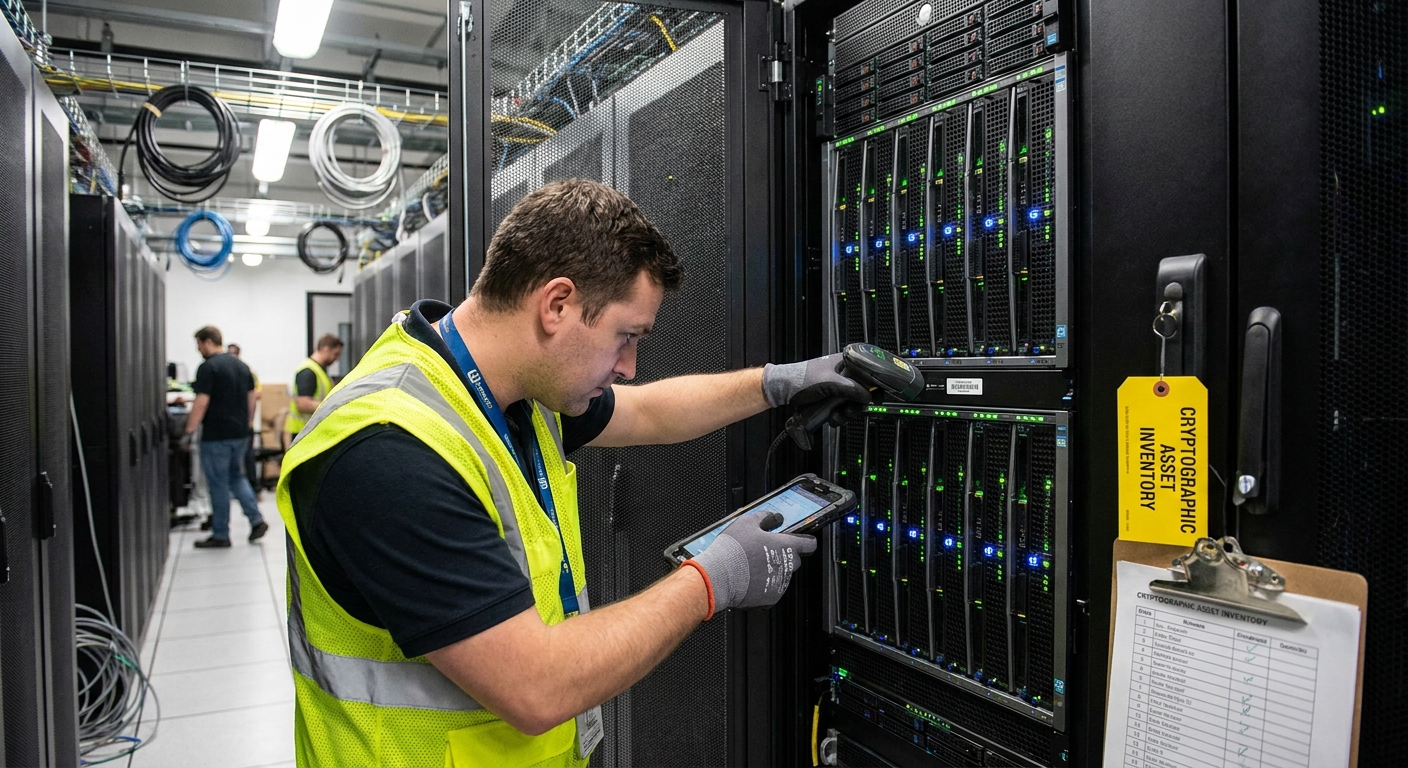
- Cryptographic Visibility: You can’t fix what you can’t see. Companies are finally auditing their entire stack to find where legacy encryption is hiding.
- Data Prioritization: Not all data is created equal. If it needs to be secret for 20 years, it moves to the front of the line for PQC migration.
- Crypto-Agility: The goal is to build systems that aren't married to a single encryption method. If an algorithm fails, you should be able to swap it out without tearing down the entire house.
- Hybrid Key Exchange: This is the "belt and suspenders" approach. By combining classical encryption with post-quantum algorithms, you ensure that even if one layer is cracked, the data remains secure.
Accelerating the Roadmap
The tech giants are moving in lockstep with the government. Google and Cloudflare have both staked their reputations on reaching full post-quantum readiness by 2029. They know the "moonshot" quantum attacks are coming, and they’d rather be ready early than late.
The research community is also doing the heavy lifting. We’re seeing more transparency than ever regarding quantum vulnerabilities. For example, there’s been significant work on disclosing of quantum vulnerabilities responsibly to keep the blockchain and other critical systems from being blindsided.
We’re also keeping a close eye on neutral atom quantum computers. These systems are proving to be far more scalable than the old-school superconducting qubits, which means the cryptography migration timeline is a living document—one that changes every time a new hardware breakthrough hits the lab.
The shift to a post-quantum world is messy, expensive, and absolutely necessary. It requires a rare synchronization between policy makers, hardware engineers, and software architects. The consensus is clear: don't wait for the quantum computer to arrive. By the time it’s here, the "harvesting" will have already been done. The only way to win this game is to start playing by the new rules today.