Why Standard Encryption Isn't Enough: The Case for Post-Quantum AI Infrastructure Security

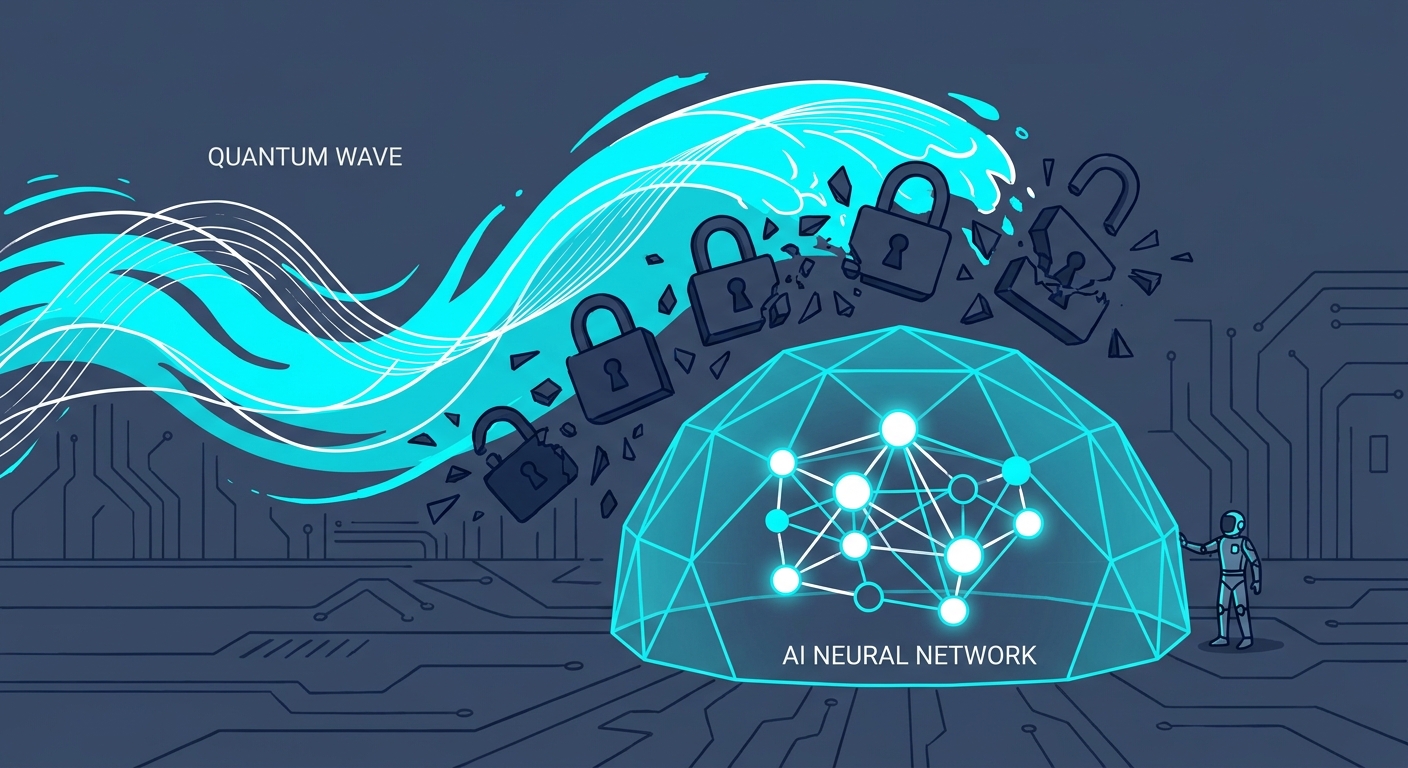
TL;DR
- ✓ Store Now Decrypt Later attacks make quantum threats an immediate 2026 survival issue.
- ✓ Current encryption standards like RSA and ECC are vulnerable to future Shor’s Algorithm attacks.
- ✓ Model Context Protocol traffic is a high-value target for intellectual property theft today.
- ✓ Organizations must migrate to lattice-based post-quantum primitives to secure AI agent communications.
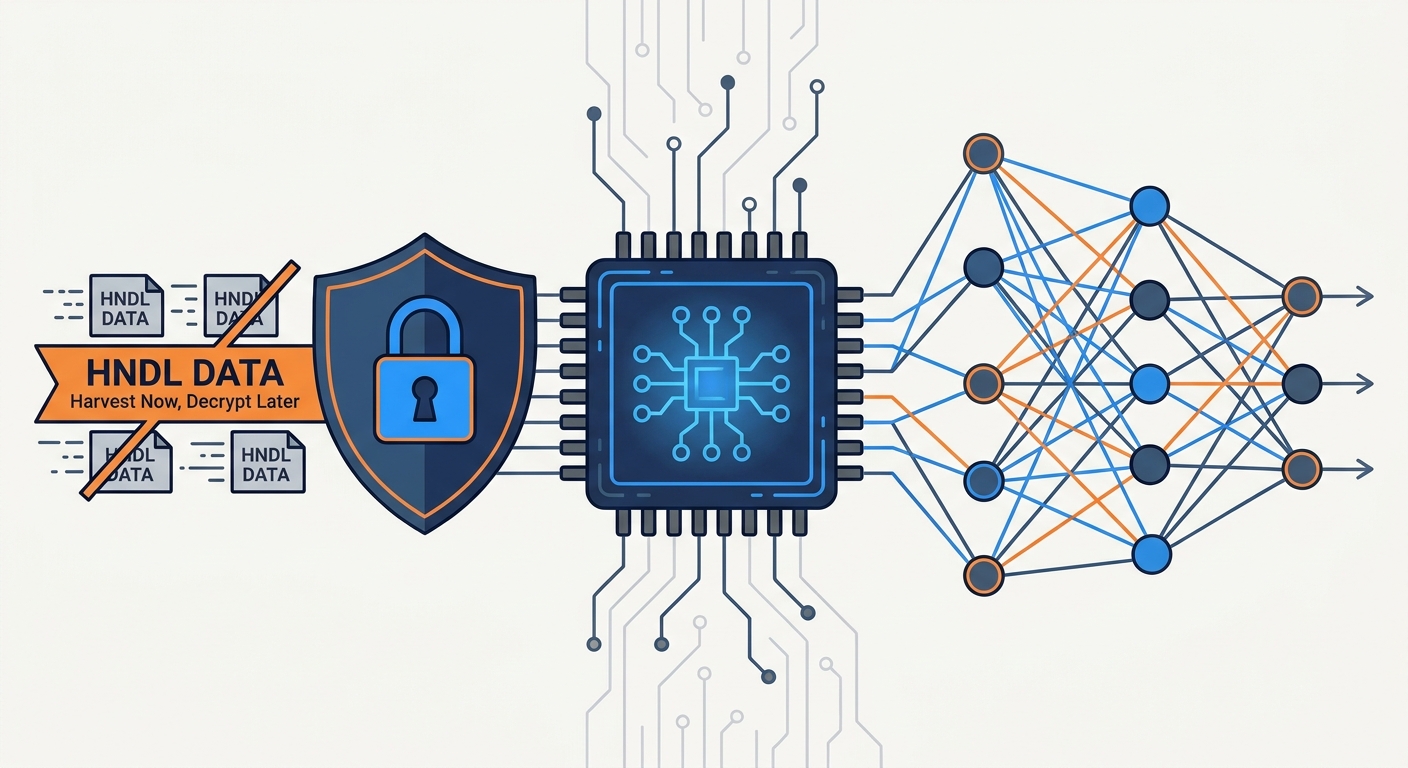
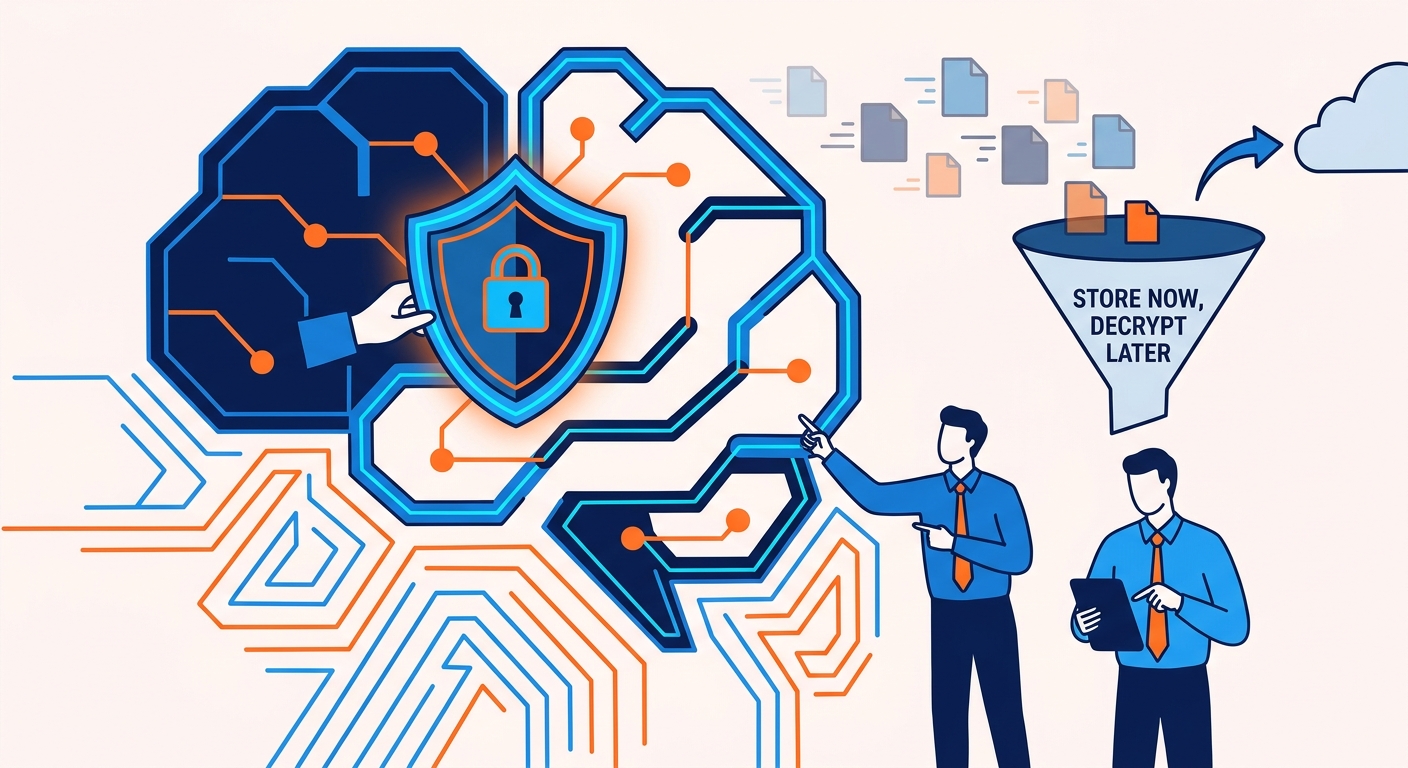
If you’re still pinning the "quantum threat" to some distant 2035 deadline, you’re already losing. The reality of "Store Now, Decrypt Later" (SNDL) has pulled the future into the present. We are looking at a 2026 survival issue, not a research project.
Right now, adversaries are scraping encrypted traffic like digital scavengers. They aren't trying to break your firewall today; they’re harvesting the high-value data flowing between your AI agents and their context sources. They’ll sit on that encrypted hoard, waiting for the moment fault-tolerant quantum hardware comes online to turn your secrets into yesterday’s news.
Your current AI infrastructure is a fortress built with glass bricks. It looks solid, it passes your compliance audits, and it feels secure—but it offers zero protection against the inevitable clarity of tomorrow’s decryption. Post-quantum security isn't some luxury upgrade for the paranoid. It is the new baseline for anyone building with agentic AI.
Why Our Current Encryption Standards Are Failing
The entire internet operates on a collective gamble: that certain math problems are too hard for computers to solve. RSA and Elliptic Curve Cryptography (ECC) are the digital padlocks keeping the world’s secrets. They rely on the sheer difficulty of integer factorization and discrete logarithms. For decades, these padlocks have held.
Then came Shor’s Algorithm.
Shor’s doesn't just guess your keys; it bypasses the math entirely. A sufficiently powerful quantum computer won't grind through your encryption—it will simply vaporize it, turning your "secure" traffic into plain text.
The fragility of our current TLS 1.3 implementations is baked into this mathematical foundation. TLS 1.3 is the gold standard for today’s web, sure, but it’s blind to a quantum adversary who has captured your initial handshake. If you’re curious about how we fix this, the NIST Post-Quantum Cryptography Standardization project pages lay out the transition to lattice-based primitives. This isn't a simple software update. It’s a total migration away from the standards that have defined digital safety for the last twenty years.
The Hidden Risk: Is Your Model Context Protocol (MCP) Exposed?
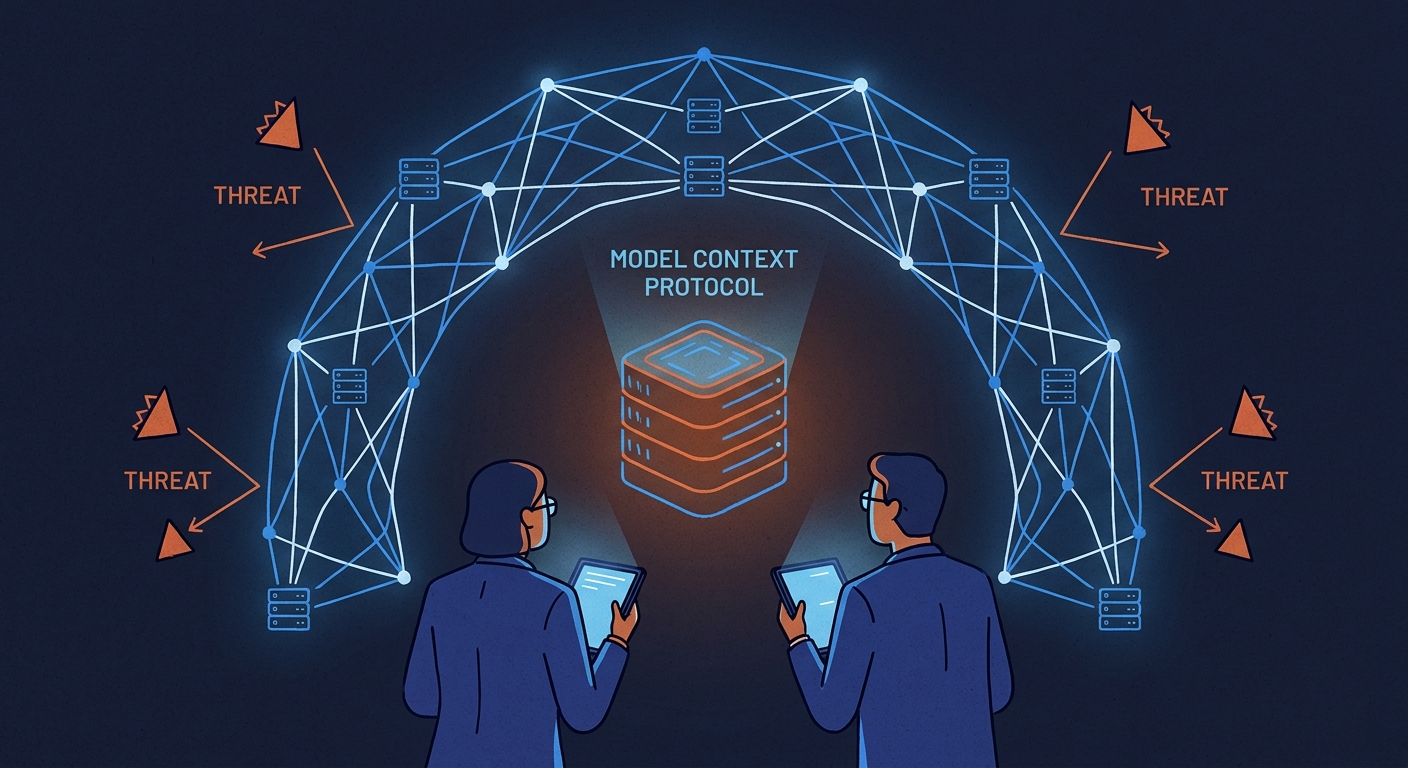
In the world of agentic workflows, the Model Context Protocol (MCP) is the connective tissue. It’s what lets your AI agents reach into your databases, your logs, and your most sensitive repositories.
But this is where your risk profile explodes.
MCP traffic—usually moving via JSON-RPC or Server-Sent Events (SSE)—is a goldmine. Because these protocols are often labeled "internal" or "trusted," they are constantly ignored during security audits. When an AI agent pulls proprietary data via an MCP server, that transaction is a prime target for interception. If that traffic is harvested today using standard TLS, it’s a ticking time bomb of intellectual property theft.
You need to treat your MCP endpoints with the same paranoia you reserve for your public-facing APIs. If you haven't put them under a microscope, you’re flying blind. Consider a Gopher Security Infrastructure Audit to pinpoint exactly where your sensitive context is leaking into the wild.
Cryptographic Agility: The Only Way Out
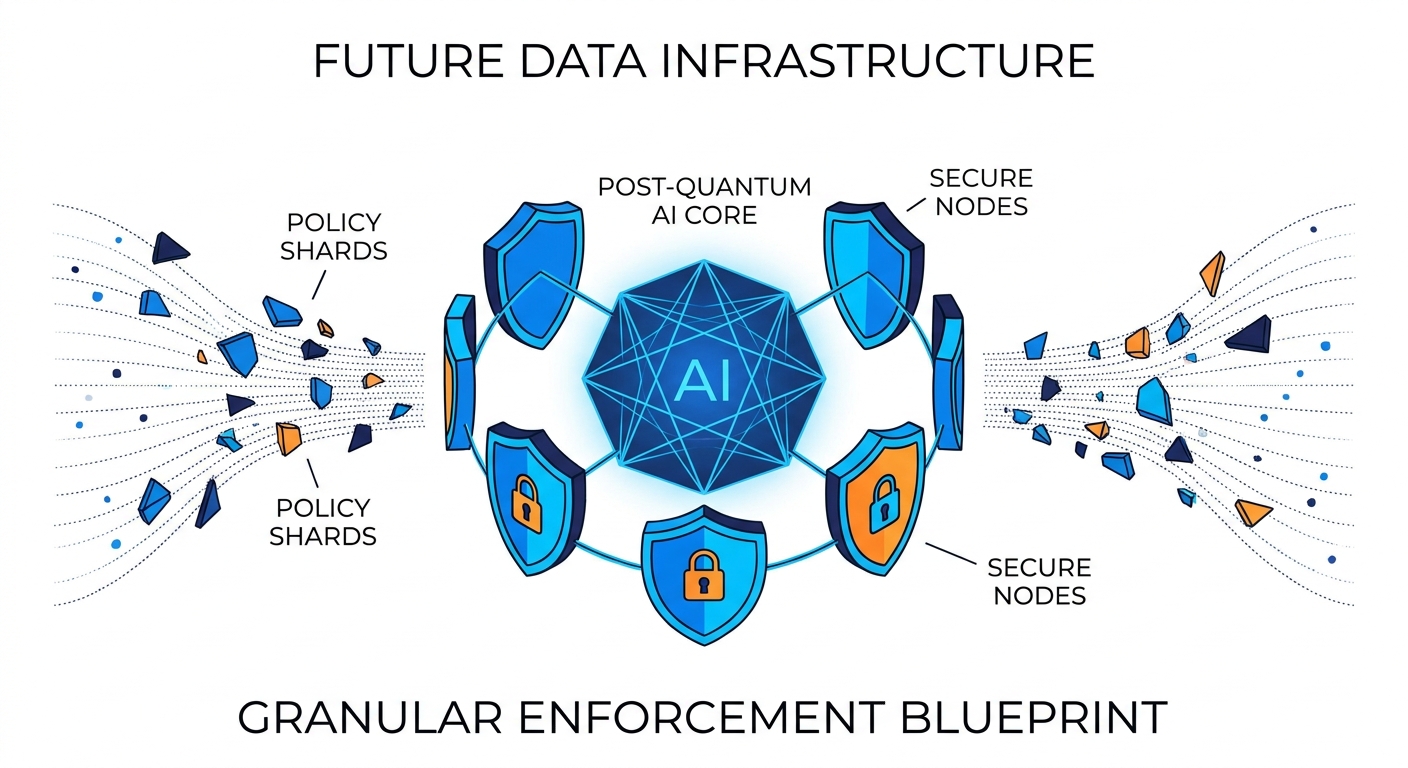
Forget the "rip-and-replace" fantasy. We don't have the luxury of shutting down entire AI ecosystems to rebuild the cryptographic backend overnight. The industry is moving toward Cryptographic Agility—the ability to swap out algorithms on the fly without tearing the whole stack apart.
The most pragmatic path forward is the "Hybrid" approach. You layer quantum-resistant algorithms—like ML-KEM (formerly Kyber)—right on top of your classical ones. Your classical layer keeps the lights on and ensures compatibility; your post-quantum layer acts as the shield against future threats. According to the ENISA Post-Quantum Cryptography Report, this is the safest way to migrate without causing a total operational collapse.
Beyond the Pipe: The Payload Problem
We obsess over the "pipe"—the tunnel through which data flows. But even if the pipe is quantum-proof, the data inside is still a target. AI agents face a unique threat: context injection.
Let’s say you perfectly secure the tunnel. If an attacker can’t decrypt your traffic, they’ll just poison the data entering the agent. If you secure the transport but leave your prompt-engineering and context-loading processes wide open, you’re locking the front door while the windows are hanging off the hinges. You have to consider data poisoning and prompt injection as part of your quantum-readiness plan. Check out the Top 5 Quantum Computing Risks for AI to see why securing the pipe is only half the battle. If you aren't verifying the payload, you aren't secure.
Roadmap: Getting Quantum-Ready in 2026
Quantum-readiness isn't a box to check. It’s a hardening process for your infrastructure.
- Audit your MCP endpoints: Find every single point where an agent touches sensitive data. Map those flows. See where standard TLS is carrying the weight.
- Deploy hybrid cryptographic tunnels: Update those high-value context connections to hybrid modes. If the classical layer fails, the quantum-resistant layer keeps the data safe.
- Build for Crypto-Agility: Standardize your deployments. When new NIST-approved algorithms drop, you should be able to flip a switch, not rewrite your entire codebase.
As the Cloudflare Post-Quantum Executive Order makes clear, the regulatory pressure is mounting. Don't wait for a "perfect" solution that doesn't exist. Start layering your security today, or prepare to be the low-hanging fruit for the next wave of quantum-enabled data theft.
Frequently Asked Questions
Does my AI infrastructure need PQC if it's only internal?
Yes. Internal traffic is the #1 target for lateral movement. Sophisticated actors love internal networks because they’re usually the least protected. They’ll sit there for months, harvesting your "internal" traffic for a future payoff.
Will post-quantum encryption slow down my AI model performance?
When you use a hybrid method, the latency hit is negligible. The risk of total data exposure is a catastrophe; a few milliseconds of latency is a rounding error. Hardware acceleration is already narrowing that gap.
How do I know if my current AI stack is vulnerable to quantum attacks?
If you are running standard TLS 1.2 or 1.3 without quantum-resistant extensions, you are fundamentally vulnerable. It’s that simple.
Why can't I just wait for my cloud provider to fix this?
Cloud providers are updating their backends, sure. But the application-layer security—specifically how your agents handle sensitive context via protocols like MCP—is 100% your responsibility. They provide the pipe; you provide the payload.
What is the primary difference between classical and post-quantum encryption?
Classical encryption relies on math problems that quantum computers are terrifyingly good at solving (integer factorization). Post-quantum algorithms rely on lattice-based math that doesn't share that weakness. It’s a different kind of armor for a different kind of weapon.