Granular Policy Enforcement for AI: A Blueprint for Quantum-Resistant Security

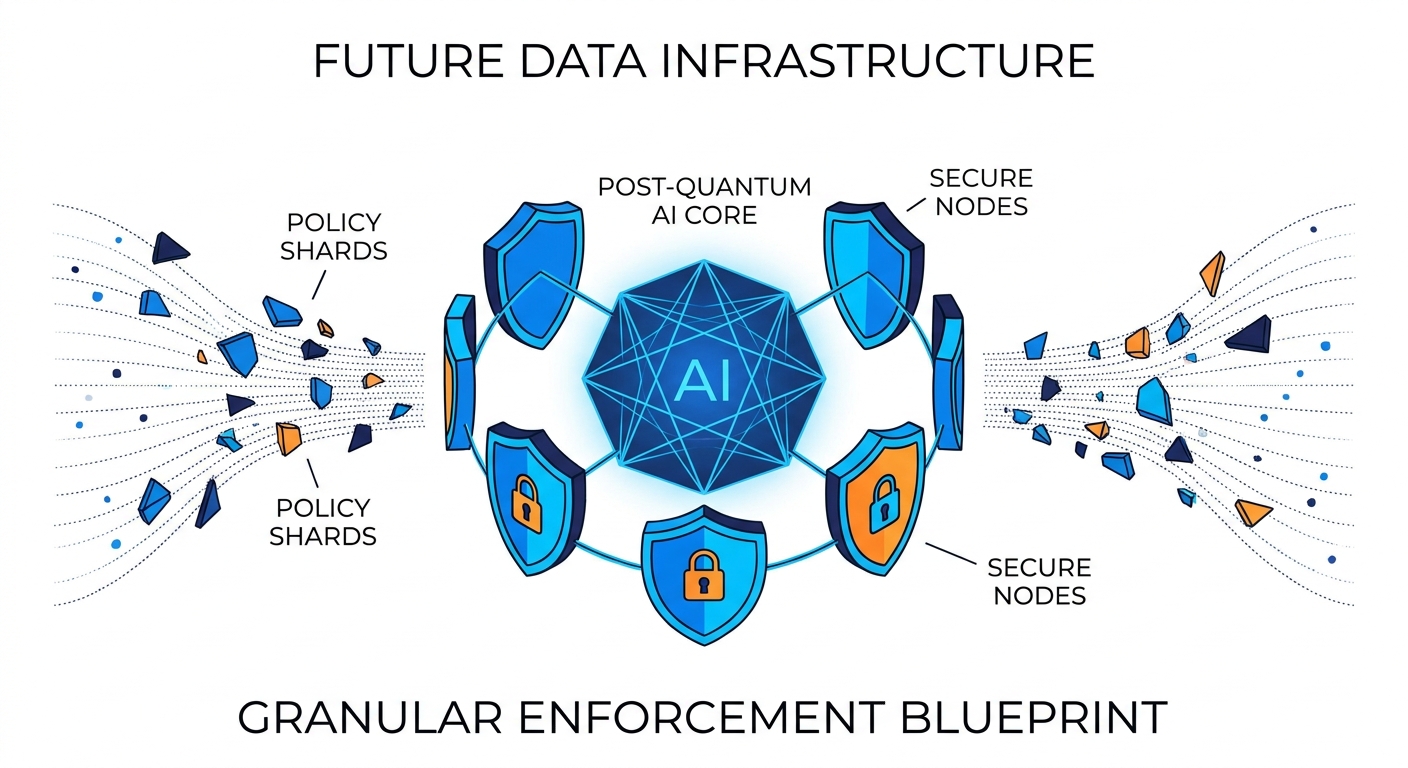
TL;DR
- ✓ AI agents acting as high-privilege entities require robust, infrastructure-level security measures.
- ✓ The Model Context Protocol creates standardized seams that attackers can exploit for unauthorized access.
- ✓ Implementing a Policy Enforcement Gateway intercepts and validates all agent-to-tool communication requests.
- ✓ Move beyond legacy tokens to cryptographic, policy-enforced frameworks for AI infrastructure.
The security perimeter is dead. It didn't just fade away; it was dismantled the moment we pivoted from static, chat-based LLMs to autonomous, action-oriented AI agents. We aren't just talking about chatbots anymore. We’re talking about software that executes code, moves data, and makes decisions on your behalf.
As we dig into The 2026 Roadmap to Post-Quantum AI Infrastructure Security, the reality is stark: security can’t be an afterthought or a "patch" applied to an application layer. It needs to be embedded in the infrastructure itself. We have to stop thinking of AI agents as "users" and start treating them as high-velocity, high-privilege entities. If they hold the keys to the kingdom, they need to be governed by a cryptographic, policy-enforced framework. Period.
Why Does the Model Context Protocol (MCP) Change the Security Calculus?
The industry has largely rallied around the Model Context Protocol (MCP) as the universal translator for AI-to-tool communication. It’s brilliant, really. It standardizes how agents talk to databases, APIs, and internal tools, which has done wonders for productivity.
But here’s the catch: standardizing the connection creates a standardized "seam" for attackers.
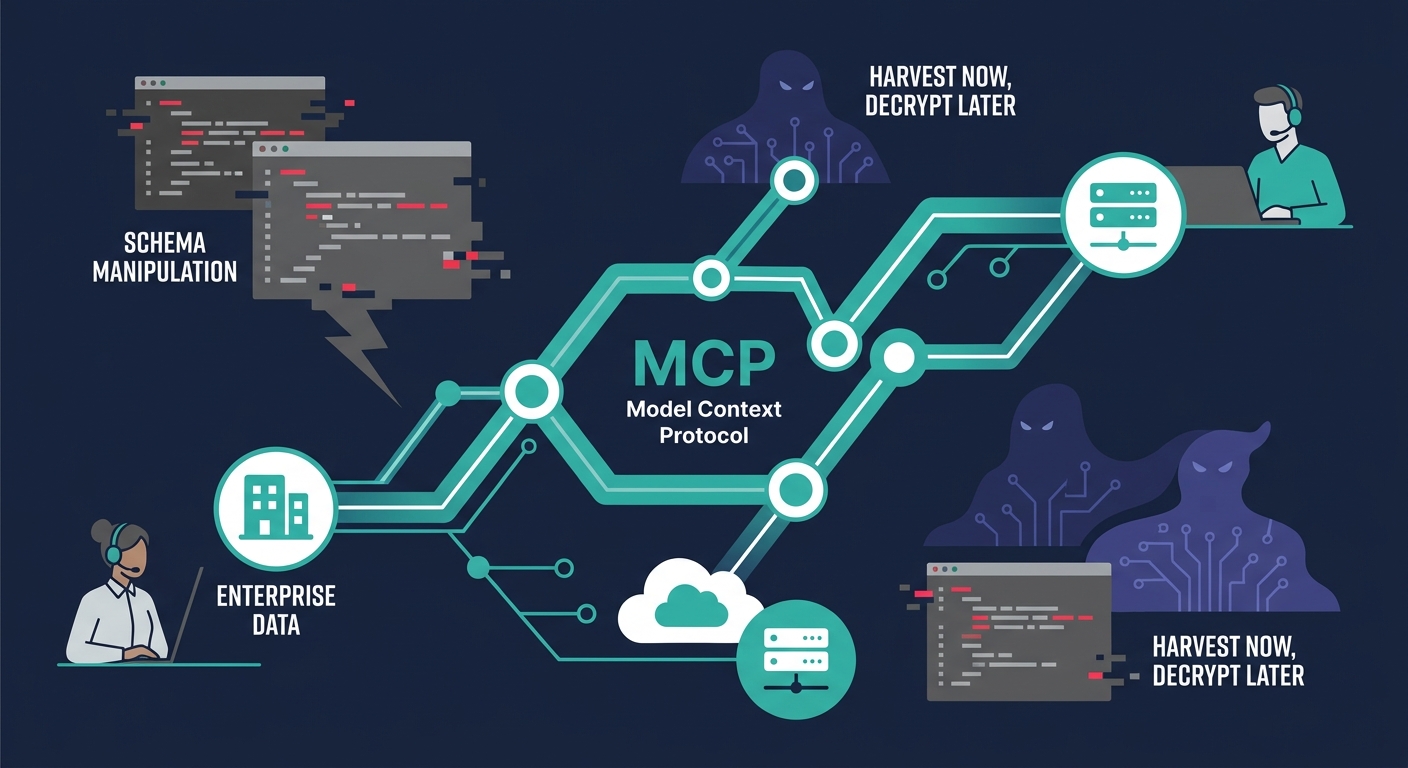
In the MCP world, the Host (your agent) talks to the Server (the tool). Without an intermediary, that connection is just a wide-open pipe. If an agent gets hijacked via prompt injection—a common enough occurrence—the attacker doesn't just get a chat response. They get a direct line to your internal systems. They can traverse that pipe, run commands, dump databases, or exfiltrate sensitive files.
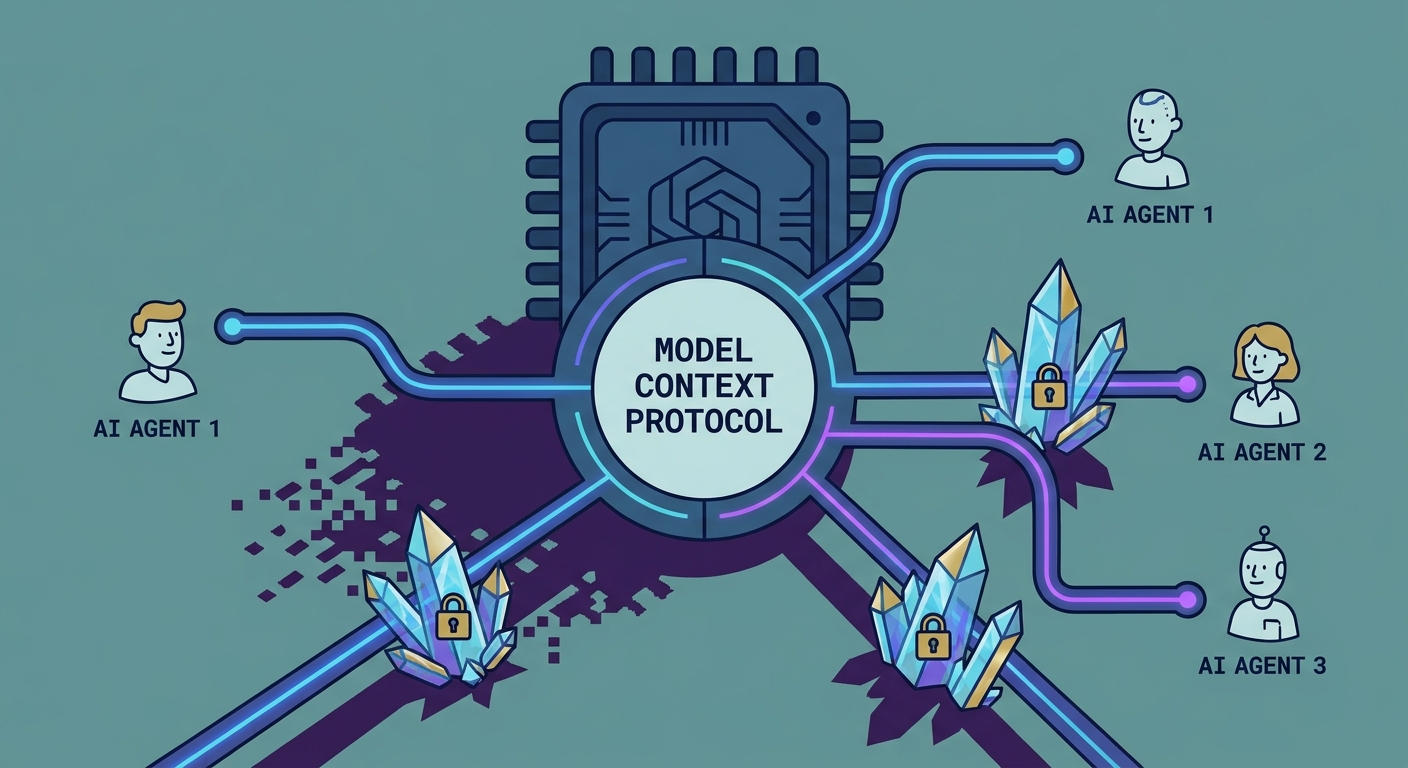
The "Human-in-the-Loop" is being stripped away. We are handing production credentials to code-executing agents. To keep the lights on, we need a "security tollbooth"—a Policy Enforcement Gateway that sits right in the middle of that MCP handshake.
What Are the Real-World Risks of Unchecked AI Agents?
This isn't just theory. If you leave your agents unchecked, you’re looking at three distinct flavors of disaster.
First, overbroad tokens. In legacy setups, we tend to provision agents with long-lived, "God-mode" API keys. If an attacker manipulates the agent's context window, they can piggyback on those tokens. Suddenly, an agent that was supposed to summarize a newsletter is deleting your production database or dumping an entire S3 bucket.
Second, lateral movement. Think of an agent acting as a bridge between your Jira instance and your GitHub repo. If that agent gets compromised, it can be coerced into leaking proprietary source code by querying the wrong tickets. Because the agent is "authorized" to access both systems, your firewall sees the traffic and thinks, "All good, just another day at the office." It’s invisible.
Third, the "living-off-the-land" attack. Agents are, by design, conduits for data. They summarize, move, and parse information. When one is compromised, it moves data out of your environment in a way that looks exactly like normal, legitimate system behavior. It’s the perfect camouflage.
The Blueprint: A Quantum-Resistant Policy Framework
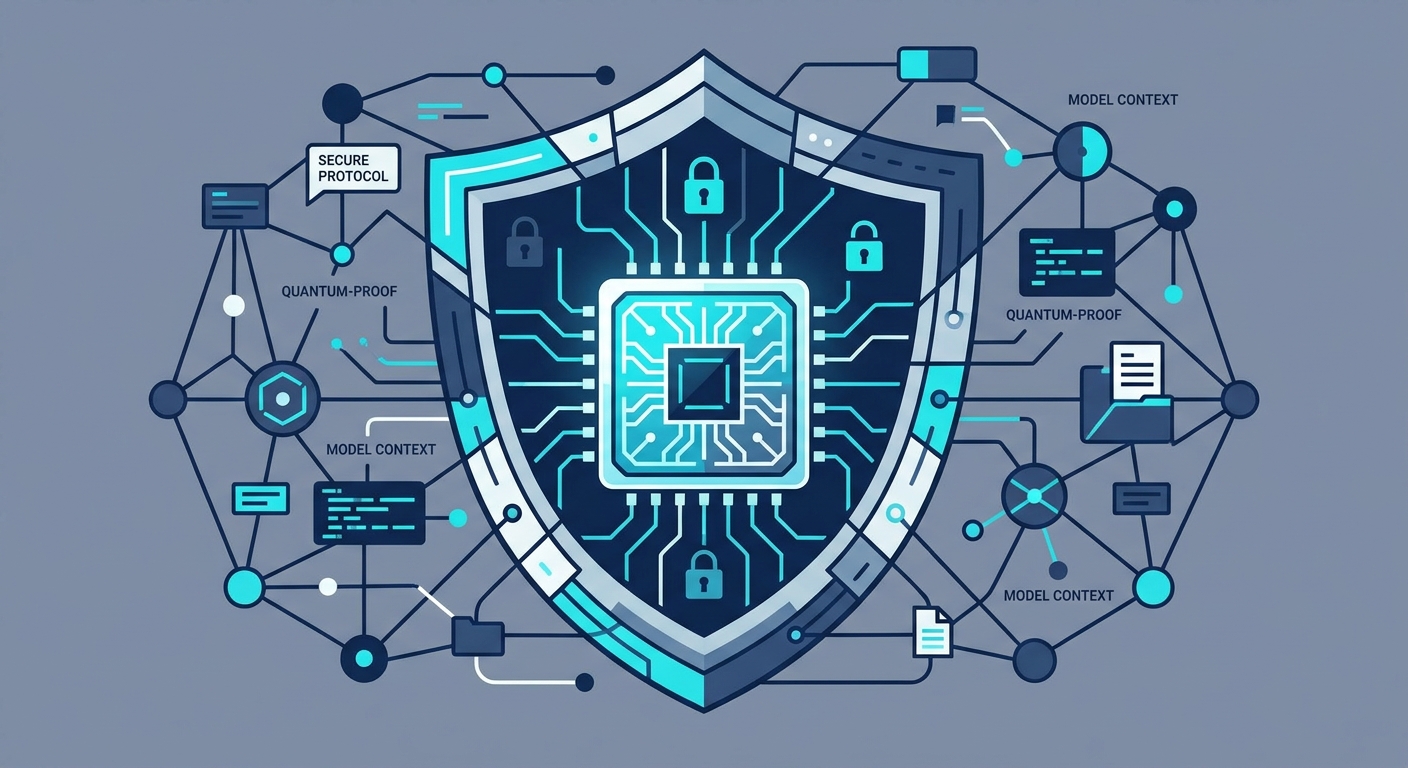
We need an infrastructure-level defense that isn't just fast—it needs to be quantum-proof. Here is how we build it.
Layer 1: Identity-Aware Transport TLS is fine for 2015, but it’s not enough for 2026. We need hybrid-cryptography. By merging classical algorithms with post-quantum primitives, we ensure that even if an attacker captures your traffic today, they can’t decrypt it in five years when a cryptographically relevant quantum computer finally comes online. By implementing Quantum-Resistant Zero Trust Architecture, we verify not just the agent’s signature, but the actual cryptographic provenance of every single request.
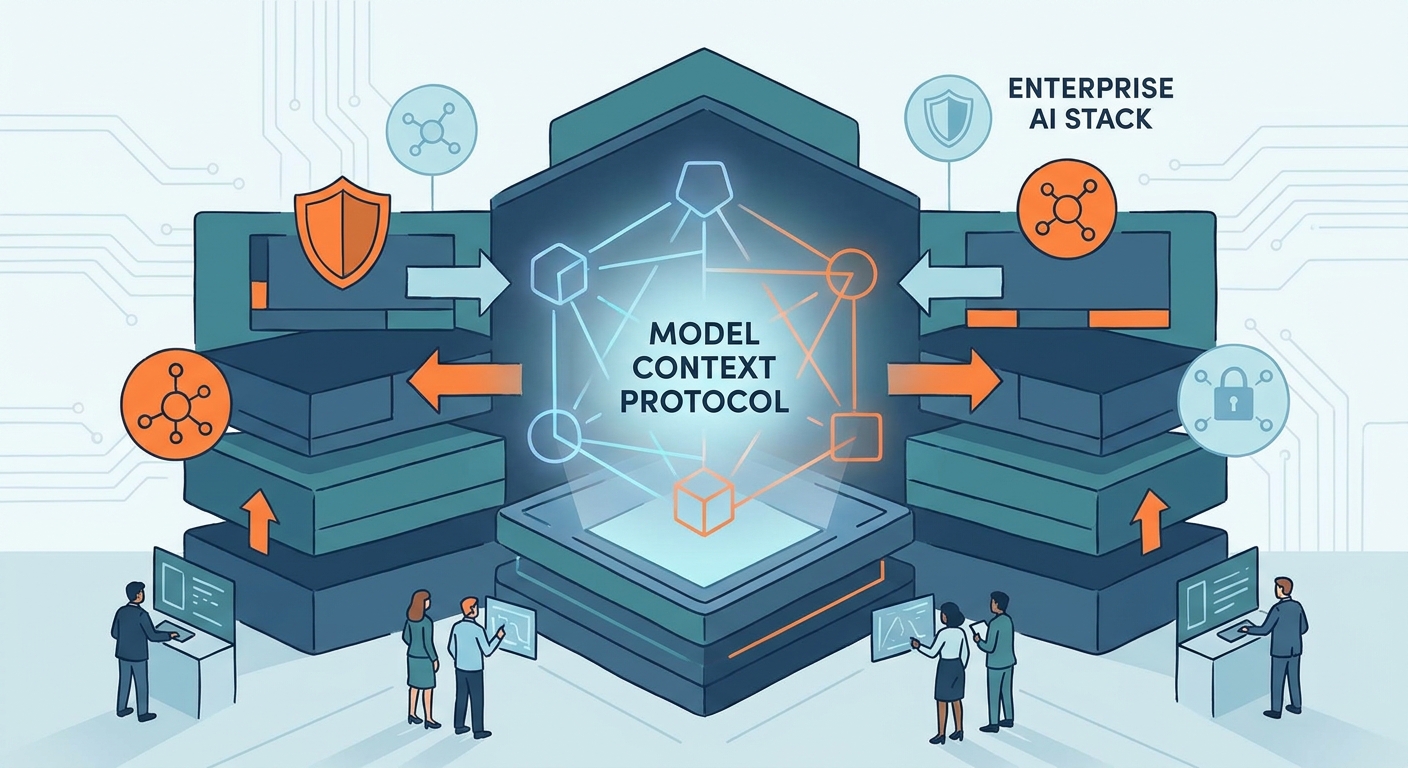
Layer 2: Infrastructure-Level Policy Enforcement Security must be enforced at the connector level, not the prompt level. If you rely on the agent to "ask nicely" for permission, you’ve already lost. By embedding policy enforcement into the infrastructure, we ensure that an agent can only call tools that match its specific, pre-defined role. We break this down further in our MCP Security Overview.
Layer 3: Policy-as-Code (PaC) Manual security is a death sentence. Permissions for AI agents should be version-controlled, auditable, and automated. If you treat security policies like code, you can run them through your CI/CD pipelines. An agent’s capabilities shouldn't depend on how well you wrote a prompt; they should be strictly constrained by the environment it lives in.
How Do We Defend Against "Store Now, Decrypt Later" (SNDL) Attacks?
SNDL is the boogeyman of the modern security stack, and it’s the primary reason we are pushing for NIST Post-Quantum Cryptography Standardization. Adversaries are currently hoarding encrypted traffic, waiting for the day they can break RSA and ECC.
For AI, this is catastrophic. Your proprietary model weights, your training data, your internal context—that’s high-value, long-term data. It doesn't lose value after a week. We have to adopt hybrid pipelines that layer PQC over our existing standards. It’s the only way to lock the door against both today's hackers and tomorrow's quantum machines.
Implementing Granular Policy: From Theory to Production
Theory is great, but how do we actually do this? Start with Least Privilege for Tools. Don't give an agent a "read/write" key. Give it access to one specific API endpoint with a tight, limited scope.
Next, use Dynamic Policy Injection. By passing real-time headers alongside your MCP requests, you can enforce context-aware access. Want to make sure an agent can only query a database if it's coming from your secure VPC? That’s how you do it.
As the CISA Post-Quantum Cryptography Guidance suggests, start by auditing your cryptographic inventory. Know where your agents store data and how they authenticate. If you integrate cryptographic proof of identity into every request, you take the power away from an attacker—even if they hijack the agent, they can't hijack the identity.
Incident Response in a Post-Quantum, Agentic World
Traditional forensics are useless here. In a normal breach, we look for human habits—strange login times or weird mouse movements. With AI, an attacker might use an agent to perform thousands of micro-actions. It looks like perfectly normal, high-speed automation.
We need Immutable Audit Trails. You need to capture the "reasoning" alongside the "action." If an agent runs a command, the log should show the prompt, the context, the policy check, and the result. If an agent that usually summarizes emails suddenly starts querying PII, the system shouldn't just log it—it should kill the process and revoke the credentials instantly.
Conclusion: Future-Proofing the AI Fabric
Security isn't something you bolt onto an AI project; it is the foundation. As agents get smarter and more capable, our guardrails have to keep pace. By shifting toward granular, policy-as-code governance and adopting quantum-resistant standards, we can ensure our infrastructure stays resilient. The future is agentic, but the security has to be human-led and machine-enforced.
Frequently Asked Questions
Why does Model Context Protocol (MCP) introduce new security risks?
MCP creates a standardized bridge between AI agents and production tools. Because these agents can execute code and perform actions autonomously, this bridge allows an AI to interact directly with sensitive systems—like databases or internal APIs—without the traditional human verification layers that previously acted as a buffer against malicious or accidental commands.
What is a "Store Now, Decrypt Later" (SNDL) attack in the context of AI?
An SNDL attack is a long-term threat where adversaries capture and store encrypted data traffic today, intending to decrypt it once quantum computers are powerful enough to break classical encryption (like RSA or ECC). For AI, this is a major risk because model weights, proprietary training data, and sensitive context windows have long-lasting strategic value that remains worth decrypting years after the initial capture.
How do I enforce granular access control on AI agents?
Granular access is achieved by implementing Role-Based Access Control (RBAC) and Attribute-Based Access Control (ABAC) specifically scoped to tool-use capabilities. Instead of giving an agent broad system access, you define specific policies that restrict the agent to certain API endpoints, methods, and data scopes, effectively turning the agent into a limited-privilege service account.
Is standard TLS enough to protect AI infrastructure in 2026?
Standard TLS is increasingly insufficient because it relies on classical cryptographic algorithms that are vulnerable to future quantum-enabled cryptanalysis. To protect long-term data, enterprises must transition to hybrid cryptography, which combines classical algorithms with NIST-standardized Post-Quantum Cryptography (PQC) algorithms to ensure data remains secure against both current and future threats.