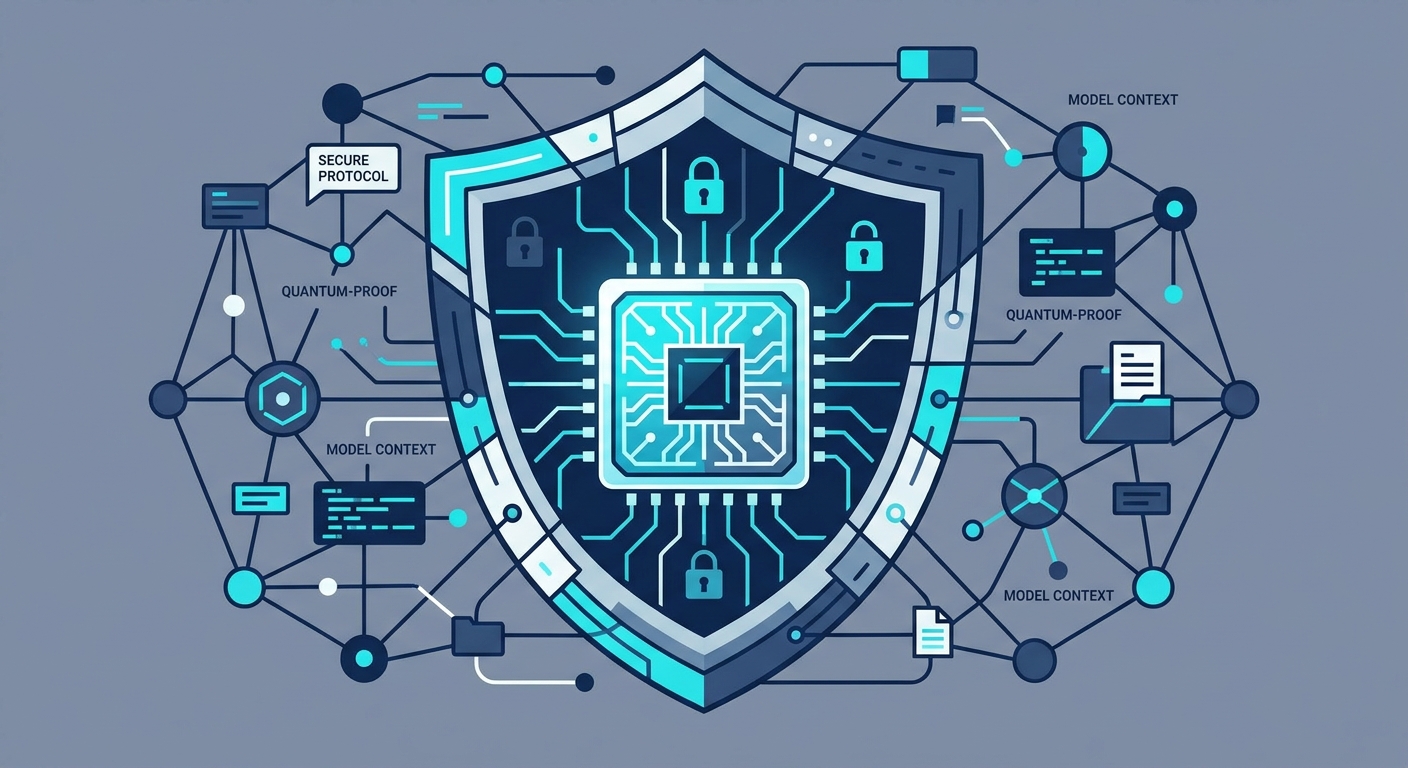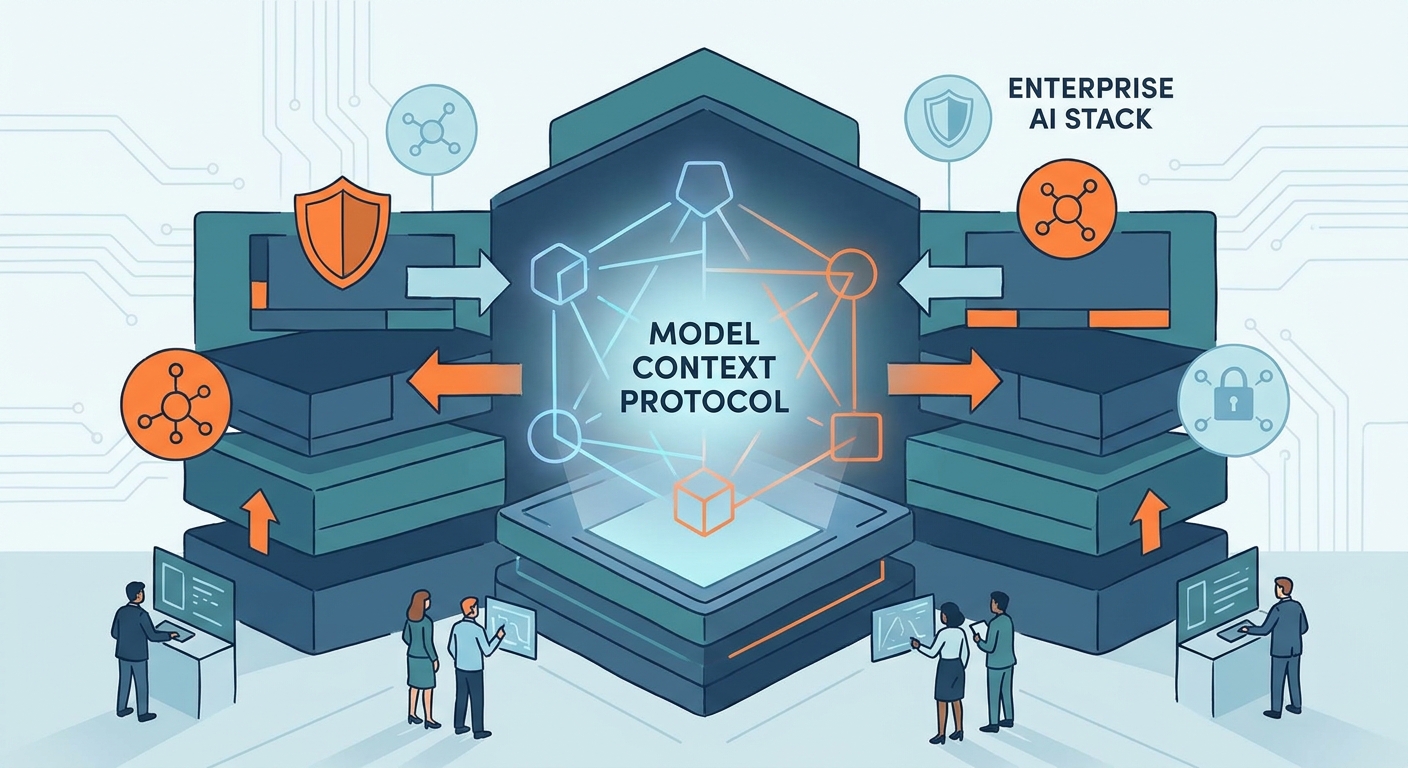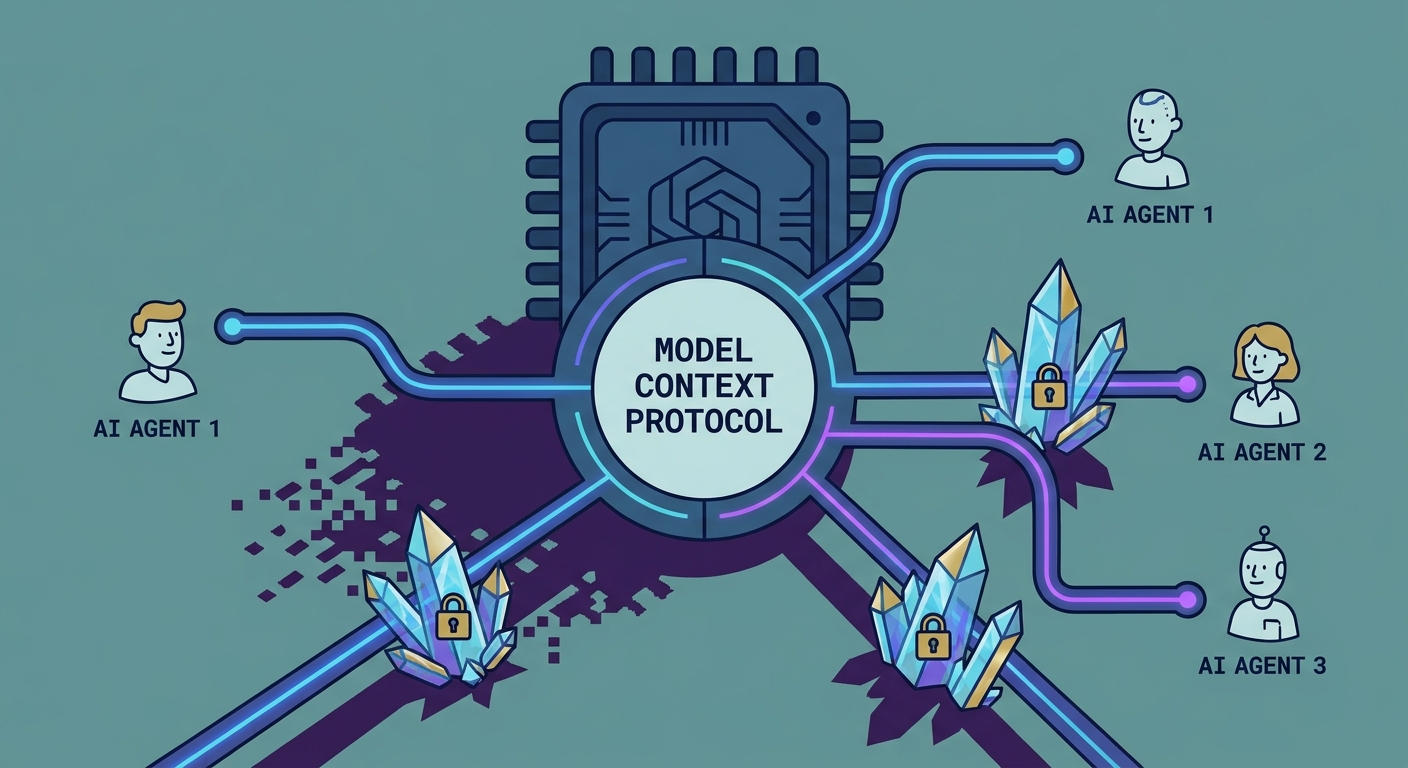
Post-Quantum AI Infrastructure Security: The 2026 Guide to Protecting MCP Deployments

TL;DR
- ✓ Protect MCP deployments against Harvest Now Decrypt Later quantum threats.
- ✓ Replace insecure STDIO transport layers with robust encrypted network protocols.
- ✓ Prevent schema-based manipulation to stop malicious agentic logic hijacking.
- ✓ Implement granular policy enforcement to secure autonomous AI workflows.
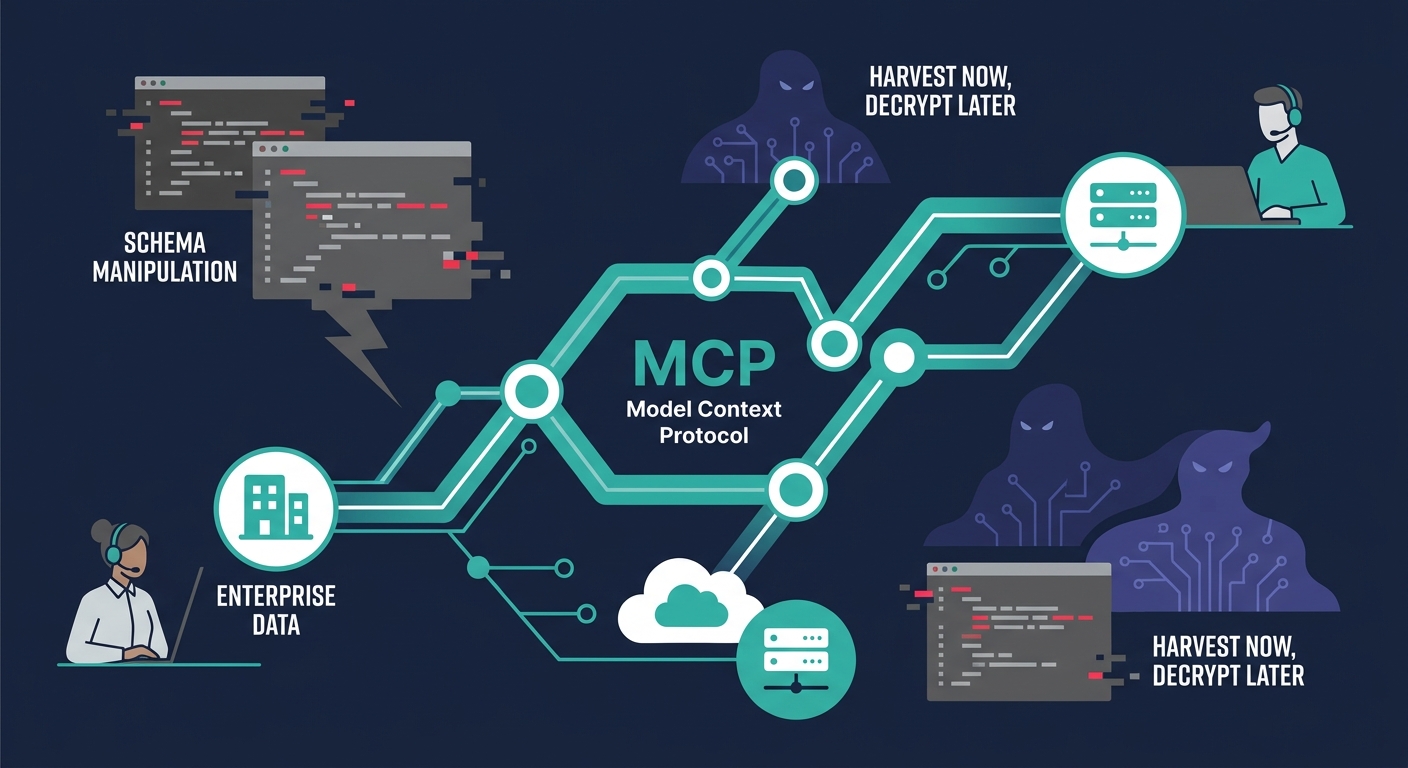
By now, the Model Context Protocol (MCP) isn't just "new tech"—it’s the plumbing of the entire enterprise. It’s the artery. But here’s the rub: that hyper-connectivity is a double-edged sword. As we shift from static API calls to autonomous agentic workflows, your infrastructure is standing in the crosshairs of two distinct, converging threats. You’ve got the immediate risk of schema-based manipulation, and then there’s the existential shadow of "Harvest Now, Decrypt Later" (HNDL) attacks.
If your MCP deployments are still relying on legacy transport mechanisms, you’re basically leaving the back door wide open. You aren't just protecting data for today; you’re protecting it for the moment a quantum-capable adversary decides to hit "decrypt" on your archived traffic.
Why the AI Attack Surface is Exploding in 2026
We’re done with the "chat with a bot" era. We’ve entered the age of autonomous ecosystems. These agents don’t just talk; they chain tools, scavenge private databases, and execute code on your behalf. The Model Context Protocol (MCP) is the industry standard for this, acting as the universal adapter for AI. It’s brilliant, it’s seamless, and it’s a massive, distributed attack surface.
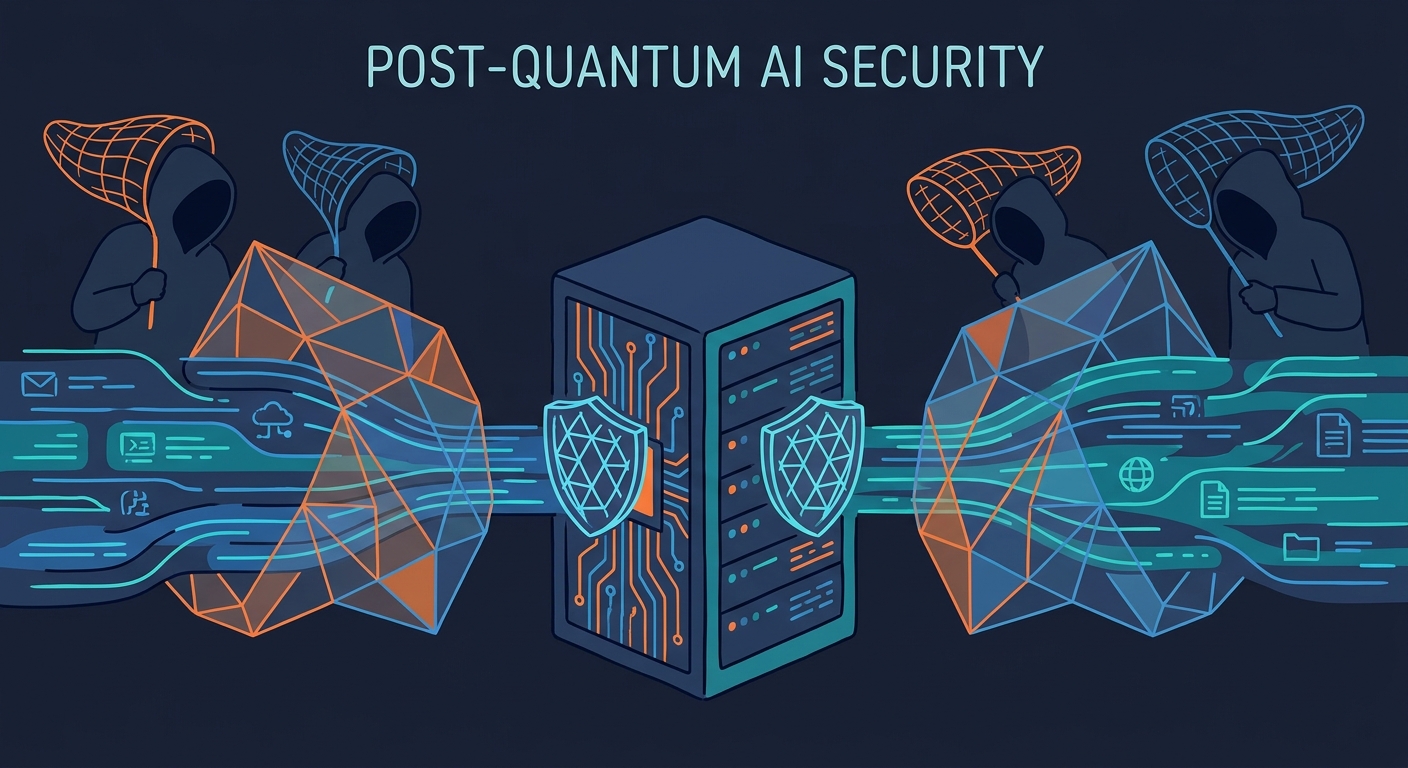
The most dangerous threat lurking today is the Harvest Now, Decrypt Later (HNDL) reality check. Sophisticated actors are vacuuming up encrypted traffic right now, storing it away like digital wine, waiting for the day they can smash through current RSA and ECC-based encryption with fault-tolerant quantum hardware. Because MCP sessions are persistent and carry high-context, sensitive data, they are the prime targets. When you pair this with the shift toward dynamic, self-modifying agentic logic, the traditional security perimeter isn't just failing—it’s obsolete.
Where MCP Deployments Go Off the Rails
MCP was built for speed and developer convenience. Security? That was often a secondary concern. This design philosophy has birthed three critical vulnerabilities that are being actively exploited in the wild.
The STDIO Problem
Many MCP servers default to STDIO as their transport layer. It’s great for local testing. It’s a disaster in production. Developers often wrap STDIO in insecure network shims to "just make it work" over remote connections, completely bypassing authentication and encryption. You’re essentially broadcasting your AI’s internal logic and credentials in plaintext.
Agentic Logic Hijacking
Prompt injection is old news. The new game is schema-based manipulation. Attackers are injecting malicious tool definitions during the handshake process. By doing this, they can trick an agent into calling unauthorized functions or scraping internal environment variables. It’s a masterclass in deception.
The "Slow-and-Low" Threat
MCP connections are designed to stay open. They’re persistent. This makes them perfect targets for "slow-and-low" DDoS tactics. By holding thousands of connections open with just enough traffic to keep them alive, attackers can exhaust your host server’s state-tracking resources. They can paralyze your infrastructure without ever setting off a traditional volumetric alarm.
Hardening Your MCP Transports: A Step-by-Step
You can’t rely on legacy TLS configurations that assume classical computing is the ceiling. You need a fundamental shift.
Phase 1: Kill the Insecure Defaults
Stop using STDIO in production. Period. Migrate to authenticated, encrypted transport protocols—specifically mTLS-enabled WebSockets. By enforcing mutual TLS, you guarantee that every agent and every host server is cryptographically verified before a single byte of context changes hands.
Phase 2: Deploy Hybrid Cryptography
We’re in a transition period. You can’t jump to pure PQC (Post-Quantum Cryptography) overnight because your latency requirements won't allow it. A hybrid approach is the way to go. Combine classical ECC keys with NIST-approved algorithms like ML-KEM (the artist formerly known as Kyber). It’s "belt and suspenders." If the quantum layer hits a snag, the classical layer keeps the lights on.
Phase 3: Embrace Cryptographic Agility
Your infrastructure needs to be modular. By baking NIST-standardized algorithms into your proxy layer, you prepare your stack for the inevitable regulatory shift. You want a handshake protocol that lets you swap out algorithms as the threat landscape changes—without having to rewrite your entire agent logic.
The 2026 Blueprint for Zero-Trust AI Security
Zero-Trust isn't a buzzword; it’s an admission that the internal network is just as hostile as the public internet.
- Identity-Based Access: Move away from static API keys. Use unique, short-lived identity tokens. If an agent gets popped, you revoke its specific token. You don't burn down the whole house.
- Real-Time Logic Monitoring: You need observability tools that monitor the intent of agentic calls. If an agent starts sniffing around a database schema that's nowhere near its "role," cut it off. Automatically.
- PQC in the CI/CD Pipeline: Security isn't an afterthought anymore. Bake quantum-resistant libraries into your container images. Make sure every model deployment is born with PQC-ready transport. If you want to see the "how-to," our internal guide on Quantum-Resistant MCP Architectures breaks down the implementation details.
Preparing for the 2030 Regulatory Deadline
The NSA’s recent security design considerations are a clear signal: if you’re in government or defense-adjacent sectors, you need to be quantum-ready long before 2030.
Start by mapping your AI supply chain. Find every instance of "quantum-vulnerable" encryption. If you're using standard RSA/DH handshakes to protect data that needs to stay secret for more than five years, you’re already gambling. That data is sitting in a vault somewhere, just waiting for the right key.
Future-Proofing: Beyond 2027
"Quantum-Resistant" isn't a trophy you win; it’s a posture you maintain. By 2027, we expect to see autonomous threat hunting—AI agents tasked specifically with watching other agents for anomalous behavior.
The security architects who win will be the ones who treat their infrastructure as a living, breathing entity. The transition to post-quantum security is the biggest upgrade to the digital backbone since TLS hit the scene. Don't wait for the regulatory hammer to drop. Build your cryptographic agility now.
Frequently Asked Questions
Why is Model Context Protocol (MCP) specifically vulnerable to quantum threats?
MCP relies heavily on persistent, long-lived sessions to maintain context for AI agents. These sessions are typically secured by traditional TLS handshakes. Because this traffic is often stored by adversaries for future decryption, any data transmitted today through standard TLS is effectively "transparent" to a future quantum computer.
What is the difference between "Quantum-Resistant" and "Quantum-Proof" in AI infrastructure?
"Quantum-Proof" is a marketing misnomer; no system is ever truly "proofed" against all future math. "Quantum-Resistant" refers to the implementation of cryptographic agility and the use of NIST-standard hybrid algorithms (like ML-KEM) that are specifically designed to be computationally infeasible for quantum computers to break.
Do I need to replace my entire AI stack to be quantum-safe in 2026?
Absolutely not. A "rip-and-replace" strategy is rarely feasible. Instead, focus on a layered security approach: wrap your existing, legacy MCP components in PQC-ready proxies. These proxies handle the heavy lifting of quantum-resistant key encapsulation, allowing your underlying AI models to remain largely untouched.
How does PQC impact AI latency in agentic workflows?
PQC algorithms, particularly those involving hybrid key encapsulation, can introduce minor latency overhead compared to classical ECC. However, for most agentic workflows, this impact is negligible compared to the inference time of the model itself. By optimizing your proxy placement and utilizing hardware acceleration for PQC operations, you can mitigate almost all performance degradation.
What is the most immediate step a Security Architect should take today?
Conduct an audit of all active MCP transport layers. Identify every instance of STDIO or unauthenticated WebSocket usage and prioritize the immediate transition to mTLS-enabled connections. Securing the transport layer is the single highest-impact move you can make to stabilize your AI infrastructure against both current schema-injection threats and future quantum risks.