How to Implement Quantum-Proof Cryptography for Model Context Protocol (MCP)

TL;DR
- ✓ Quantum computers threaten AI data security via Harvest Now Decrypt Later tactics.
- ✓ Current MCP deployments relying on elliptic-curve cryptography are vulnerable to Shor's algorithm.
- ✓ Adopting cryptographic agility allows for modular security updates without full re-architecture.
- ✓ Enterprises must decouple transport layers from crypto libraries to ensure future-proof AI communication.
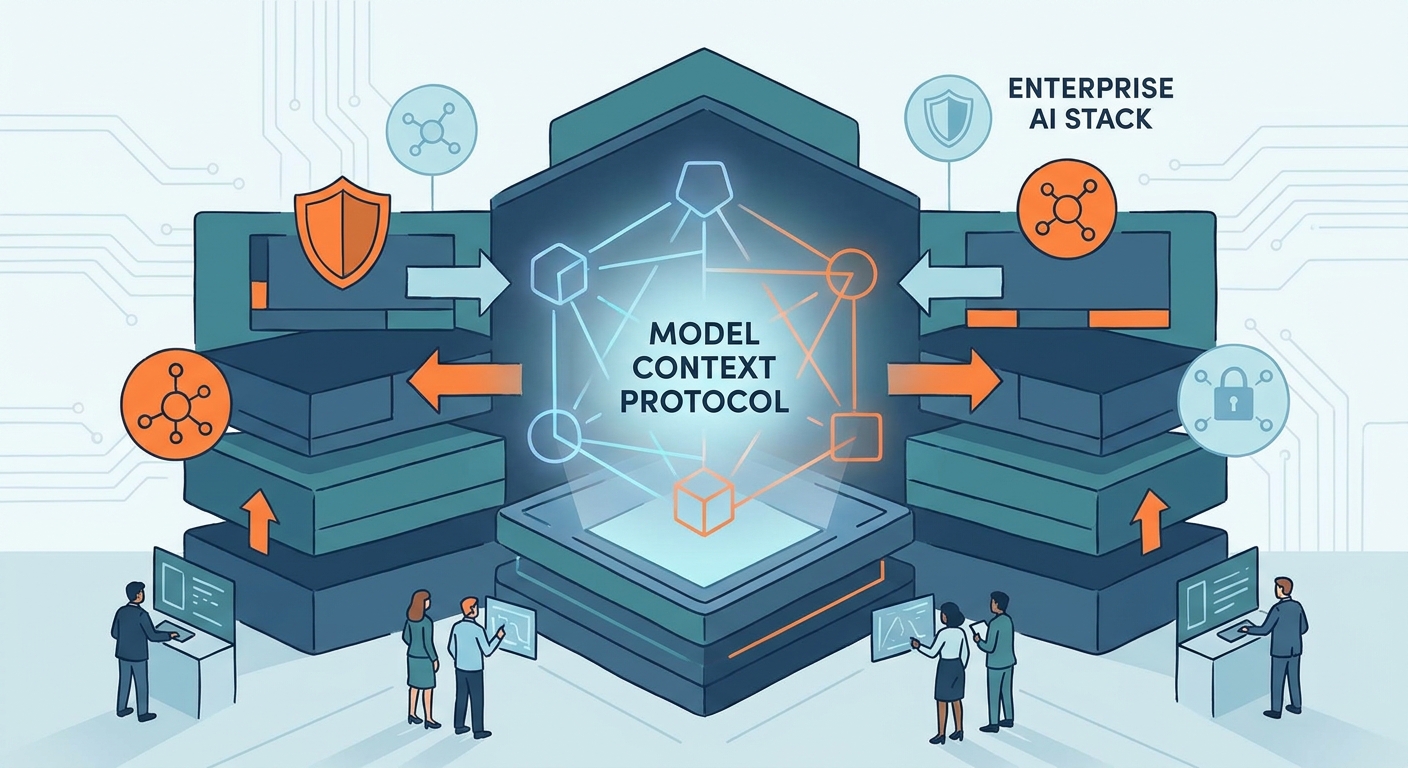
Quantum computing isn't some sci-fi threat lurking in the next century. It’s a ticking clock. If your enterprise pipeline handles sensitive agentic data, ignoring the quantum threat to your Model Context Protocol (MCP) isn't just an oversight—it’s professional negligence.
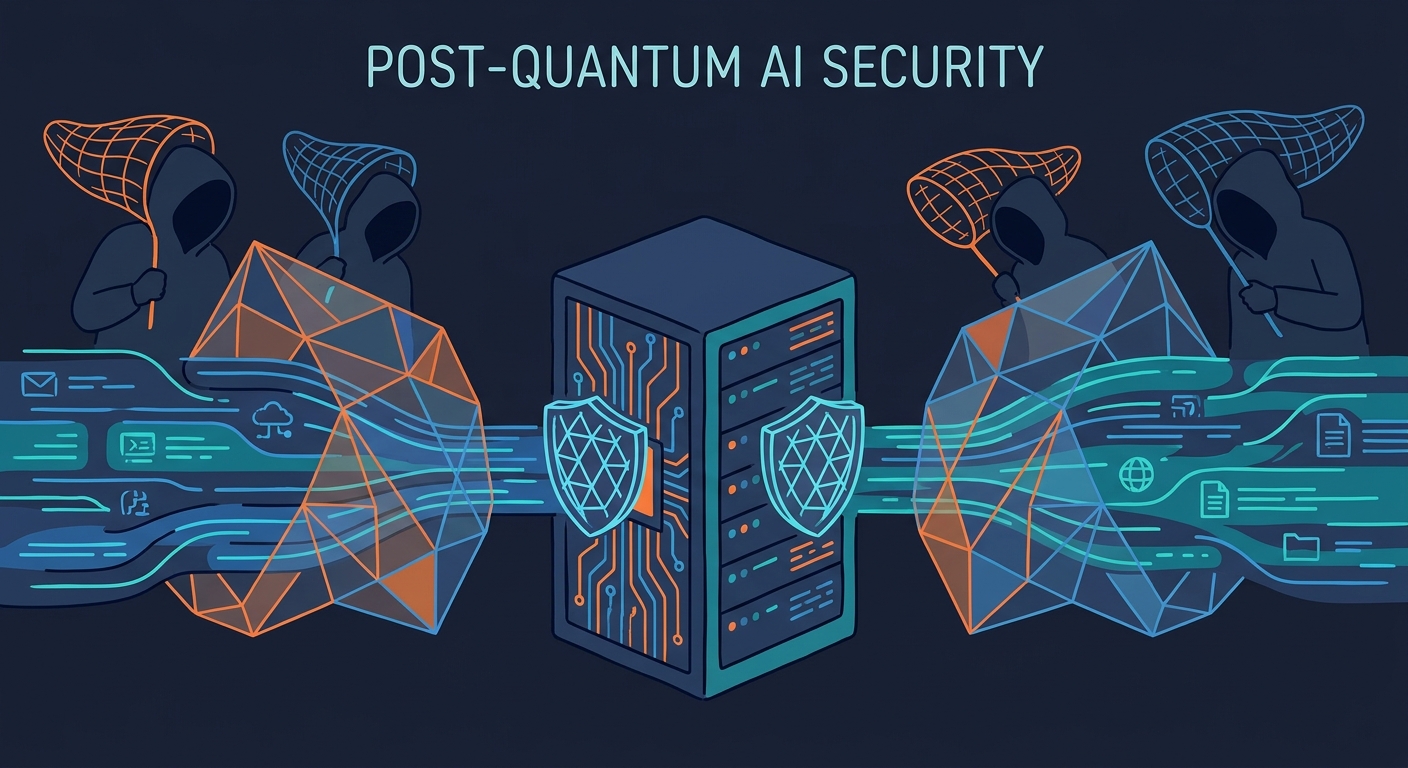
MCP is the nervous system of modern AI. It’s what allows your models to talk to your databases, your proprietary code, and your most private business logic. Right now, most of this traffic is wrapped in standard TLS 1.3. That sounds secure, right? It isn't. You’re leaving your intellectual property wide open to the "Harvest Now, Decrypt Later" (SNDL) tactic. Adversaries are busy scooping up your traffic, hitting "save," and waiting for the day a Cryptographically Relevant Quantum Computer (CRQC) comes online to unlock everything they’ve stolen.
The Ground Zero of AI Data Risk
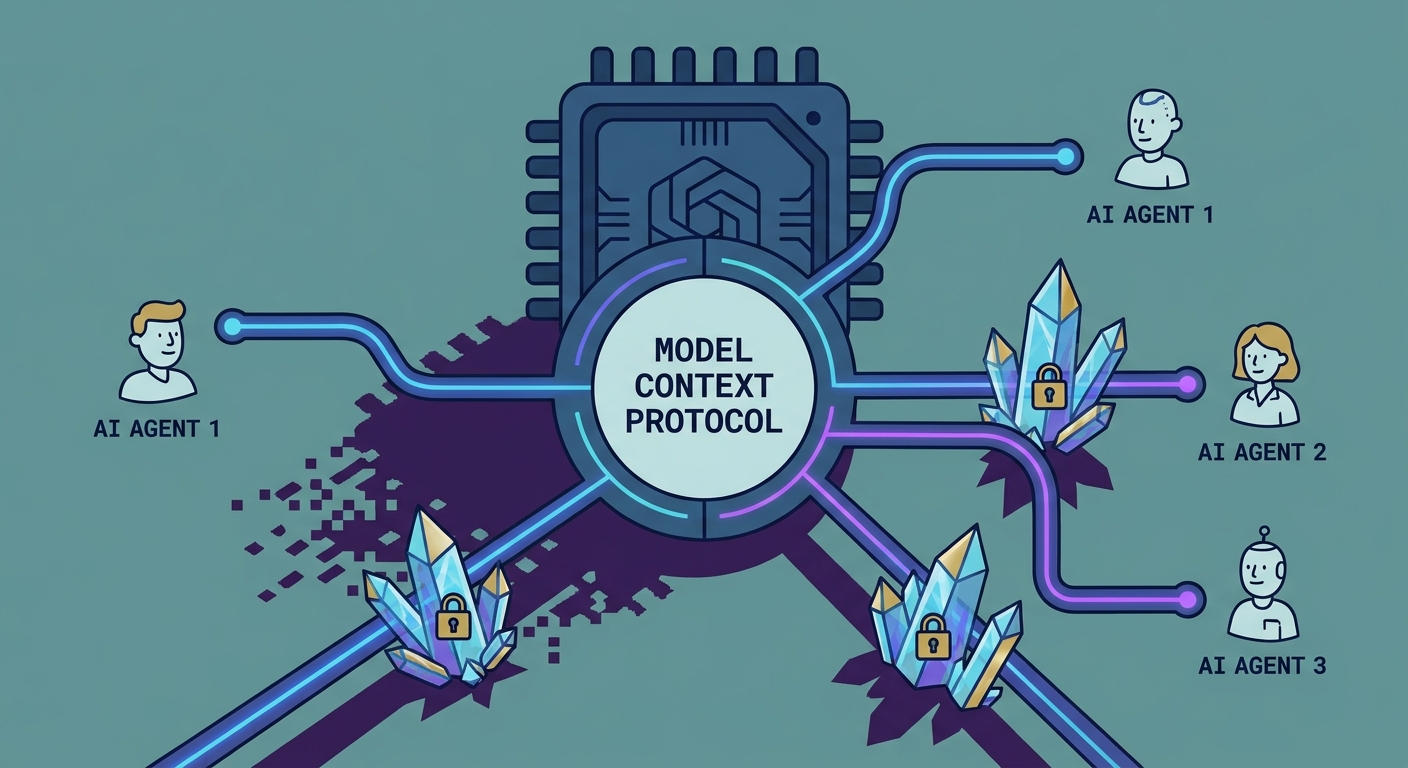
The beauty of MCP is its utility. It bridges the gap between powerful AI models and your siloed data. But that utility is a double-edged sword. By design, an MCP server acts as a funnel, aggregating high-value data points into a single, continuous stream.
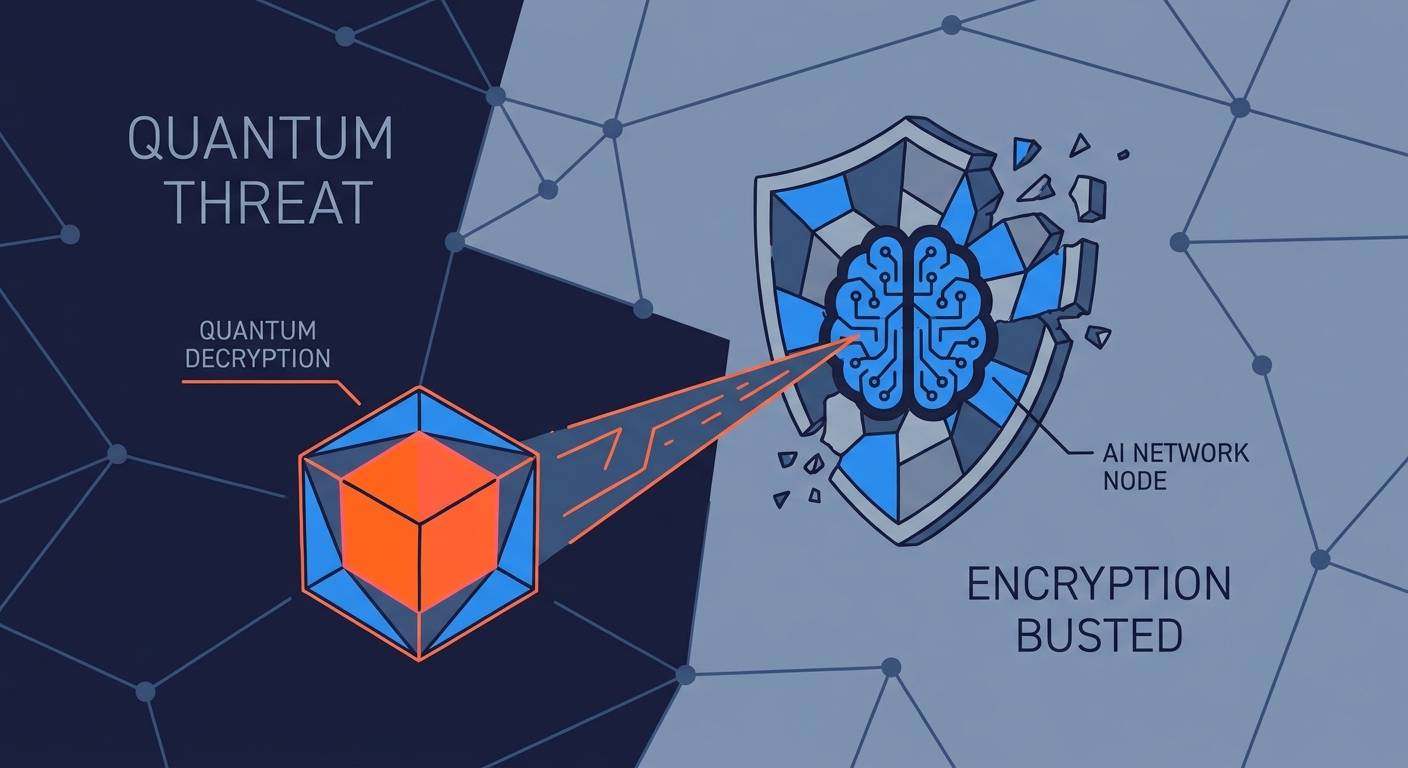
When this data travels, it’s usually guarded by elliptic-curve cryptography. It’s great against hackers with laptops, but it’s no match for Shor’s algorithm. A sufficiently powerful quantum computer can chew through those keys in seconds.
The Cloud Security Alliance has been sounding the alarm on SNDL for a while now. They’ve noted that state-level actors are already hoarding data with a long shelf life—think trade secrets, M&A roadmaps, and core product architecture. If your MCP traffic contains anything that needs to stay secret for the next three to five years, consider it compromised. Right now.
The Architectural Bottleneck
We’ve boxed ourselves in. Most security stacks for AI orchestration are rigid, brittle structures. They rely on TLS/SSL handshakes with hard-coded encryption algorithms. When you bake your security into the transport layer, changing it is a nightmare. It’s not just a patch; it’s a total re-architecture.
We’ve spent years prioritizing speed, assuming that our encryption would hold forever. But as agent-to-agent communication explodes, we’re generating massive, searchable databases of metadata and context. Every bit of that is being recorded by bad actors. We need to stop thinking in static, monolithic terms and start building for "Cryptographic Agility"—a concept we dig into in our guide on Cryptographic Agility for Enterprise AI.
Achieving Cryptographic Agility
What does agility actually mean? It means you can swap out your security protocols without tearing down your entire application. For MCP, you need to decouple your transport layer from your crypto library. Stop hard-coding. Start modularizing.
Think of it like swapping tires on a race car while it’s moving. When you build for agility, you aren't just picking an algorithm; you’re building a pipe that can handle updates as the NIST Post-Quantum Cryptography Standards mature. When a better, faster, or more secure algorithm drops, your MCP server should just need a configuration tweak. Not a full rewrite.
The Hybrid Strategy: Layering NIST-Standardized PQC
Let’s be pragmatic. Don't throw away classical encryption. Augment it.
The "Hybrid" approach is your best bet. You layer NIST-standardized algorithms like ML-KEM (formerly Kyber) for key encapsulation and ML-DSA (formerly Dilithium) for digital signatures over your existing ECC infrastructure. It’s a fail-safe. If the PQC layer has a hidden flaw, your classical layer still holds the line against traditional attacks. If a quantum computer cracks the classical layer, your PQC layer remains standing. It’s defense-in-depth, plain and simple, and it’s the only way to meet the 2026 Executive Order requirements.
Implementation Guide: Integrating PQC into MCP
To secure your MCP server, you’ll want to wrap your current transport layer with an Open Quantum Safe (OQS) provider. The liboqs library is the gold standard here. It provides the building blocks for lattice-based cryptography you can actually use.
The diagram below shows how a hybrid handshake works. Both classical and quantum-resistant keys contribute to the final session secret.
By adding this encapsulation layer, you’re effectively slamming the door on both current threats and the future quantum-based decryption of your traffic.
The Performance Impact Myth
Engineers worry that lattice-based cryptography will turn their responsive AI agents into sluggish, lagging messes. It’s a myth. Yes, the math is more complex, but the computational overhead of algorithms like ML-KEM is tiny compared to the time it takes for an LLM to generate a single token or for a packet to bounce across the network.
Sure, the packet size for a hybrid handshake is a bit beefier than pure ECC, but the end-user won't notice a thing. If you optimize your PQC-enabled MCP traffic—as we show in our Quantum-Resistant AI Infrastructure Guide—you get near-zero latency overhead and a security posture that’s lightyears ahead of the competition.
Future-Proofing for 2026 and Beyond
The 2026 Executive Order isn't a suggestion; it’s a deadline for critical infrastructure. If you’re building with MCP, you’re on the clock. You need to treat your security stack as a living thing.
Keep a close eye on NIST updates. Right now, ML-KEM and ML-DSA are the pillars, but the field is moving fast toward stateful hash-based signatures and other innovations. By going modular today, you’re buying yourself the freedom to adapt. Stay compliant. Stay secure. And stay ready for whatever the next decade of AI throws at you.
Frequently Asked Questions
Is my MCP traffic at risk if I don't have a quantum computer attacking me today?
Yes. Due to the "Store Now, Decrypt Later" (SNDL) threat, adversaries are currently capturing encrypted traffic that they cannot yet read. They are storing this data in massive data centers, waiting for the day when quantum computing technology is mature enough to decrypt it, rendering your historical data exposed.
Does quantum-proof cryptography slow down my AI agent's response time?
No. While lattice-based algorithms involve more complex math than traditional elliptic curves, the computational overhead is minimal. In the context of an MCP interaction, where the bottleneck is typically the LLM model inference time or network latency, the added milliseconds for a quantum-safe handshake are effectively unnoticeable.
Do I need to rewrite my entire MCP application to be quantum-safe?
Not necessarily. By prioritizing cryptographic agility, you can implement a wrapper or a transport-layer proxy that handles the hybrid key exchange. This allows you to upgrade your security posture without needing to refactor the underlying application logic or the MCP server itself.
Which NIST algorithms should I prioritize for my MCP implementation?
You should prioritize ML-KEM (FIPS 203) for key encapsulation and ML-DSA (FIPS 204) for digital signatures. These are the primary building blocks recommended by NIST and are widely supported by the OQS (Open Quantum Safe) ecosystem, making them the most practical choices for 2026-compliant infrastructures.
How do I start testing PQC in my development environment?
The best way to start is by integrating liboqs wrappers into your local MCP test environment. This allows you to simulate a hybrid handshake and observe the impact on your specific traffic patterns before pushing changes to your staging or production environments.