Securing the Model Context Protocol: A Strategy for Quantum-Proof Cryptography

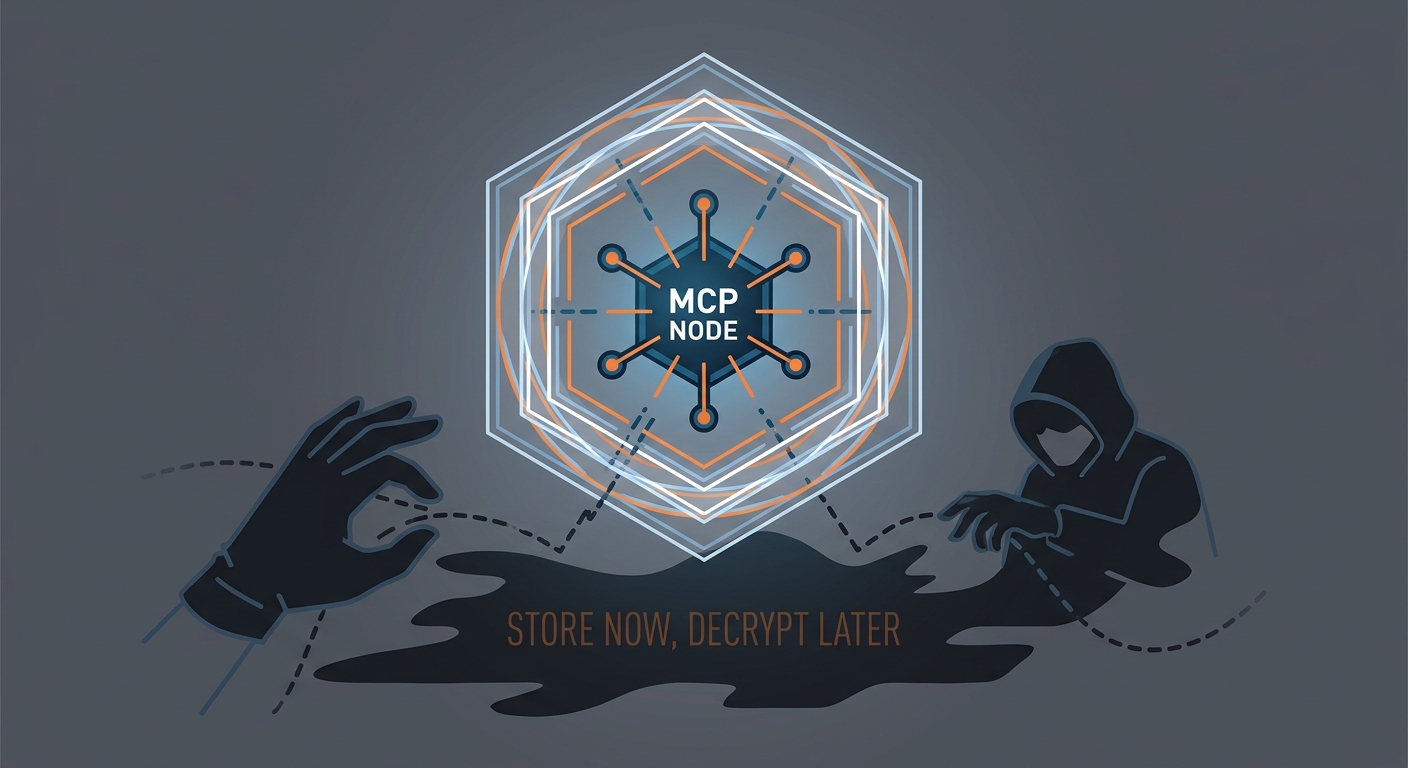
TL;DR
- ✓ Identify the critical risk of Store Now Decrypt Later attacks on AI data.
- ✓ Understand why classical TLS encryption fails against future quantum computing capabilities.
- ✓ Learn actionable strategies to secure your Model Context Protocol infrastructure today.
- ✓ Discover why MCP traffic requires more robust protection than standard web API calls.
The Model Context Protocol (MCP) is the glue holding the modern AI enterprise together. It’s what lets your agents talk to your codebases, your databases, and your internal wikis. But this seamless connectivity comes with a massive, invisible target on its back: the "Store Now, Decrypt Later" (SNDL) threat.
State-sponsored actors and high-end cyber-criminals are currently vacuuming up encrypted traffic at scale. They aren't trying to break it today. They’re betting that in a few years, they’ll have a cryptographically relevant quantum computer (CRQC) that can crack these vaults like an egg.
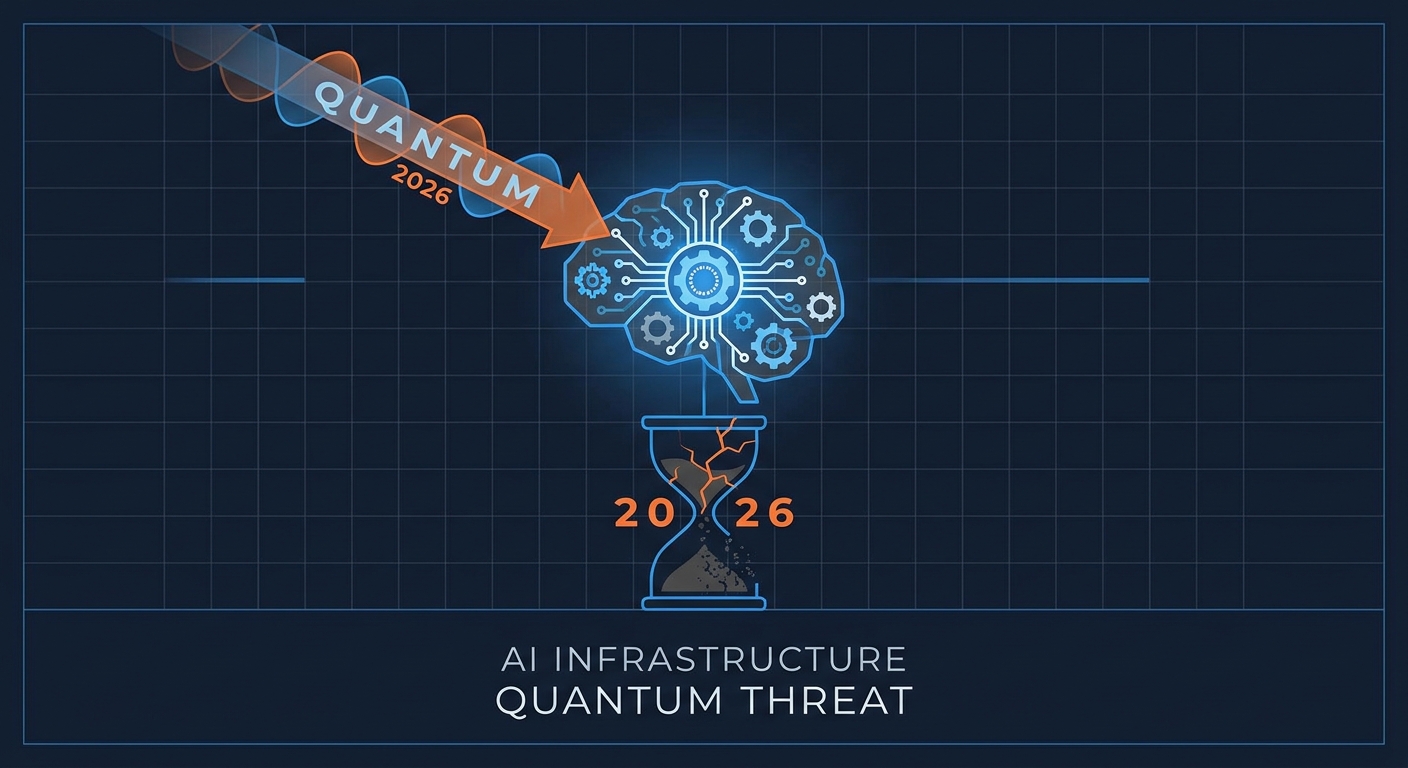
If your MCP traffic is carrying sensitive strategy, PII, or proprietary code, you’re already behind. Securing your MCP infrastructure isn't some sci-fi project for 2030. It’s a make-or-break requirement for any enterprise AI deployment in 2026.
Why the Model Context Protocol is Uniquely Vulnerable
To get why this is a problem, you have to look at what’s actually moving through your MCP servers. Standard web traffic is usually transient—a quick API hit here, a webpage refresh there.
MCP traffic is different. It’s the "memory" of your AI. It’s moving context-heavy payloads, internal policy documents, and high-stakes analytical queries. According to Anthropic's MCP Documentation, the protocol is designed to provide seamless access to local and remote resources. In plain English? It’s centralizing your company’s most valuable assets into one addressable interface.
Current TLS/SSL setups—the stuff protecting your MCP transport—rely on math problems like integer factorization. These are the Achilles' heel of classical encryption. Once a sufficiently powerful quantum computer arrives and runs Shor’s algorithm, those mathematical locks will pop open. Any traffic that was intercepted and stored today will become an open book.
The Quantum Threat: The Reality of "Store Now, Decrypt Later"
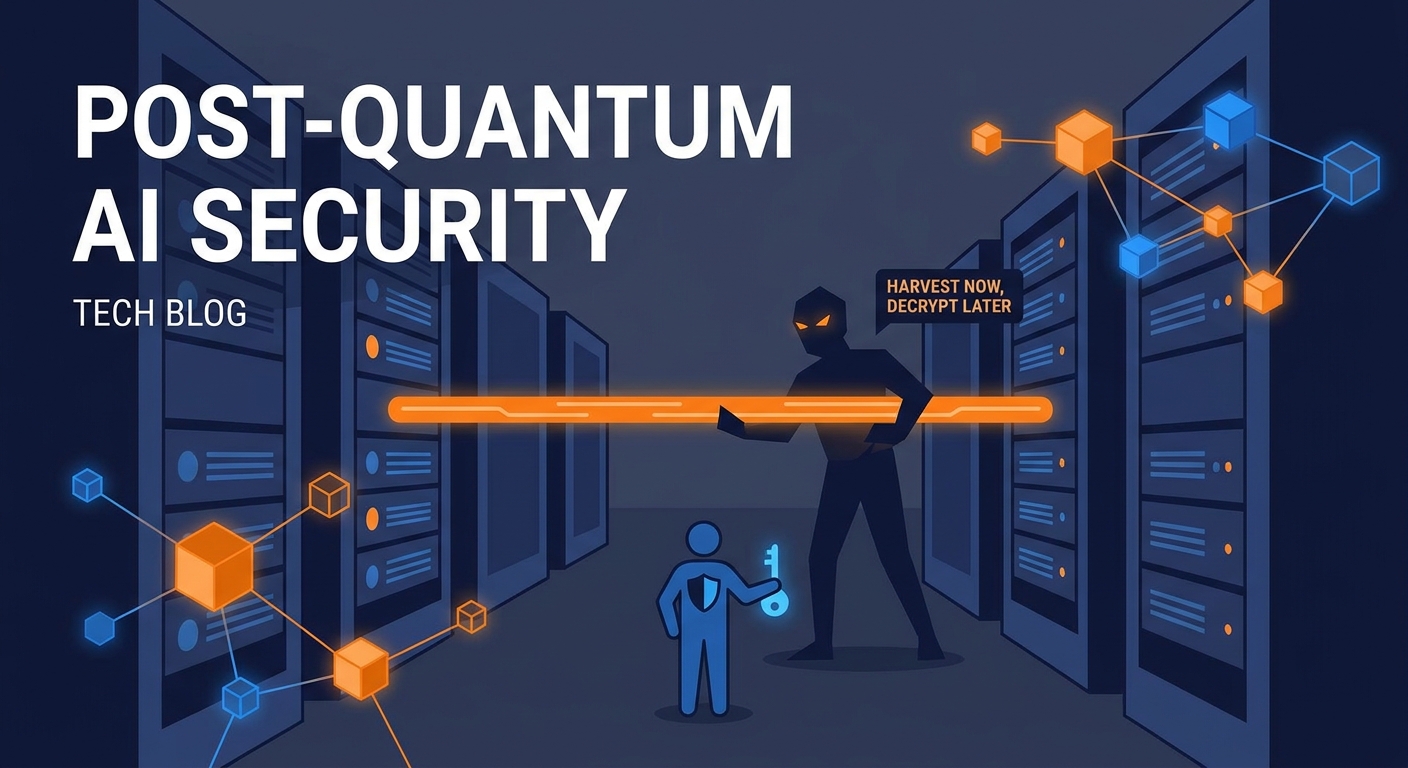
The SNDL threat model is brutally simple. Attackers don't need a quantum computer right now. They just need a network tap and a lot of hard drive space. By capturing the encrypted packets moving between your MCP clients and servers, they’re building a permanent, decryptable record of your intellectual property.
As the diagram shows, once that quantum horizon hits, the "Quantum Vault" opens. Everything from your API keys to your secret business logic is exposed. This is exactly why the industry is pivoting toward proactive resilience. As outlined in the Post-Quantum AI Infrastructure Guide, failing to plan for this shift is like giving a thief the keys to your vault and hoping they just don't feel like opening it.
Achieving Cryptographic Agility
You don't need to reinvent the wheel or build a "quantum-safe" protocol from scratch. You need "cryptographic agility."
Think of it like an upgradeable lock on your front door. Cryptographic agility means you can swap out your encryption algorithms without tearing down your entire MCP transport layer. Modern security can’t be a static, monolithic block. It has to be modular, so you can pull out an old, compromised standard and snap in a new, NIST-approved one as the threat landscape evolves.
If your AI infrastructure is built on rigid, hard-coded foundations, you’re looking at a painful, expensive "rip-and-replace" cycle the moment quantum computing scales. By decoupling your transport security from the underlying algorithms, you keep your MCP deployment robust, compliant, and—above all—secure.
Implementing Post-Quantum Cryptography (PQC) for MCP
The smartest path forward is a hybrid approach. Don't ditch classical encryption; it still works great against current-day threats. Instead, layer it with NIST-standardized PQC algorithms like ML-KEM (the tech formerly known as Kyber).
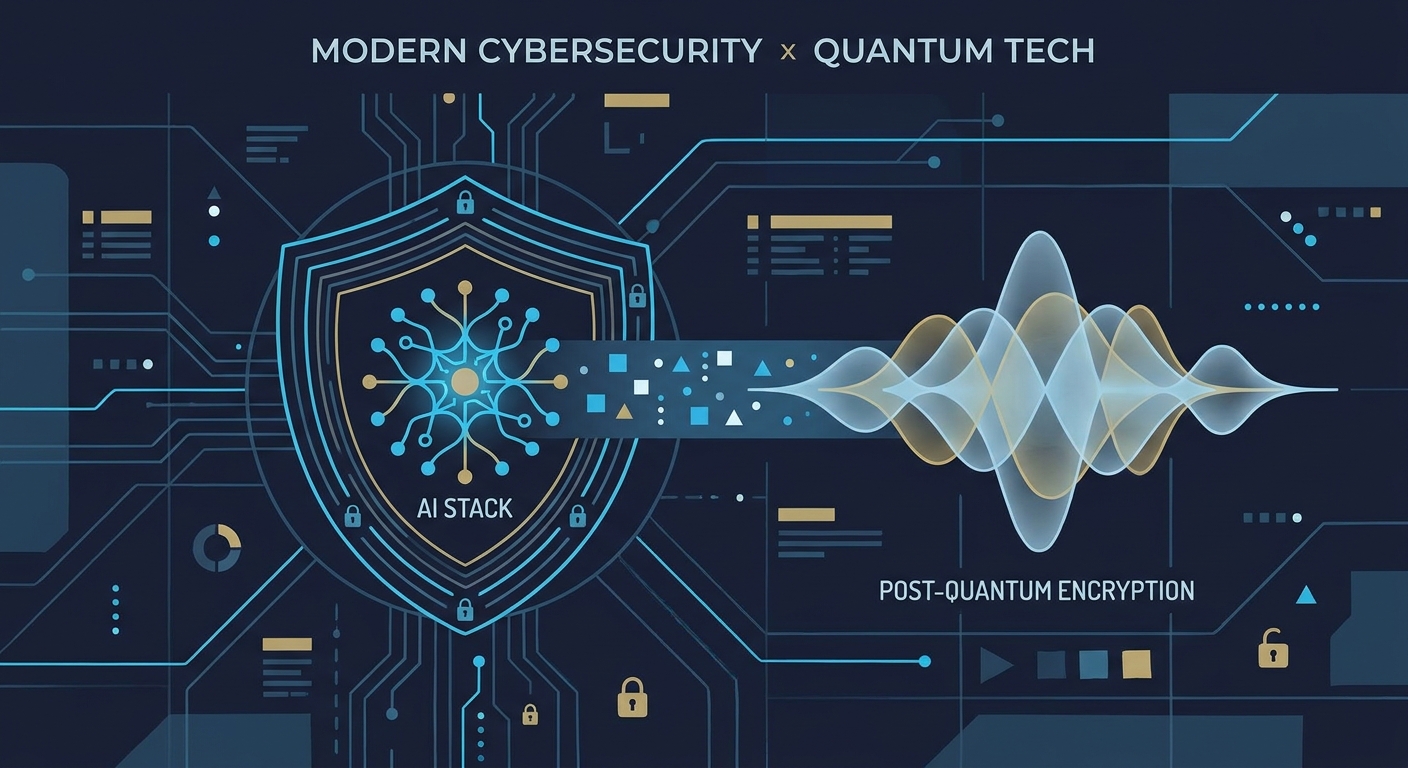
By combining classical ECC or RSA with ML-KEM, you create a dual-layered wall. If the classical layer gets cracked by a quantum machine, the lattice-based security of the ML-KEM layer stays standing.
As detailed in the NIST Post-Quantum Cryptography Standards, these algorithms are the foundation for future-proof communications. Configuring your MCP servers to negotiate these hybrid key exchanges ensures you don't have a single point of failure in your security stack.
This hybrid handshake forces an attacker to face a mathematical hurdle that even a CRQC can't easily jump over.
Building a Quantum-Resistant MCP Architecture
Transport security is the floor, not the ceiling. A truly quantum-resistant AI architecture needs zero-trust principles baked into every layer. Stop thinking about "securing the network" and start thinking about "securing the tool."
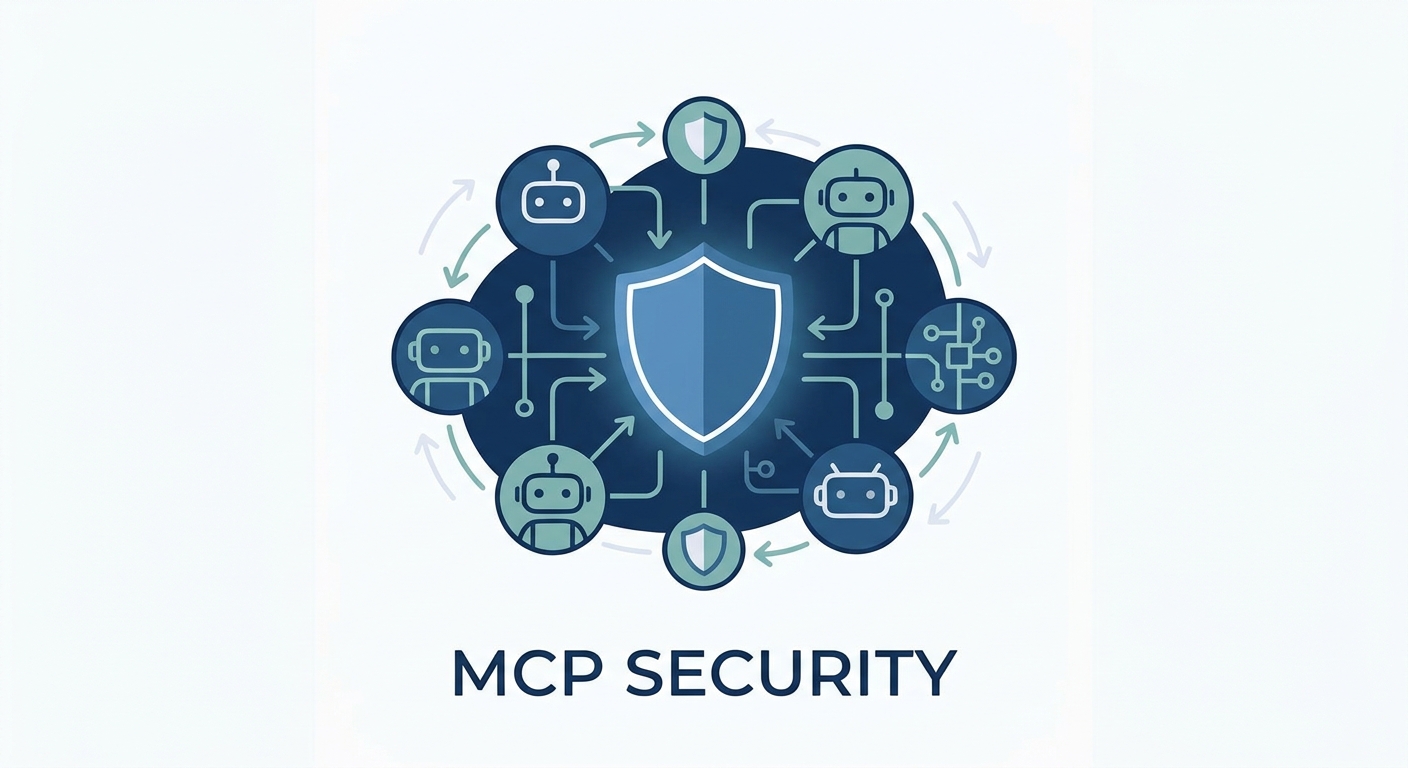
When you use MCP Protection Services, you aren't just scrambling bits; you're enforcing granular policies. Which agent can access which database? Is the request validated? Is the data itself protected by quantum-resistant encryption? This defense-in-depth strategy ensures your AI agents remain productive, not a back door for the next big breach.
The 2026 Readiness Framework: A Checklist for Architects
Don't panic, but do act. Here’s how to approach this without breaking your production environment.
Phase 1: Inventory Where is your MCP living? Catalog every endpoint. Rank the sensitivity of the data moving through those channels. If you can’t see it, you can’t protect it.
Phase 2: Agility Audit your libraries. Are they stuck in the past with hard-coded encryption? You need to move toward pluggable architectures where you can swap algorithms on the fly.
Phase 3: Hybrid Deployment Start with your most critical paths—the ones connecting your primary AI agents to your backend databases. Enable ML-KEM. As noted in The Quantum Insider's 2026 Landscape, the ecosystem for PQC is exploding, and standardizing these hybrid handshakes is becoming standard operating procedure.
Future-Proofing Your AI Memory
Post-quantum security isn't just a "best practice" anymore. It’s becoming a regulatory mandate. Auditors are already asking about AI infrastructure resilience; soon, they’ll want proof that you’ve accounted for the quantum threat.
Your AI’s memory is its lifeblood. Don't leave it wide open to tomorrow's threats just because you’re comfortable with yesterday’s standards. By implementing cryptographic agility and hybrid PQC today, you’re securing more than just a protocol—you’re protecting the longevity of your entire enterprise. The quantum horizon is coming. Build your defenses now.
Frequently Asked Questions
Why is the Model Context Protocol (MCP) specifically at risk from quantum computing?
MCP acts as the central hub for AI context; because it frequently transmits highly sensitive, long-lived data like internal strategy documents and source code, it is the most attractive target for SNDL attacks.
Do I need to replace my entire infrastructure to achieve quantum-proof MCP security?
No. The goal is "cryptographic agility." By implementing hybrid models that layer NIST-standardized PQC (like ML-KEM) over existing classical encryption, you can secure your infrastructure without a full-scale rip-and-replace.
How does ML-KEM differ from traditional encryption in an MCP context?
Traditional encryption (RSA/ECC) relies on the hardness of factoring large integers or discrete logarithms—problems easily solved by Shor’s algorithm on a CRQC. ML-KEM is based on lattice-based cryptography, which is mathematically resistant to quantum computation.
Is PQC compliance becoming a regulatory requirement?
Yes. As of 2026, NIST standards are increasingly being folded into AI infrastructure audits and regulatory compliance frameworks, moving PQC from a "nice-to-have" to a mandatory security control in regulated industries.