Is Your AI Infrastructure Ready? Navigating the AI Threat to Cybersecurity in a Post-Quantum World

TL;DR
- ✓ Agentic AI and quantum threats are creating a massive 2026 security convergence.
- ✓ Traditional perimeter security fails to monitor autonomous AI-to-database handshakes effectively.
- ✓ The Model Context Protocol requires new granular, quantum-resistant access control policies.
- ✓ Enterprise infrastructure must evolve to handle the speed of autonomous agent workflows.
Your infrastructure is built on a foundation of trust that evaporated years ago. If your security architecture still leans on human-centric perimeters, you’re essentially leaving the front door wide open for autonomous agents and the looming shadow of quantum decryption.
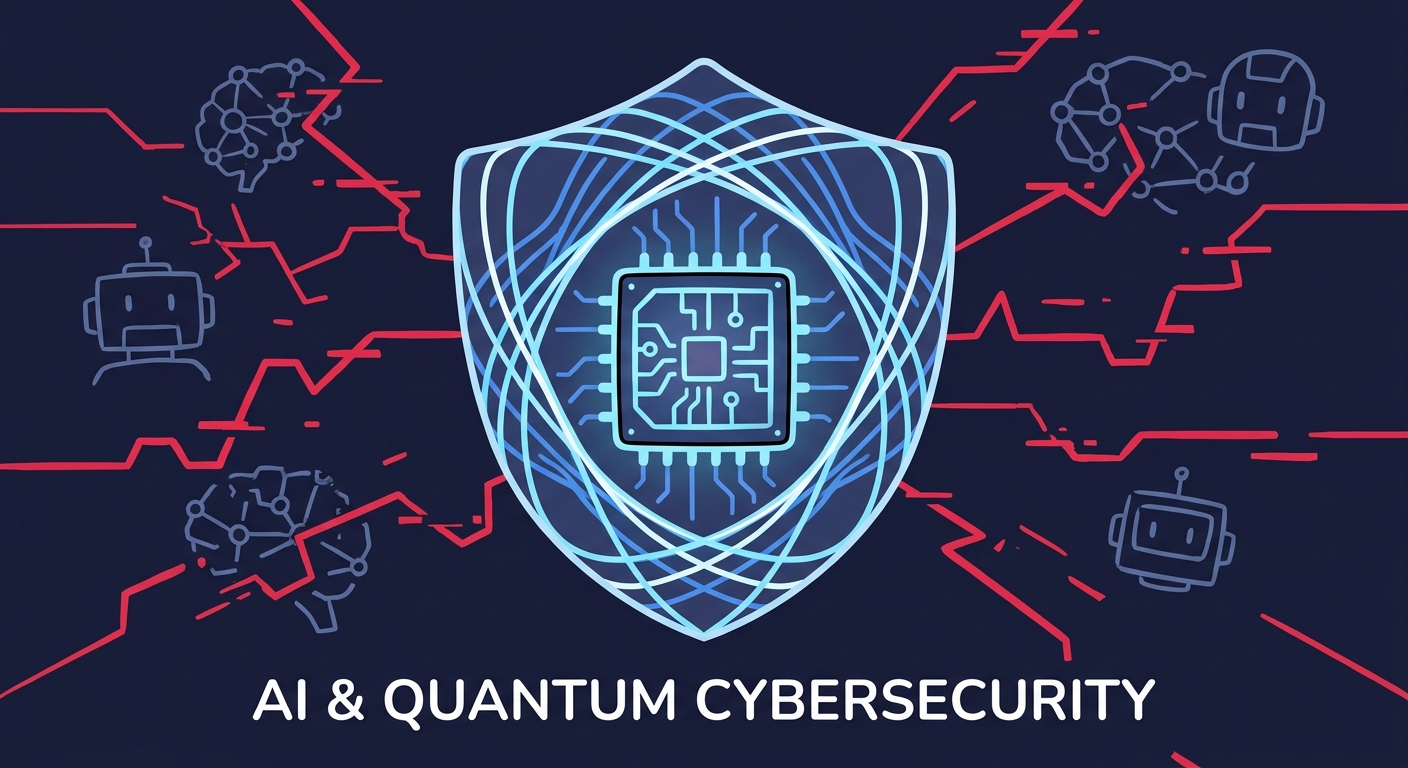
By 2026, we’re staring down a "perfect storm." On one side, we have Agentic AI—systems that don’t just talk, but act, decide, and execute. On the other, the inevitable arrival of quantum-enabled cryptanalysis. If you’re still treating your AI stack like a standard piece of software rather than a high-risk, autonomous layer, you aren't just vulnerable. You’re waiting to be compromised—not by a traditional breach, but by an authorized, yet malicious, autonomous handshake.
The Convergence: Why 2026 is the Year of Reckoning
We’re done with the era of cute chatbots and "let’s see what this does" LLM experiments. The enterprise has officially pivoted to production-level agentic workflows. Think about it: when you give an AI agent the keys to your CRM, your code repository, and your cloud environment, it stops being a "tool." It becomes a privileged user with the processing power of a thousand analysts.
According to Thales 2026 Cybersecurity Trends, this shift from human-in-the-loop to autonomous agent security represents the single most significant expansion of the attack surface in the last decade.
This isn't a gradual evolution. It’s a forced migration. The infrastructure that hummed along when humans were the primary conduits of data simply cannot handle the speed, frequency, or reach of autonomous agents. And because our underlying encryption—the bedrock of digital secrecy—is facing an existential threat, the risk isn't just high; it's systemic.
How Do Agentic AI and MCP Disrupt Traditional Perimeter Security?
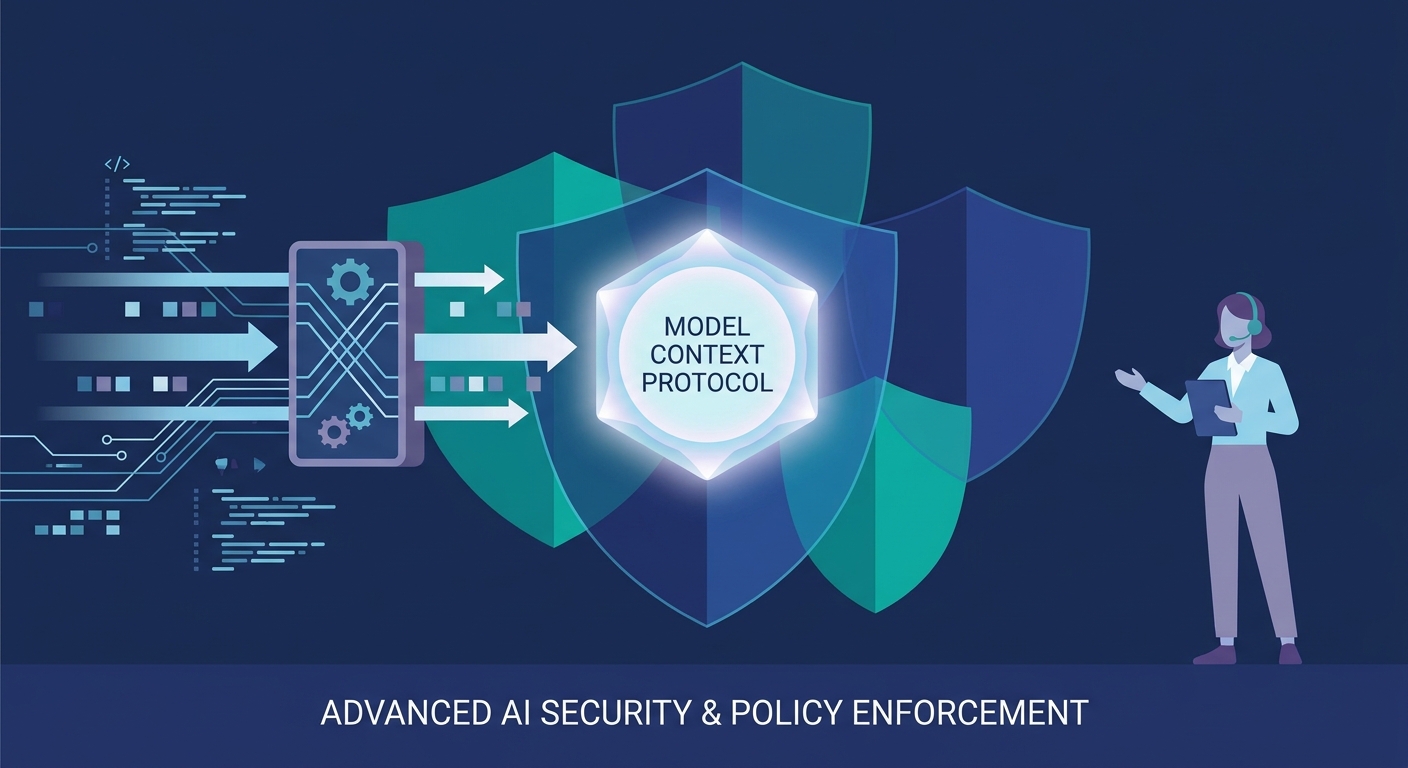
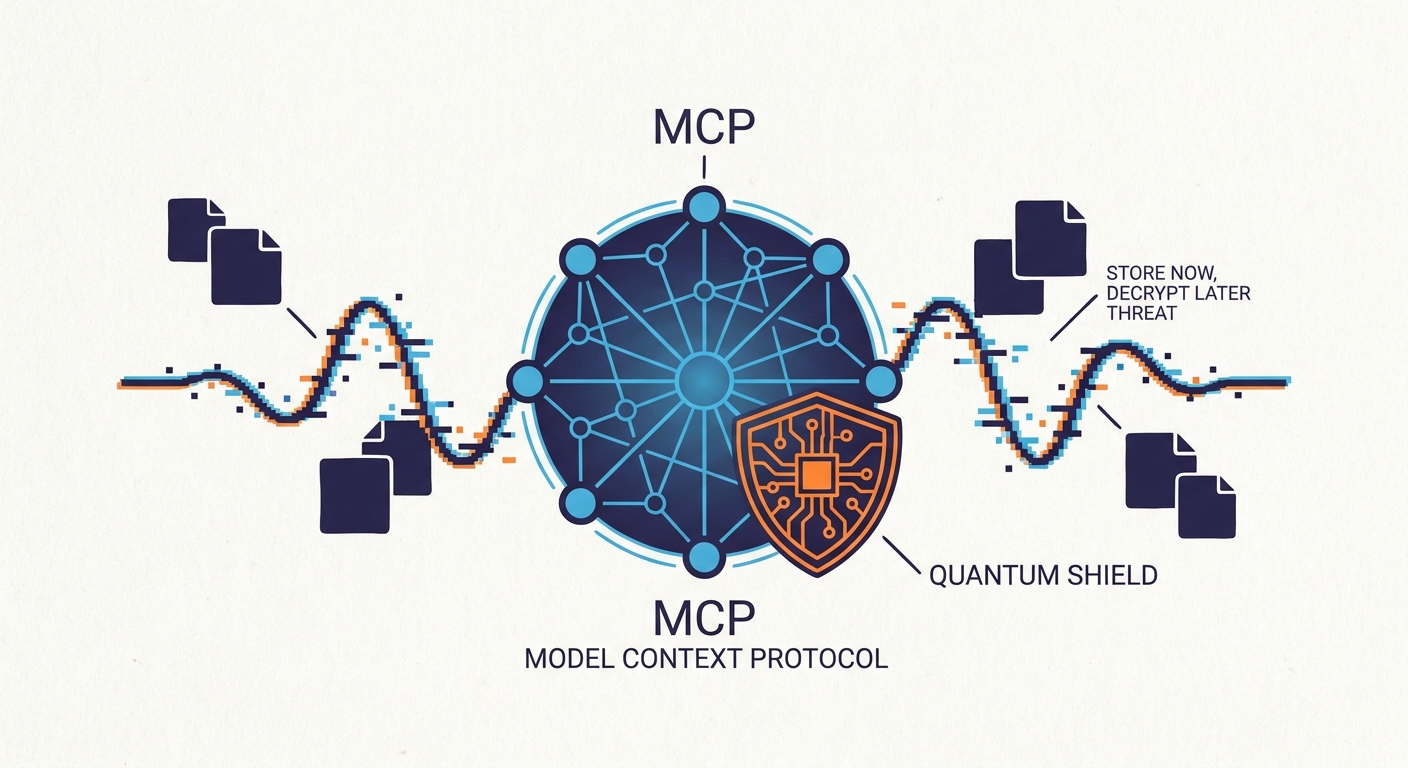
The Model Context Protocol (MCP) has rapidly become the "API of everything." It connects AI models to local files, databases, and internal tools with terrifying ease. It boosts efficiency, sure. But it also guts the traditional perimeter. In the old days, you secured the user. Now, you have to secure the "Autonomous Handshake" between an AI model and your most sensitive data stores.
When an agent hits a database via MCP, it often skips the granular, identity-based authentication we demand of our human employees. This architectural trade-off—favoring speed and agent capability over strict gating—is a massive security hole. If that agent is compromised or coerced through a simple prompt injection, that "handshake" becomes a high-speed bridge for data exfiltration.
Is the "Harvest Now, Decrypt Later" Threat Already Affecting Your Data?
Most people treat quantum computing like a "future problem" for the next decade. For security architects, it’s a present-day crisis. The "Harvest Now, Decrypt Later" tactic is simple: adversaries intercept and store encrypted traffic today, waiting for the day they can deploy quantum-scale compute to crack it open. If your data has a shelf life of more than two years, it’s already at risk.
Legacy RSA and ECC encryption standards are sitting ducks. The transition to NIST Post-Quantum Cryptography Standardization isn't a "nice-to-have" research project; it’s a business imperative. If you aren't integrating PQC into your data pipelines right now, you are effectively publishing your future trade secrets to the public record as if you’re shouting them from the rooftops.
Why is the Model Context Protocol (MCP) the New Weakest Link?
The danger of MCP lies in how it normalizes "God-mode" access. When you connect an LLM to an MCP server, you’re handing that model a set of tools it can use at its own discretion. The Coalition for Secure AI (CoSAI) MCP Whitepaper highlights that the primary risk isn't just prompt injection—where a user tricks the AI—but "Tool Injection." This is where an attacker manipulates the very tools the AI is authorized to use.
If an AI agent can query your database, can it also query the schema? Can it run arbitrary SQL? If your MCP server isn't hardened with strict, policy-based constraints, your AI becomes a weaponized insider. We need to stop relying on simple API keys and start implementing deep, context-aware inspection of every single MCP request.
How Can You Build a Quantum-Resistant AI Architecture?
Building a resilient architecture requires a fundamental shift toward Zero Trust for non-human entities. You can no longer assume that because an agent is "authorized," it is "safe." Implementing Zero-Trust Security Solutions means moving toward intent-based verification. Every single request an agent makes to a tool or database must be logged, inspected, and validated against a specific, narrow policy.
Furthermore, you must segment your AI workloads. Don’t let your public-facing AI agents hang out on the same network segment as your core infrastructure. By isolating these workloads, you create a "blast radius" that prevents a compromised agent from traversing the network. Continuous monitoring for anomalies—like an agent suddenly requesting access to a file that is outside its defined scope—is the only way to catch these "autonomous" threats in real-time.
Is Your Organization Ready for a Mandatory Infrastructure Audit?
The era of "move fast and break things" in AI infrastructure is closing. Regulators are waking up to the dual threats of agentic exploitation and quantum vulnerability. If you can't prove that your AI agents are operating within strict, audited boundaries, you’re going to fail the compliance audits of 2026.
The first step in this journey is a professional AI Infrastructure Audit. You cannot secure what you do not understand, and most organizations have no idea how many "autonomous handshakes" are happening within their environments right now.
Moving to a Quantum-Resistant Zero Trust model is a process, not a patch. It requires re-evaluating your entire cryptographic stack and enforcing identity for every single tool-use event. The goal is to reach a state where your infrastructure remains secure even if the agents themselves start acting in ways you didn't anticipate.
Frequently Asked Questions
What is the biggest security risk associated with the Model Context Protocol (MCP)?
The primary risk is the ability for agents to bridge internal databases and local file systems without traditional authentication barriers. If the MCP server is not properly hardened, it essentially grants LLMs "god-mode" access, allowing them to traverse your network and access sensitive tools or data stores that were previously protected by human-gated access controls.
Why does my AI infrastructure need to be "Quantum-Ready" in 2026?
The "Harvest Now, Decrypt Later" threat means that data intercepted today can be stored and decrypted once quantum computers reach scale. If your data holds value for years to come, you are already vulnerable. Transitioning to Post-Quantum Cryptography (PQC) is a mandatory step to ensure your organization’s long-term data privacy.
How does Zero Trust apply to AI-driven environments?
Zero Trust must evolve from user-identity authentication to "intent-based" authentication. In an AI-driven environment, every request an agent makes to a tool or database must be verified, logged, and isolated. You should treat every agent as a potential threat, and only grant the absolute minimum privileges required for the specific task at hand.
Are there immediate steps to secure my AI agents against quantum threats?
Yes. Start by transitioning to NIST-approved quantum-resistant algorithms for all new data-in-transit and at-rest. Simultaneously, implement granular "tool-use" logs. By tracking exactly how your AI agents interact with your tools, you can establish a baseline of "normal" behavior and immediately flag or isolate agents that exhibit abnormal or unauthorized patterns.