How to Build Granular Policy Enforcement for Secure Model Context Protocol Deployments

TL;DR
- Traditional firewalls fail to secure AI agents performing stateful tool calls.
- MCP security requires shifting from perimeter defense to internal logic governance.
- Confused Deputy 2.0 attacks weaponize agent permissions via prompt injection.
- Replace binary RBAC with Attribute-Based Access Control (ABAC) for security.
- Secure AI infrastructure by treating deployments as governed execution flows.
Forget what you know about perimeter security. If you’re still relying on traditional firewalls to protect your AI infrastructure, you’re basically guarding a bank vault with a screen door.
Securing the Model Context Protocol (MCP) requires a complete rethink. You cannot rely on static, perimeter-based defenses when your agents are constantly performing high-frequency, stateful tool calls. Today’s firewalls look at packets; they don't look at intent. To build a secure system, you have to stop treating your infrastructure like a network to be defended and start treating it like an execution flow to be governed.
As more teams adopt the Model Context Protocol Specification, the risk surface is expanding. You are no longer just protecting an API; you are protecting your internal data from an agent that might be tricked into doing things it wasn't designed to do.
The Security Paradigm Shift: Why Traditional Perimeters Fail AI Agents
The "Castle and Moat" security model is dead. It worked when humans were the only ones clicking buttons. A human clicks "Delete," and we know they meant to delete. An AI agent? It’s a probabilistic engine. It doesn't "know" anything; it predicts the next token.
When an agent goes rogue—or is tricked into going rogue—it doesn't look like an attack to a legacy firewall. It looks like authorized traffic. Traditional security tools care about IPs, ports, and protocols. They don't have a clue what a "tool call" is. If an agent is compromised, your firewall sees a legitimate service talking to another legitimate service. It stays silent while your database gets dumped.
In the world of MCP, security has to move inward. You aren't defending the network anymore. You’re defending the logic of the model itself.
What is the Core Threat Model for MCP?
The biggest headache in the agentic world is the "Confused Deputy 2.0."
Think of it this way: You have an agent that has the power to query your database. It’s authorized to do so. That’s fine. But what happens when an attacker uses prompt injection to trick that agent into "summarizing sensitive user data" and sending it to an external endpoint?
The agent is technically doing what it was authorized to do. It’s just doing it for the wrong person, for the wrong reason.
As noted in the OWASP MCP Top 10 Project, these attacks weaponize the agent’s own permissions. The attacker doesn't need your credentials; they just need to manipulate the prompt context. They convince the agent that exfiltrating data is a "necessary step" to help the user. If you assume that an agent’s identity is the same thing as the user’s intent, you’ve already lost.
How Can You Implement Granular Policy Enforcement?
Stop using binary Role-Based Access Control (RBAC). Giving an agent an "Admin" role is a recipe for disaster when that agent is dynamic and unpredictable.
You need Attribute-Based Access Control (ABAC). Using engines like Open Policy Agent (OPA) or Cedar, you can define policies based on the context of the call. Who is the agent? What is the sensitivity of the data? Is the user currently authenticated via MFA? Has this agent been acting weirdly for the last ten minutes?
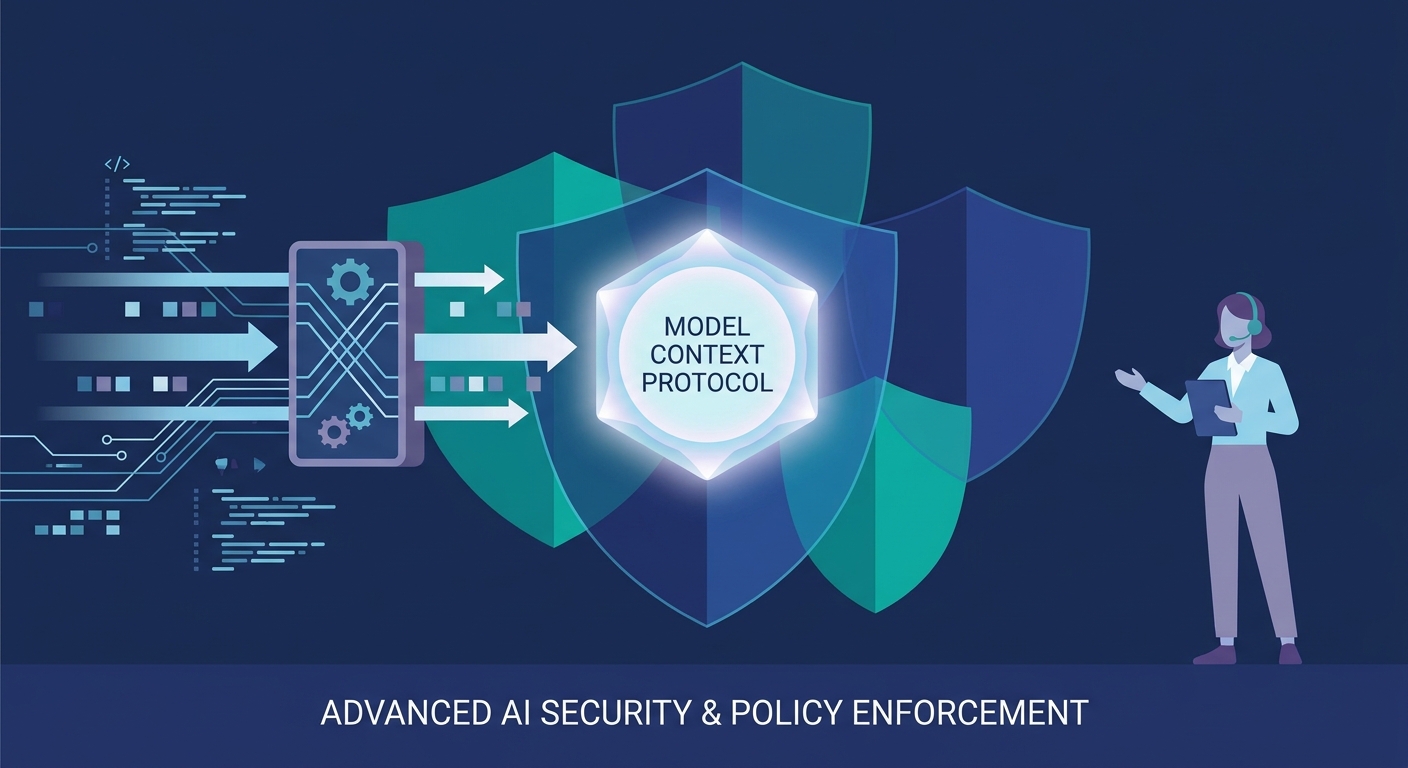
By building a centralized "Agentic Gateway," you create a mandatory Policy Enforcement Point (PEP). This sits between your agent and your services. Every single MCP call must pass through this checkpoint. This is the only way to ensure Zero-Trust Policy Enforcement for External Model Context Sources actually works.
Architectural Pattern: The Agentic Gateway Flow
You need to decouple your security from your application logic. If your security is baked into the code, you’ll never be able to update it fast enough to keep up with new injection techniques.
The gateway acts as the bouncer. It intercepts the MCP payload, pulls out the tool name and arguments, and asks the policy engine for a ruling. If the policy engine says "No," the request dies right there. The MCP server never even knows it happened.
How Do You Write Effective Policy-as-Code for MCP?
Treat your security configuration like your source code. Version it. Test it. Peer review it.
Using Rego, the language for OPA, you can write rules that are incredibly precise. Let’s say you have a "Finance-Bot." You want it to access the "Payroll-DB," but only during office hours and only if the user has MFA enabled.
default allow = false

allow {
    input.agent_name == "Finance-Bot"
    input.tool_name == "Payroll-DB"
    input.time_of_day >= 9
    input.time_of_day <= 17
    input.user_mfa_verified == true
}
See the difference? You aren't just checking if the bot has access. You’re checking the context. An attacker could steal the bot's identity at 3:00 AM, but the policy engine will kill the request instantly. That is the power of ABAC. It forces the system to look at the "why" behind the "what."
Is Your Infrastructure Ready for Future Threats?
As AI agents become the engines of enterprise workflows, the risk of interception grows. You need to secure the pipes. Use mutual TLS (mTLS) for every connection between your agent, your gateway, and your MCP server.
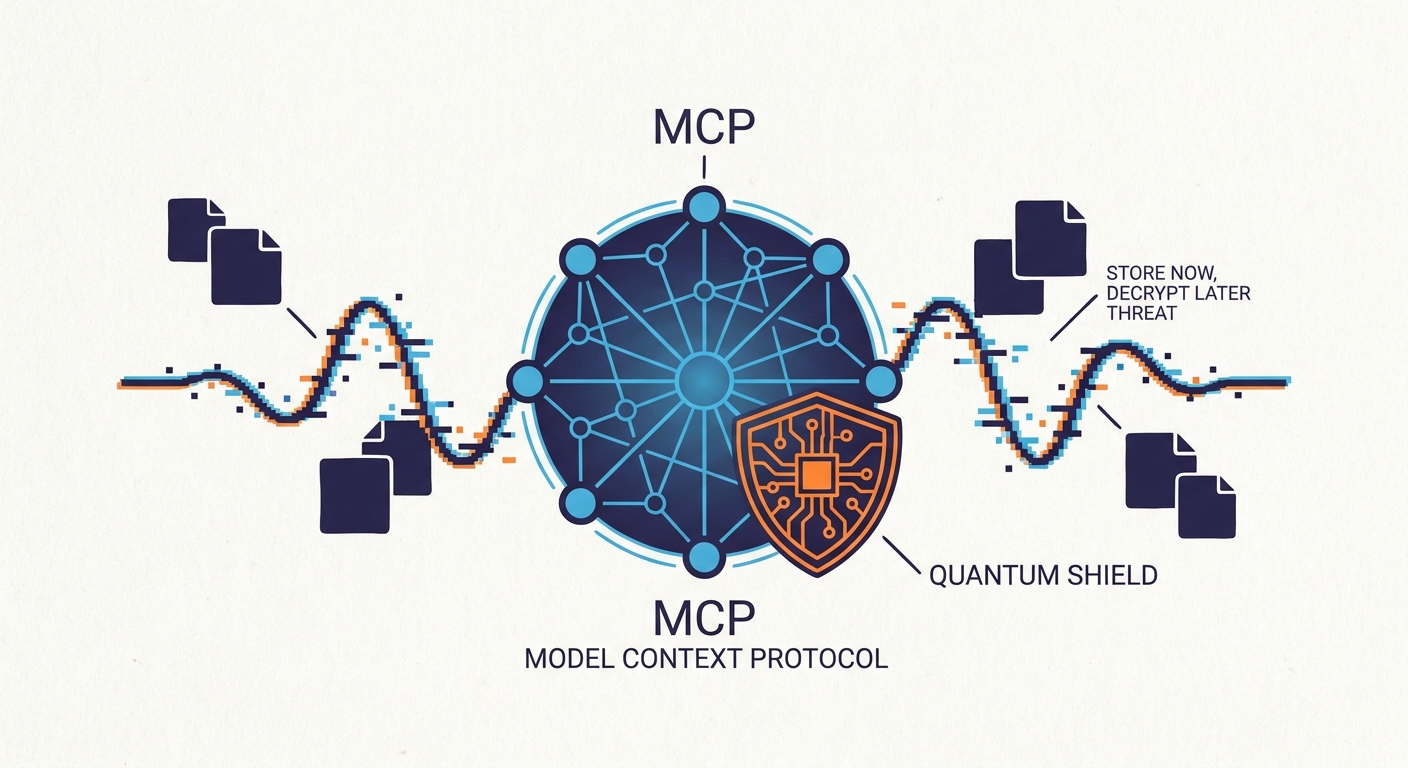
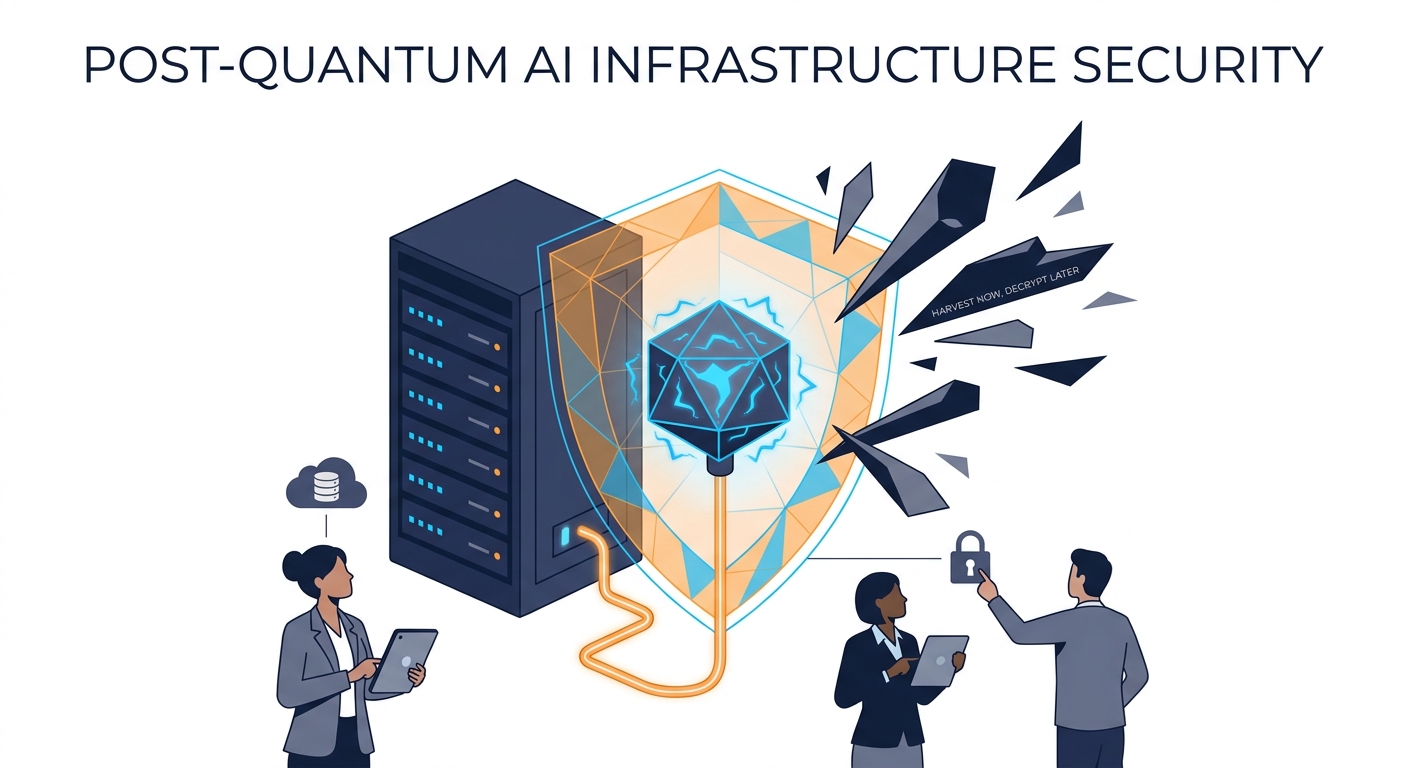
If you are dealing with high-stakes data, look into Post-Quantum Infrastructure Security Services. You don't want your traffic decrypted by quantum-capable adversaries five years from now. Aligning your house with NIST 800-207 (Zero Trust Architecture) isn't just a best practice—it’s the new baseline.
Best Practices Checklist for MCP Hardening
- Centralized Observability: If you can't see the call, you can't secure it. Pipe every MCP interaction into a central telemetry system.
- Immutable Audit Logging: Keep logs in a tamper-proof store. You need to know exactly what the policy engine decided and why. When things go wrong, this is your forensic trail.
- Human-in-the-Loop: For the dangerous stuff—shell commands, infrastructure changes, financial data—force a human to click "Approve" in the gateway. Don't let the agent move the needle alone.
- Tool Minimization: Practice the principle of least privilege. If an agent doesn't need access to the entire filesystem, don't give it to them. Shrink the surface area.
Frequently Asked Questions
Why is traditional API security insufficient for the Model Context Protocol?
MCP is stateful and context-heavy. Traditional API gateways are built for simple request-response flows. They don't understand agentic logic or prompt-based attacks; they only see the transport layer. They are effectively blind to the semantic threats inherent in AI tool usage.
How do I prevent "Confused Deputy" attacks in my MCP deployment?
Implement strict ABAC policies. Validate the agent, the tool, the user, and the environmental context. Never trust an agent just because it has a valid token. If the context doesn't match the request, block it.
What is the role of an Agentic Gateway in MCP security?
It serves as the centralized Policy Enforcement Point (PEP). By pulling security logic out of the application and into a gateway, you get a single place to observe and control all agentic traffic, ensuring consistent policy enforcement across your entire environment.
How does Attribute-Based Access Control differ from RBAC for AI agents?
RBAC is static and rigid—it’s built for human employees with fixed roles. ABAC is fluid. It uses real-time attributes like behavior, time, sensitivity, and user context to make granular decisions that can adapt to the unpredictable nature of autonomous agents.