Building Quantum-Proof Cryptography into Your Enterprise AI Security Architecture

TL;DR
- ✓ Address the Store Now Decrypt Later threat to your sensitive enterprise AI data.
- ✓ Replace vulnerable classical encryption with NIST-approved hybrid cryptographic models today.
- ✓ Build cryptographic agility to adapt your AI infrastructure to future quantum security standards.
- ✓ Secure Model Context Protocol deployments against both transport and context-based attacks.
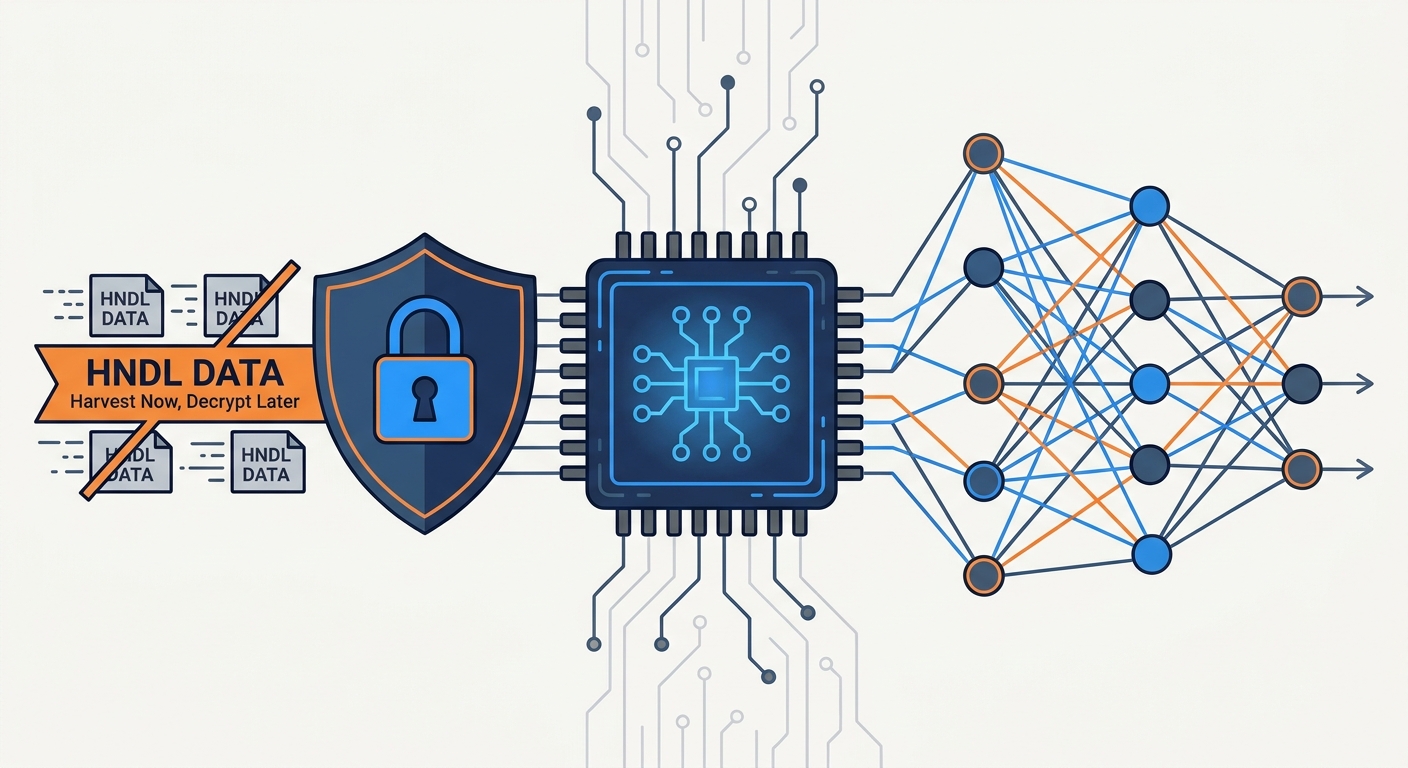
If you think your enterprise AI is safe just because you’re running TLS 1.3, you’re kidding yourself. It’s a dangerous delusion. Right now, bad actors are vacuuming up your data. They aren’t interested in what it’s worth today; they’re waiting for the day they can crack it open.
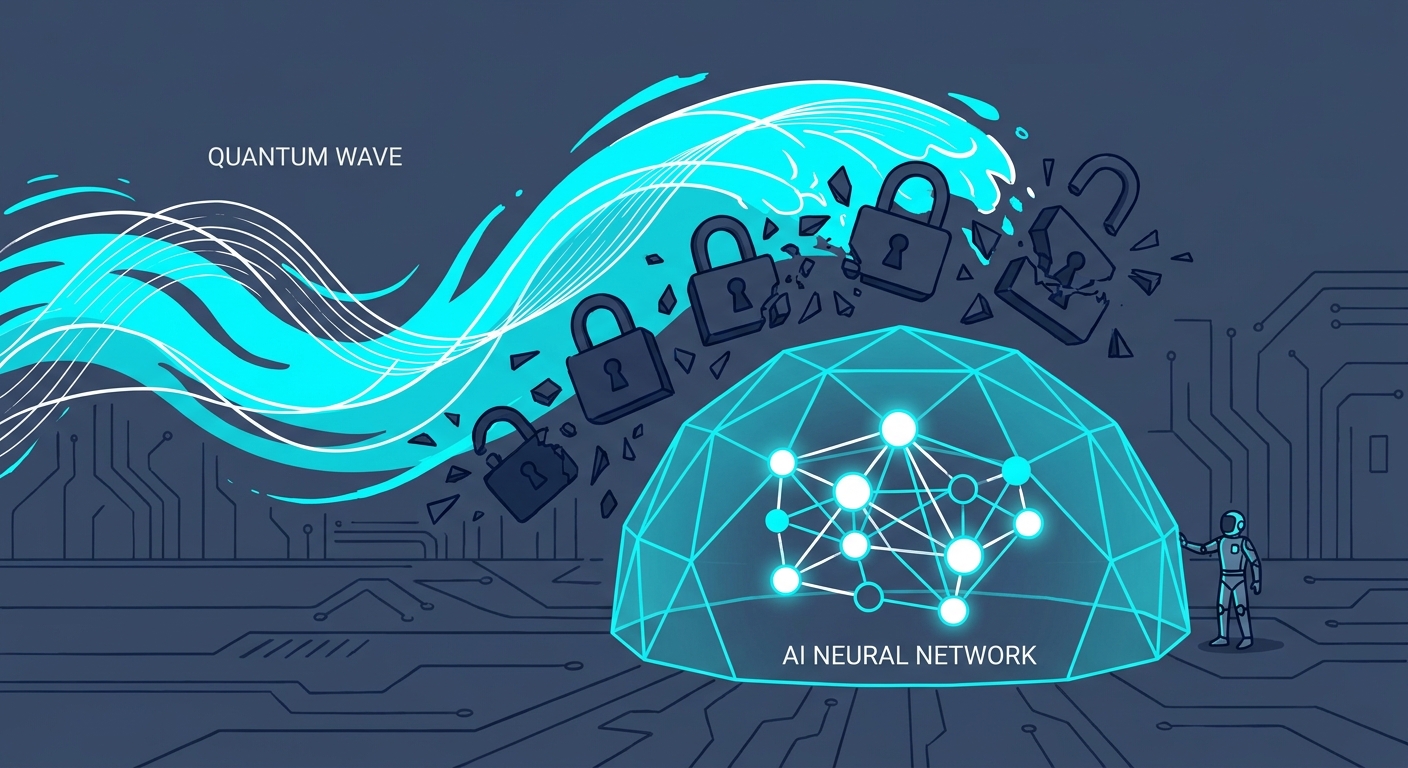
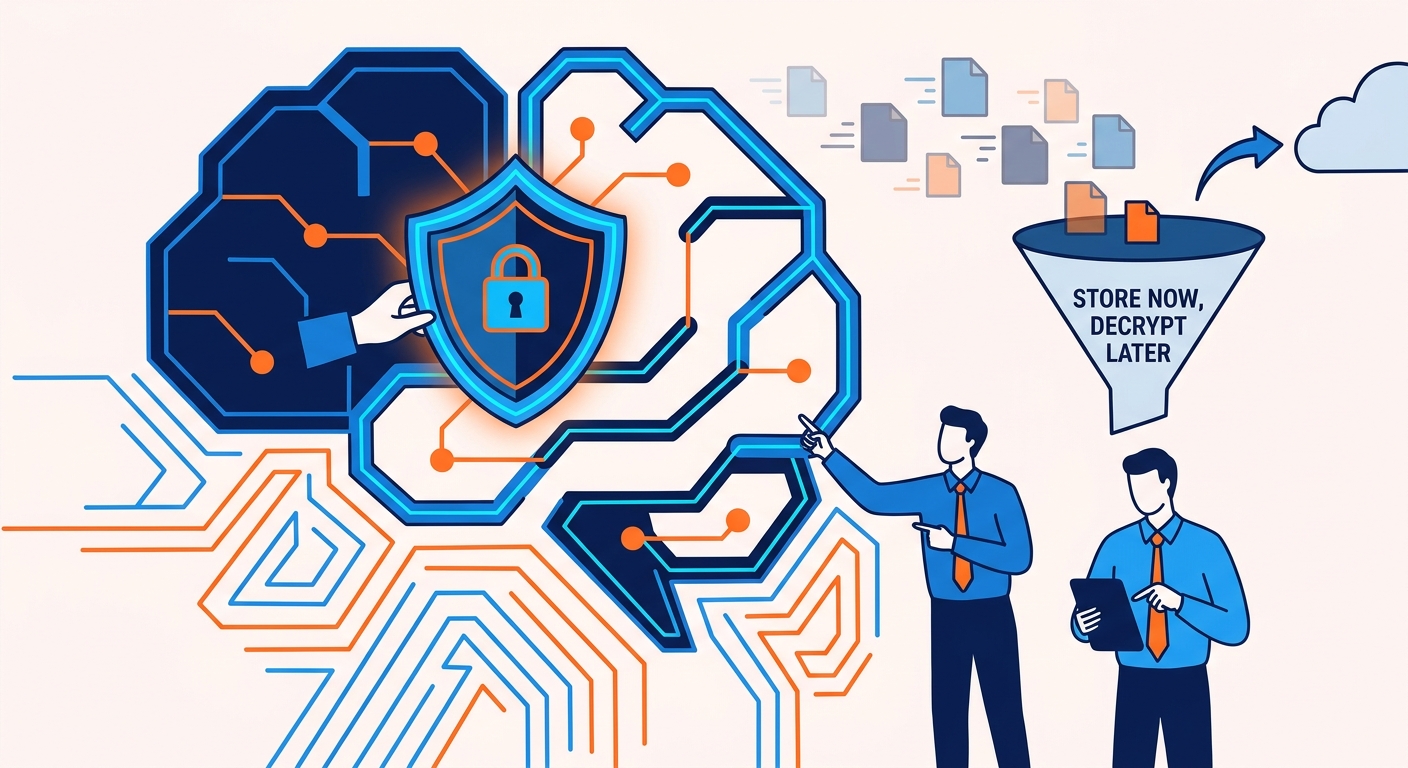
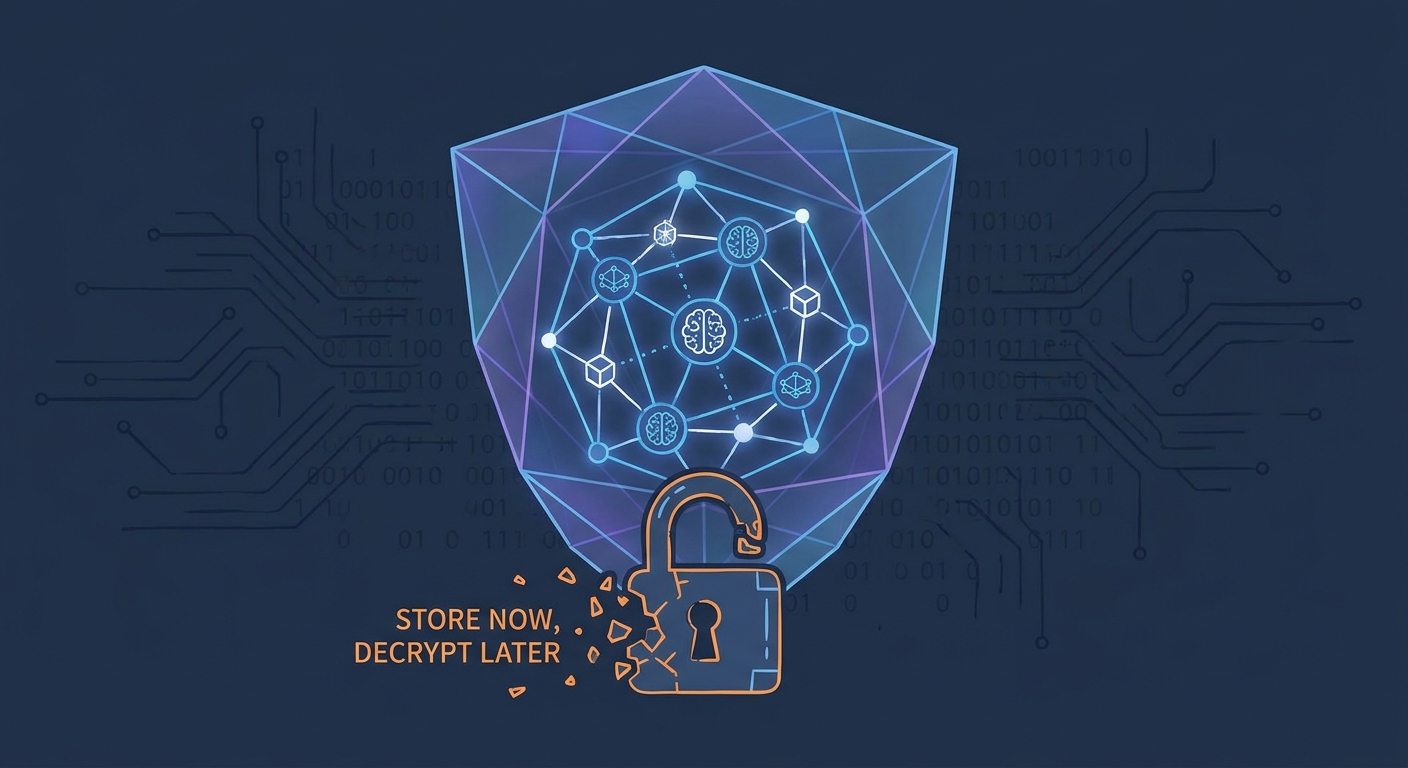
This is the "Store Now, Decrypt Later" (SNDL) reality. It’s not just a plot point in a spy thriller anymore. If your firm handles intellectual property or sensitive PII via AI agents, you are a target. By 2026, the shift from theoretical quantum research to mandatory implementation is going to be the litmus test for whether a company is actually secure or just pretending. According to CISA Post-Quantum Cryptography Guidance, you need to start hardening your systems today. We are hurtling toward a future where Shor’s algorithm will turn your current encryption into a screen door.
Why Your Current AI Infrastructure is Built on Sand
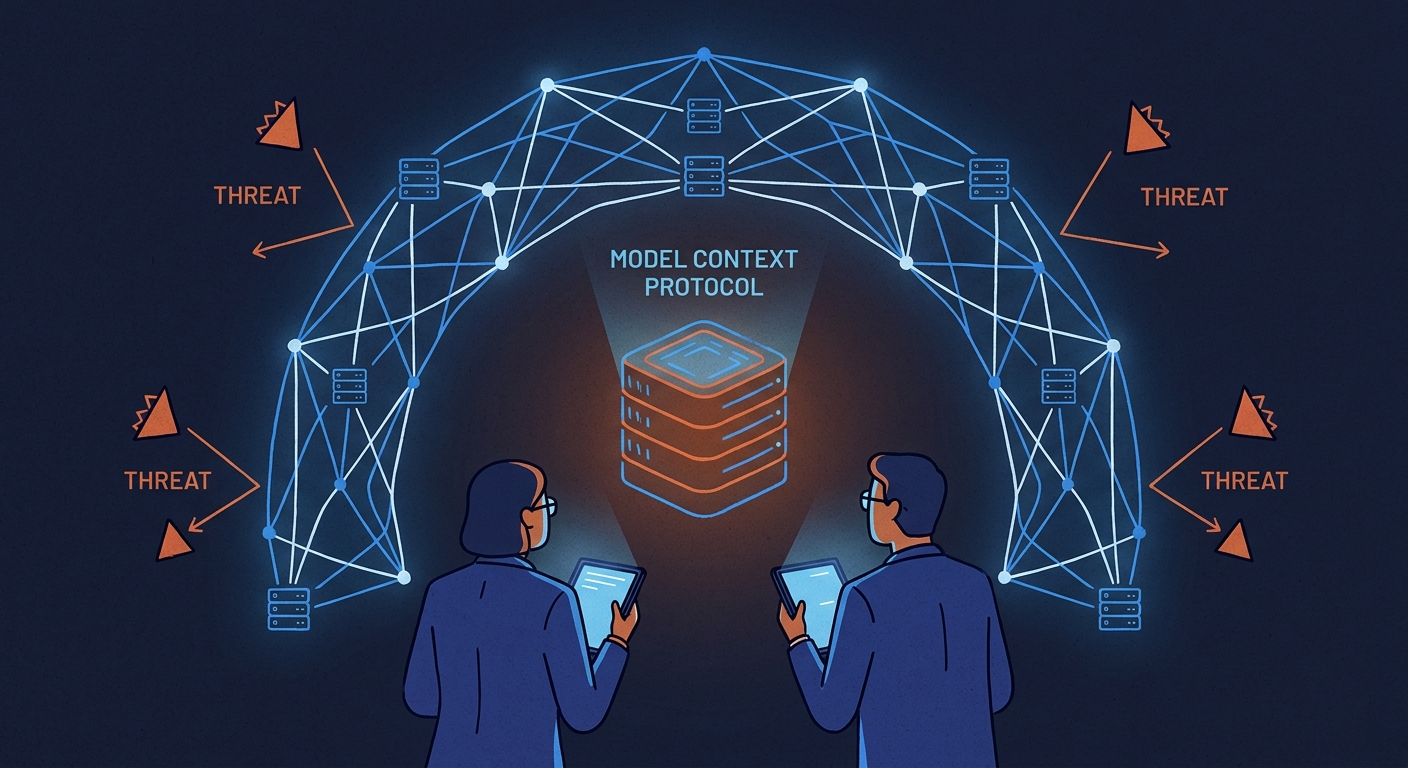
The modern enterprise AI stack relies heavily on the Model Context Protocol (MCP). It’s a brilliant way to let LLMs talk to your databases. But here’s the rub: MCP assumes the transport layer—the actual pipes carrying your data—is unbreakable. It bets everything on RSA and Elliptic Curve Cryptography (ECC).
They are breakable.
When you push context-heavy data through standard TLS 1.3, you’re wrapping secrets in a digital lock that quantum computers will eventually treat like a joke. Even if your AI agents are perfectly coded, the pipe they use is porous. We also need to talk about the difference between transport security and data integrity. A quantum-resistant "envelope" is great, but it doesn't stop "Context Poisoning." If an attacker injects malicious data into an MCP server, they can manipulate your agent’s logic. You don’t just need a secure tunnel; you need to verify what’s actually flowing through it.
The Architecture of Resilience: The Hybrid Cryptography Model
Don't try to rip and replace everything—that’s a recipe for disaster. Instead, look at the "belt-and-suspenders" approach, known as the Hybrid Cryptography Model. You layer NIST-approved algorithms like ML-KEM (FIPS 203) on top of your classical foundation. If one layer buckles, the other holds.
This is what we call "Cryptographic Agility." You want a system where you can swap out algorithms as easily as you update a software library. If your crypto-logic is glued to your AI workflow, you’re going to be stuck in a permanent state of architectural overhaul every time NIST drops a new standard.
From Transport to Context: Implementing a Dual-Layer Defense
Securing AI is a two-front war. First, fix the pipe. Move your MCP traffic to PQC-ready protocols. As the NIST Standards Migration News points out, the clock is ticking to adopt NIST Post-Quantum Cryptography Standards.
Second, treat your data like it’s radioactive. Even inside a quantum-safe tunnel, the stuff flowing into your AI agents could be toxic. You need strict input validation after the decryption step. If an MCP server gets compromised, an attacker could feed your agent poisoned datasets. You have to assume the tunnel is safe but the content is compromised. Secure the transit, but validate the intent.
Strategic Roadmap: How Do You Start Your Migration?
This isn't a project you finish over the weekend. It’s a long, methodical slog. Start with a Gopher Security Infrastructure Audit. Find every MCP node. Map every data flow. You can't fix what you can't see.
Once you’ve mapped the terrain, look at your vendors. Many legacy dependencies are hard-coded with zero agility. Phase three is the hybrid rollout—start with internal traffic, then move to your public-facing API gateways. As the Cloud Security Alliance: Q-Day Research suggests, Q-Day isn't a finish line; it’s a permanent part of your security management.
Addressing the "Performance vs. Security" Trade-off
People keep complaining about latency. They say PQC key sizes are too big and will slow down their AI inference. Sure, the math is heavier than standard ECC. But honestly? In a world of modern cloud networks and LLM API calls, that extra overhead is a drop in the bucket.
The real headache is certificate management. You’re effectively doubling your workload here, managing two distinct key sets during the transition. But if you’re sweating a few milliseconds of latency while ignoring the threat of a full-scale data breach, your priorities are upside down.
Frequently Asked Questions
If I'm using TLS 1.3, aren't I already quantum-secure?
No. TLS 1.3 is great for today's threats, but it relies on ECDHE. That’s a sitting duck for quantum decryption. You need hybrid modes that incorporate NIST-approved PQC.
Does implementing PQC for my MCP traffic slow down my AI agents?
There’s a small performance hit because keys are larger. But compared to the latency of the actual AI model inference, you’ll barely notice it. It’s a small price to pay for not getting hacked.
Is "Store Now, Decrypt Later" a real threat to my company or just hype?
It is very real. State actors are harvesting encrypted traffic right now. If your data has a shelf life of more than a few years—think trade secrets or legal records—you have to assume it’s already being archived for the moment a quantum computer comes online.
What is "Cryptographic Agility" and why does it matter for my 2026 roadmap?
It’s the ability to swap out crypto algorithms without burning your whole architecture to the ground. Since PQC standards are still moving pieces, your infrastructure needs to be modular enough to adapt as the tech improves.
How does PQC interact with existing regulatory compliance like GDPR or HIPAA?
Regulators are starting to look at "state-of-the-art" security as a requirement. If you aren't preparing for the quantum threat, you’re failing to provide the "due care" expected for sensitive data. Compliance isn't just about what you do today; it's about being ready for tomorrow.