Securing AI Infrastructure: From Standard Encryption to Quantum-Resistant Protocols

TL;DR
- ✓ Standard encryption is vulnerable to future Store Now Decrypt Later quantum attacks.
- ✓ Nation-state actors are currently hoarding encrypted AI model data for future decryption.
- ✓ Quantum computers will soon render RSA and ECC encryption standards obsolete.
- ✓ Organizations must transition to quantum-resistant protocols to protect proprietary model weights.
The days of resting easy because you’ve got TLS running are dead and buried. If you’re operating under the assumption that standard encryption is enough to keep your AI infrastructure safe in 2026, you’re not just behind the curve—you’re a sitting duck.
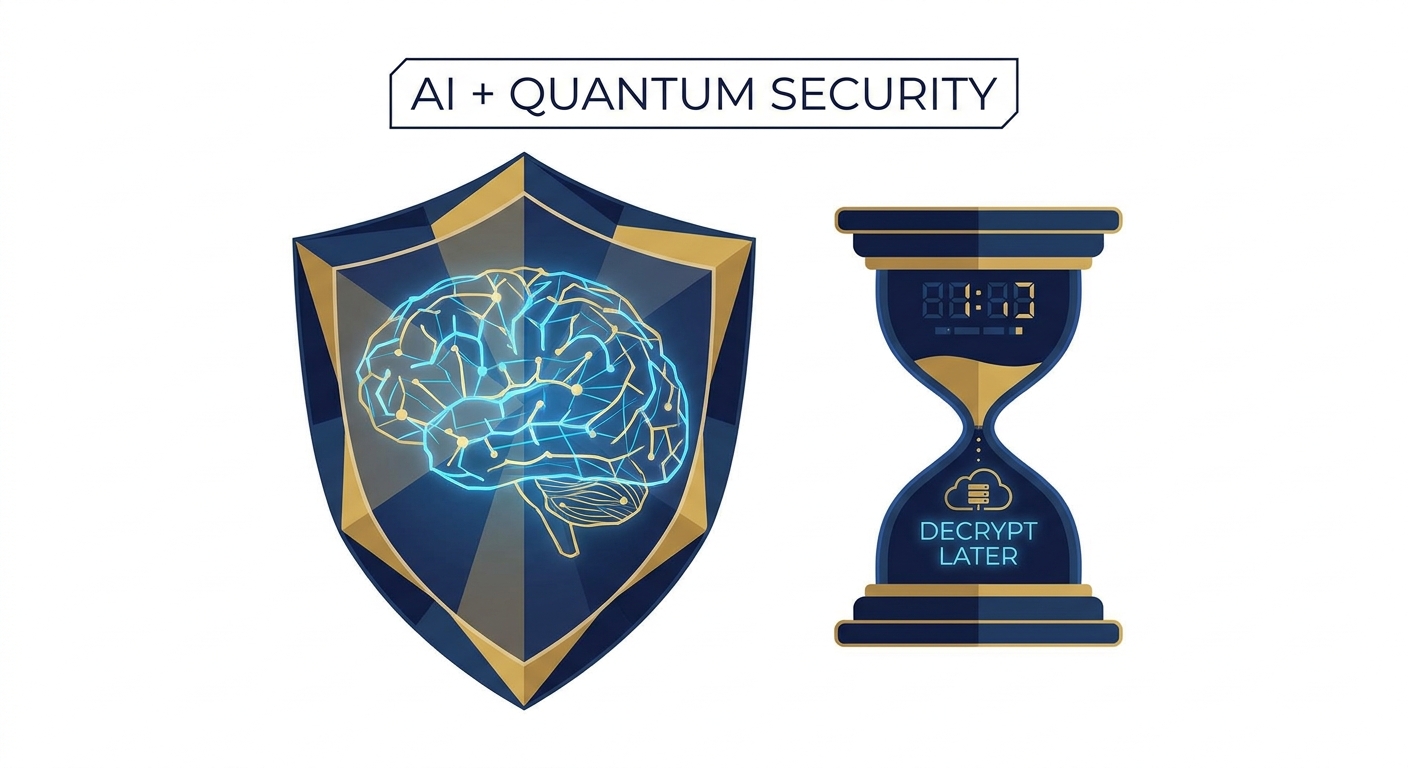
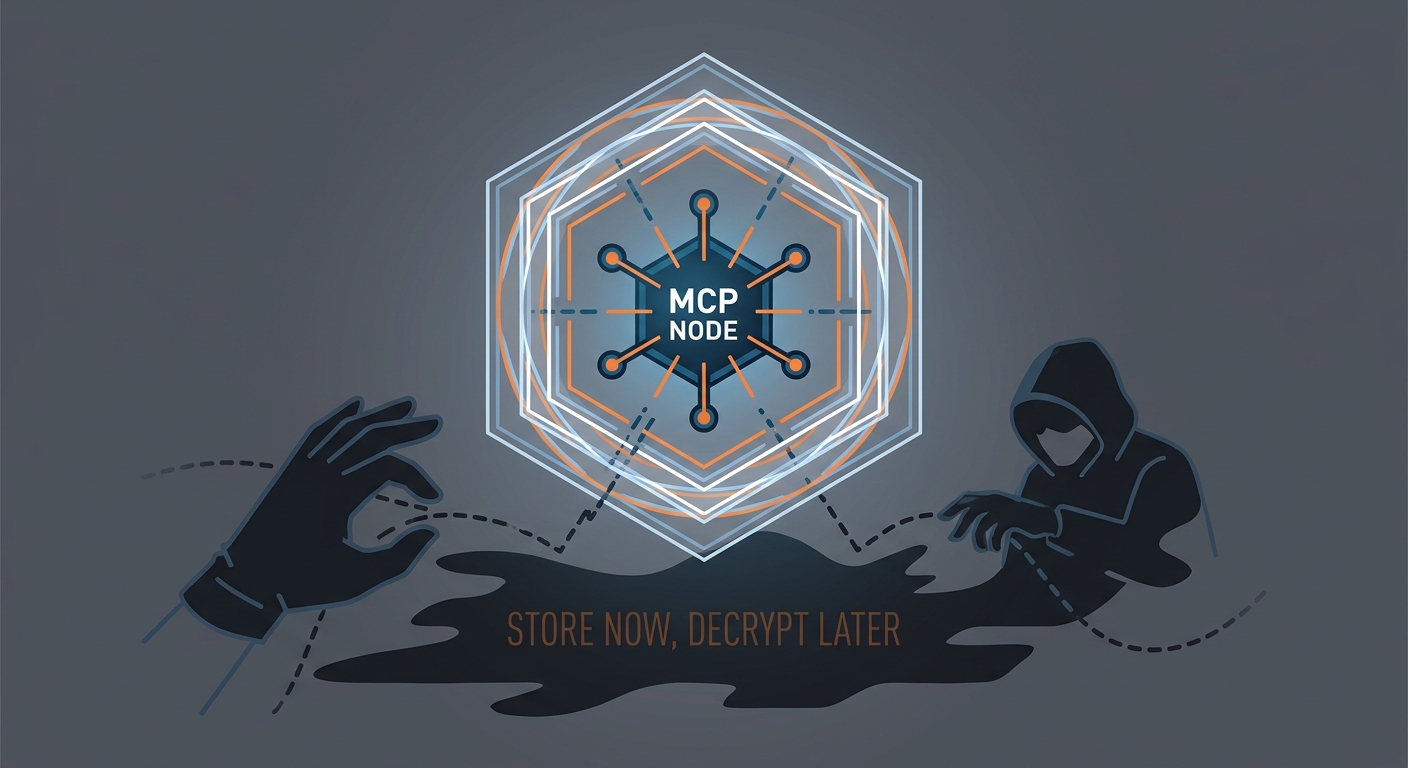
The real threat to your proprietary model weights and high-value training data isn’t some loud, smash-and-grab brute-force attack. It’s quiet. It’s methodical. Nation-state actors are vacuuming up intercepted traffic right now, hoarding it in massive data centers. They know they can’t break your encryption today, so they don’t bother. They’re playing the long game: "Store Now, Decrypt Later" (SNDL). The moment a sufficiently powerful quantum computer comes online, that mountain of harvested data becomes an open book.
For organizations building the next generation of LLM-driven workflows, ignoring this trajectory is a strategic disaster. If your infrastructure doesn't prioritize quantum-resistant encryption for AI infrastructure, you are effectively leaving your most valuable intellectual property exposed for future harvesting.
Why the Quantum Threat is a 2026 Reality
SNDL isn’t some abstract nightmare cooked up for academic journals. It’s a cold, hard logistical reality for any CISO worth their salt. Think about it: your AI models are the "crown jewels" of your enterprise. They are under constant, persistent surveillance.
Adversaries don't need to crack your code today. They just need to archive your traffic until Shor’s algorithm becomes a practical reality on fault-tolerant quantum hardware. When that day comes—and it is coming—the keys to your kingdom won't just be stolen; they’ll be retroactively forged.
When we talk about high-value targets, we aren't just talking about customer PII. We’re talking about the weights of fine-tuned models that represent thousands of hours of R&D and millions of dollars in compute spend. Once those weights are exfiltrated, your competitive advantage doesn't just shrink—it vanishes. Understanding the why behind protecting LLM workflows is the absolute first step in moving your security posture from a reactive, "hope-for-the-best" mess to a proactive, hardened strategy.
Is Standard Encryption Enough?
For years, we’ve leaned on TLS and AES like they were bulletproof vests. They’re great, sure, but they’re only half the battle. Classical public-key cryptography—specifically RSA and Elliptic Curve Cryptography (ECC)—relies on mathematical problems like integer factorization and discrete logarithms.
Here’s the rub: those are exactly the types of problems quantum computers were born to solve.
Current standards are a necessary baseline for stopping the average script kiddie, but they lack any real quantum resilience. As you look at your current stack, you need to review NIST Post-Quantum Cryptography Standards to see which algorithms are being codified as the new gold standard for long-term data security. Relying solely on classical encryption in 2026 is like locking your front door while leaving the windows wide open to a thief who is currently building a ladder.
Transitioning to Quantum-Resistant Protocols
Don't panic. You don't need a "rip and replace" operation that brings your whole company to a screeching halt. This is about cryptographic agility. You need to build systems that allow you to swap out or augment underlying algorithms without breaking your entire orchestration pipeline.
The smartest move? A hybrid approach. By layering NIST-approved algorithms—like ML-KEM (formerly Kyber) for key encapsulation and ML-DSA (formerly Dilithium) for digital signatures—over your existing classical encryption, you’re double-locking the door. You stay protected against today’s threats while building a wall against tomorrow’s.
This hybrid handshake keeps you compliant with current regulations while future-proofing your data against quantum-capable adversaries. It’s the safest middle ground in a volatile security landscape.
Securing the Model Context Protocol (MCP)
The Model Context Protocol (MCP) has changed the game, but it’s also added a layer of complexity that keeps security teams up at night. Unlike static REST APIs, MCP facilitates dynamic, bidirectional communication between AI agents and local or remote data sources.
This creates a massive attack surface. An agent could easily be tricked into accessing unauthorized context or leaking sensitive data during an active session.
Securing MCP means moving past static API keys. You need granular, context-aware policy enforcement. An agent shouldn't just have access to a data source; it should have access to specific context windows based on the task it's performing. You can refer to the official Model Context Protocol (MCP) documentation to get a handle on these controls. Just remember: those channels need to be wrapped in quantum-resistant tunnels, or you’re just inviting a different kind of interception.
The Quantum-Ready AI Audit Checklist
If you're feeling overwhelmed, stop. Take a breath and treat quantum readiness as a systematic audit, not an overnight overhaul.
- Inventory Everything: Map out every single data-in-transit and data-at-rest encryption point. If you don’t know where your data is encrypted, you can’t protect it. Period.
- Test Agility: Check your current AI orchestration tools. Can your load balancers and service meshes handle hybrid PQC handshakes? If they can’t, they’re your biggest bottleneck.
- Hardware Matters: Look into hardware acceleration. PQC algorithms can be a drag on performance; don't let that be an excuse to skip them.
You can read our complete guide for 2026 infrastructure security for a deep dive into these tactical steps, or explore the Cloud Security Alliance (CSA) Quantum Readiness framework for a broader organizational roadmap.
Balancing Performance and Protection
There’s a persistent myth that PQC is "too slow" for real-time AI inference. Let’s clear that up: PQC algorithms do involve larger keys and more intensive math than classical RSA. That’s a performance challenge, yes. But it’s not a dead end.
If you leverage hardware acceleration—specifically FPGAs or ASICs designed for lattice-based cryptography—you can keep your inference speeds fast while keeping your data locked down. The goal is to make security a transparent layer, not a performance tax that grinds your workflow to a halt.
Conclusion: Continuous Refinement
Quantum readiness isn't a finish line. It’s a habit. As new standards emerge and hardware evolves, your infrastructure has to remain flexible. Start your audit today. You aren't just ticking a box for compliance; you’re stopping future-dated breaches that could be the death knell for your organization.
If you're ready to build a more resilient foundation, discover broader enterprise-level solutions for quantum-ready security and start the transition before the threat landscape shifts under your feet again.
Frequently Asked Questions
Does post-quantum encryption slow down AI model inference?
While PQC algorithms are computationally more intensive than classical ones, the impact on latency is often negligible when using hardware acceleration. By offloading cryptographic operations to specialized hardware (ASICs or FPGAs), you can maintain standard inference SLAs without compromising on security.
Is it too early to implement quantum-resistant protocols in 2026?
It is never too early to mitigate the "Store Now, Decrypt Later" threat. If your data has a long shelf life—such as proprietary AI model weights or sensitive training datasets—it is already a target for adversaries who are harvesting data today to decrypt it when quantum computing matures.
How does MCP security differ from standard API security?
MCP security requires managing dynamic, bidirectional, and context-aware interactions. Unlike static REST APIs that rely on simple request-response authentication, MCP demands granular, policy-based access control that can adapt based on the specific context of the AI agent's request.
Do I need to replace my existing encryption entirely?
No. The recommended industry approach is a "Hybrid" strategy. By layering NIST-approved post-quantum algorithms over your existing, trusted classical encryption, you ensure both immediate regulatory compliance and long-term resilience against future quantum threats.