How to Implement Quantum-Resistant Encryption in AI-Driven Environments

TL;DR
- ✓ Learn how Store Now Decrypt Later attacks threaten your sensitive AI model weights.
- ✓ Implement NIST FIPS 203 204 and 205 standards for robust quantum-resistant encryption.
- ✓ Identify critical vulnerabilities within your AI training pipelines and model distribution nodes.
- ✓ Integrate post-quantum security as a core pillar of your enterprise MLOps strategy.
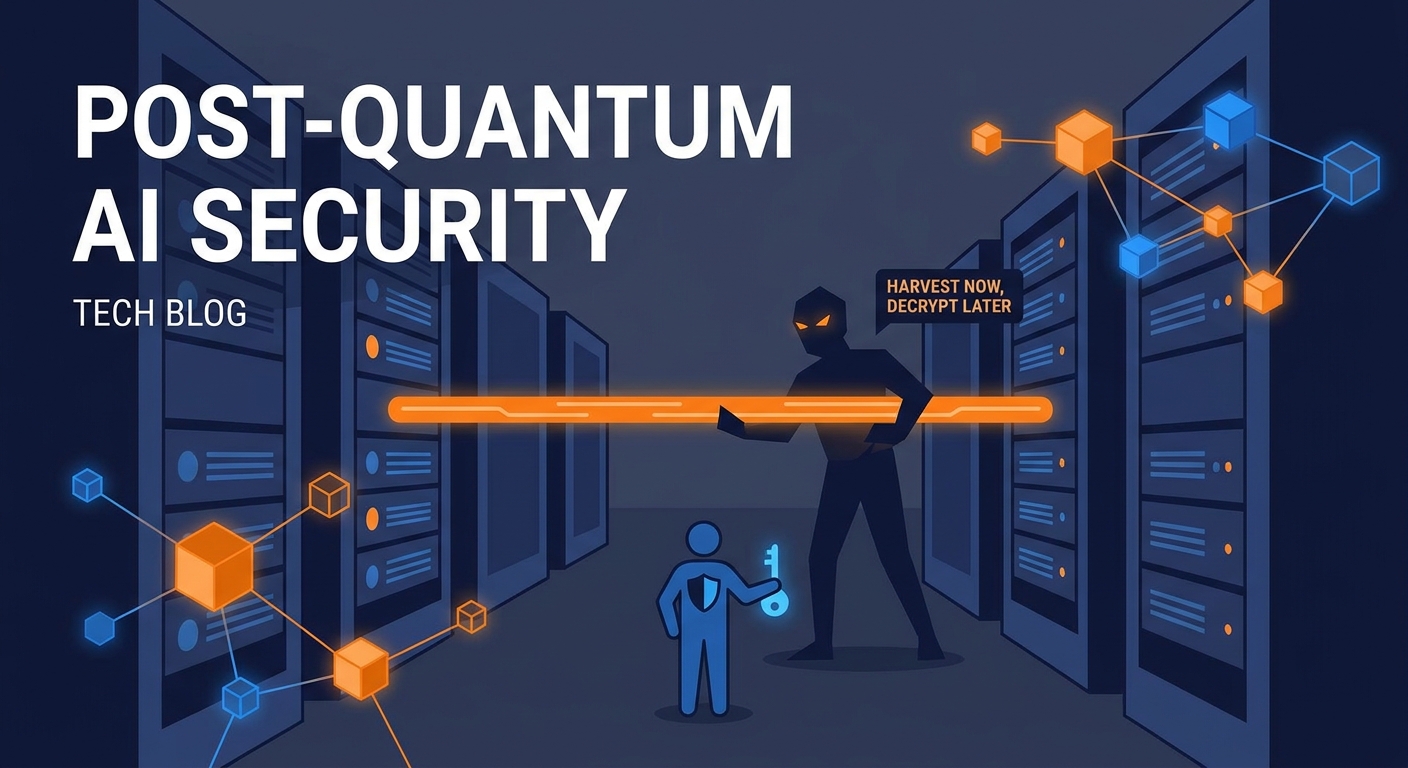
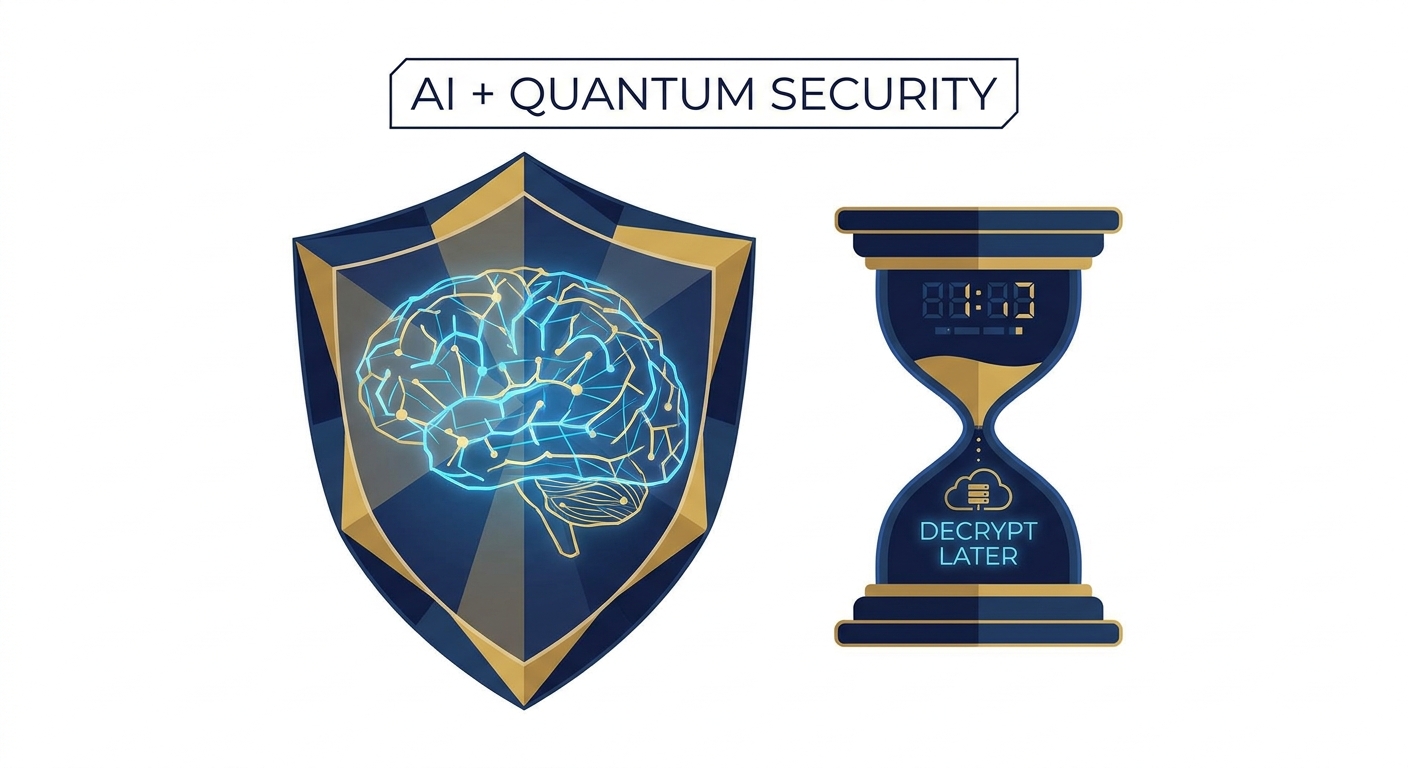
The quantum threat to artificial intelligence isn't some sci-fi plot for the next decade. It’s here, right now, hiding behind a strategy known as "Store Now, Decrypt Later" (SNDL). Bad actors are vacuuming up encrypted traffic, training datasets, and proprietary model weights as we speak. They aren't trying to break your encryption today; they’re banking on the inevitable arrival of a cryptographically relevant quantum computer (CRQC) to crack those vaults wide open in a few years.
If you’re building the future on AI, the clock is ticking. Hard. If you don't secure your infrastructure today, you’re basically handing your intellectual property to anyone with enough storage to wait for the encryption to expire. To protect your AI infrastructure, you need to stop treating quantum readiness as a "maybe someday" project. It needs to be a core pillar of your MLOps security.
Understanding the NIST Standards That Define the New Baseline
Your quantum-resistant strategy has to start with the groundwork laid by the National Institute of Standards and Technology (NIST). Aligning your enterprise with NIST PQC Standards isn't just best practice—it’s the new global benchmark for trust.
FIPS 203, which uses ML-KEM (Module-Lattice-Based Key-Encapsulation Mechanism), is your new go-to for key exchange. It’s designed to replace the RSA and ECC handshakes that currently keep the web running. For signatures, FIPS 204 (ML-DSA) and FIPS 205 (SLH-DSA) provide the muscle you need to ensure that the data feeding your models—and the models themselves—haven't been tampered with. These aren't just suggestions. They are the new baseline for keeping things honest when classical math just doesn't cut it against state-level adversaries anymore.
Mapping Quantum Vulnerabilities in AI Infrastructure
Before you can defend your turf, you need a map of where the breach is likely to happen. Your AI lifecycle is a massive, sprawling target. Every single hop—from raw data hitting the pipeline to the final inference call—is a potential point of interception.
The danger zones? The "transit" phases—where model weights are moving between training clusters and inference nodes—and the "storage" phase, where your most valuable training datasets sit idle, waiting for a future decryption key. Keep a close eye on your Model Context Protocol (MCP) bridges. They’re high-risk because they often punch holes through traditional security perimeters to get data flowing between LLMs and enterprise databases.
Why Cryptographic Agility is the Foundation of Your Strategy
Forget "set-it-and-forget-it" security. That’s a recipe for disaster in a world where the quantum landscape shifts every few months. You need cryptographic agility—the ability to swap out algorithms, keys, and protocols without tearing your entire AI application layer to the ground.
By decoupling your security protocols from your model logic, you ensure that as new PQC standards evolve, your team can update encryption modules via configuration. No massive, months-long engineering slog required. As noted in the Cloud Security Alliance guide on preparing for the era of PQC, this kind of modularity is the only way to stay secure without killing your innovation speed.
Executing a Phased Hybrid Migration
Don't go for a "rip-and-replace." That’s how systems crash. Instead, go for a hybrid migration path that respects the stability of your current stack while hardening it against the future.
Phase 1: Inventory
You can't protect what you can't see. Catalog every TLS connection, every encryption module, and every certificate authority (CA) in your stack. Build yourself a Quantum-Resistant Cryptography Strategy that ranks assets by how sensitive they are and how exposed they are to the internet.
Phase 2: Hybrid Deployment
This is the "sweet spot." Combine classical algorithms like ECC with PQC algorithms like ML-KEM. It’s a "best of both worlds" play. If a flaw is found in a new PQC algorithm tomorrow, your classical layer is still there holding the line.
Phase 3: Full Migration
Once your hybrid setups are stable and the performance hits are accounted for, you can start sunsetting the classical-only components. This is the long-term play to clear out your technical debt once and for all.
Balancing PQC Latency with AI Performance Requirements
Let’s be real: PQC is heavy. It’s computationally expensive, and if you aren't careful, it will drag down your AI’s performance. If you’re running inference-heavy tasks where every millisecond counts, you’ll feel that penalty.
The fix? Hardware acceleration. Offload those PQC computations to FPGAs or ASICs built for crypto-heavy lifting. Let your AI clusters focus on tensor operations while the hardware handles the key exchange. Also, look at your TLS termination points. By moving the handshake closer to the edge, you can shrink round-trip times and hide most of that PQC overhead from the end-user.
Securing the Model Context Protocol (MCP) Against Quantum Threats
The Model Context Protocol (MCP) is the connective tissue between your sensitive data and your LLMs. If an attacker compromises an MCP bridge, they can siphon off your entire context window—proprietary info and all—before the model even touches it.
You need quantum-safe identity verification for all machine-to-machine (M2M) communication. Every MCP server and client should be authenticating using PQC-backed digital signatures. Even if someone intercepts the connection, they can’t impersonate a trusted data source or inject malicious context into your pipeline. Looking at the 2026 Quantum Cryptography Market Landscape, it’s obvious that vendors are already building tools for this. Don't wait for these to become commodities—get them integrated now.
Case Study: Quantum-Proofing an MLOps Pipeline
Imagine an enterprise running a massive fleet of LLMs. They were relying on standard RSA keys for their MLOps pipeline. The first thing they did? They identified their Key Management System (KMS) as the weak link.
They rotated their root keys to an ML-KEM compliant standard. Just like that, they neutralized the threat of a future quantum computer decrypting their historical model weight transmissions. Next, they rolled out a hybrid TLS tunnel for all cross-region model distribution. The result? A negligible 3% increase in latency, smoothed out by hardware-accelerated crypto-processors, and a security profile that finally satisfies their auditors for the next decade.
Frequently Asked Questions
Do I need to replace my existing encryption immediately?
Not all at once, no. But you do need to start layering PQC on top of your current standards to stop those SNDL attacks. Don't wait for a "perfect" environment. Start by securing your most sensitive data-at-rest and high-value M2M connections today.
How does quantum-resistant encryption affect AI model inference latency?
PQC algorithms are heavier than the old-school ones. You’ll need hardware acceleration and careful selection of your NIST-approved algorithms to keep performance snappy.
What is the biggest risk to AI environments in the quantum era?
The theft of model weights and training data right now. Hackers are archiving this data to reverse-engineer your proprietary intelligence the second a quantum computer becomes available.
How does a "Hybrid" approach differ from a full migration?
Hybrid uses both classical and post-quantum layers at the same time. It keeps things backwards-compatible while covering your bases against both current and future threats. Full migration is the end goal, but only after you’ve thoroughly vetted the new stack.
Is hardware acceleration necessary for implementing PQC in AI pipelines?
For production-grade AI? Almost certainly. It’s the best way to maintain the low latency your users expect while dealing with the extra compute load of PQC.