Securing Model Context Protocol: The Future-Proof Blueprint for 2026

TL;DR
- ✓ Static API keys and TLS 1.3 cannot stop modern autonomous agent threats.
- ✓ Agentic AI enables lateral movement that bypasses traditional EDR and XDR security tools.
- ✓ Implementing Zero-Trust architecture is essential for managing sensitive MCP-driven data pipelines.
- ✓ Prepare for Harvest Now Decrypt Later attacks by adopting quantum-resistant security strategies today.
If you’re still running your Model Context Protocol (MCP) integrations using static API keys and standard TLS 1.3 tunnels, you’ve basically left your front door wide open in a neighborhood where everyone’s looking to break in.
The rise of agentic AI has flipped the script. We’ve moved past simple data retrieval. We’re now in a world where autonomous agents have the keys to the kingdom: they execute code, query internal databases, and rewrite system states across your entire infrastructure. This "Agentic Shift" means your old-school EDR and XDR tools are effectively blind. They aren't built to track the lateral, inter-tool traffic that defines modern MCP-driven workflows.
To survive the 2026 threat landscape, you have to stop obsessing over the perimeter. It’s time to move toward a Zero-Trust architecture built for the era of autonomous agents. If you need a compass for where this is all heading, our Post-Quantum AI Security Roadmap breaks down the long-term architectural shifts you’ll need to secure these pipelines.
The Current Threat Landscape for MCP
The real risk with MCP isn't the AI models themselves; it’s the bridges they build into your private data. As the OWASP MCP Top 10 Guide points out, these threats aren't just theoretical anymore. We are seeing a massive spike in attacks hitting three specific vectors: prompt injection that tricks agents into running unauthorized tools, the abuse of over-privileged MCP servers to hop through internal networks, and the constant leaking of sensitive internal context.
Think about how an agentic compromise actually plays out. An attacker slips a malicious prompt into an LLM host. That prompt triggers a "benign" request to an MCP server. Because the agent has broad "read-only" access to your development database, the attacker uses that foothold to scrape internal docs, eventually escalating until they find an API tool that lets them run administrative commands.
This lateral movement is the silent killer. Traditional security tools look for nasty binaries or weird logins. They don't look for an AI agent performing a perfectly "authorized" query that just happens to be malicious.
Why "Harvest Now, Decrypt Later" (HNDL) is the New Baseline
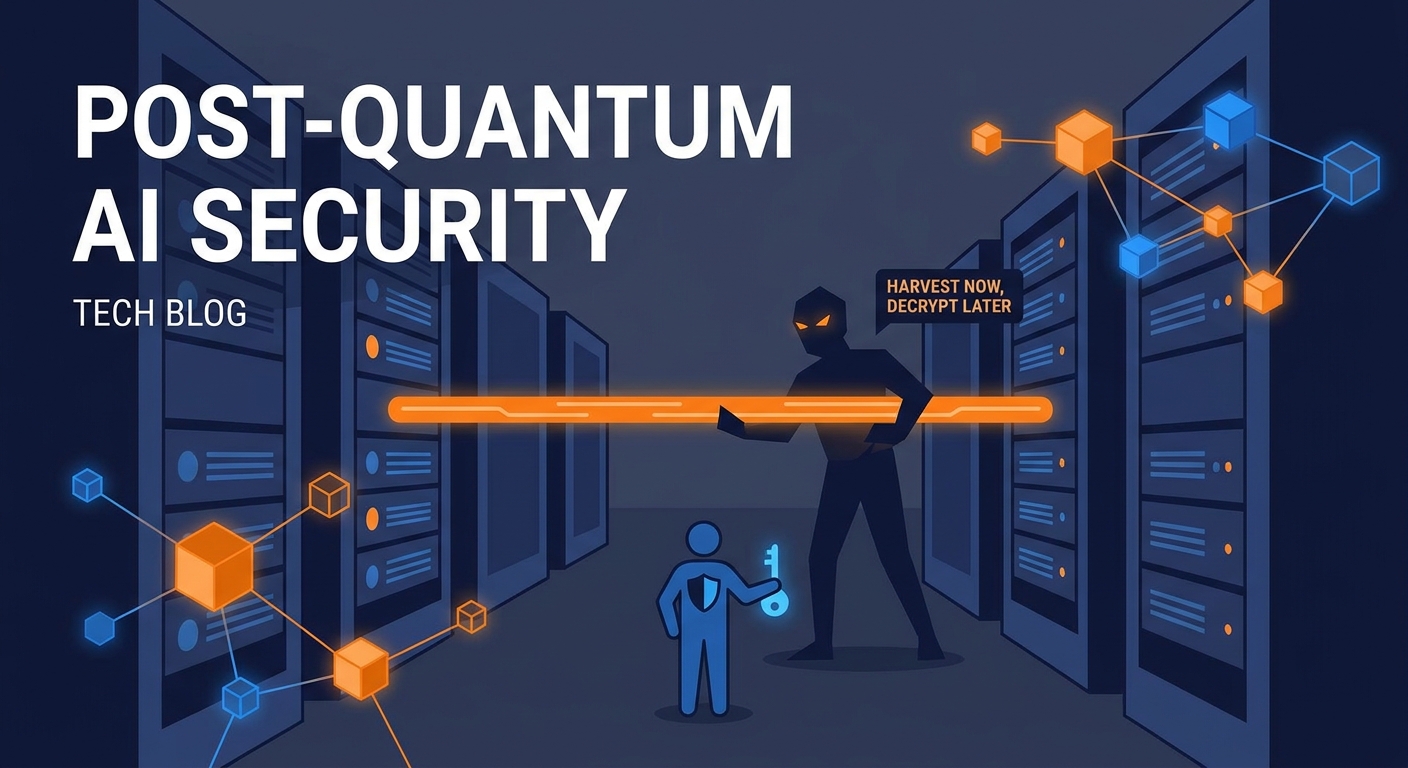
The urgency here is spiked by the looming quantum threat. You’ve heard of the "Harvest Now, Decrypt Later" (HNDL) strategy—where bad actors intercept encrypted traffic today, just waiting for the day quantum computers can crack it. This isn't science fiction. It’s the current reality for state-sponsored groups and high-tier cybercriminals.
Standard TLS 1.3 is great for browsing the web, but it’s a sitting duck for future quantum analysis. MCP often carries your most sensitive enterprise context—think proprietary code, auth tokens, and PII. That’s a massive risk. As the NSA Guidance on AI-Driven Automation suggests, security architects need to pivot to Post-Quantum Cryptography (PQC) algorithms now. If you aren't auditing your infrastructure for PQC readiness today, you’re already behind on 2026 compliance.
How Do You Implement Identity Propagation Without "God-Mode" Accounts?
The biggest mistake in modern MCP deployments is relying on static service accounts. When an LLM host logs into an MCP server with one persistent API key, any breach of that connection gives the attacker the keys to the castle. It’s "God-mode" by accident.
The fix? Identity propagation. Every tool execution needs to be authorized based on the user’s identity and the specific context of the request—not the broad permissions of the agent. You want a token-exchange pattern where the LLM host fetches a short-lived, scoped token from an Identity Provider (IdP) on behalf of the user. That token then goes to the MCP server for verification.
By using ephemeral, scoped JWTs, you kill the risk of session hijacking and privilege escalation. Every interaction is audited, limited in time, and strictly scoped.
The Future-Proof Blueprint: A Step-by-Step Hardening Strategy
Hardening your MCP architecture isn't a one-and-done task. It’s an ongoing process. To hit the gold standard for 2026, follow this three-step methodology:
Step 1: Enforce Policy-as-Code. You need an explicit "allow-list" for agent actions. Use Policy-as-Code (PaC) engines to intercept MCP requests before they hit the tool. If an agent tries to do something outside its scope—like writing to a production table when it should only be looking at logs—the PaC engine should kill that request instantly.
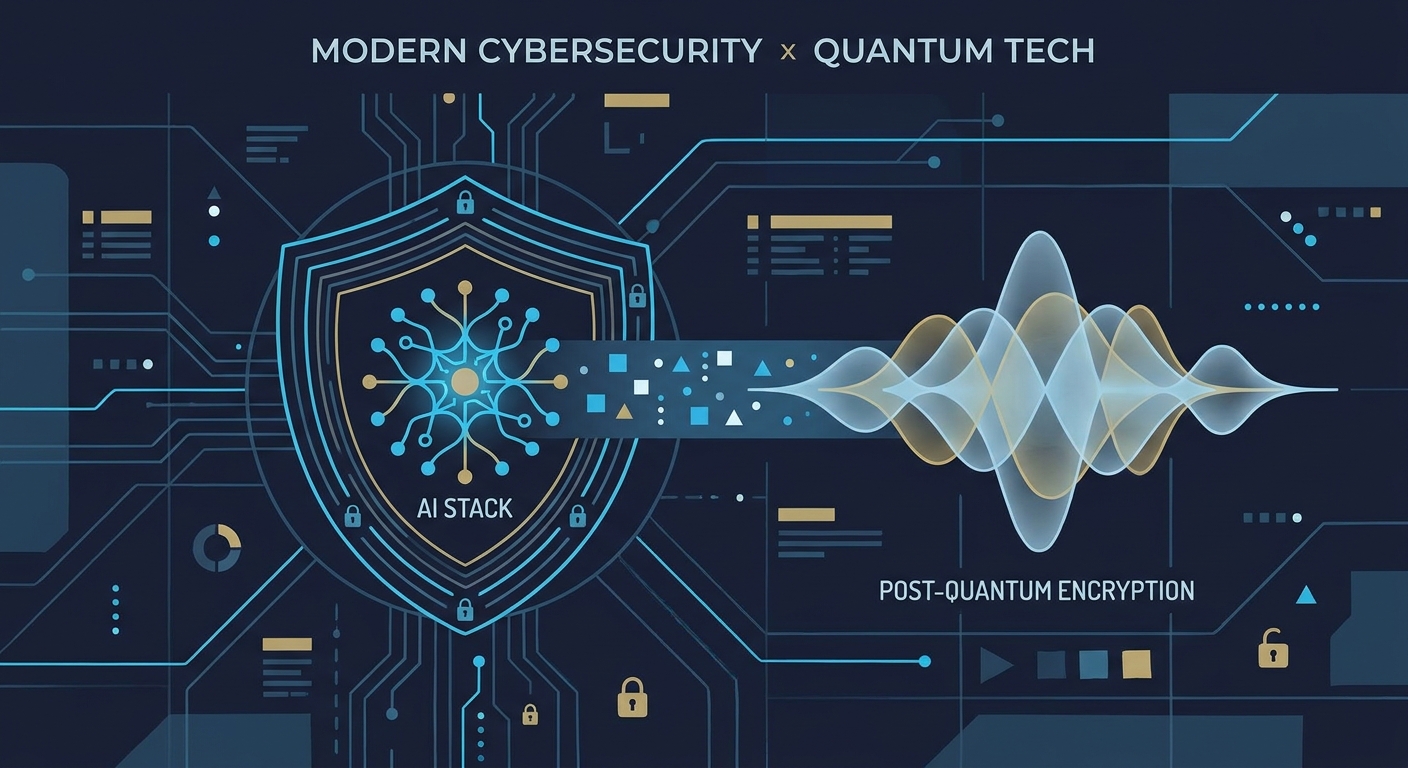
Step 2: Harden the Traffic. Move internal MCP traffic to hybrid PQC tunnels. This means wrapping your existing TLS traffic in a layer of quantum-resistant key exchange. We’ve put together a deep dive into Hardening MCP Architecture that covers the specific libraries you need to do this without slowing your network to a crawl.
Step 3: Granular Tool Authorization. Stop using binary access controls. Implement resource-level authorization. An MCP server shouldn't just know that "Agent A" is allowed to run; it should know that "Agent A" can see "File X" but is strictly forbidden from touching "File Y." This requires the MCP server to be identity-aware and capable of parsing those scoped tokens we discussed earlier.
How to Achieve Regulatory Alignment in 2026
Compliance isn't just a checkbox anymore; it's an architectural requirement. The 2026 NSA Cybersecurity Information Sheet (CSI) is very clear: you must isolate AI-driven automation tasks. If your MCP setup doesn't support granular logging and identity-aware access, you’re going to fail your next audit.
Furthermore, the CoSAI Practical Guide to MCP Security has become the industry standard. It provides a rock-solid framework for mapping MCP risks to the OWASP Top 10. By adopting these standards now, you aren't just filing paperwork—you’re building an infrastructure that can actually stand up to the scrutiny of the next three years of AI evolution.
The 2026 MCP Hardening Checklist (Actionable Summary)
| Security Domain | Action Item | Priority |
|---|---|---|
| Traffic | PQC Enabled for all MCP-to-Host communication? | Critical |
| Identity | Identity propagation (scoped tokens) implemented? | Critical |
| Governance | Policy-as-Code enforced for all tool calls? | High |
| Monitoring | Continuous logs of lateral agent-to-tool traffic? | High |
| Compliance | Audit performed against OWASP MCP Top 10? | Medium |
Frequently Asked Questions
Why does standard TLS fail to protect MCP traffic against future threats?
Standard TLS relies on math that quantum computers will eventually shred using Shor’s algorithm. Because of the "Harvest Now, Decrypt Later" threat, any traffic captured today can be decrypted years from now, exposing your long-term sensitive context.
How do I manage user identity across multiple MCP tool calls?
Use an identity propagation model with short-lived, scoped JWTs. The LLM host acts as the middleman, pulling a token restricted to the specific task and user. This ensures the MCP server only sees credentials that are both time-bound and permission-restricted.
Is the OWASP MCP Top 10 mandatory for compliance in 2026?
It’s technically voluntary, but it’s become the de facto benchmark for internal audit and procurement teams. If you aren't aligning with it, you’re failing to show due diligence.
Where can I find more technical details on PQC implementation?
For detailed guides, library recommendations, and common migration pitfalls, you can visit our Post-Quantum FAQ.